

Discover 5 key steps to understand how does a solar panel work. Learn how sunlight turns into electricity, panel layers, types of solar cells, and how it affects your electric bill.
This guide will cover:
- How solar panels generate electricity through the photovoltaic effect
- How a solar cell works at the P–N junction
- How solar panels are built layer by layer
- Types of solar panels and when each one is best
- Key factors that influence efficiency
- How solar panels work with your electric bill
- Whether solar panels work at night
How Solar Panels Turn Sunlight Into Electricity
At the heart of every solar panel is the photovoltaic effect. When sunlight hits a solar cell, energy from photons is captured and converted into an electrical current. This is the core of how does a solar panel work.
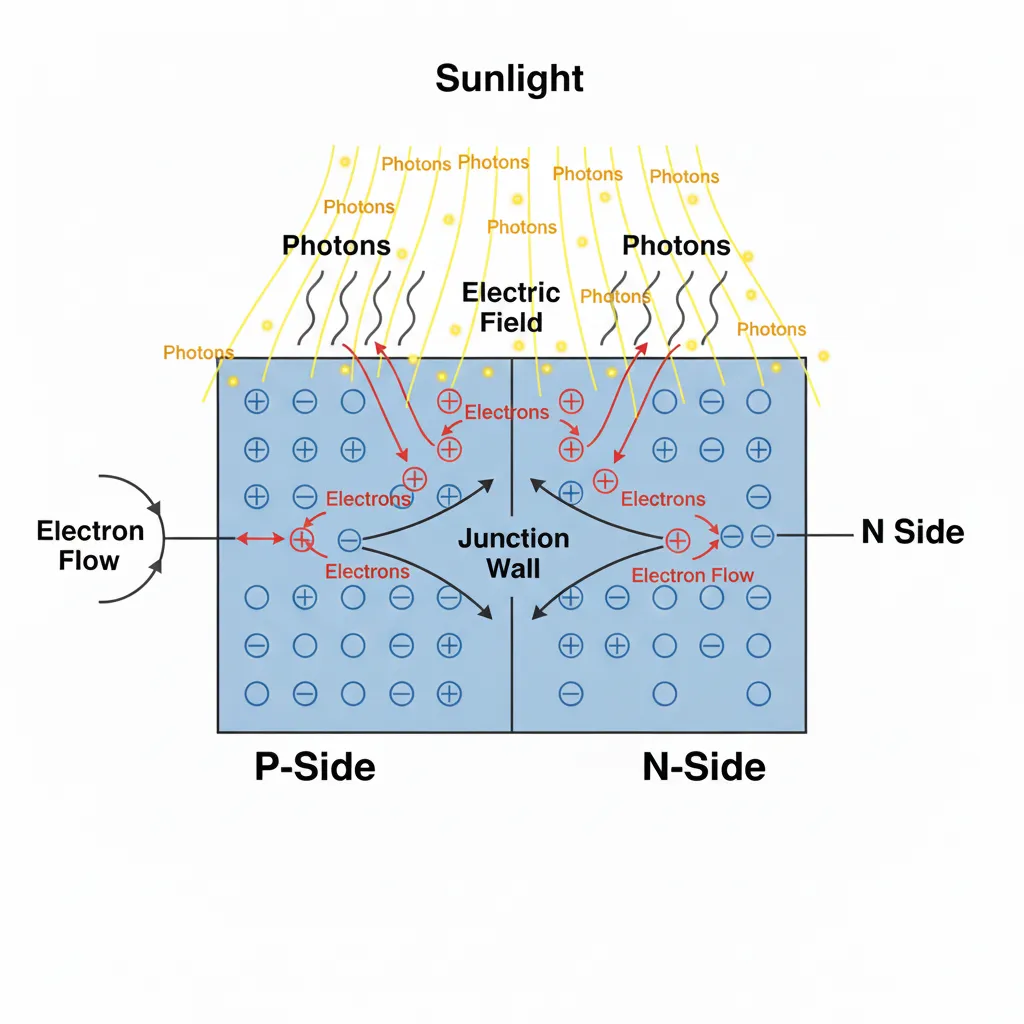
The P–N Junction: Where Power is Born
A solar cell starts as a thin silicon wafer. To create electricity, we separate positive and negative charges by “doping” the silicon to form two sides:
| Half | Role | Impurity Added |
|---|---|---|
| P-Side (Positive) | The receptor, or “electron home.” | Boron – creates holes (positive charge) |
| N-Side (Negative) | The donor, or “electron source” | Phosphorus – adds free electrons (negative charge) |
When these two layers meet, a built-in electric field forms naturally. Think of it like a barrier storing energy. When sunlight arrives, electrons get knocked loose and pushed across this junction. This is the beginning of electricity
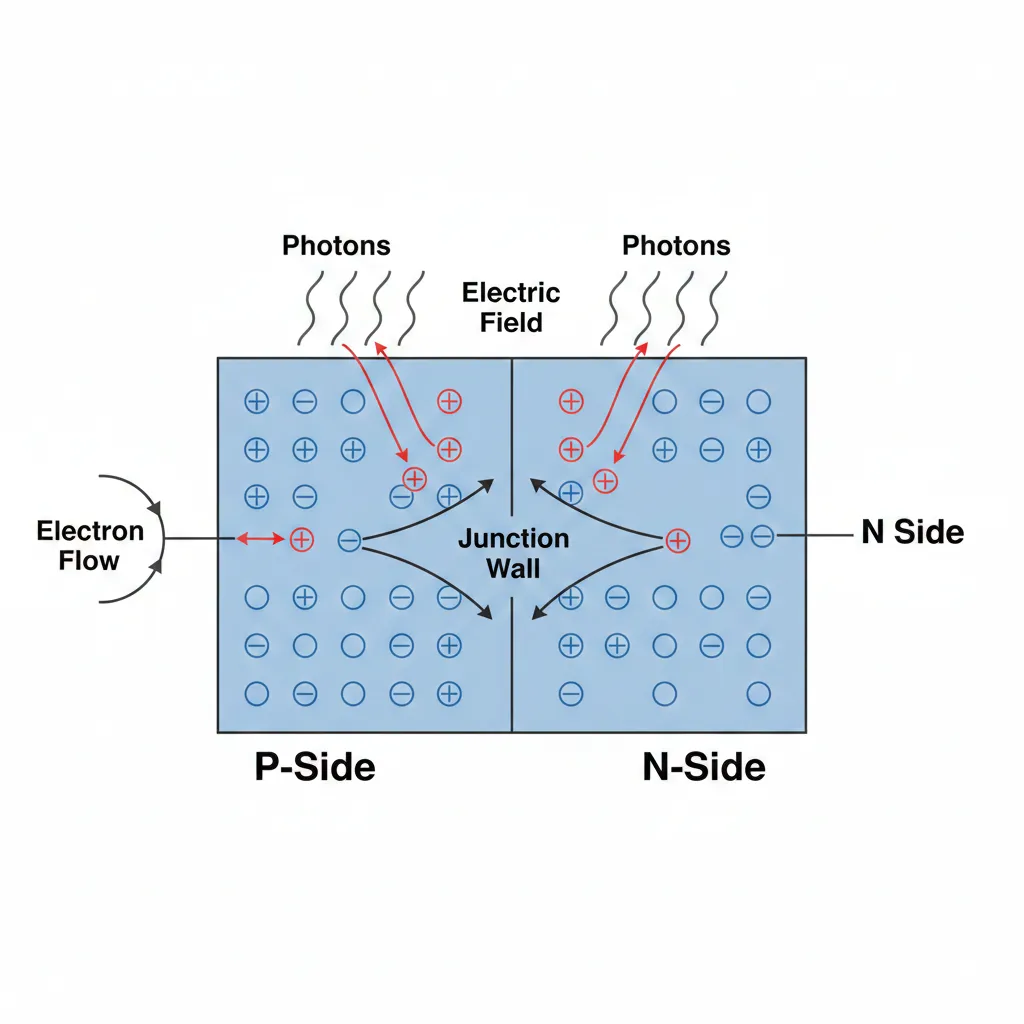
Sunlight Sparks the Current
- Photons hit the solar cell, knocking electrons loose and creating electron-hole pairs.
- The electric field pushes electrons toward the N-side and holes to the P-side.
- Electrons flow through wires in an external circuit, creating electricity.
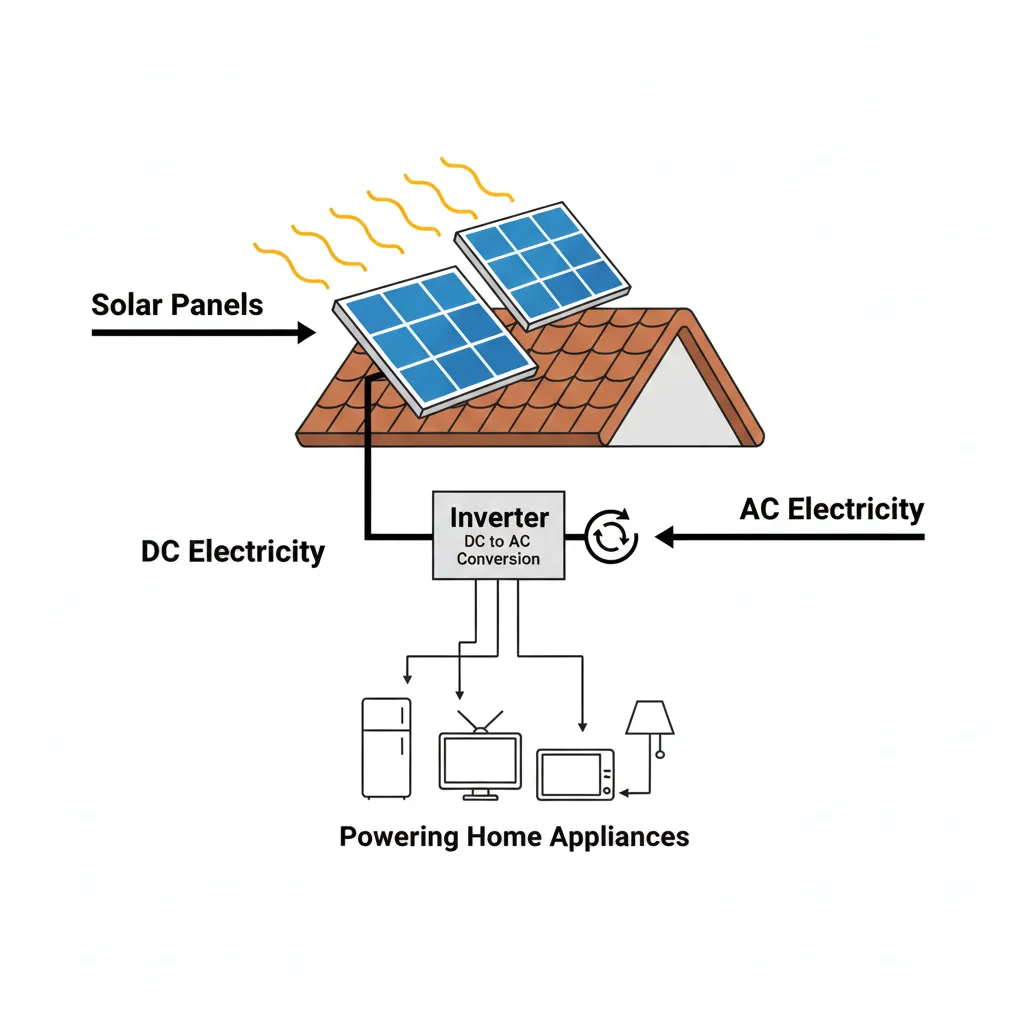
This current travels to a solar inverter, converting DC (direct current) to AC (alternating current) used by your home appliances. Understanding this step is essential to see how does a solar panel work in practice.
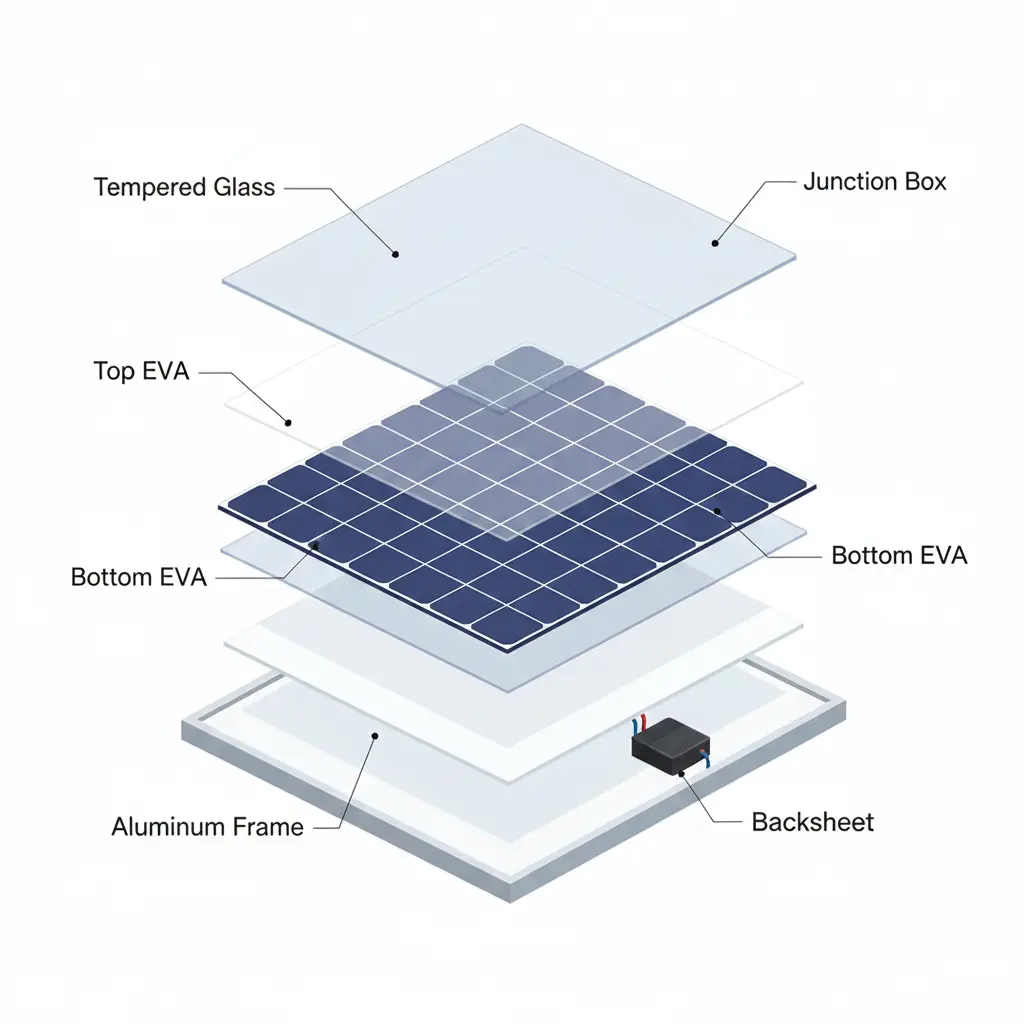
Solar Panel Construction: Layer by Layer
A solar panel is more than one cell, it’s a collection of 50–72 cells protected and connected for long-term use:
- Tempered Glass: Top layer that protects cells and allows sunlight to pass through.
- EVA Encapsulation (Top & Bottom): Transparent bonding layer that keeps cells in place.
- Solar Cells: Where sunlight is converted into electricity. Connected with busbars, ribbons, and conductive tracks.
- Backsheet: Protective layer at the rear preventing moisture and electrical leakage.
- Aluminum Frame: Adds strength and makes mounting easy.
- Junction Box: Contains diodes and connectors for safe electrical output.
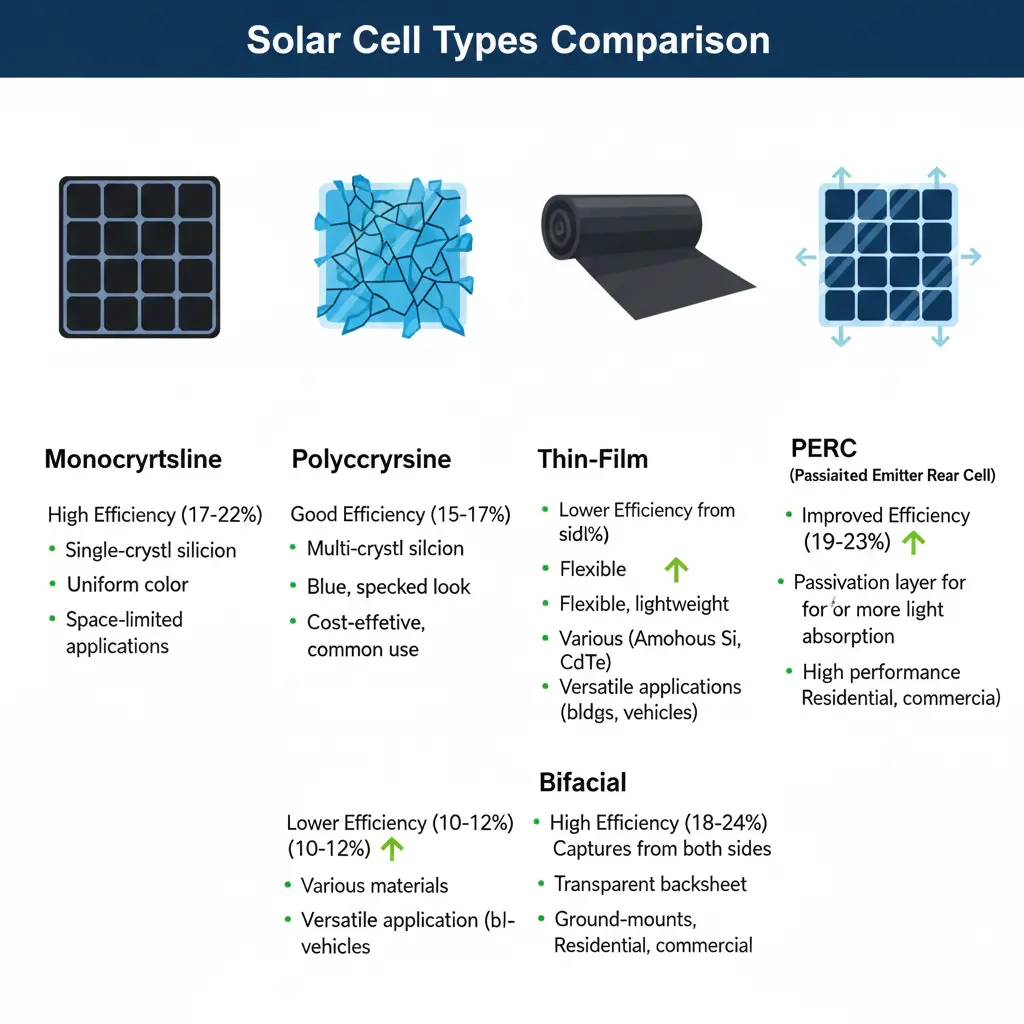
Types of Solar Cells
Solar panels are made of different kinds of solar cells, each with unique characteristics. Choosing the right cell type affects efficiency, cost, and panel performance.
Monocrystalline Cells: Made from a single silicon crystal, high efficiency, best for limited roof space.
Polycrystalline Cells: Made from multiple silicon fragments, slightly lower efficiency but more affordable.
Thin-Film Cells: Flexible and lightweight, suitable for unusual surfaces or portable solar panels, but produce less electricity per square meter.
Bifacial Cells: Capture sunlight from both sides of the panel for increased energy generation.
PERC Cells (Passivated Emitter Rear Cell): Enhanced monocrystalline cells that capture more sunlight and improve efficiency.
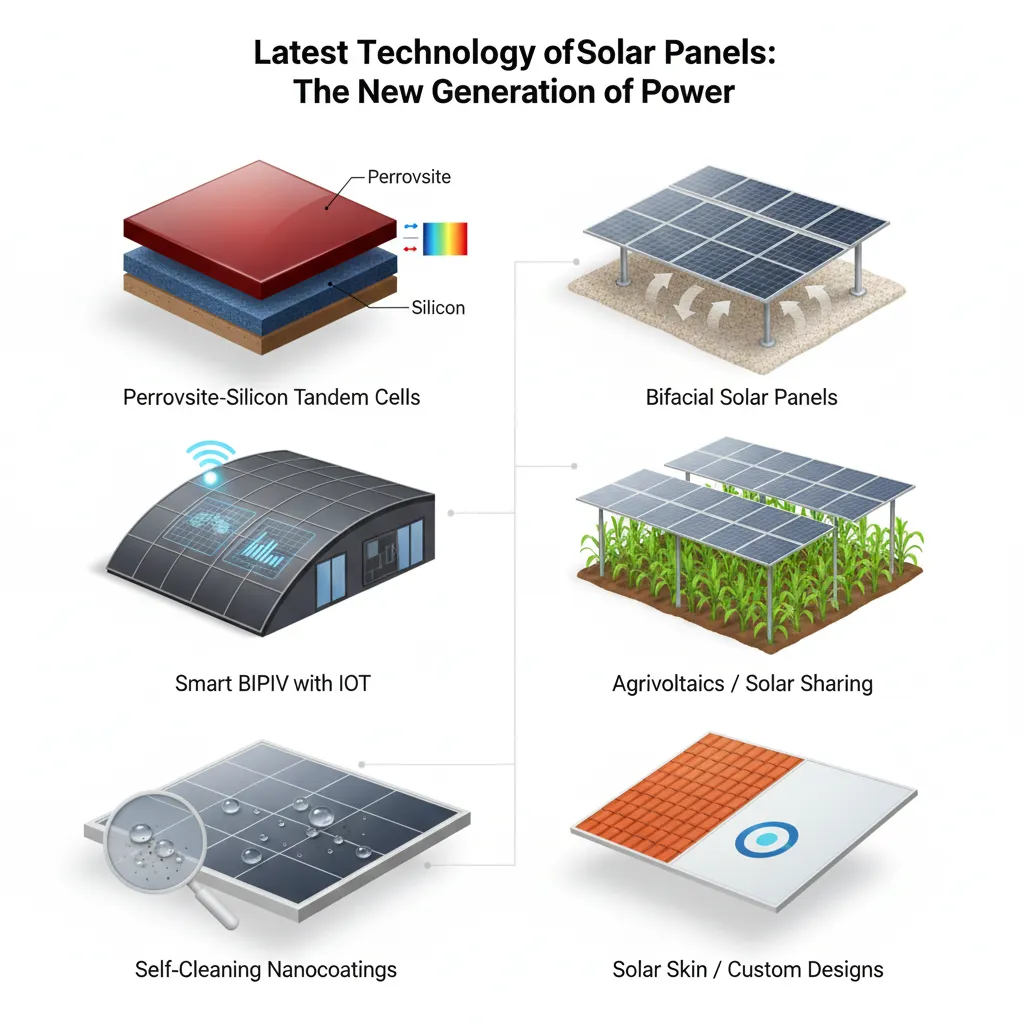
Latest Technology in Solar Panels
Understanding how does a solar panel work today involves more than just the basic photovoltaic effect. Modern solar technologies are designed to increase efficiency, integrate seamlessly, and adapt to diverse applications:
- Perovskite-Silicon Tandem Cells: Advanced layering of perovskite on silicon captures a broader spectrum of sunlight, achieving higher efficiency than traditional panels.
- Bifacial Solar Panels: These panels absorb sunlight from both front and rear, utilizing reflected light to boost energy output by up to 20% in optimal conditions.
- Smart BIPV (Building-Integrated PV): Panels integrated into windows, facades, and roofs, often connected via IoT for real-time monitoring and smart energy management.
- Agrivoltaics / Solar Sharing: Panels mounted above crops allow dual land use, generating electricity while supporting agricultural growth.
- Self-Cleaning Nanocoatings: Hydrophobic coatings repel dust and water, maintaining efficiency and reducing maintenance over time.
- Solar Skin / Custom Designs: Thin-film layers allow custom colors, patterns, or images without significant power loss, making solar installations aesthetically flexible.
These innovations demonstrate how solar panels work in the modern era, not just converting sunlight into electricity, but doing so intelligently, efficiently, and adaptably
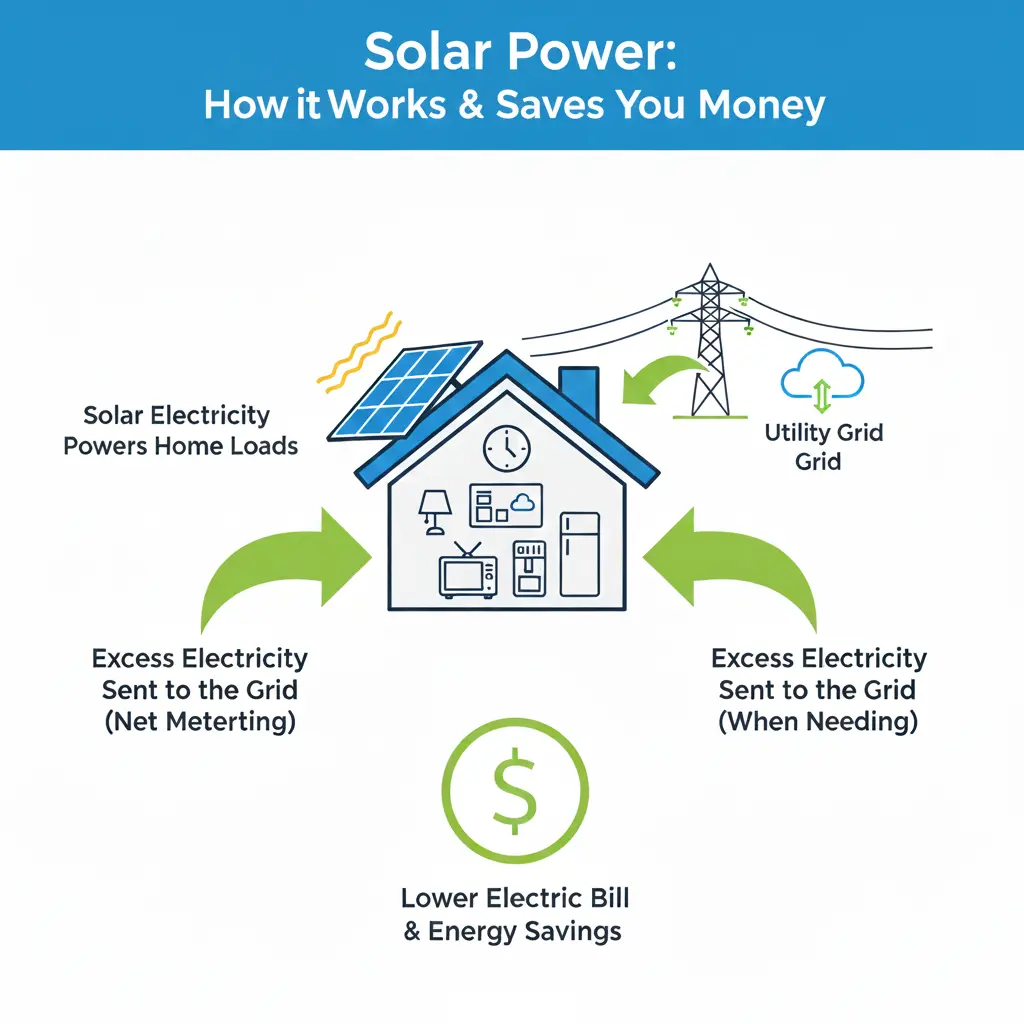
How Do Solar Panels Work With Your Electric Bill
Understanding how do solar panels work with your electric bill helps homeowners see the financial benefit of solar energy. Solar panels generate electricity that powers your home, reducing the amount you need from the utility company
- Daytime Energy Use: Solar panels provide electricity during the day, powering appliances first and reducing grid usage.
- Net Metering Credits: Any excess electricity sent back to the grid can earn credits, lowering future bills.
- Monthly Savings: The more energy your panels generate, the less you pay your utility company. Savings depend on sunlight hours, system size, and local rates.
- Seasonal Changes: Solar output varies with sunlight, so electricity drawn from the grid may fluctuate, but net metering helps balance it.
Monitoring production and consumption ensures maximum savings. Over time, solar panels can significantly reduce your electricity expenses, making them both a sustainable and cost-effective solution.
How Panels Are Made
- Cells are connected into strings.
- Layers are stacked: Glass → EVA → Cells → EVA → Backsheet.
- Laminated under heat and vacuum.
- Aluminum frame and junction box added.
- Each panel tested for performance and quality.
What Affects Solar Panel Efficiency
- Type of solar cell (mono > poly > thin-film)
- Number of busbars
- Shading, dirt, or snow
- Panel orientation and angle toward the sun
- Temperature and weather conditions
Do Solar Panels Work at Night?
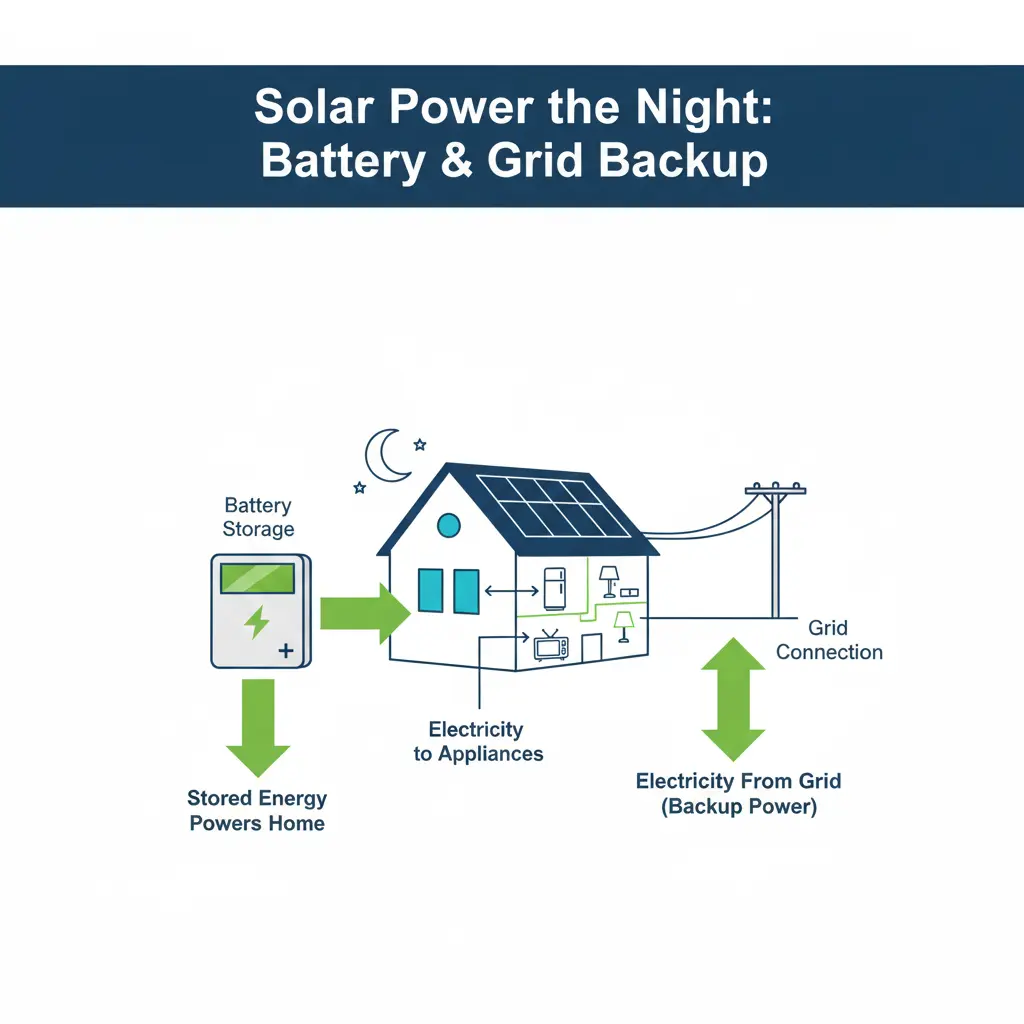
Many homeowners wonder, do solar panels work at night? The simple answer is no. Solar panels need sunlight to generate electricity. Without sunlight, the photovoltaic effect cannot occur, so the panels do not produce power during nighttime.
However, this doesn’t mean your home goes dark. Solar energy systems are often paired with batteries or connected to the electric grid. Batteries store excess energy produced during the day for use at night, while grid-tied systems allow you to draw electricity from the utility when solar production is zero.
- No Sunlight = No Production: Solar panels only generate electricity when sunlight hits them.
- Battery Storage: Stored energy can power your home after sunset.
- Grid Connection: Grid-tied systems provide uninterrupted power even when the sun isn’t shining.
- Smart Energy Management: Monitoring usage and battery storage can maximize nighttime efficiency.
Quick FAQs
Do solar panels work at night? No. Panels only produce electricity when exposed to sunlight. At night, you rely on batteries or the grid.
Do solar panels work with your electric bill? Yes. When panels generate more electricity than you use, the extra energy goes to the grid, lowering your bill through net metering (depending on your region).
Do panels work during cloudy or snowy weather? Yes, but with reduced efficiency.
How long do solar panels last? Most panels last 25–30 years.
What happens if part of a panel is shaded? Bypass diodes help keep power flowing, but overall output decreases.
Conclusion
Solar panels combine clever engineering with natural energy. From the P–N junction creating current to the protective layers and wiring, each part ensures sunlight becomes usable electricity for your home or business.
By understanding how does a solar panel work, their construction, the types available, and how they affect your electric bill, you can make smarter energy decisions and appreciate the science powering clean, renewable energy.