
7 Steps to Clean Solar Panels Safely | Roof & Home Maintenance Guide
Learn how to clean solar panels safely at home or on your roof. An Engineer explains step-by-step cleaning methods, tools, schedules, and robot cleaning solutions.
Introduction: Why Solar Panel Cleaning Is Essential
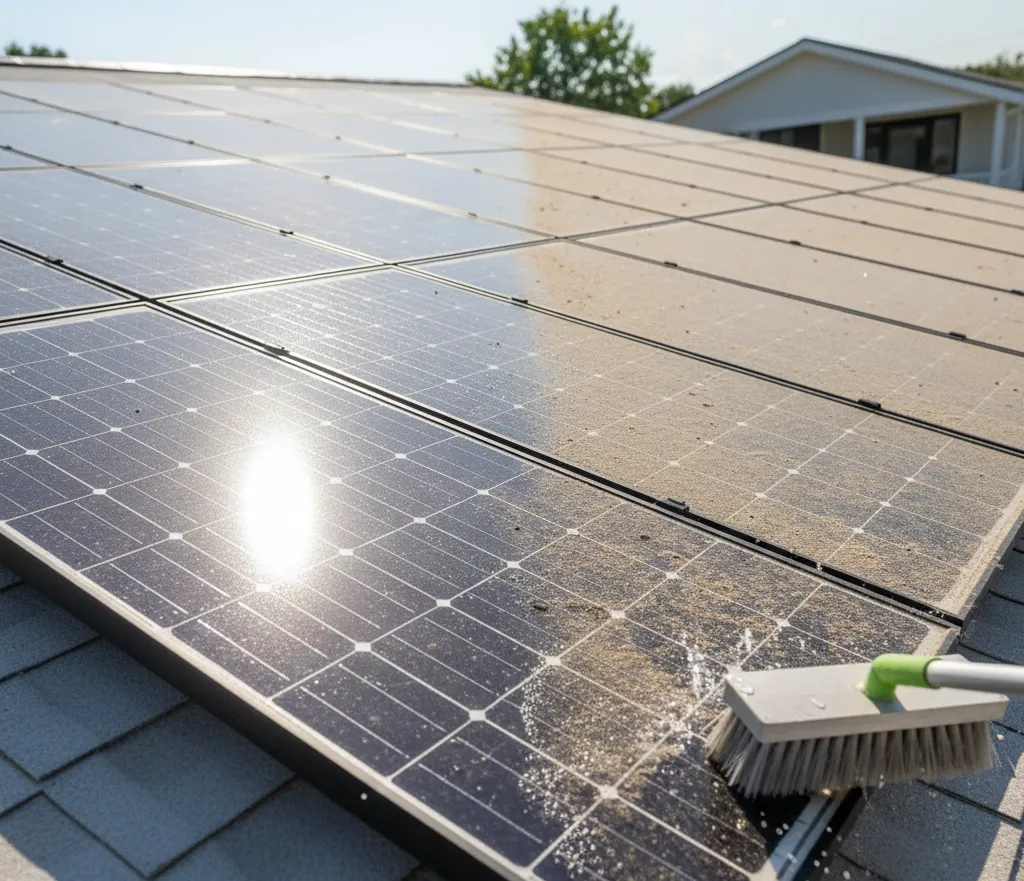
Solar panels are your gateway to clean, sustainable energy. Even a thin layer of dust, pollen, bird droppings, or debris can reduce energy output dramatically.
From my experience as an engineer inspecting solar systems:
- Clean panels can improve energy production by up to 25 percent.
- Unsafe cleaning risks electric shock, falls, or panel damage.
- Cleaning solar panels isn’t just aesthetics. It’s a critical maintenance activity that protects your investment and maximizes efficiency.
This guide will teach you how to clean solar panels at home or on your roof safely, which tools to use, the best schedule, and how modern cleaning robots can help.
Why Cleaning Solar Panels Matters
Dirty panels don’t just look unattractive. They steal energy and money from you.
Key Benefits of Regular Solar Panel Cleaning
- Maximized Energy Production: Even light dust can reduce efficiency by five to twenty five percent, depending on your environment.
- Protect Your Panels: Bird droppings, leaves, and pollen can scratch glass surfaces or block sunlight.
- Early Problem Detection: Cleaning helps you spot cracks, loose wiring, corrosion, or water damage early, keeping your panels efficient enough to support devices like solar water pumps and other off-grid equipment
- Long-Term Savings: Clean panels last longer and require fewer repairs.
DIY Solar Panel Cleaning: How to Save Money and Maximize Efficiency Safely
Most homeowners hesitate to clean solar panels themselves. Understanding how a solar panel works and your system setup, including solar panel kits, can make this task easier and safer. DIY solar panel cleaning can be a smart choice when done correctly:
- Save money: Avoid recurring costs of professional cleaning services.
- Maximize efficiency safely: Control the cleaning schedule to keep panels performing at their best.
- Understand your system: Knowing how a solar panel works and your solar panel kit setup helps you spot potential issues early.
With the right tools and precautions, DIY solar panel cleaning keeps your panels and solar panel kits in top condition while saving money and maximizing efficiency safely.
Essential Tools and Equipment for Solar Panel Cleaning
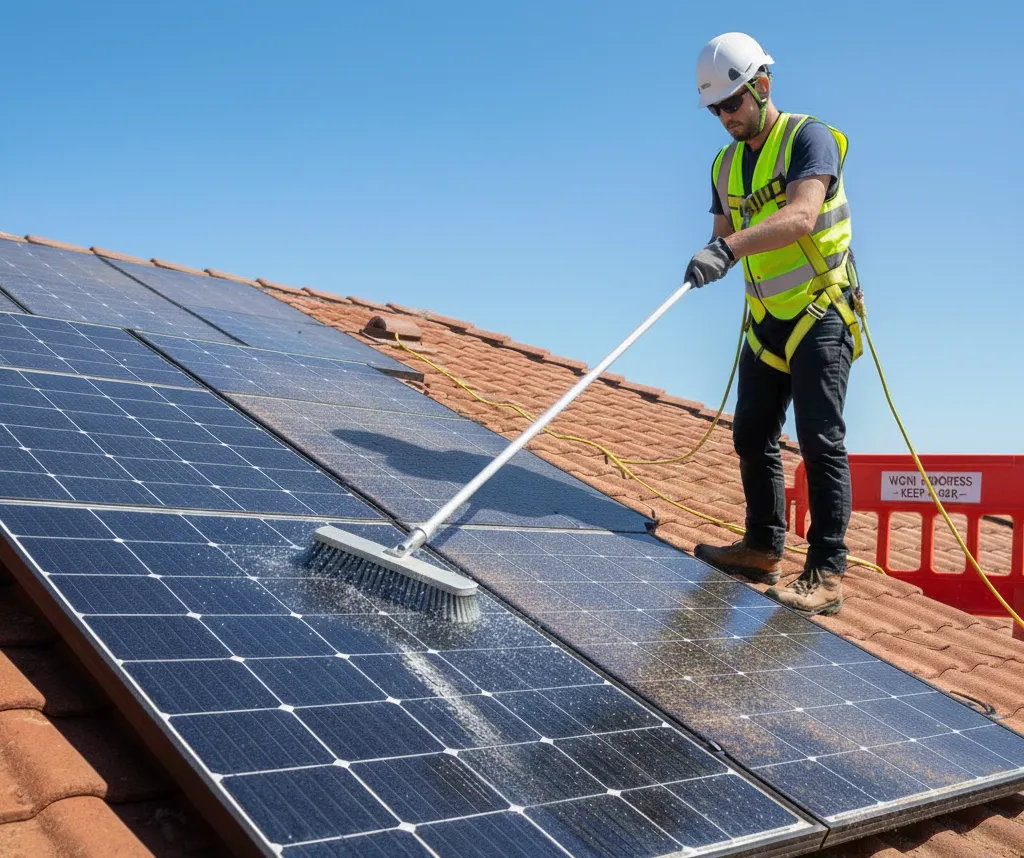
Using the right tools ensures no scratches, no water ingress, and minimal risk during cleaning.
1. Personal Safety Equipment (Non-Negotiable)
- Safety harness with anchor point
- Non-slip rubber shoes
- Helmet
- Safety gloves
2. Cleaning Tools
- Soft solar panel cleaning brushes (nylon or microfiber)
- Sponges or soft cloths
- Extendable water-fed poles
- Buckets
3. Water and Cleaning Agents
- Garden hose with low-pressure spray
- Mild detergent
- Distilled water (to avoid mineral spots)
4. Optional Advanced Equipment
- Solar panel cleaning robots
- Water-free cleaning kits
- Soft squeegees
7 Steps for How to Clean Solar Panels Safely | Roof & Home Maintenance
Learn how to clean solar panels safely with these 7 simple steps. Whether you’re cleaning panels on your roof or at ground level, following this guide ensures maximum energy efficiency, panel protection, and personal safety.
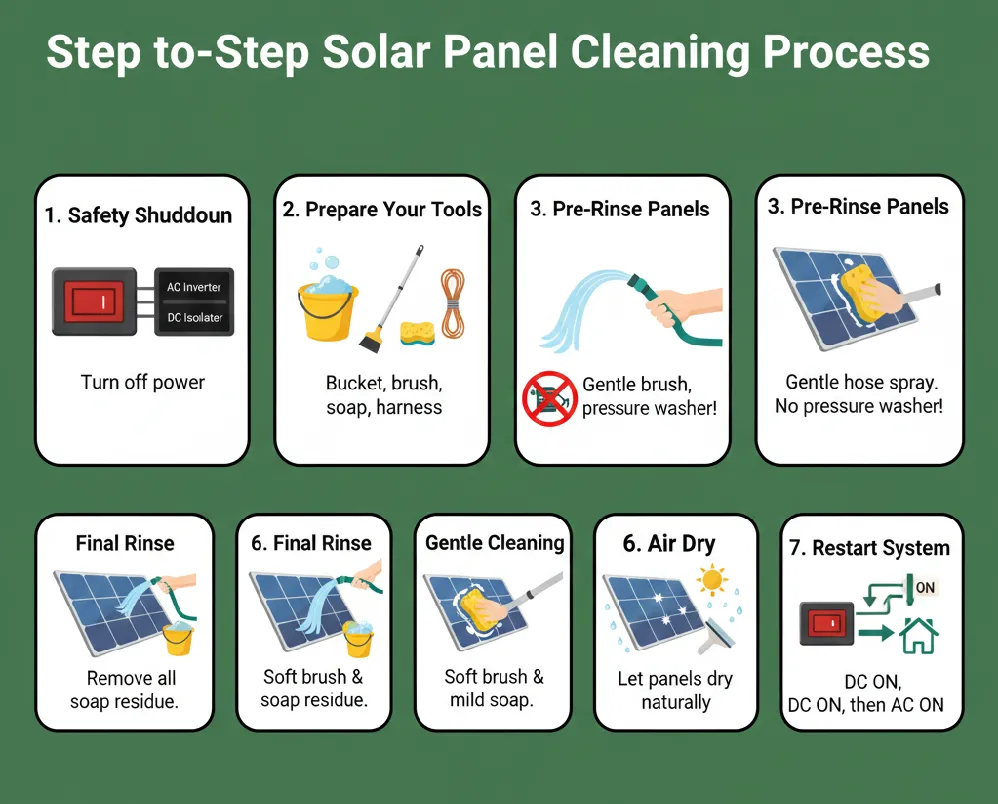
Step 1: Safety Shutdown
- Turn off AC inverter at the main switch.
- Switch DC isolator (near inverter) to OFF.
- Ensure no one else touches the system during cleaning.
Step 2: Prepare Your Tools
- Fill a bucket with water and mild detergent.
- Assemble brushes, sponges, and poles.
- Check harness and fall protection.
Step 3: Pre-Rinse Panels
- Gently spray panels with water.
- Avoid pressure washers and high-pressure sprays.
Step 4: Gentle Cleaning
- Dip a sponge or brush in solar panel cleaning cleaner.
- Clean using straight, soft strokes.
- Pay extra attention to corners.
Step 5: Final Rinse
- Rinse off dirt and soap.
- Ensure no residue is left.
Step 6: Air Dry
- Let the panels dry naturally.
- Optionally use a soft squeegee.
Step 7: Restart System
- Turn ON DC isolator.
- Turn ON AC inverter.
- Confirm power generation.
Avoid Pets and Kids Around During Cleaning
Solar panel cleaning is not a normal household chore. It involves:
- Electricity
- Slippery wet surfaces
- Tools
- Chemicals
- Roof-level work
To avoid accidents:
- Keep children away from the cleaning area.
- Do not allow pets, especially on rooftops or near ladders.
- Water splashes, loose wires, or falling tools can cause harm.
- Pets can also accidentally tug ropes, harnesses, or hoses.
For maximum safety:
Create a restricted zone and inform family members before starting the cleaning process.
Safer Alternatives: Ground-Level Cleaning
If your panels are accessible:
- Use an extendable brush.
- Use a gentle garden hose.
- Use cleaning robots for roof-mounted systems.
These methods greatly reduce the risk of falls or shocks.
How Often Should You Clean Solar Panels?
| Area Type | Frequency | Reason |
|---|---|---|
| Industrial / High Dust | Every two to three months | Dust and pollution |
| Coastal | Every three to four months | Salt buildup |
| Bird / Pollen Areas | Spot clean as needed | Sticky droppings |
| Residential / Low Dust | Once a year | Rain helps |
💡 Expert Tip: Watch your solar inverter output. A drop usually means it’s time to clean.
When You Should Hire a Professional
There are situations where DIY cleaning becomes unsafe or impractical.
You should call a professional cleaner if:
- Your roof is very steep.
- Your panels are highly elevated or on multiple floors.
- You don’t have the correct safety equipment.
- The system wiring looks damaged, loose, or corroded.
- You notice cracks or water leakage inside panels.
- You’re uncomfortable with heights.
- You have a large commercial system that requires regular or robotic cleaning.
Professionals also bring specialized tools such as:
- Pure water cleaning systems
- Long-range water-fed poles
- Industry-grade safety gear
- Commercial-grade cleaning robots
This ensures both your safety and your panels’ longevity.
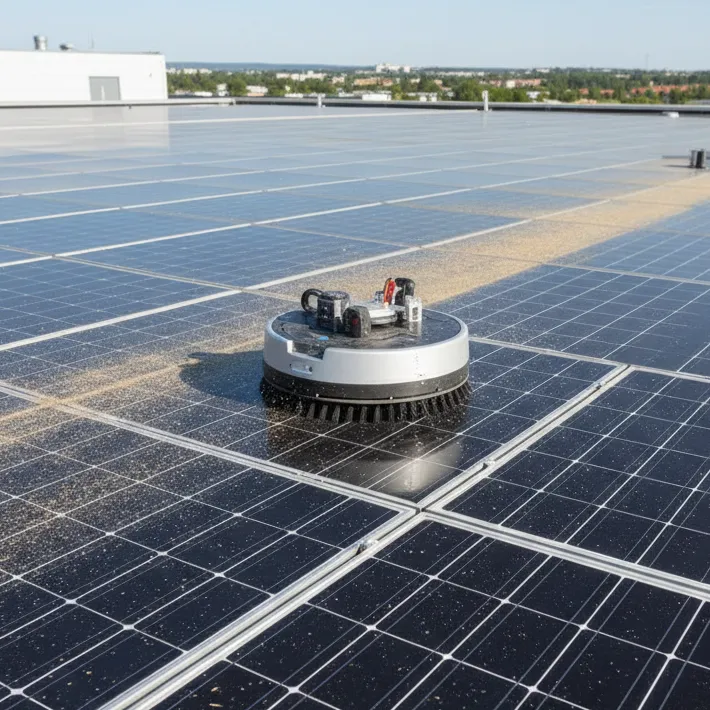
Advanced Options: Solar Panel Cleaning Robots
how to clean solar panels on roof, difficult angles, or commercial buildings:
- Robots clean without human risk, reducing the chance of falls or electric shock.
- Water-free models save water, ideal for areas with limited supply.
- Robots create consistent, repeatable cleaning cycles, ensuring all panels are thoroughly maintained.
- Robots are particularly effective for commercial solar cleaning, handling large rooftops or multi-panel installations efficiently.
Conclusion: Maximize Efficiency, Protect Your Investment
- Clean panels perform better and last longer.
- Follow safety protocols.
- Use the right tools.
- Hire professionals when needed.
- For risky roofs, consider cleaning robots.
⚠️ Disclaimer: Cleaning solar panels involves electrical and height-related risks. Follow safety guidelines and consult professionals when required.
FAQ: How to Clean Solar Panels
Can I clean panels myself?
Yes, with the proper tools and safety measures.
What if I never clean them?
Expect up to 25 percent lower efficiency.
Is rain enough?
No, rain does not remove bird droppings or sticky dirt.
Can I use a pressure washer?
No, it can damage seals and void warranties.
What’s the safest method?
Ground-level tools or robotic cleaners.
What is the best time of day for cleaning solar panels?
Early morning or late evening is ideal. Panels are cooler, safer to touch, and water won’t evaporate quickly, giving you a streak-free clean.
Can hot panels crack if I pour cold water on them?
Yes. Sudden temperature shock can cause thermal stress and lead to micro-cracks. Always clean panels when they are cool.
Do I need to turn off the solar system before cleaning?
Yes. Always switch OFF the AC inverter and DC isolator before cleaning to minimize electrical risk and protect the system.
Can soap damage solar panels?
Harsh soaps can leave residue and cause streaks that reduce efficiency. Use only mild, eco-friendly detergents recommended for glass surfaces.
Can I walk on solar panels while cleaning?
Never. Walking on panels can cause micro-cracks, void warranties, and permanently reduce power output.
How do I clean bird droppings that are stuck and hard?
Soak the area with water first, wait a few minutes, then gently wipe using a soft brush or sponge. Avoid scraping tools, which can scratch the glass.
What happens if my panels have hard water stains?
Use distilled water for rinsing. For old stains, use a vinegar–water mix (1:8 ratio) or consult a professional for mineral removal.
Can I use window glass cleaner on solar panels?
Avoid it. Many glass cleaners contain chemicals that leave residue and reduce panel transparency.
Does cleaning solar panels void the warranty?
Cleaning does not void the warranty, but using pressure washers, abrasive tools, or harsh chemicals might. Always follow manufacturer guidelines.
How long does a cleaning session take?
Home systems usually take 20–45 minutes, depending on dirt level and roof height.
How can I tell if my solar panels need cleaning?
Watch for:
Sudden drop in power output
Visible dust or bird droppings
Shade patches caused by debris
Monitoring apps or inverters make this easier.
Do solar panels clean themselves in the rain?
Rain removes loose dust only. It does not remove sticky residue like bird droppings, tree sap, or pollution stains.
Should I clean panels during cloudy weather?
Yes, cloudy weather is ideal. Panels stay cool, water evaporates slowly, and you avoid heat shock.
How dangerous is DIY cleaning really?
Falls and electrical exposure are the main risks. If your roof is steep, slippery, or high, hire a professional.
Can I use a long water-fed pole on a two-story building?
Yes, if the pole is designed for roof cleaning and the water pressure is gentle. It’s safer than climbing the roof.