
Discover the ultimate guide to solar panels for schools. Learn cost, ROI, benefits, and how schools can save money while going green in 2026
Education has always been about shaping the future. Today, that mission is expanding beyond the classroom. Schools everywhere face a dual challenge: managing ever-rising operational costs while teaching the next generation to be responsible stewards of our planet.
The solution is shining right above us. Solar panels for schools offer an unparalleled opportunity to slash electricity bills, provide a real-world lesson in sustainability, and create long-term financial benefits. Thanks to their daily and yearly schedules, educational institutions are ideal candidates for solar energy, with the potential to achieve near-total energy independence.
Introduction Summary: Solar Panels for Schools with AI
Installing solar panels in schools offers financial, educational, and environmental benefits, especially when integrated with AI technology:
- Reduce Electricity Bills: Generate clean energy to lower operational costs and predict energy usage efficiently.
- Energy Independence: Schools produce their own power, reducing reliance on the grid and maximizing self-consumption.
- AI-Enabled Optimization: AI forecasts solar generation, manages energy storage, and smartly dispatches power to minimize waste and peak charges.
- Safe & Certified Systems: Panels, inverters, wiring, and mounting systems meet international safety standards for sensitive school environments.
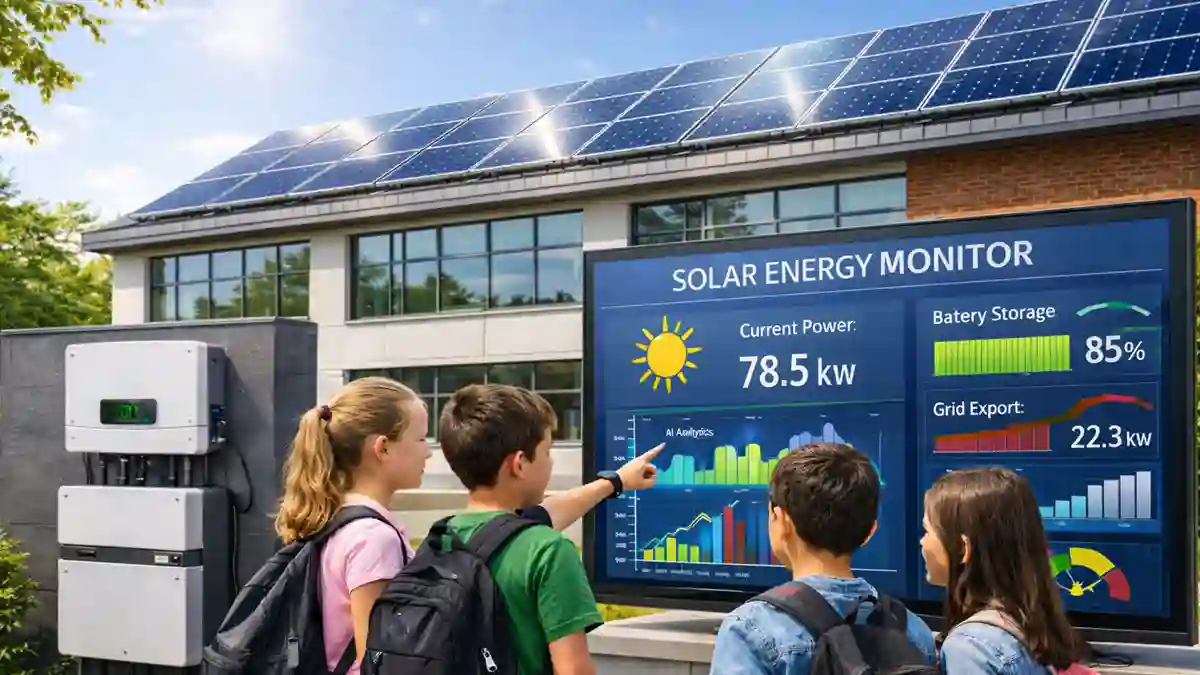
- Hands-On Science, Technology, Engineering, and Mathematics (STEM) Learning: Students can monitor real-time energy production via dashboards, combining education with sustainability.
- Financial Benefits: Maximize ROI with proper financing options like cash purchase, solar loans, or PPAs.
- Leverage Incentives & Grants: Government subsidies, tax credits, and NGO support reduce upfront costs.
- Durable & Long-Lasting: Routine monitoring, maintenance, and cleaning keep AI-enabled solar systems efficient for decades.
- Community Leadership: Schools showcase environmental responsibility, attracting support and enhancing reputation.
Solar Panels for Schools: Why They Are the Perfect Choice
A school’s operational clock is perfectly synchronized with the sun’s. Classes run from early morning to mid-afternoon—the exact hours of peak solar production. This alignment makes solar panels in schools highly efficient and impactful.
Key advantages include:
- Direct Consumption: Schools utilize most of their power while the sun is shining, directly consuming solar energy as it is produced for maximum efficiency.
- Net Metering Advantage: When the final bell rings, solar panels continue producing energy. Surplus clean energy is fed back to the grid, earning valuable credits.
- Vacation Overproduction: Schools are closed roughly 60 days per year. During breaks, nearly 100% of solar energy generated can be exported to the grid, building credits to cover cloudy days or nighttime consumption.
For example, a mid-sized high school installing a 500-panel array can generate enough power not only to run the campus all day but also export surplus energy, effectively negating their monthly electricity bills.
Solar Panels On Schools: Cost, ROI, and Benefits
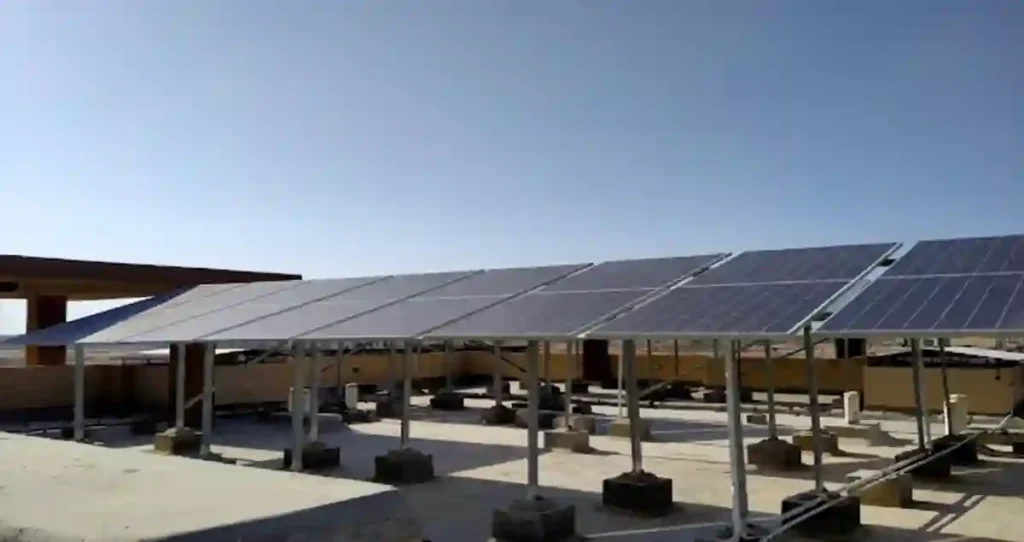
Understanding solar panel cost & ROI for schools is crucial for decision-makers. A well-planned system ensures financial sustainability alongside energy independence.
Typical Cost Breakdown of a Mid-Sized School Solar Project:
| Component | Estimated Cost (USD) |
|---|---|
| Solar Panels (100 kW system) | $140,000 – $180,000 |
| Inverters & Electrical | $30,000 – $40,000 |
| Batteries (Optional) | $10,000 – $30,000 |
| Installation & Labor | $40,000 – $80,000 |
| Total Cost | $220,000 – $330,000 |
Financing Options & Payback Period:
| Financing Option | Upfront Cost | Payback Period | Notes |
|---|---|---|---|
| Cash Purchase | $250,000 | 6–8 years | Highest ROI; IRR 12–15% |
| Solar Loan | $0 Down | 7–10 years | Positive cash flow from Day 1 |
| Power Purchase Agreement (PPA) | $0 | N/A | Third-party owns the system; the school buys discounted power |
Estimated Annual Savings: 140,000 – 160,000 kWh → $14,000 – $20,000+
A correctly sized 100 kW solar system can cover most daytime energy needs for a mid-sized school, turning recurring utility bills into a long-term financial asset.
Beyond Energy Savings: Educational & Community Benefits
Solar projects offer more than just cost savings. They provide educational and social advantages:
- Real-World Learning: Students can monitor live energy production and carbon offsets, integrating STEM into everyday learning.
- Community Leadership: Schools become examples of fiscal and environmental responsibility.
- Student Values: Encourages responsibility, innovation, and forward-thinking habits.
- Reputation & Enrollment: Environmentally conscious families are more likely to choose sustainable schools.
These benefits complement the financial ROI, creating a full-spectrum value proposition.
How to Implement Solar Panels in Schools: A Step-by-Step Guide
Implementing solar panels for schools is not just about installing equipment—it’s a strategic process that ensures maximum energy savings, financial returns, and educational benefits. By following a structured approach, schools can seamlessly integrate renewable energy into their operations while teaching students about sustainability.
Here’s a detailed breakdown of the five key steps:
1. Feasibility Study: Assessing the School’s Solar Potential
Before investing in a solar system, it’s critical to understand the school’s unique energy needs and structural capacity. A feasibility study helps identify the best approach to maximize efficiency and ROI.
Key tasks in this phase:
- Roof Assessment: Evaluate roof type, orientation, age, and structural strength to ensure it can support solar panels. Flat and south-facing roofs typically generate the highest energy output.
- Electrical Load Analysis: Review the school’s historical energy usage patterns. This includes classroom consumption, lighting, HVAC systems, and administrative loads to determine the optimal system size.
- Shading and Environmental Factors: Consider surrounding trees, buildings, and seasonal sun paths. Even small amounts of shading can reduce solar panel efficiency.
- Preliminary ROI Calculation: Estimate the potential savings on electricity bills, taking into account local utility rates, net metering policies, and incentives.
By the end of the feasibility study, schools should have a clear picture of system size, expected energy production, and approximate costs, setting the stage for a smooth implementation.
2. RFP / EPC Selection: Choosing the Right Partner
Once the feasibility study is complete, schools need to select a qualified partner to design, supply, and install the solar system. This is typically done through an RFP (Request for Proposal) process targeting EPC (Engineering, Procurement, and Construction) firms.
Steps include:
- Drafting the RFP: Clearly outline project goals, expected system size, budget range, and performance requirements.
- Evaluating Proposals: Compare technical designs, warranties, pricing, and past project experience. Look for providers with experience installing solar panels on schools to ensure compliance with safety and educational facility requirements.
- Site Visits and References: Visit other school installations completed by the bidders to verify quality and reliability.
- Negotiating Terms: Ensure contracts include maintenance agreements, performance guarantees, and clear timelines.
Selecting the right EPC ensures the project is delivered on time, within budget, and meets all regulatory and safety standards.
3. Financing Analysis: Maximizing ROI and Cost Efficiency
Investing in solar panels for schools is more than just an environmental decision—it’s a strategic financial choice. With the right financing approach, schools can achieve significant cost savings, predictable energy expenses, and strong long-term ROI. Financing analysis ensures that the school selects the structure that balances upfront costs, ongoing savings, and the available incentives in their region.
1. Cash Purchase: Full Upfront Investment (100 kW System)
Overview:
Schools pay the full cost of the solar system at the time of purchase. This approach provides full ownership from Day 1 and maximizes long-term financial benefits.
Benefits:
- Highest Long-Term ROI: Without financing costs, schools achieve maximum net savings over the system’s lifetime.
- Immediate Ownership: Schools fully own the system, allowing them to take advantage of regional incentives, tax credits, or depreciation where applicable.
- Predictable Energy Costs: Future utility bills are significantly reduced or eliminated, providing long-term financial stability.
Example by Region (100 kW System):
| Region | System Size | Estimated Cost | Annual Savings | Payback Period | Notes |
|---|---|---|---|---|---|
| USA | 100 kW | $300,000 – $350,000 | $17,000 – $20,000 | 6–8 years | ITC 30% can reduce the upfront cost |
| UK | 100 kW | £200,000 – £250,000 | £7,000 – £9,000 | 7–9 years | Feed-in Tariff & council grants shorten payback |
| Pakistan | 100 kW | PKR 20M – 22M | PKR 1.5M – 1.8M | ~6 years | Government solar subsidies may lower the upfront cost |
| India | 100 kW | ₹60L – ₹70L | ₹5L – ₹6L | 5–6 years | MNRE rooftop solar incentives reduce initial investment |
Key Takeaway:
A 100 kW solar system is sufficient for most mid-sized schools, offering a realistic upfront cost while still providing substantial energy savings, ROI, and environmental benefits.
2. Solar Loan: Spread the Investment Over Time
- Overview: Schools borrow funds to install solar panels, repaying over a set period while still benefiting from energy savings.
- Benefits:
- Immediate Positive Cash Flow: Monthly energy savings often exceed loan payments.
- No Large Upfront Payment: Makes solar accessible for schools with limited budgets.
- Ownership at End of Term: After loan repayment, the system belongs to the school, maximizing ROI for the remaining life of the panels.
Example by Region:
- USA: Loan at 5% interest, $0 upfront → savings exceed loan payments; payback effectively starts Day 1.
- UK: Schools can access green energy loans from local councils or banks, reducing immediate financial burden.
- Pakistan & India: Local financial institutions offer renewable energy loans with low-interest rates and flexible repayment periods, often paired with government subsidies.
3. Power Purchase Agreement (PPA): $0 Upfront Cost
- Overview: A third-party developer owns, installs, and maintains the solar system. The school purchases electricity at a fixed, discounted rate, often lower than utility prices.
- Benefits:
- Zero Upfront Cost: Ideal for schools without available capital.
- Immediate Savings: Schools start saving on energy bills from Day 1.
- Maintenance-Free: The developer handles system performance, maintenance, and monitoring.
Example by Region:
- USA: Schools buy electricity at 20% below utility rates; ITC claimed by developer; savings start immediately.
- UK: PPAs are increasingly used for schools in partnership with energy companies; Feed-in Tariff savings may apply.
- Pakistan & India: Some private energy providers and NGOs offer PPAs, allowing schools to benefit from solar energy without upfront investments.
4. Incentives & Grants to Maximize ROI
In addition to financing methods, schools should explore government and NGO incentives to improve payback and ROI:
- USA: Federal ITC (30%), MACRS accelerated depreciation, state rebates, local grants.
- UK: Feed-in Tariff, Renewable Heat Incentive (RHI), Sustainable Schools grants.
- Pakistan: Alternate Energy Development Board subsidies, provincial solar programs, NGO/CSR support.
- India: MNRE rooftop solar schemes, state-level subsidies, CSR funding for schools.
Using incentives effectively can reduce upfront costs by 20–50%, shorten payback periods, and boost overall ROI.
5. Regional ROI Comparison (100 kW System)
| Region | Financing Option | Avg Cost | Annual Savings | Payback Period | Notes |
|---|---|---|---|---|---|
| USA | Cash Purchase | $300k – $350k | $17k – $20k | 6–8 yrs | ITC 30% & net metering boost ROI |
| USA | PPA | $0 upfront | $13k – $15k | Immediate | Developer owns & maintains the system |
| UK | Cash Purchase | £200k – £250k | £7k – £9k | 7–9 yrs | Feed-in Tariff & council grants shorten payback |
| Pakistan | Loan | PKR 20M – 22M | PKR 1.5M – 1.8M | ~6 yrs | Government subsidy reduces interest |
| India | PPA | ₹60L – ₹70L | ₹5L – ₹6L | Day 1 savings | MNRE rooftop solar incentives applied |
Key Takeaway:
A 100 kW solar system is ideal for most mid-sized schools, offering manageable upfront costs, fast payback, and strong ROI across different regions when combined with available incentives.
4. Installation & Integration: Bringing the System to Life
Once financing and contracts are in place, the solar system can be installed. For schools, careful planning ensures minimal disruption to students and staff.
Key considerations:
- Scheduling: Most school solar installations are completed during summer or holiday breaks, avoiding interference with classes and activities.
- System Integration: Panels, inverters, and wiring must be seamlessly integrated with the school’s electrical infrastructure. Smart meters and monitoring systems should be configured for easy use by staff.
- Safety Measures: Ensure compliance with local building codes, fire safety standards, and structural engineering requirements.
A well-managed installation ensures that the school can start generating clean, cost-saving energy immediately after completion.
5. Maintenance, Cleaning, and Long-Term Efficiency of Solar Panels for Schools
Installing solar panels for schools is only the beginning of a sustainable and cost-saving energy journey. To maximize energy production, ROI, and system longevity, ongoing solar system maintenance and smart monitoring are essential.
Routine Inspections and System Health
Regular inspections are crucial to ensure the school’s solar system continues to perform at its peak. Check mounting structures, connectors, wiring, inverters, and other components for wear or damage. Early detection of minor issues prevents costly repairs and helps maintain the efficiency of solar panels for schools.
Solar Panel Cleaning
Dust, bird droppings, and pollution can significantly reduce solar panel efficiency. Schedule cleaning based on local environmental conditions:
- Use soft, solar brushes to remove dirt without scratching the panel surface.
- Employ non-abrasive, panel-safe cleaning solutions to maintain glass integrity and maximize sunlight absorption.
- Avoid harsh chemicals or high-pressure water, which can degrade panels and reduce lifespan.
Proper cleaning ensures that the school solar system delivers optimal energy production year-round.
Monitoring with Energy Dashboards
Integrating monitoring tools into the school’s operations transforms solar panels from a simple energy source into an educational asset:
- Real-Time Energy Tracking: Display energy production for students and staff to encourage STEM learning and environmental awareness.
- Performance Alerts: AI or smart monitoring systems can detect inefficiencies or faults, allowing proactive maintenance and minimizing downtime.
- Data-Driven Adjustments: Quarterly performance reviews help verify ROI, optimize energy usage, and ensure the solar system continues to meet school energy needs efficiently.
System Longevity and ROI
Consistent maintenance, combined with proactive monitoring, ensures that school solar panels achieve their full operational life, typically 25+ years. By maintaining clean panels, functioning inverters, and properly secured connections, schools can:
- Maximize energy yield from the installed solar panels.
- Reduce long-term maintenance costs.
- Achieve predictable utility savings and accelerate ROI.
- Offer students a reliable, hands-on learning platform in renewable energy.
Bottom Line
A well-maintained school solar system is both a financial asset and an educational tool. By combining routine cleaning, inspections, monitoring, and performance tracking, schools not only safeguard their investment but also ensure that their solar panels provide maximum efficiency, safety, and long-term environmental benefits.
Benefits of Following This Process
Following these five steps ensures that schools:
- Maximize Financial Savings: Reduce electricity bills and optimize ROI.
- Gain Financial Security: Predictable energy costs for decades.
- Provide Educational Value: Students learn about renewable energy in a practical setting.
- Enhance Community Reputation: Demonstrates leadership in sustainability.
Implementing solar panels for schools with this structured approach turns a complex project into a strategic investment in both energy and education.
Buying Solar Panels for a School: Safety, Quality, and Key Components
Installing solar panels for schools is not just about generating clean energy—it’s about ensuring the safety of students, staff, and the school community, especially when the campus is in a sensitive location with young or immature students. Selecting high-quality, certified materials and following proper installation standards is crucial to creating a safe, efficient, and durable solar system.
Here’s a detailed guide to the key components schools should focus on when purchasing solar systems, along with safety considerations and quality standards:
1. Solar Panels: Efficiency, Safety, and Advanced Options
The solar panel is the core of any system. Schools should select panels that maximize safety, efficiency, and long-term ROI:
Only internationally certified panels should be selected:
- IEC 61215 for performance and reliability
- IEC 61730 / UL 61730 for electrical and mechanical safety
Panels must be durable, able to withstand harsh weather, continuous UV exposure, and minor impacts in rooftop or playground-adjacent areas.
High-efficiency monocrystalline panels are ideal for schools with limited roof space.
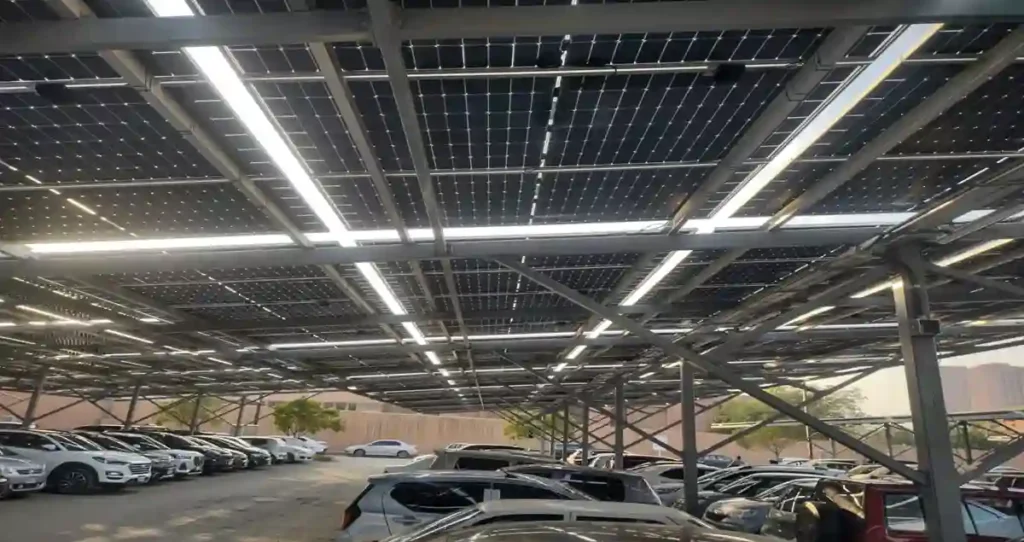
Bifacial solar panels generate energy from both sides and can increase output by 15–25% in reflective environments such as school parking areas or light-colored rooftops.
TopCon bifacial solar panels are highly recommended for schools due to:
- Higher efficiency and lower degradation
- Full compliance with IEC and UL standards
- Long-term, reliable energy generation for decades
- Strong alignment with sustainability and STEM education goals
2. Solar Inverters: The Heart of Energy Conversion
The inverter converts DC electricity generated by solar panels into AC electricity usable by the school. Modern inverter choices can improve safety, monitoring, and cost efficiency:
- String Inverters vs. Microinverters:
- Microinverters: Safer for schools; reduce high-voltage DC risk and allow panel-level monitoring.
- String Inverters: Cost-effective for medium-sized installations; can pair with optimizers for partial shading mitigation.
- Hybrid Inverters:
- Integrate battery storage and grid management, enabling schools to store excess energy for evening or cloudy days.
- Support AI-driven energy dispatch for maximum cost savings and reliability.
- Recommended Codes: IEC 62109 (Safety), UL 1741 (Grid Compliance), IEEE 1547 (Interconnection Standards)
- Monitoring Capability:
- Real-time dashboards allow staff and students to track energy generation, promoting STEM learning and sustainability awareness.
- AI-enabled monitoring detects faults early, improves efficiency, and reduces O&M costs.
3. MC4 Connectors: Safe Electrical Connections
MC4 connectors are used to connect panels in series safely:
- Certified Connectors: Use connectors compliant with IEC 62852 to prevent accidental disconnections or electrical hazards.
- Weatherproofing: IP67-rated MC4 connectors resist dust and water ingress, crucial for outdoor school installations.
- Safety First: Ensure connectors are installed out of student reach and labeled properly.
4. Cable Trays, Wiring, SPD & Earthing: Organized and Safe Power Delivery
Proper cabling is a critical safety layer when installing solar panels for schools, especially because school campuses are sensitive environments with young and immature students. A well-designed cable management, surge protection, and earthing system ensures electricity flows safely from the solar panels to the inverter while minimizing electrical hazards.
Key elements schools must prioritize:
Cable Trays: Physical Protection and Organization
- Use non-conductive, UV-resistant cable trays to prevent electrical shock and insulation damage.
- Trays should be fully enclosed or covered in areas accessible to students.
- All trays must be securely fixed and routed along walls or rooftops, never left exposed or hanging.
This prevents accidental contact, tampering, or mechanical damage over the system’s lifetime.
5. Mounting Systems: Stability and Security
The mounting structure supports the panels and ensures long-term stability:
- Material Quality: Aluminum or stainless steel with anti-corrosion coatings ensures longevity.
- Wind & Load Ratings: Mounting systems should be engineered to handle local wind speeds, snow loads, and seismic conditions.
- Safety Considerations: Avoid sharp edges and ensure proper height and fencing around rooftop access areas.
6. Prioritizing Safety and Standards in Sensitive Locations
Schools, especially those with young children, require extra attention to safety:
- Panels and inverters should be certified and insulated to prevent electric shock.
- Wiring must be enclosed in protected trays to avoid accidental contact.
- Components should be mounted securely with proper fasteners, anti-theft measures, and edge protection.
- Safety signage and restricted access zones around solar arrays can prevent student injuries.
Basic installer safety checklist (essential):
- Use licensed or certified solar installers familiar with school environments.
- Verify compliance with local electrical and building codes.
- Ensure proper earthing and surge protection are installed.
- Conduct final safety testing and commissioning before handover.
Investing in high-quality, standard-compliant components and qualified installation not only ensures safety in sensitive school locations but also improves system reliability, longevity, and overall ROI.
How AI Optimizes Solar Panels for Schools
Solar panels for schools become far more effective when integrated with artificial intelligence. AI transforms solar power from a passive energy source into an intelligent cost-optimization tool, making solar panels on schools not only a sustainable investment but also a financial and operational advantage.
Predictive Energy Management
AI forecasts solar generation, weather patterns, and school energy demand in advance. By optimizing how solar panels on schools generate and store energy, AI ensures that electricity is used, stored, or exported at the most cost-effective time, maximizing savings and ROI.
Peak Shaving and Cost Control
When schools or connected facilities experience high energy demand, AI-enabled solar panels for schools can inject stored energy from batteries to prevent peak demand spikes. This reduces utility costs without compromising energy availability for classrooms or administrative areas.
Smart Energy Dispatch
AI continuously manages solar panels on schools, deciding whether the energy should be consumed on-site, stored in battery systems, or exported to the grid. By prioritizing solar energy usage efficiently, schools reduce wastage and improve overall system efficiency.
Production Stability
By balancing energy inputs from solar panels on schools, battery storage, and grid connections, AI maintains a stable power supply. This prevents fluctuations that could disrupt school operations or sensitive electronic equipment.
Long-Term ROI Improvement
AI monitors solar panels in schools for inefficiencies and potential faults. Predictive maintenance ensures issues are addressed before they affect performance. This reduces energy waste, extends system lifespan, and accelerates ROI, making solar panels on schools a truly sustainable financial and environmental investment.
Bottom Line
AI-enabled solar panels for schools optimize energy usage, lower costs, enhance operational reliability, and turn surplus solar energy into a valuable asset for schools, students, and the surrounding community.
AI-Driven Cost Optimization: Technical Comparison
To clearly understand how AI improves solar system performance, it helps to compare a standard solar installation with an AI-enabled solar system.
| Feature | Standard Solar System | AI-Enabled Solar System |
|---|---|---|
| Maintenance Approach | Reactive (issues fixed after failure) | Predictive (issues identified up to 7 days in advance) |
| Energy Yield | Fixed and non-optimized | Up to 25% higher through smart dispatch |
| O&M Costs | High (manual checks and emergency repairs) | Up to 30% lower due to proactive maintenance |
| Fault Detection | Manual inspections | ~95% accuracy with real-time alerts |
| Energy Waste | High (unused or poorly timed generation) | Minimal (optimized battery use and grid export) |
Key takeaway:
AI transforms solar systems from static infrastructure into self-optimizing energy assets, reducing operational costs, improving reliability, and maximizing usable energy over the system’s lifetime.
FAQs: Solar Panels for Schools
Why are solar panels considered a smart investment?
Solar panels in schools provide energy independence while lowering electricity bills. They align with school schedules, producing power during daytime hours when classrooms are occupied, and promote sustainability and real-world STEM learning.
Are solar panels in schools safe for students?
Yes. When installed properly, solar panels in schools use certified panels, inverters, MC4 connectors, and cable trays with proper earthing and surge protection. Components are mounted securely, with restricted access zones to ensure student safety.
How are solar panels in schools installed?
Installation begins with a feasibility study and selecting a qualified EPC partner. Panels, inverters, and wiring are integrated with the school’s electrical system while maintaining safety standards and minimal disruption to classes.
How can schools maintain solar panels for long-term efficiency?
Routine maintenance ensures longevity. Schools should clean panels with soft brushes and safe solutions, inspect inverters, wiring, and connectors, and monitor energy output. This ensures optimal performance and maximizes the solar panel cost & ROI for schools.
Can schools monitor energy production from solar panels?
Yes. Energy dashboards allow students and staff to track real-time energy generation. Solar panels in schools become both an educational tool and a financial asset.
What happens to excess solar energy in schools?
Excess energy can be stored in batteries or exported to the grid, ensuring minimal energy waste. Smart management of solar panels in schools maximizes cost savings and ROI.
How do solar panels in schools benefit the environment?
Solar panels in schools reduce carbon footprint and promote renewable energy awareness. They help schools demonstrate environmental leadership to students and the local community.
What key components should schools consider when buying solar panels?
Important components include solar panels, solar inverters, MC4 connectors, cable trays, and mounting systems. All materials should meet international safety standards and be installed by certified professionals.
How can schools ensure the longevity of their solar system?
By following maintenance schedules, cleaning panels safely, inspecting electrical connections, and monitoring performance, solar panels on schools can operate efficiently for decades, providing maximum financial and environmental returns.
Can AI enhance the efficiency of solar panels in schools?
Yes. AI predicts solar generation, optimizes energy dispatch, manages batteries, and detects system faults. Using AI, schools can maximize energy savings, reduce costs, and improve the solar panel cost & ROI for schools.
Are there financial incentives available for solar panels in schools?
Yes. Depending on the region, schools can benefit from government grants, tax credits, subsidies, and PPA models to lower upfront costs and improve ROI for solar panels in schools.
Can solar panels in schools serve as a teaching tool?
Absolutely. Students can monitor energy production, learn about renewable energy, and understand sustainability practices firsthand, integrating STEM education into everyday learning.