
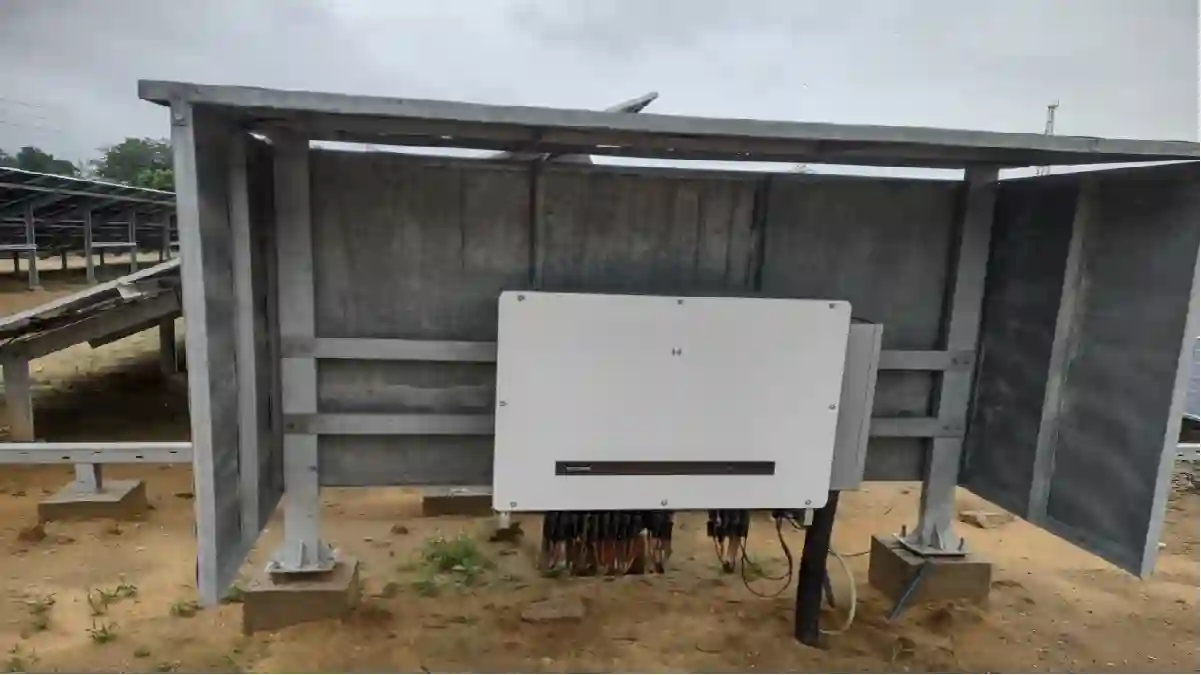
Master global energy transitions with Engr. Syed Farrukh Anwar’s 2026 Solar Inverter Guide. Compare Hybrid & AI tech to maximize ROI from the USA to Asia & EMEA.
A solar inverter is the core component of a solar power system. Solar panels produce direct current (DC) electricity, while homes, businesses, and industries use alternating current (AC). The inverter converts DC to AC and also controls power flow, ensures system safety, and optimizes energy use.
Modern solar inverters do more than conversion; they monitor performance, protect equipment, and help reduce electricity costs by balancing solar power, batteries, and grid supply. Some advanced models now integrate Solar AI, which predicts energy generation, optimizes battery use, and adjusts system performance in real time for maximum efficiency
Having designed more than a hundred solar systems for homes and businesses, I’ve seen firsthand how selecting the right inverter can make a huge difference in performance and savings. In the next section, we’ll discuss how to choose the best solar inverter for your specific needs, whether it’s for a small home, a commercial office, or a large industrial facility.

What Is a Solar Inverter and How It Works
A solar inverter is an electronic device that converts the direct current (DC) electricity generated by solar panels into alternating current (AC) electricity, which can be used by homes, businesses, or fed into the industrial grid. Beyond simple conversion, modern solar inverters also manage energy flow, protect connected equipment, and optimize overall system performance.
Think of it as the brain of a solar power system: it decides how power is distributed between appliances, batteries, and the grid to ensure maximum efficiency and cost savings.
Main Circuit Blocks of a Solar Inverter
A solar inverter consists of several essential blocks, each performing a critical function:
- DC to AC Converter (Inversion Stage)
- This is the heart of the inverter. It uses high-speed electronic switches such as MOSFETs or IGBTs to convert DC into stable AC power.
- Modern inverters generate a pure sine wave, which is safe for sensitive appliances.
- Charger Circuit
- Found in hybrid and off-grid inverters, this block manages battery charging.
- It prevents overcharging, deep discharge, and ensures longer battery life.
- Controller Section
- Acts as the inverter’s brain, managing voltage, frequency, and power flow.
- Advanced charge controllers include MPPT (Maximum Power Point Tracking) to maximize energy extraction from solar panels.
- Protection and Safety Components
- Includes fuses, surge protectors, thermal sensors, and polarity guards.
- Prevents short circuits, overloads, and overheating for safe operation.
- Display & Communication Module
- Provides real-time monitoring via LCD or mobile apps.
- Modern models with Solar AI can analyze system performance, predict energy generation, and optimize usage automatically.
Together, these blocks make the inverter more than a simple converter—it becomes a smart energy manager for homes, businesses, and industries.
EMI & EMC Considerations in Modern Solar Inverters
Modern solar inverters use high-speed PWM switching (20 kHz–100 kHz) to convert DC power into AC. This rapid switching creates high-frequency noise due to fast voltage and current changes (dV/dt and dI/dt), which can cause electromagnetic interference (EMI) if not properly controlled.
EMI appears in two forms: conducted noise, which travels through AC and DC wiring, and radiated noise, which leaks into the surrounding environment from cables and inverter enclosures. Poor EMI control may affect Wi-Fi routers, smart meters, monitoring systems, and other sensitive electronics.
High-quality inverters are designed with built-in EMI filters, common-mode chokes, proper shielding, and grounding points to meet international EMC standards. Proper installation, earthing, and cable management are equally important to maintain system stability and prevent interference.
Key takeaway: Good EMI and EMC design ensures reliable inverter operation, accurate monitoring, grid compliance, and interference-free performance in modern homes and commercial systems.
Types of Solar Inverters and Their Applications
Choosing the right type of solar inverter is essential for ensuring efficiency, safety, and reliability in your solar energy system. Different inverters are better suited for homes, businesses, and industrial grids, depending on system size, complexity, and power requirements.
1. String Inverter
Other names: Solar string inverter, central solar inverter, residential solar inverter, commercial string inverter
Applications:
- Homes: Perfect for small to medium rooftop installations with uniform sunlight.
- Small commercial setups: Offices, retail stores, and small workshops with single or double-story buildings.
- Industrial: Light industrial operations with moderate power needs and relatively uniform solar exposure.
Pros:
- Cost-effective and straightforward to install
- Reliable for consistent sunlight conditions
Cons:
- Entire string output drops if one panel is shaded or underperforms
- Less ideal for complex, multi-directional roof layouts
- No Native Storage: Cannot integrate a battery directly. To add storage later, you would need to buy a separate “AC-coupled” battery inverter, increasing costs and complexity compared to a Hybrid system.
2. Microinverter
Other names: Panel-level inverter, smart solar microinverter
Applications:
- Homes: Best for rooftops with shading issues or multiple roof directions.
- Small commercial buildings: Offices or retail spaces with uneven sunlight exposure.
- Industrial: Can be used on industrial rooftops where partial shading occurs due to HVAC units or machinery.
Pros:
- Maximum energy extraction per panel
- Panel-level monitoring
- Eliminates single-point failure issues
Cons:
- Higher initial cost
- Slightly more complex installation
3. Power Optimizer
Other names: Panel-level optimizer, solar efficiency optimizer
Applications:
- Homes and businesses: Rooftops with partial shading, architectural obstructions, or varying angles.
- Industrial: Large-scale factories with multiple roof orientations and shading from nearby structures.
Pros:
- Improves the performance of string inverters under shaded or mixed conditions
- Reduces energy losses
Cons:
- Extra cost for hardware
- Requires a compatible string inverter
4. Hybrid Inverter
Other names: Battery-ready inverter, smart hybrid solar inverter, on-grid/off-grid hybrid inverter
Applications:
- Homes: For energy independence with battery storage, night-time usage, and backup during outages.
- Businesses: Offices, shops, or restaurants where backup power is critical to maintain operations.
- Small industrial setups: Light industrial operations needing continuity of essential machinery during outages.
Pros:
- Combines solar, battery, and grid energy efficiently
- Optimizes self-consumption
- Supports energy storage for future expansions
Cons:
- Higher upfront cost
- Complex installation and maintenance
5. Off-Grid Inverter
Other names: Standalone solar inverter, independent power system inverter
Applications:
- Homes: Off-grid living, Remote locations without grid access or unreliable grids.
- Commercial: Small remote offices, shops, or resorts relying fully on solar energy.
- Industrial: Mining camps, rural factories, or agricultural setups not connected to the main grid.
Pros:
- Complete energy independence
- Fully battery-backed systems
Cons:
- Requires precise battery and solar sizing
- No grid support for excess energy
6. Grid-Tie Inverter
Other names: Net metering inverter, utility interactive inverter, on-grid solar inverter
Applications:
- Homes: Export excess electricity to the grid and earn credits.
- Businesses: Offices, retail chains, or commercial complexes seeking reduced electricity bills and net metering benefits.
- Industries: Factories or warehouses generating large-scale solar power with grid integration for cost savings.
Pros:
- Efficiently reduces electricity bills
- Minimal battery requirements
Cons:
- Stops supplying during grid outages unless paired with batteries
- Dependent on net metering policies
7. Battery-Based Inverter
Other names: Energy storage inverter, solar battery inverter, LiFePO4-compatible inverter
Applications:
- Homes: Backup power during outages or nighttime solar usage.
- Businesses: Critical offices or retail spaces where power interruptions affect operations.
- Industries: Industrial operations that cannot tolerate downtime, such as manufacturing or cold storage units.
Pros:
- Continuous power supply
- Works with hybrid or off-grid setups
Cons:
- Higher upfront cost due to battery integration
- Requires proper battery management
8. Three-Phase Inverter
Other names: Industrial solar inverter, high-capacity solar inverter, factory solar inverter
Applications:
- Commercial: Large office buildings, malls, and hospitals require high capacity and a stable energy supply.
- Industrial: Manufacturing plants, large warehouses, factories, and industrial complexes with heavy machinery and continuous power needs.
- Industry Note: For high-capacity irrigation or water management, see our [Solar Water Pump Guide 2026: Best Types & Selection]
- Utilities / Microgrids: Solar farms or industrial microgrids requiring grid stability and efficient high-capacity conversion.
Pros:
- High capacity for large systems (50 kW–500 kW+)
- Stable and efficient for industrial loads
- Reduces energy losses over long distances
Cons:
- Complex installation requiring professional design
- Higher upfront investment
Quick Review Table: Types of Solar Inverters and Their Applications
| Inverter Type | Other Names | Applications (Home, Business, Industrial) | Quick Overview |
|---|---|---|---|
| String Inverter | Solar string inverter, central solar inverter, residential solar inverter, commercial string inverter | Homes: small to medium rooftops Businesses: offices, retail stores Industries: light industrial operations | Converts multiple solar panels in a series to AC. Best for uniform sunlight exposure. Reliable and cost-effective for most setups. |
| Microinverter | Panel-level inverter, smart solar microinverter | Homes: shaded or multi-directional roofs, Businesses: offices with uneven sunlight, Industries: rooftops with partial shading | Installed on each panel individually. Optimizes performance panel-by-panel, perfect for shaded or complex rooftops. |
| Power Optimizer | Panel-level optimizer, solar efficiency optimizer | Homes & Businesses: shaded/multi-angle rooftops, Industries: multiple roof orientations, shading from structures | Works with string inverters to maximize energy output from each panel. Ideal for partial shading situations. |
| Hybrid Inverter | Battery-ready inverter, smart hybrid solar inverter, on-grid/off-grid hybrid inverter | Homes: energy independence, battery storage. Businesses: backup critical offices, shops, Small industries: essential machinery continuity | Combines solar conversion, battery management, and grid interaction. Provides backup during outages and smarter energy management. |
| Off-Grid Inverter | Standalone solar inverter, independent power system inverter | Homes: remote locations, Businesses: small remote offices or shops, Industries: mining camps, rural factories, farms | Works independently from the grid. Stores excess solar energy in batteries for night use or remote areas. |
| Grid-Tie Inverter | Net metering inverter, utility interactive inverter, on-grid solar inverter | Homes: export excess energy to the grid. Businesses: offices, commercial complexes. Industries: factories with grid integration | Connects directly to the grid. Excess solar power is sent to the utility for credits. Efficient for areas with net metering. |
| Battery-Based Inverter | Energy storage inverter, solar battery inverter, LiFePO4-compatible inverter | Homes: backup or night-time solar usage, Businesses: critical offices or retail, Industries: manufacturing or cold storage requiring continuous power | Works with batteries to store solar energy. Provides power when solar isn’t available and ensures continuous operation. |
| Three-Phase Inverter | Industrial solar inverter, high-capacity solar inverter, factory solar inverter | Commercial: large offices, malls, hospitals. Industries: manufacturing plants, warehouses, and factories.Utilities/Microgrids: solar farms or industrial microgrids | Designed for high-capacity systems. Supports heavy loads and industrial equipment, perfect for large commercial and industrial setups. |
Smart & AI-Optimized Inverters: The 2026 Efficiency Standard
Modern inverters have evolved from simple converters into “Energy Orchestrators.” By integrating Solar AI, these systems no longer just react to the sun—they anticipate it.
- Predictive Generation: AI analyzes weather forecasts to decide when to fast-charge batteries before a storm or cloudy period.
- Dynamic Load Balancing: The inverter learns your household or industrial patterns, shifting heavy loads (like HVAC or machinery) to coincide with peak solar production.
- Health Diagnostics: AI detects “arc faults” or panel degradation before they become fire hazards, sending real-time alerts to your smartphone.
- Grid Arbitrage: In regions with time-of-use pricing, the inverter automatically sells power back to the grid when prices are highest and switches to battery when rates spike.

Engineer’s Insight: If you are looking to maximize ROI, choosing an AI-enabled inverter can reduce your payback period by up to 15% through smarter energy management. Learn more in our guide: [Solar AI: Lower Your Monthly Electricity Bills Effortlessly].
How to Select the Best Solar Inverter: A Step-by-Step Guide

Choosing the right solar inverter is crucial for efficient energy conversion, appliance protection, and maximizing savings. Before selecting an inverter, it’s important to consider your energy needs, installation space, and system type for your home, business, or industrial facility.
Having designed over 100 solar systems, I can help you select an inverter that is reliable, efficient, and compliant with local regulations.
1. Assess Your Available Space
Before even thinking about inverter type, determine how much roof or land space you have for solar panels. The inverter you choose must match the size and capacity of your solar array.
- Small rooftops: A string inverter or microinverter may be ideal.
- Large commercial areas: A hybrid, three-phase, or central inverter is better suited.
Expert Advice: Take accurate measurements of your installation area and check for shading, roof angle, and orientation, as these affect inverter selection and energy output.
2. Determine Your Energy Requirement
Understand how much electricity you need daily.
- Homes: Calculate the total load of lighting, appliances, ACs, and electronics.
- Businesses: Include office equipment, computers, lighting, and machinery.
- Industries: Consider large motors, pumps, HVAC, and continuous operations.
Expert Advice: Always plan for peak consumption to avoid undersizing the inverter. Oversizing slightly (10–15%) is usually recommended to handle load spikes and future expansions.
3. Decide on Net Metering or Backup Needs
Your system design may depend on whether you want:
- Net metering: Export excess energy to the grid and get credits.
- Backup power: Store energy in batteries for nighttime use or outages. Requires a hybrid or battery-based inverter.
Expert Advice: Clearly define whether you want energy independence, cost savings, or both, as this affects the inverter choice.
4. Check Your Electrical Connection and Safety
Before purchasing an inverter, you must identify your property’s existing electrical infrastructure. Using an incompatible inverter can lead to grid-connection rejection or system failure.
- Single-Phase vs. Three-Phase: * Single-Phase: Standard for most residential homes. Look for a single main breaker in your distribution board.
- Three-Phase: Common in large villas, commercial offices, and industrial plants. You will see three interconnected breakers.
- Note: A three-phase property can technically use a single-phase inverter (on one phase), but for systems above 10kW, a three-phase inverter is mandatory to maintain phase balance.
- Voltage Standards: Ensure the inverter matches your local grid voltage (e.g., 230V for Pakistan/UAE or 120V/240V split-phase for the USA).
- Earthing & Grounding: This is non-negotiable. Every inverter must be connected to a dedicated earthing pit with a resistance of less than 5 ohms to protect against leakage and lightning.
- Surge Protection: Modern high-quality inverters should include built-in Type II Surge Protection Devices (SPDs) on both the DC and AC sides to guard against atmospheric electrical surges.
Engineer’s Insight: Messy wiring and poor earthing are the #1 causes of solar fires. Always verify that your installer uses UV-rated DC cables and ensures all connections are torqued to the manufacturer’s specifications.
5. Check Input and Output Ratio
The input-output ratio is the relationship between your solar panel’s power and the inverter’s capacity.
- Why it matters:
- Prevents overload and energy loss.
- Protects your inverter and appliances.
- Tip: Input power should be slightly higher than the inverter’s output — around 10–20% extra — to handle very sunny days efficiently.
6. Understand Your Solar Zone and Location Conditions
The inverter must suit your geographic area, climate, and solar intensity:
- High temperatures require inverters with good thermal management.
- Humid or dusty areas may need protective enclosures.
- Areas with partial shading benefit from microinverters or power optimizers.
Expert Advice: Always consider local weather patterns and environmental conditions before selecting the inverter.
7. Match the Inverter with Your Solar Panels
Your inverter should be compatible with your solar panels in terms of voltage, current, and capacity:
- Ensure the input voltage range matches the voltage of your solar array.
- The inverter’s output capacity must cover your total load plus some margin for efficiency losses.
- For multiple panels or arrays, consider whether a string inverter, hybrid, or three-phase inverter fits best.
8. Evaluate Smart Features and Monitoring Options
Modern solar inverters come with advanced features like:
- Wi-Fi or IoT connectivity: Monitor system performance from your phone.
- Solar AI optimization: Adjusts battery usage and power flow automatically.
- Remote firmware updates: Keep your system efficient without manual intervention.
Expert Advice: Invest in smart inverters for homes, businesses, or industries to stay informed, improve efficiency, and avoid unexpected downtime.
9. Check Manufacturer Reliability and Warranty
A solar inverter is a long-term investment. Choose a reputable brand with strong after-sales support:
- Standard warranty is usually 5–10 years, with some models offering extended warranties up to 15 years.
- Reliable service centers and prompt support reduce system downtime.
10. Factor in Future Expansion
When designing your system, consider whether you may expand your solar setup later:
- A slightly higher capacity inverter allows for additional panels or batteries.
- Some hybrid inverters support multi-battery integration for future storage upgrades.
Expert Advice: When planning for expansion, it’s often more cost-effective to purchase a [Solar Panels Kit] that includes the mounting hardware and wiring needed to scale your 8 kW or 10 kW system without compatibility headaches
11. Approvals and Documentation Requirements
Before installing a solar inverter, you must comply with local regulations and utility requirements. This ensures your system is legal, safe, and eligible for incentives such as net metering.
Key approvals and documents typically required:
- Utility approval/grid connection consent: Most areas require your energy provider to approve the inverter type and system size before connection.
- Net metering application: If you plan to export surplus energy to the grid, submit the necessary forms for net metering registration.
- Electrical inspection report: Some local authorities may require a certified electrician to inspect wiring, connections, and grounding.
- Solar installation plan: Includes inverter specifications, panel layout, and safety measures.
- Warranty and compliance certificates: Ensure your inverter meets national and international safety standards (e.g., IEC, UL, CE).
Expert Advice: Keep all documents on hand. Some utility companies may need them during inspections, and they are required for insurance and warranty claims.
12. Consult a Professional Designer
Based on my experience designing over 100 solar systems for homes and businesses, a tailored approach is always best. Professionals can evaluate:
- Load requirements and peak demands
- Roof conditions, shading, and panel layout
- Battery sizing and backup needs
- Net metering compatibility and grid integration
Expert Advice: A professional assessment ensures you choose the perfect inverter for efficiency, safety, and long-term savings.
Checklist for Selecting the Perfect Solar Inverter
Choosing the right solar inverter involves more than picking a brand or model. Use this checklist to ensure your system is safe, efficient, and future-ready for your home, business, or industrial facility
| Step / Factor | What to Check | Expert Advice / Recommendation |
|---|---|---|
| 1. Available Space | Roof or land area, shading, orientation, tilt | Small rooftops → string/microinverter. Large areas → hybrid/three-phase/central inverter. Measure carefully. |
| 2. Energy Requirement | Daily electricity usage (home, business, industrial) | Plan for peak consumption. Oversize inverter by 10–15% for load spikes and future expansion. |
| 3. Net Metering / Backup Needs | Export to grid or store in battery | Net metering → grid-tied inverter. Backup → hybrid/battery inverter. Define priorities: energy independence or cost savings. |
| 4. Electrical Connection & Safety | Single-phase or three-phase; voltage standard; earthing/grounding; lightning arrest | Single-phase → small/medium systems. Three-phase → industrial/high-load. Ensure proper grounding, lightning protection, breakers, and fuses. |
| 5. Input-Output Ratio | Solar panel input vs inverter output | Input slightly higher than output (10–20%) to handle sunny days efficiently. Protects equipment from overload. |
| 6. Location & Climate | Temperature, humidity, dust, partial shading | High temp → thermal management. Dust/humidity → protective enclosure. Shading → microinverters or power optimizers. |
| 7. Compatibility with Solar Panels | Voltage, current, capacity | Ensure inverter matches panel specs. Choose string, hybrid, or three-phase depending on panel layout and total capacity. |
| 8. Smart Features & Monitoring | IoT connectivity, Solar AI, remote updates | Smart inverters improve efficiency, reduce downtime, and provide real-time monitoring. |
| 9. Manufacturer & Warranty | Brand reputation, warranty length | Standard 5–10 years; some models up to 15 years. Reliable support reduces downtime. |
| 10. Future Expansion | Potential system growth | Slightly higher capacity inverter or hybrid with multi-battery support avoids costly upgrades later. |
| 11. Professional Consultation | Tailored design based on load, roof, backup, net metering | Professional assessment ensures efficiency, safety, and maximum long-term savings. |
Conclusion
Selecting the right solar inverter is more than just picking a device—it’s about designing a reliable, efficient, and future-ready solar energy system. By considering your space, load, connection type, location, and backup needs, and combining these with smart features and professional guidance, you can maximize savings and ensure uninterrupted power for your home, business, or industry.
“A carefully chosen solar inverter doesn’t just convert energy—it empowers you to generate, store, and use solar power smarter and more efficiently.”
Designing a 10 kW Solar System Using the Same Inverter Across Countries
Using a single 10 kW inverter simplifies installation and reduces complexity, but the system design, particularly the number of panels, panel arrangement, and energy optimization, must be tailored to each country’s climate, solar irradiance, and regulations.
1. System Basics
- Target System Size: 10 kW
- Panel Rating: 500 W per panel (monocrystalline)
- Initial Panel Count: 10,000 W ÷ 500 W = 20 panels
- Inverter: 10 kW grid-tied / net metering compatible
Formula for panel count:
Number of Panels = System Size (W) ÷ Panel Wattage (W)
- Note: Extra panels are added to compensate for climate, shading, and efficiency losses.
2. Energy Production Formula
Daily Energy Output (kWh) = System Size (kW) × Peak Sun Hours × System Efficiency
Where:
- System Efficiency: Typically 80–85% (accounts for inverter losses, wiring, temperature, dust, shading)
- Peak Sun Hours (PSH): Average number of equivalent full-sun hours per day
Monthly & Annual Output:
- Monthly: Daily Output × 30
- Annual: Daily Output × 365
3. Pakistan (High Sun, Moderate Losses)
- Peak Sun Hours (PSH): ~5.5 h/day
- Efficiency: 82%
- Daily Output: 10 × 5.5 × 0.82 ≈ 45 kWh/day
- Annual Output: 45 × 365 ≈ 16,425 kWh/year
To compensate for partial shading or rooftop angle, add 2 extra panels: 22 panels total
4. UAE (Desert, Heat & Dust Losses)
- Peak Sun Hours (PSH): ~6 h/day
- Efficiency: 80% (heat & dust reduce performance)
- Daily Output: 10 × 6 × 0.80 ≈ 48 kWh/day
- Annual Output: 48 × 365 ≈ 17,520 kWh/year
Add 2–3 extra panels to offset midday heat losses and dust accumulation: 22–23 panels total
5. USA (Varied by Region)
- Southwest (AZ, CA, TX):
- PSH: 6 h/day, Efficiency: 82%
- Daily Output: 10 × 6 × 0.82 ≈ 49 kWh/day
- Annual Output: 49 × 365 ≈ 17,885 kWh/year
- Midwest / Mid-Atlantic:
- PSH: 4.5 h/day, Efficiency: 80%
- Daily Output: 10 × 4.5 × 0.80 ≈ 36 kWh/day
- Annual Output: 36 × 365 ≈ 13,140 kWh/year
- Northeast / Northwest:
- PSH: 3.5 h/day, Efficiency: 78%
- Daily Output: 10 × 3.5 × 0.78 ≈ 27 kWh/day
- Annual Output: 27 × 365 ≈ 9,855 kWh/year
Extra panels:
- Southwest: 20–21 panels (minimal extra)
- Midwest: 2–3 extra panels → 22–23 panels
- Northeast: 4–5 extra panels → 24–25 panels
Inverter Clipping Reminder
When extra panels are added to optimize generation:
- Clipping occurs during peak sun, usually around noon.
- Impact is minimal because extra panels increase energy capture in the morning and late afternoon, improving overall daily generation.
6. Quick Comparison Table
| Country / Region | PSH (h/day) | Efficiency | Daily Output (kWh) | Annual Output (kWh) | Panels Required |
|---|---|---|---|---|---|
| Pakistan | 5.5 | 82% | 45 | 16,425 | 22 |
| UAE | 6 | 80% | 48 | 17,520 | 22–23 |
| USA – Southwest | 6 | 82% | 49 | 17,885 | 20–21 |
| USA – Midwest | 4.5 | 80% | 36 | 13,140 | 22–23 |
| USA – Northeast | 3.5 | 78% | 27 | 9,855 | 24–25 |
7. Summary
The 10 kW inverter stays the same, but to get optimal performance in Pakistan, UAE, and USA, the number of panels, layout, and configuration are adjusted based on local climate, PSH, and rules. This approach maximizes energy output, ensures safety, and simplifies maintenance with a uniform inverter model.
Solar Inverter Maintenance & Efficiency Checklist
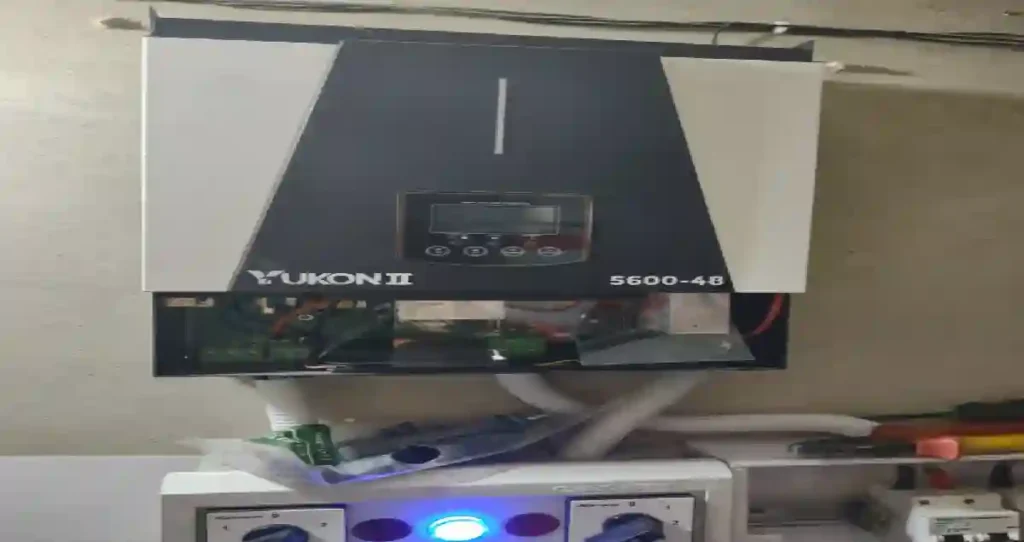
- Regular cleaning of solar panels to remove dust, bird droppings, and debris
- Monitor inverter performance via display or app regularly
- Anti-Dust Kit Service: Inspect the removable dust filters every 1–3 months. A clean filter can improve cooling efficiency by up to 15%, preventing the inverter from ‘derating’ (reducing power output) during peak summer heat
- Check MC4 connectors for tightness, corrosion, or damage
- Inspect cables and wiring for wear, fraying, or overheating
- Ensure battery connections (for hybrid/off-grid systems) are secure
- Verify ventilation and cooling to prevent overheating
- Check fuses and circuit breakers for proper functioning
- Update firmware/software for smart or AI-optimized inverters
- Inspect protective enclosures for water, dust, or insect intrusion
- Record performance logs to detect drops in efficiency early
- Schedule a professional inspection annually for safety and compliance
Solar Inverter Error Codes: Troubleshooting Guide
Modern inverters display Fault or Warning codes to protect the system. Understanding them helps identify minor issues versus those needing professional support.
| Error / Code | Cause | Action |
|---|---|---|
| Grid Lost | Power outage / tripped AC breaker | Check the main board; the inverter restarts automatically |
| Overload (F07 / 305) | Too many heavy appliances | Turn off some loads; the inverter resets automatically |
| Low Battery (F04 / 64) | Deep discharge / poor solar charging | Reduce load; the system recovers with the sun |
| Isolation Fault | Electrical leakage | Safety risk—turn off DC isolator, call technician |
| PV Overvoltage | DC input too high | Verify panel string configuration |
| Battery Open (F56) | Loose battery / blown fuse | Check connections, ensure breaker is ON |
| High Battery (F03) | Overcharged | Check battery type and charge settings |
| Over-Temperature | Poor ventilation/dust | Clean fans, ensure clearance around the unit |
Quick Fix Tips
- Soft Start: Turn on heavy loads one at a time, 15s apart
- Reset: AC OFF → DC OFF → wait 5 min → DC ON → AC ON
⚠️ High-Voltage Warning
Solar inverters can have 600–1000 V DC. Never touch terminals, open casing, or bypass protection. Persistent faults require a licensed technician.
FAQs: Solar Inverters
What is a solar inverter?
A solar inverter converts the DC electricity from solar panels into AC electricity for use in homes, businesses, or industry. Modern inverters also manage energy flow, protect appliances, and optimize system efficiency.
How do I choose the right solar inverter?
Consider your energy needs, roof/land space, net metering or backup requirements, electrical safety, panel compatibility, smart features, and warranty. Consulting a professional ensures safe and efficient installation.
What types of solar inverters are there?
Common types include: String, Microinverter, Power Optimizer, Hybrid, Off-Grid, Grid-Tie, Battery-Based, and Three-Phase. Each type is suited for different applications, from small homes to large industrial setups.
Can a solar inverter work during a blackout?
Only hybrid or battery-based inverters with proper storage can supply power during outages. Grid-tie inverters stop supplying power when the grid is down unless paired with batteries.
How often should I maintain my solar inverter?
Basic maintenance includes cleaning panels, checking cables and connectors, verifying ventilation, and monitoring performance. A professional inspection annually is recommended.
What does a high-voltage warning mean?
Solar inverters can have 600–1000 V DC. Never touch terminals, open casing, or bypass safety features. Persistent faults must be handled by a licensed technician.
What if my inverter shows a fault code?
Check the error code and follow recommended actions: reduce load for overload, verify battery connections for open battery, clean fans for over-temperature, or call a technician for isolation faults.