
The ultimate engineering guide to lithium ion battery for solar. Compare LiFePO4 vs NMC, calculate ROI, and optimize lifespan for home, farm, and off-grid
The answer for most homeowners, farmers, businesses, and off-grid setups worldwide is a lithium-ion battery for solar. But not all lithium batteries are the same, and the wrong choice can cost you years of performance and thousands in early replacement costs.
This guide covers everything — how lithium solar batteries work, the four main types, how they compare to lead-acid, how they fit into a complete solar system, real costs, and which option suits your specific situation. Whether you are powering a home in Europe, sizing a backup system in the US, managing load-shedding in South Asia, running an off-grid farm in Africa, or building a remote system in Southeast Asia or the Asia-Pacific region, this guide is written for you.
What Is a Lithium Ion Battery for Solar?
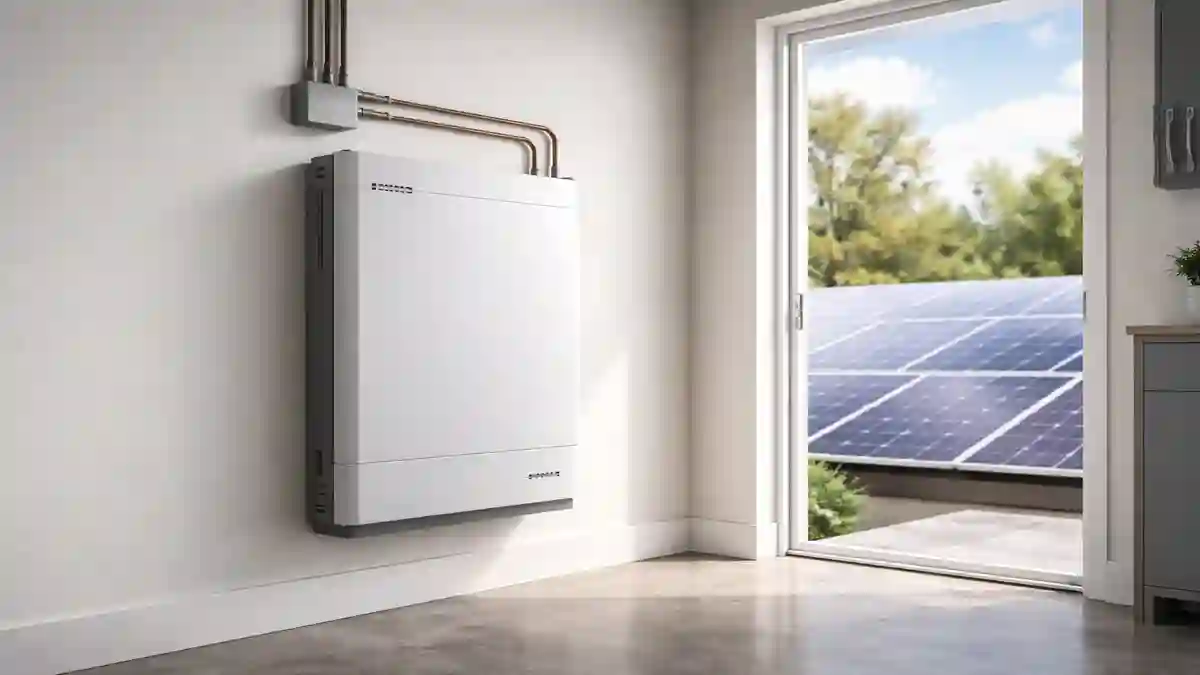
A lithium-ion battery for solar stores the electricity your solar panels generate during daylight hours so you can use it at night, on cloudy days, or when the grid goes down. Without storage, any solar energy you do not use in real time is either exported to the grid or wasted entirely.
Lithium solar batteries work by moving lithium ions between a positively charged cathode and a negatively charged anode through a liquid electrolyte. When your solar panels generate electricity via an MPPT charge controller, the battery absorbs and stores that energy as chemical potential. When you draw power, the reaction reverses, and electricity flows out.
Key Components Inside a Lithium Solar Battery
Every quality lithium solar battery contains four core components that determine its performance and safety:
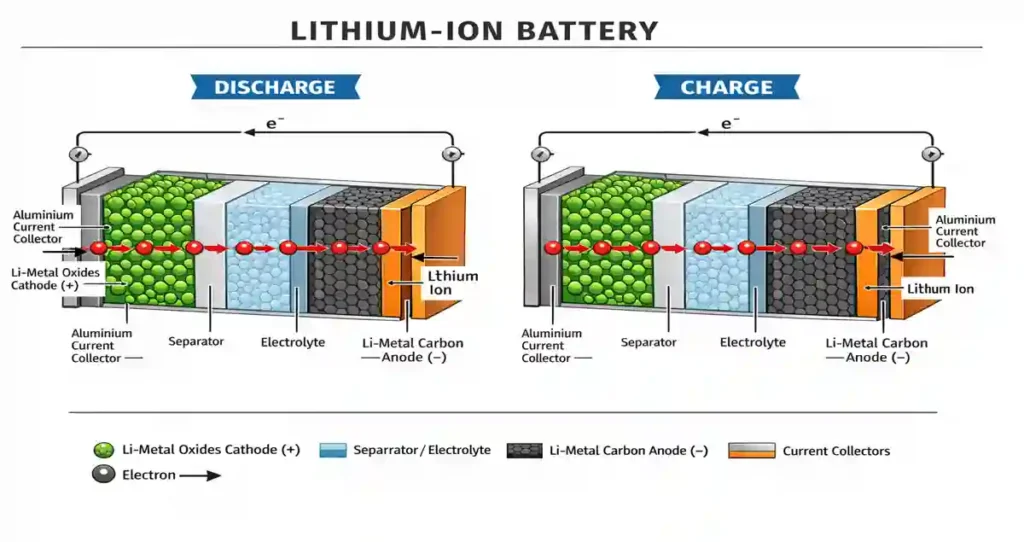
- Cathode — the positive electrode, which defines the battery chemistry (LiFePO4, NMC, NCA, or LTO)
- Anode — typically graphite, where lithium ions are stored during charging
- Electrolyte — the liquid medium through which ions travel between electrodes
- Battery Management System (BMS) — the brain of the battery that monitors temperature, voltage, state of charge, and protects cells from overcharging, over-discharging, and short circuits
The BMS is critical. A good BMS is what allows a lithium solar battery to work safely with your hybrid solar inverter and charge controller without risk of damage or fire. Always verify BMS compatibility before purchase.
Types of Lithium Ion Batteries for Solar Panels
There are four main lithium chemistries used in solar storage today. Understanding them is the single most important decision you will make when building or upgrading your solar system.
1. LiFePO4 (Lithium Iron Phosphate) — The Best Choice for Most Solar Setups
LiFePO4 is the industry standard for solar energy storage in 2026, and for good reason. Its iron-phosphate cathode structure is thermally and chemically stable, meaning it will not catch fire even under physical damage, overcharging, or extreme heat — a critical consideration for residential rooftop installations and off-grid living setups in hot climates.
- Cycle life: 3,000–10,000 cycles (10–15 years of daily use)
- Depth of Discharge (DoD): 80–100% safely usable
- Operating temperature: reliable from -20°C to 60°C — performs in cold European winters and hot desert climates equally
- Safety: no thermal runaway risk, cobalt-free, non-toxic materials
- Best for: homes, farms, off-grid systems, commercial solar, agricultural solar panels
The only real tradeoff is physical size — LiFePO4 is slightly bulkier than NMC for the same capacity. For fixed installations like home battery walls or ground-mounted commercial systems, this is rarely a concern.
Pro Tip — Ambient Temperature & Battery Lifespan
| Climate Zone | Temp Range | Regions | Risk to Battery | Engineer Recommendation |
| Optimal | 15°C – 25°C | Temperate Europe, US | Minimal — full rated cycle life | Standard install — no special precautions needed |
| Hot Climate | 25°C – 60°C | Middle East, South Asia, N. Africa, SE Asia | Every 10°C above 25°C accelerates cell ageing — up to 2–3 years lost lifespan | Install in a shaded, ventilated enclosure — never in direct sunlight or an unventilated rooftop cabinet |
| Extreme Heat | Above 60°C | Desert regions, direct solar exposure | BMS thermal cutoff triggers — system shuts down, cells may be permanently damaged | Active cooling or a climate-controlled enclosure is mandatory |
| Cold Climate | 0°C – -10°C | N. Europe, Canada, high-altitude installs | Reduced charge acceptance — slower charging, mild capacity loss over time | Install in an insulated, frost-protected enclosure — avoid charging below -10°C |
| Extreme Cold | Below -10°C | Scandinavia, Siberia, mountain regions | Lithium plating on anode — permanent capacity loss if charged repeatedly at this temperature | Heated battery enclosure required — do not charge until cell temp reaches 0°C minimum |
Optimal operating temperature for maximum LiFePO4 cycle life: 15°C – 25°C. Performance is rated to 60°C, but every degree above 25°C costs cycle life.
2. NMC (Nickel Manganese Cobalt)
NMC batteries store more energy per kilogram than LiFePO4, making them the preferred choice for electric vehicles and space-constrained wall-mounted residential systems. Brands like early Tesla Powerwall models used NMC chemistry.
- Cycle life: 800–2,500 cycles (2–7 years of daily use)
- Energy density: 20–30% higher than LiFePO4
- Safety: higher thermal runaway risk, requires precise BMS management
- Best for: compact city apartments, portable solar generators, temporary setups
For daily solar cycling — which is the reality for any home or off-grid system — NMC reaches its cycle limit significantly faster than LiFePO4. The energy density advantage rarely justifies the shorter lifespan in stationary solar applications.
3. NCA (Nickel Cobalt Aluminium)
NCA batteries offer very high energy density and are primarily used in high-performance electric vehicles. In the solar storage world, NCA is less common due to its higher cost and more complex thermal management requirements. It is not typically recommended for residential or agricultural solar applications.
4. LTO (Lithium Titanate)
LTO batteries have the longest cycle life of all — up to 25,000 cycles — and charge extremely fast even in sub-zero temperatures. However, their energy density is very low, and their cost is exceptionally high, making them a niche product used primarily in industrial solar storage, grid-scale BESS installations, and specialised cold-weather environments.
Which Type Should You Choose? (Comparison Table)
| Chemistry | Cycle Life | Safety | Cost | Best For |
| LiFePO4 | 3,000–10,000 | Excellent | Medium | Solar homes, farms, off-grid, commercial |
| NMC | 800–2,500 | Good | Medium-High | Compact installs, portables |
| NCA | 1,000–2,000 | Fair | High | High-performance EVs |
| LTO | 15,000–25,000 | Excellent | Very High | Industrial BESS, cold climates |
For 90%+ of solar applications globally — residential, agricultural, commercial, and off-grid — LiFePO4 is the recommended choice in 2026.
Can AI Optimize a Lithium Solar Battery System?
Yes — and this is one of the most significant developments in solar storage engineering in recent years. Modern Battery Management Systems (BMS) now integrate AI and machine learning algorithms to move well beyond simple over-charge and over-discharge protection.
Here is what AI-driven battery optimization actually does at an engineering level:
Predictive Charging — AI analyses historical solar generation data, weather forecasts, and household consumption patterns to pre-charge the battery before a cloudy period or peak demand window. Instead of reacting to conditions, the system anticipates them.
Dynamic DoD Management — Rather than applying a fixed 80% DoD limit, AI adjusts the usable depth of discharge in real time based on battery age, cell temperature, and cycle history — squeezing more usable energy out of the battery without accelerating degradation.
Cell Balancing Optimization — In a multi-cell LiFePO4 pack, AI monitors individual cell voltages and redistributes charge between cells to prevent weak cells from dragging down the whole pack — extending overall pack life by 10–15%.
Grid Arbitrage — Your solar battery does not have to sit idle during peak electricity price hours. AI grid arbitrage technology reads live tariff data and automatically discharges your battery when grid rates are highest — and recharges it when rates fall overnight. For households in time-of-use markets, this single feature alone can cut monthly electricity bills by $40–$120 depending on system size and local tariff structure.
Degradation Forecasting — AI models predict remaining battery life based on cycle count, temperature history, and charge patterns, alerting the owner before capacity drops below an acceptable threshold.
Engineer’s Note: AI optimization is not a replacement for correct hardware sizing and installation. A correctly sized LiFePO4 battery in a shaded ventilated enclosure with a compatible hybrid inverter will always outperform an undersized or thermally stressed system — regardless of how sophisticated the software is. Hardware first, software second.
Lithium Solar Battery vs Lead-Acid — The Real Difference
Many solar systems installed before 2020, especially in developing markets, still run on lead-acid batteries. The cost gap has narrowed significantly, and in most cases, lithium now offers better total value over 10 years.
| Factor | Lithium (LiFePO4) | Lead-Acid |
| Cycle Life | 3,000–10,000 | 300–1,000 |
| Usable Capacity | 80–100% DoD | 50% DoD max |
| Weight | Light (e.g., 10 kWh ≈ 100kg) | Very heavy (10 kWh 300 kg+) |
| Maintenance | Zero — sealed, BMS protected | Regular watering & checks |
| Efficiency | 95–99% round-trip | 70–85% round-trip |
| Lifespan | 10–15 years | 2–5 years |
| Upfront Cost | Higher | Lower |
| 10-Year Total Cost | Lower overall | Higher (3–5 replacements) |
The efficiency gap matters more than it sounds. A lead-acid battery at 80% round-trip efficiency loses 20% of every kWh your solar panels generate. Over a 10-year system life, that wasted energy adds up to thousands of kWh — energy your panels produced but your home never used.
How a Lithium Solar Battery Fits Into Your Complete Solar System
A lithium solar battery does not work in isolation. It is one component in a system, and how well it performs depends entirely on how well the other components are matched to it.
Solar panels generate DC electricity from sunlight. That electricity flows to an MPPT charge controller, which optimizes the voltage and current to charge the battery at maximum efficiency. The battery stores the energy. When you need power, a hybrid solar inverter converts the stored DC electricity into the AC power your home, farm, or business uses.
For larger commercial installations, agricultural solar setups, or grid-scale projects, multiple battery units are combined into a Battery Energy Storage System (BESS) — a complete storage infrastructure that can manage thousands of kWh, handle peak demand, and provide grid services.
One critical compatibility point: lithium batteries have a different charging profile from lead-acid. If you are upgrading an existing system, your inverter and charge controller must support lithium chemistry. Modern hybrid inverters handle this automatically, but older string inverters may need firmware updates or replacement.
For off-grid living setups in remote areas, the battery bank size determines how many days of autonomy you have without sun. A properly sized 10kW solar system paired with a 20–30kWh LiFePO4 battery bank can comfortably power a large family home, a small farm, or a school building with 2–3 days of storage even without any solar generation.
Real Cost & ROI of Lithium Solar Batteries in 2026
Lithium solar battery prices have dropped steadily — roughly 8–12% per year over the past five years — making 2026 one of the best years to invest in solar storage.
- Entry-level LiFePO4 home battery (5–10 kWh): $2,000–$5,000 USD installed
- Mid-range home storage system (10–20 kWh): $5,000–$12,000 USD installed
- Commercial or agricultural system (50–200 kWh): $25,000–$100,000+ USD
Cost per cycle is the number that actually matters. A $4,000 LiFePO4 battery with 6,000 cycles costs $0.67 per cycle. A $1,500 lead-acid battery with 600 cycles costs $2.50 per cycle — nearly four times more expensive per use.
The value of solar storage goes beyond the grid bill. In the US and Europe, lithium solar batteries are driven by energy independence, time-of-use tariff arbitrage, and net metering optimisation — homeowners charge batteries when electricity is cheap and discharge when rates peak. Across South Asia, Sub-Saharan Africa, Southeast Asia, and the Middle East, the driver is reliability — every hour of grid outage your battery covers is an hour your business keeps running, your solar water pump keeps working, and your solar refrigerator keeps your food safe. The engineering case for storage is universal; the economic case simply varies by market.
Who Needs a Lithium Ion Battery for Solar?
Homeowners & Residential Use
In the US and Europe, residential battery storage is increasingly driven by time-of-use electricity tariffs, net metering policies, and feed-in tariff optimisation — a well-sized LiFePO4 battery can reduce household electricity bills by 60–80% when paired with a smart hybrid inverter. For homes already running or planning a solar home appliances setup — including solar air conditioners, solar refrigerators, and general household loads — a LiFePO4 battery bank ensures you use more of the energy your panels produce. The typical residential system ranges from 5–20 kWh, depending on household consumption and grid reliability.
Off-Grid & Remote Properties
Off-grid living with solar is now practical and affordable with LiFePO4 batteries. Remote homes, cabins, and island communities can design a complete system using bifacial solar panels for higher yield, an MPPT charge controller for maximum efficiency, a hybrid inverter, and a LiFePO4 battery bank sized to their load. For water access, a solar water pump running directly from the solar system during daylight can further reduce battery drain.
Agricultural & Commercial Applications
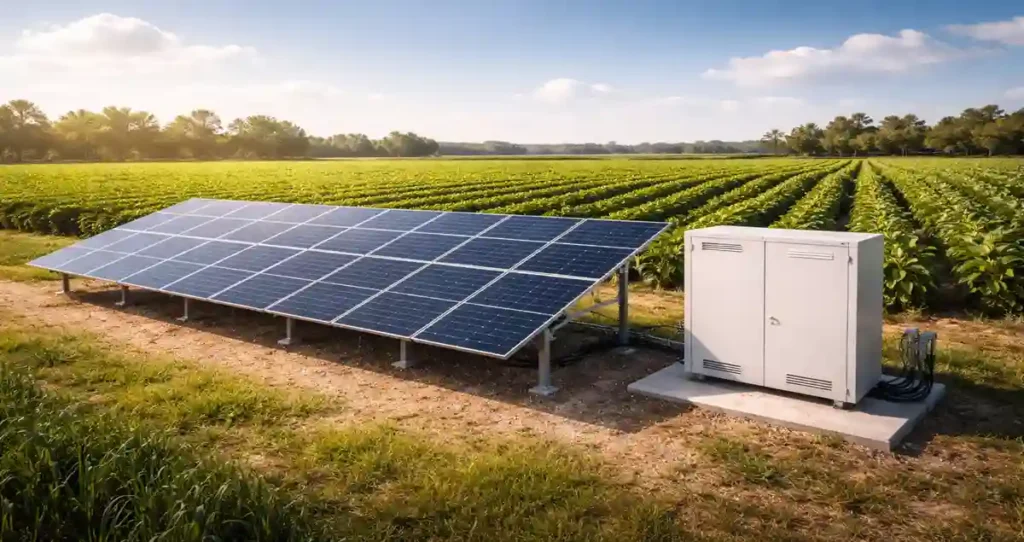
Farms, schools, and small businesses across every region benefit from solar storage. In Europe and North America, agricultural solar storage is increasingly used for precision irrigation control, cold chain management, and reducing peak demand charges from grid operators. In regions with unreliable grid supply across Asia and Africa, the case is even more direct. Agricultural solar panels paired with a lithium battery bank can power irrigation pumps, cold storage, processing equipment, and lighting around the clock. School solar panels with battery backup ensure uninterrupted learning even during outages, which is a documented barrier to education in many developing regions.
For larger industrial solar panel deployments, BESS solutions using LiFePO4 cells are now cost-competitive with diesel backup generation — with zero fuel cost, zero emissions, and dramatically lower maintenance requirements.
The Bottom Line
A lithium ion battery for solar is no longer a luxury — in 2026, it is the foundation of any serious solar energy system. Whether you are powering a single home, a school, a farm, or a commercial facility, the combination of LiFePO4 chemistry, a quality hybrid inverter, and a properly sized solar array gives you clean, reliable, low-maintenance energy storage that pays for itself over a decade of daily use.
Start by calculating your daily energy consumption, then size your battery to cover 1–2 days of autonomy. Choose LiFePO4 for any fixed installation. Verify compatibility with your hybrid solar inverter and charge controller. And if you are scaling up to a commercial or agricultural system, explore BESS configurations that can be expanded as your energy needs grow.
The sun produces more energy every hour than humanity uses in a year. A lithium solar battery is how you capture your share of it.
Frequently Asked Questions
How long does a lithium ion battery for solar last?
A quality LiFePO4 battery used in daily solar cycling will last 10–15 years. Most manufacturers rate their batteries to 3,000–6,000 cycles at 80% depth of discharge. At one cycle per day, that is 8–16 years before the battery reaches 80% of its original capacity — still fully functional, just slightly reduced.
Can I add a lithium battery to my existing solar system?
Yes, in most cases — but you must verify compatibility. Your hybrid solar inverter and MPPT charge controller must support lithium chemistry charging profiles (different voltage ranges from lead-acid). Most inverters manufactured after 2019 support both. Check the manufacturer’s specifications before purchasing your battery.
What size lithium battery do I need for solar?
A basic rule of thumb: size your battery bank to cover 1–2 days of your average daily electricity consumption. Use this engineering formula to calculate the exact capacity you need:
Required Capacity (kWh) = Daily Consumption (kWh) × Days of Autonomy ÷ 0.8 (DoD)
Worked example: A home consuming 10 kWh/day requiring 2 days of autonomy needs: 10 × 2 ÷ 0.8 = 25 kWh minimum battery capacity.
The 0.8 divisor accounts for the 80% Depth of Discharge (DoD) limit — the safe usable capacity of a LiFePO4 battery. Never size your battery bank to exactly your daily consumption; always apply the DoD factor to protect cycle life. For a 3-day autonomy buffer in a region with frequent cloudy periods, simply replace “Days of Autonomy” with 3 in the formula above.
Is LiFePO4 the same as lithium ion?
LiFePO4 is a type of lithium ion battery — specifically, lithium iron phosphate. All LiFePO4 batteries are lithium ion, but not all lithium ion batteries are LiFePO4. The distinction matters because LiFePO4 is safer, longer-lasting, and better suited to solar storage than other lithium ion chemistries like NMC or NCA.
Can lithium solar batteries work in hot climates?
Yes. LiFePO4 batteries operate reliably in temperatures up to 60°C (140°F), making them well suited to solar installations in hot regions including the Middle East, South Asia, Africa, and Southeast Asia. That said, optimal long-term performance is maintained at around 25°C — in hot climates, always install your battery in a shaded, ventilated space rather than direct sunlight. NMC batteries degrade faster in sustained heat, which is another reason LiFePO4 is preferred for outdoor and rooftop installations in tropical and desert climates.
What happens if my battery and inverter are not compatible?
An incompatible inverter may overcharge or undercharge the battery, shortening its life significantly. In worst cases, incorrect charging voltage can trigger the BMS protection and shut the system down entirely. Always match your inverter’s battery type setting to your battery chemistry before commissioning the system.