
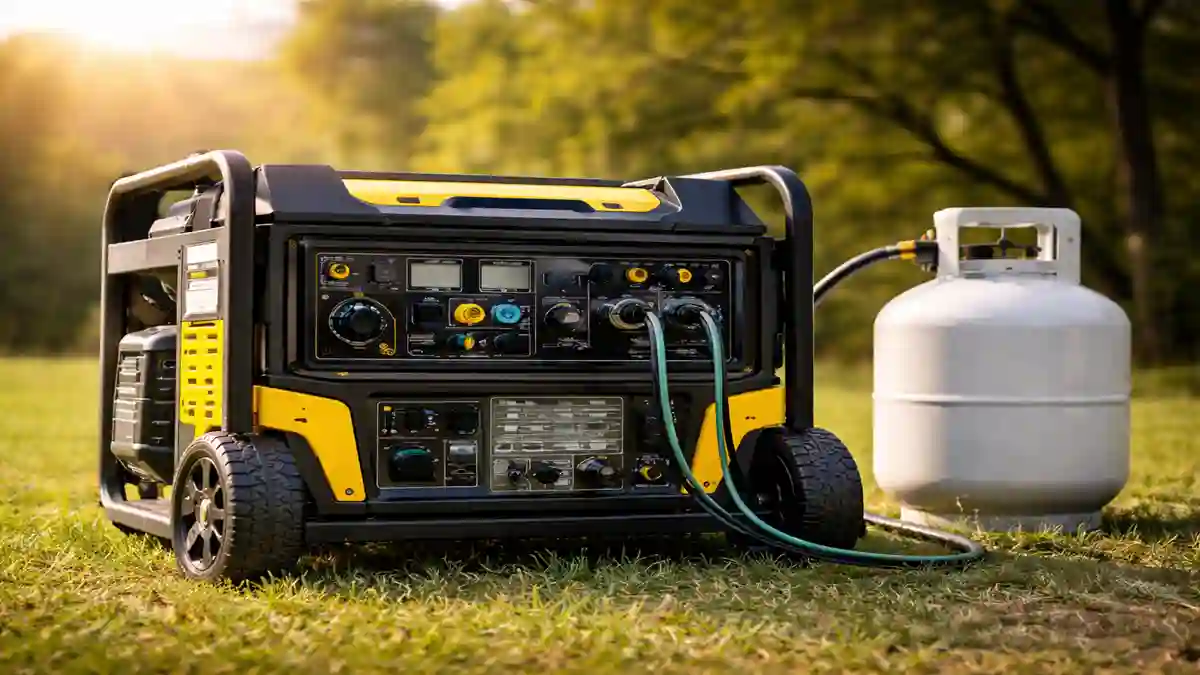
Technical analysis of dual fuel inverter generator. We break down <3% THD, propane derating, and two-wire auto-start for solar battery integration.
A dual fuel inverter generator runs on both gasoline and propane — giving you fuel flexibility, clean power output, and reliable backup when you need it most. Whether you’re preparing for power outages, heading off-grid, or building a solar backup system, this guide covers everything you need to choose the right unit in 2026.
What Is a Dual Fuel Inverter Generator?
A dual fuel inverter generator combines two technologies: dual fuel capability (run on gasoline OR propane) and inverter technology (produces clean, stable power with less than 3% total harmonic distortion).
This makes it far more versatile than a single-fuel generator. During normal times, you might run on gasoline. During a long outage when gas stations run dry, you switch to stored propane. You never get caught powerless.
The inverter module converts raw AC output into DC, then back to clean AC — resulting in power that is safe for sensitive electronics like laptops, medical devices, solar charge controllers, and smart TVs.
Key benefits at a glance:
Fuel Flexibility — Switch between gasoline and propane based on availability and cost.
Clean Sine Wave Output — Less than 3% THD, safe for all electronics and solar power systems.
Quiet Operation — Typically 50–65 dBA, far quieter than conventional generators.
Fuel Efficient — Auto-throttle matches engine speed to load, saving fuel and extending runtime.
Key Features to Look For
1. Running Watts vs Peak Watts
Running watts is what the generator sustains continuously. Peak watts is the brief surge capacity for starting motors. Always size based on running watts and ensure peak watts covers your largest motor — usually a refrigerator, AC unit, or well pump.
2. Total Harmonic Distortion (THD)
For a true inverter generator, THD should be under 3%. This is what separates it from conventional generators and makes it safe for electronics, solar inverters, and battery chargers.
3. Electric Start
A push-button or remote electric start is a major convenience upgrade — especially in cold weather or emergencies where pull-starting is difficult.
4. Parallel Capability
Some dual fuel inverter generators support parallel linking — connecting two identical units to double your output. Useful if your power needs grow over time.
5. CO Shutoff Safety
Carbon monoxide auto-shutoff is a critical safety feature. Look for generators with built-in CO sensors that automatically shut the engine off if dangerous CO levels are detected nearby.
6. Two-Wire Auto-Start Port
For advanced solar setups, look for dual fuel inverter generators with a Two-Wire Start port. This allows your solar hybrid inverter — such as Victron, Sol-Ark, or EG4 — to automatically trigger the generator to start when your lithium battery bank hits a low State of Charge (SoC). This makes your backup system fully hands-free and automatic.
7. Runtime on Each Fuel
Check the runtime at 25% load for both gasoline and propane. Propane typically gives 10–20% less runtime per tank equivalent than gasoline due to lower BTU density, but propane stores indefinitely without degrading.
Choosing the Right Wattage for a Dual Fuel Inverter Generator
Wattage is the most important spec. Here is a quick guide by use case:
Recreational (2,000–3,500W)
Best for camping, tailgating, and small apartments. Powers lights, fans, a small fridge, and phone charging.
Home Essentials (3,500–5,000W)
Covers home basics during outages — fridge, lights, TV, phones, and a small window AC unit.
Whole Home Partial (7,000–9,000W)
Handles most home circuits, including central fan, multiple home appliances, sump pump, and well pump.
Heavy Duty (9,000–11,000W)
Whole home critical circuits, workshop tools, and large HVAC systems.
Important note on propane derating: If a generator is rated for 4,500W on gasoline, it will typically only deliver around 4,000W on propane due to propane’s lower BTU density — roughly a 10–15% drop. Always size your loads based on the lower propane running wattage if you plan to use propane as your primary backup fuel.
The most searched wattage categories for dual fuel inverter generators are the 3,400W, 3,500W, 4,500W, and 7,100W classes — indicating these are the sweet spots most buyers are targeting.
Pros and Cons
Pros:
— Flexible fuel — gasoline or propane
— Propane stores indefinitely with no degradation
— Clean power output safe for all electronics
— Quieter than conventional generators
— More fuel-efficient at partial load
— Wide model selection at all price points
— Excellent portability for camping and travel
Cons:
— No natural gas option (unlike tri fuel models)
— Propane delivers 10–15% less power output than gasoline (derating applies)
— Gasoline degrades if stored too long without stabilizer
— Higher upfront cost than conventional generators
— Limited runtime compared to a natural gas hookup
Dual Fuel Inverter Generator Pairing with Solar Power
Because inverter generators produce clean sine wave power (under 3% THD), they are fully compatible with solar hybrid inverters and LiFePO4 battery chargers. When cloudy weather reduces solar output, your dual fuel generator seamlessly tops off the battery bank — keeping your home powered without grid dependency.
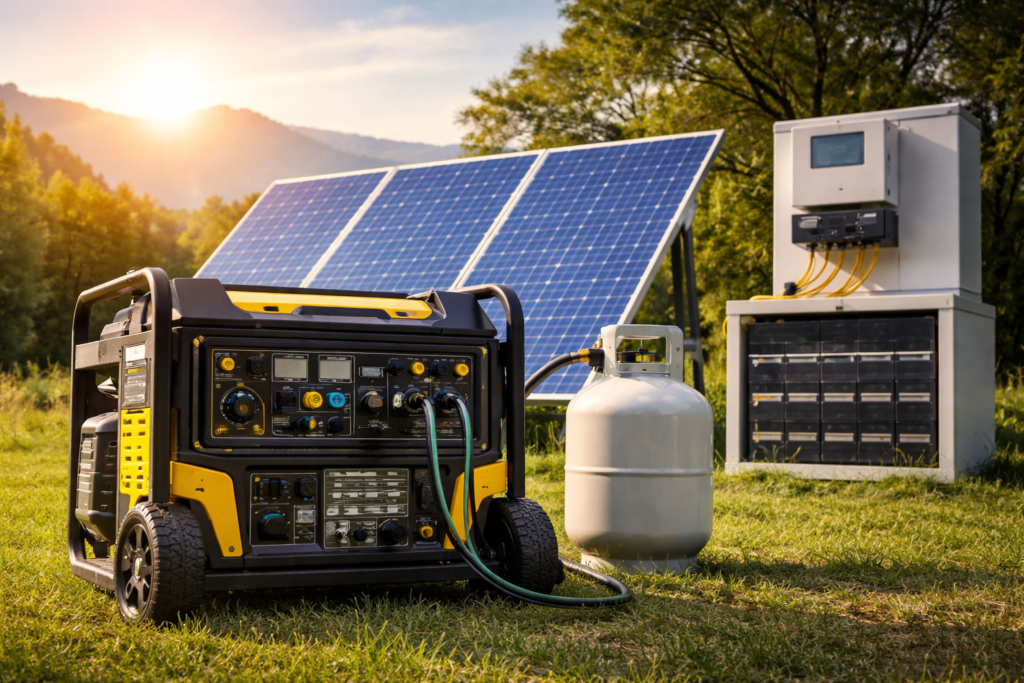
For solar users, propane is often the preferred generator fuel. It burns cleaner, stores without degradation, and is safer to stockpile in large quantities than gasoline. A 100–500 lb propane tank gives you days to weeks of generator backup — the perfect complement to a solar-plus-battery system.
For the most advanced setup, pair your dual fuel inverter generator with a solar hybrid inverter that supports automatic generator start via a Two-Wire Start connection. When your battery bank drops below a set threshold — say 20% SoC — the inverter automatically signals the generator to start, charge the batteries, and shut off when full. No manual intervention needed.
At SolarVisionAI, we help homeowners design complete solar panels + battery + generator systems built for true energy independence.
Pre-Buy Checklist
Before you buy, run through this:
✓ List all appliances you will power and add up their running watts
✓ Add 20–25% buffer above your total calculated load
✓ Account for propane derating — size loads on propane wattage, not gasoline
✓ Confirm the unit produces less than 3% THD if powering electronics
✓ Check that CO auto-shutoff is included
✓ Verify electric start if you need convenience
✓ Check for Two-Wire Start port if connecting to a solar hybrid inverter
✓ Check if parallel capability is available for future expansion
✓ Confirm transfer switch compatibility for home hookup
✓ Read warranty terms — aim for 2+ years residential coverage
Frequently Asked Questions
What is the best dual fuel inverter generator in 2026?
The best choice depends on your wattage needs. For the 3,500W portable class, the Westinghouse iGen4500DF and the Champion 201183 are well-regarded for quiet operation and reliable CO shutoff. For the 7,000W and above range, the DuroMax XP9000iH is a market favorite known for its robust build and copper windings — and the Pulsar 7250W Dual Fuel Inverter is another strong option. Always confirm THD under 3% and look for a Two-Wire Start port if pairing with solar.
Is a dual fuel inverter generator worth the extra cost?
Yes — for most buyers. The dual fuel flexibility pays off during extended outages when gasoline becomes scarce. The inverter technology protects your electronics and solar equipment. The combination is a significant upgrade over a basic conventional generator.
Can I use a dual fuel inverter generator with my solar system?
Absolutely. The clean sine wave output (under 3% THD) is fully compatible with solar hybrid inverters and LiFePO4 battery chargers. For the most seamless integration, look for a model with a Two-Wire Start port — this allows your solar inverter to auto-start the generator when batteries run low, without any manual intervention.
How long does propane last in a dual fuel generator?
A standard 20 lb propane tank (common BBQ size) typically runs a 3,500W generator for 5–8 hours at 50% load. A 100 lb tank extends that to 25–40 hours. Remember that propane delivers about 10–15% less output than gasoline, so factor that into your runtime estimates. For extended backup power, investing in a larger propane tank is worthwhile.
Does propane reduce the power output of a dual fuel generator?
Yes — this is called propane derating. When running on propane, most dual fuel generators produce roughly 10–15% less power than on gasoline. A generator rated at 4,500W on gasoline will typically deliver around 4,000W on propane. Always check the manufacturer’s propane-specific wattage rating before sizing your loads.
Combine Solar + Generator for True Energy Independence
SolarVisionAI helps homeowners build resilient solar, battery, and generator systems. Free consultation available.