
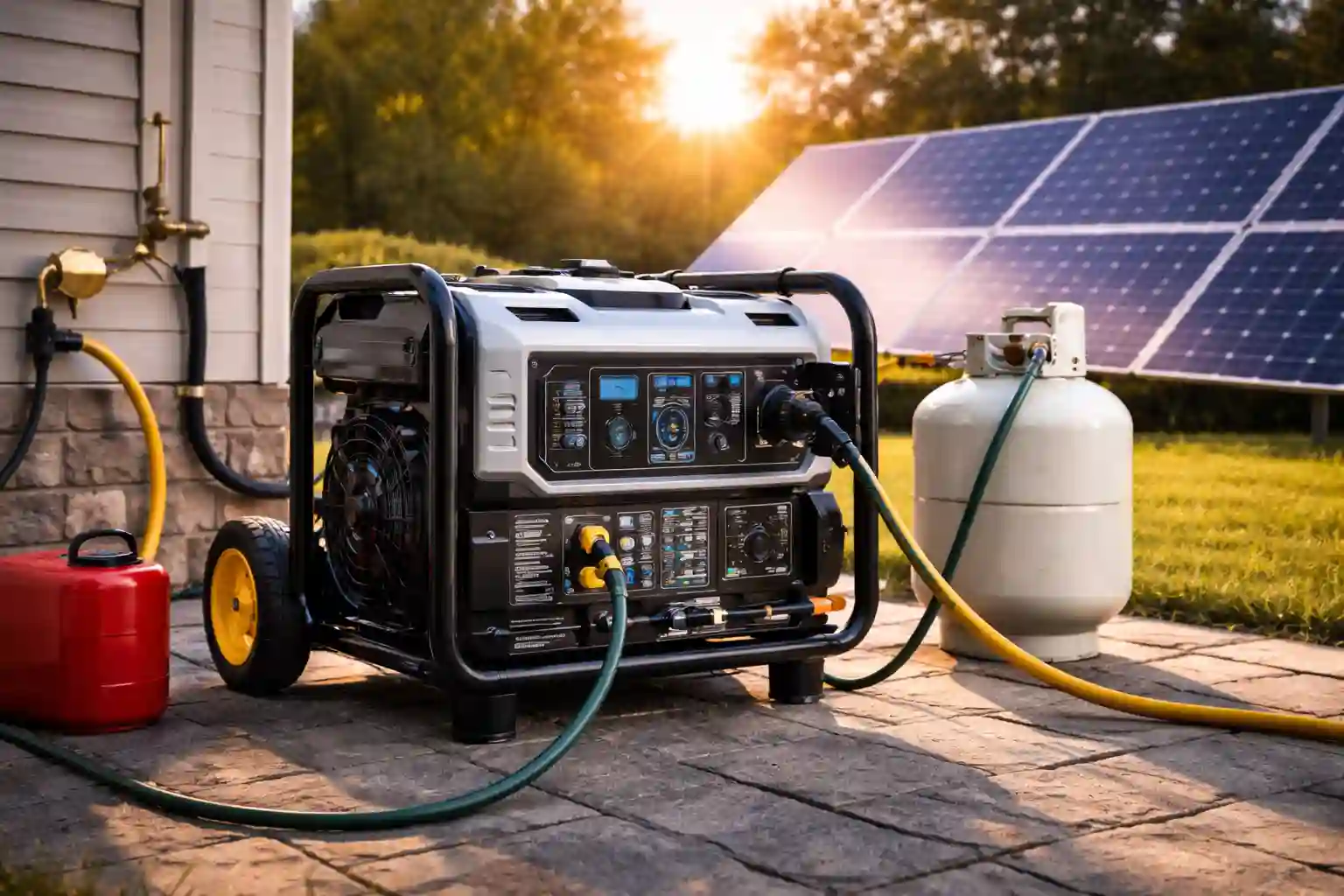
Tired of fuel runs? Discover how a tri fuel inverter generator provides unlimited runtime on natural gas—engineering analysis of the best 11,000W models, clean power for electronics, and solar battery pairing.
A tri fuel inverter generator runs on gasoline, propane, and natural gas — making it the most fuel-flexible generator type available in 2026. If your home is connected to a natural gas line, this is the ultimate whole-home backup solution. This guide covers everything you need to know before buying, including key features, fuel comparisons, top 2026 models, solar integration, and a full pre-buy checklist.
What Is a Tri Fuel Inverter Generator?
A tri fuel inverter generator is a portable or semi-portable generator capable of running on three fuel sources: gasoline, propane (LPG), and natural gas. It also incorporates inverter technology — producing clean, stable AC power with less than 3% total harmonic distortion (THD).
This combination makes tri fuel inverter generators the most versatile backup power option on the market. Whether the grid goes down for an hour or two weeks, you have three independent fuel sources available — and the clean power output protects your valuable electronics throughout.
The standout advantage over a dual fuel unit is the natural gas connection. Hook it directly to your home’s gas line and you have effectively unlimited runtime — no fuel runs, no tank refills, no expiration dates on your fuel supply.
Key benefits at a glance:
- Natural Gas Ready — Connect to your home gas line for unlimited, uninterrupted runtime.
- Three Fuel Options — Gasoline, propane, or natural gas. Switch based on availability and cost.
- Clean Inverter Power — Under 3% THD, safe for laptops, medical devices, and solar systems.
- High Wattage Options — The 11,000W tri fuel class is the most popular and most searched segment in 2026.
Who Should Buy a Tri Fuel Inverter Generator?
A tri fuel inverter generator is the right choice if any of these apply to you:
- Your home is connected to a natural gas line
- You need extended or whole-home backup power
- You live in an area with frequent or prolonged power outages
- You want to eliminate fuel storage and restocking entirely
- You are building a solar + battery + generator hybrid system
- You need 9,000W or more of clean, reliable output
- Long-term fuel cost is a priority — natural gas is the cheapest fuel per kWh
If natural gas is not available at your location, a dual fuel inverter generator is the more practical and affordable choice for most buyers.
Key Features to Look For
1. Natural Gas Connection Type
Tri fuel generators connect to natural gas via a standard 1/2″ or 3/4″ gas line fitting. Confirm what size your home gas line uses before purchasing. A licensed plumber or gas fitter must handle the installation — this is not a DIY connection. Most jurisdictions require a permit for permanent gas hookups, so factor in that timeline and cost.
2. Wattage Derating on Natural Gas and Propane
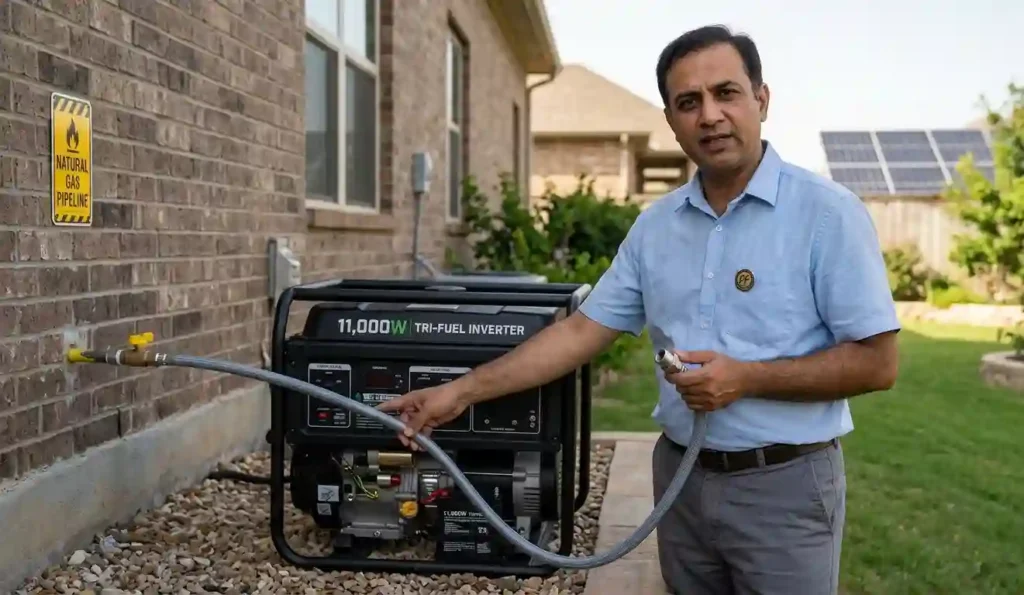
Both natural gas and propane have lower energy density than gasoline. Expect roughly 10-20% less output on natural gas and 10-15% less on propane compared to the gasoline rating. An 11,000W rated unit will typically deliver around 9,000-9,500W on natural gas. Always size your loads based on the derated wattage — never the gasoline peak rating.
3. True Inverter Output
Confirm the unit is a true inverter generator producing under 3% THD — not a conventional generator with a multi-fuel carburetor. Some tri fuel models on the market are conventional generators, not inverters. The inverter designation is critical for electronics safety and full compatibility with solar hybrid systems.
4. Two-Wire Auto-Start Port
For solar hybrid setups, look for a tri fuel generator with a Two-Wire Start port. This allows your solar hybrid inverter — such as Victron, Sol-Ark, EG4, or SolarEdge — to automatically start the generator when your battery bank drops below a set State of Charge (SoC). Running on natural gas, this creates a completely hands-free backup system with unlimited fuel supply and zero manual intervention required.
5. Transfer Switch Compatibility
For whole-home use, you will need a transfer switch. Confirm your generator supports the type — manual or automatic — compatible with your home’s electrical panel. A licensed electrician must install this. Never backfeed a generator into your home panel without a proper transfer switch in place.
6. Electric and Remote Start
At 9,000-11,000W, these generators are large and heavy. Electric start with a remote fob or app control is almost mandatory at this size class. Look for models that include battery charging capability to keep the starter battery topped off during long standby periods between uses.
Fuel Source Comparison
| Fuel | Runtime | Storage | Cost | Best For |
| Gasoline | Best per gallon | 6-12 months with stabilizer | Moderate | Short outages, portable use |
| Propane | ~10-15% less than gasoline | Indefinite — no degradation | Low to moderate | Emergency stockpile, long-term storage |
| Natural Gas | Unlimited — line fed | Not needed — piped supply | Lowest per kWh | Extended outages, whole-home standby |
The best strategy for most tri fuel generator owners: use natural gas as the primary fuel, keep propane as a secondary backup in case the gas line is interrupted during a major event, and reserve gasoline for portable or off-site use.
Pros and Cons
Pros:
- Natural gas connection means effectively unlimited runtime
- Three fuel sources for maximum resilience in any emergency
- Natural gas is the cheapest fuel option per kWh
- Clean inverter power output under 3% THD
- Ideal for whole-home standby power setups
- Pairs perfectly with solar hybrid inverters via Two-Wire Start port
- No fuel restocking or storage management when running on natural gas
Cons:
- Higher upfront cost than dual fuel models
- Fewer models available compared to the wider dual fuel market
- Requires licensed gas line installation for natural gas use
- Natural gas and propane both reduce output by 10-20% vs gasoline
- Larger and heavier in high wattage classes
- Not the right choice if natural gas is unavailable at your location
Choosing the Right Wattage
Home Essentials (3,500-5,000W)
Covers a fridge, lights, TV, phones, fans, and a small window AC unit. A good entry point for tri fuel if you want fuel flexibility without a large footprint.
Whole Home Partial (7,000-9,000W)
Handles most home circuits — central fan, multiple appliances, sump pump, and well pump simultaneously. Size your loads on the derated propane or natural gas wattage, not the gasoline rating.
Whole Home Heavy Duty (9,000-11,000W)
The most searched tri fuel class. Powers critical whole-home circuits, central HVAC, workshop tools, and large appliances all at once. The Genmax GM11000iEDF and DuroMax XP11000EH are the standout models in this class for 2026 — both deliver true inverter output, electric and remote start, and natural gas compatibility out of the box.
Important derating reminder: A generator rated at 11,000W on gasoline will deliver approximately 9,000-9,500W on natural gas. Always verify the manufacturer’s natural gas wattage specification and calculate your load against that figure.
Pairing with Solar Power
Pairing a tri fuel inverter generator with a solar-plus-battery system creates one of the most resilient home energy setups available. Solar covers your daytime generation, batteries handle nights and cloudy periods, and the tri fuel generator on natural gas acts as the always-ready backup charging source when battery reserves run low.
Because tri fuel inverter generators produce clean sine wave power under 3% THD, they integrate seamlessly with solar hybrid inverters from Victron, SolarEdge, Enphase, Sol-Ark, EG4, and others. The generator acts as a reliable AC input when battery state of charge drops below your set threshold.
For the most advanced setup, use the Two-Wire Start port to connect your generator directly to your solar hybrid inverter. When your battery bank drops below your set SoC threshold — say 20% — the inverter automatically signals the generator to start, charges the batteries back up, and shuts the generator off when full. Running on natural gas, this process is completely automatic and requires zero manual intervention. It is as close to a true whole-home energy backup as most homeowners can build without a whole-home standby generator.
At SolarVisionAI, we design complete solar + battery + generator systems for homeowners who want real energy independence — not just a battery that lasts two days.
Pre-Buy Checklist
Before you buy, run through this:
- Confirm natural gas is available and accessible at your property
- List all appliances you will power and add up their running watts
- Add 20-25% buffer above your total calculated load
- Size loads based on natural gas derated wattage — not the gasoline rating
- Confirm the unit is a true inverter generator producing under 3% THD
- Check for CO auto-shutoff
- Verify electric and remote start capability
- Look for Two-Wire Start port if connecting to a solar hybrid inverter
- Confirm transfer switch compatibility for your home’s electrical panel
- Budget for licensed gas line installation and electrical transfer switch
- Read warranty terms — aim for 3+ years residential coverage at this price point
Frequently Asked Questions
What is the best tri fuel inverter generator in 2026?
The 11,000W class dominates the tri fuel inverter market. The Genmax GM11000iEDF is a top-searched model known for its clean inverter output, tri fuel flexibility, and electric start. The DuroMax XP11000EH is another well-regarded option with strong build quality and copper windings. For both, confirm the natural gas derated wattage, verify true inverter output under 3% THD, and look for a Two-Wire Start port if you plan to pair with solar.
Do I need a plumber to connect a tri fuel generator to natural gas?
Yes, without exception. Natural gas connections must be made by a licensed plumber or gas fitter. The connection requires proper fittings, pressure testing, and local permits in most jurisdictions. Never attempt a DIY natural gas hookup — the risk of gas leaks and carbon monoxide exposure is serious and the liability consequences are significant.
Does a tri fuel inverter generator lose power on natural gas?
Yes — this is expected and normal. Natural gas has lower BTU density than gasoline, resulting in roughly 10-20% less output. An 11,000W rated unit typically delivers around 9,000-9,500W on natural gas. Always check the manufacturer’s natural gas wattage spec before sizing your loads. This derating also applies to propane, which causes approximately a 10-15% reduction.
Is a tri fuel generator worth it over dual fuel?
If your home has a natural gas connection — yes, absolutely. The unlimited runtime and lowest fuel cost make it a superior long-term investment for extended outage protection. The $100-$300 price premium over a comparable dual fuel model pays for itself quickly through fuel savings and the convenience of never restocking. If natural gas is not available at your location, a dual fuel inverter generator is the better choice.
Can a tri fuel inverter generator run my whole house?
An 11,000W tri fuel inverter generator can power most whole-home critical circuits — lights, fridge, HVAC fan, well pump, sump pump, and electronics simultaneously. For central air conditioning compressors, check the starting watt requirement carefully as these draw heavy surge current on startup. A transfer switch installed by a licensed electrician is required to connect the generator to your home’s panel safely