
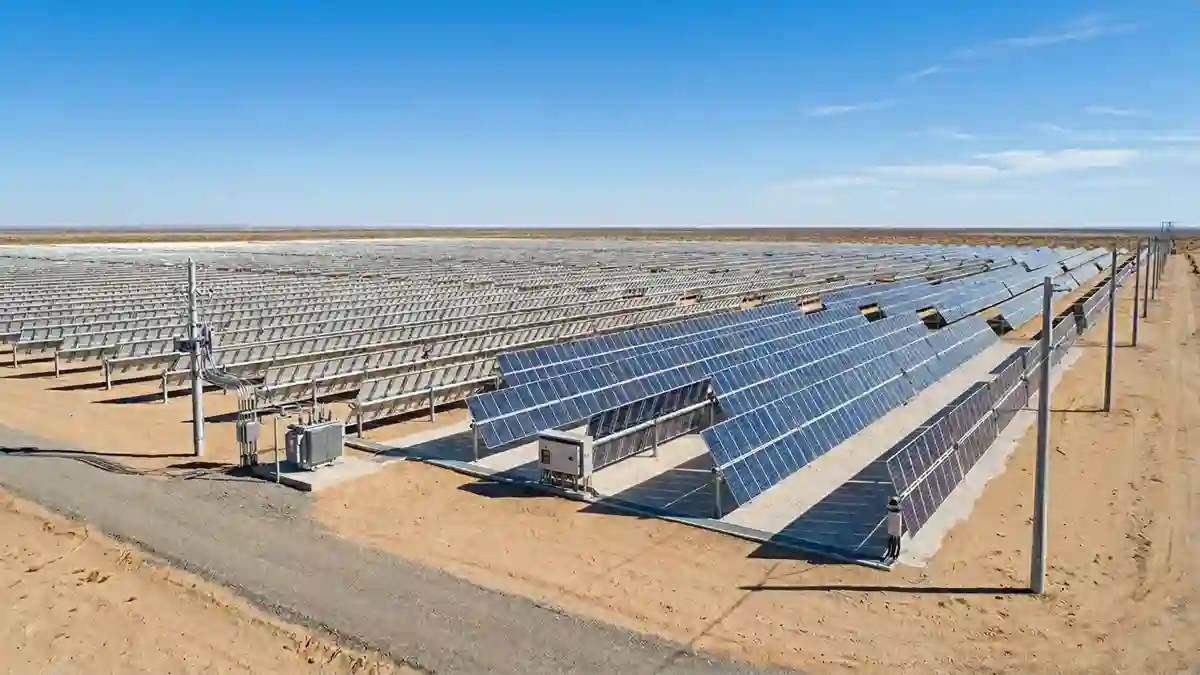
Single axis solar tracker system engineering — horizontal axis drive design, foundation requirements, wind load analysis, US commercial yield data, and procurement checklist.
Single-axis solar trackers are the workhorses of utility-scale solar power systems in the United States. They dominate new ground-mounted installations across high-irradiance regions, are the preferred tracker configuration for projects exceeding 500 kW, and remain the most commercially proven solar tracking technology on the market. For engineers and developers seeking to maximize the performance of ground-mounted solar power systems, single-axis tracking is typically the first option evaluated..
This guide covers how single axis solar tracker systems work mechanically and structurally, how they are specified and procured for US commercial projects, and the engineering requirements that determine whether a site is suitable. For a broader comparison of tracker types — including when dual axis tracking is worth the additional complexity — see the Solar Tracker System hub.
1. How a Single Axis Solar Tracker System Works
A single axis solar tracker rotates a row of solar panels on a single horizontal axis — the torque tube — that runs north-south along the length of the tracker row. As the sun moves from east to west throughout the day, the tracker rotates the panels to face the sun, keeping the panel surface approximately perpendicular to the incoming solar radiation.
The rotation range is typically ±55 to ±60 degrees from horizontal — enough to track the sun from shortly after sunrise to shortly before sunset. At the ends of the rotation range, the efficiency gain from additional tracking is offset by electrical losses in the drive system, so trackers park at the rotation limit rather than tracking to extreme angles.
The Drive System
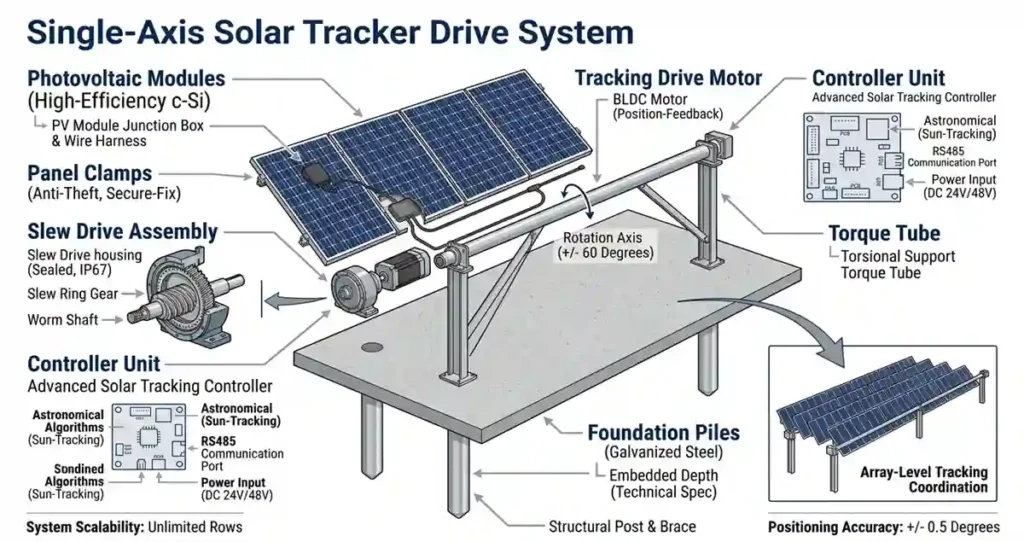
The drive system of a single axis tracker consists of a motor assembly — typically a low-speed DC gear motor rated for outdoor duty — connected to the torque tube through a slewing mechanism or linear actuator. The motor is controlled by a programmable tracking controller that calculates the theoretical sun position from GPS coordinates and time, and adjusts the tracker angle to match.
Modern single axis tracker controllers use astronomical algorithms — not light sensors — to determine target angle. Astronomical algorithms are more reliable than light-sensor systems because they function correctly in cloudy conditions where light sensors can chase reflected light from clouds and hunt back and forth unpredictably.
Backtracking
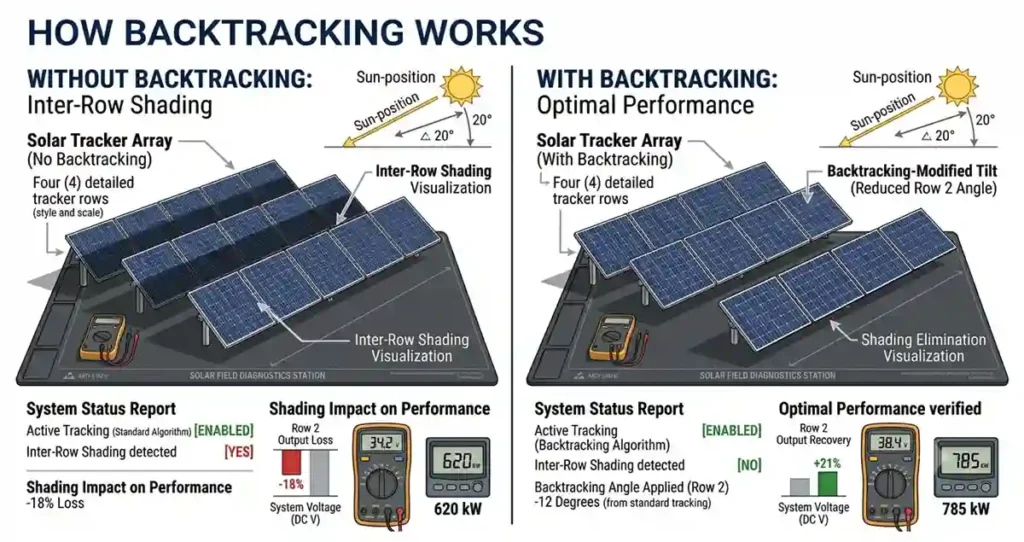
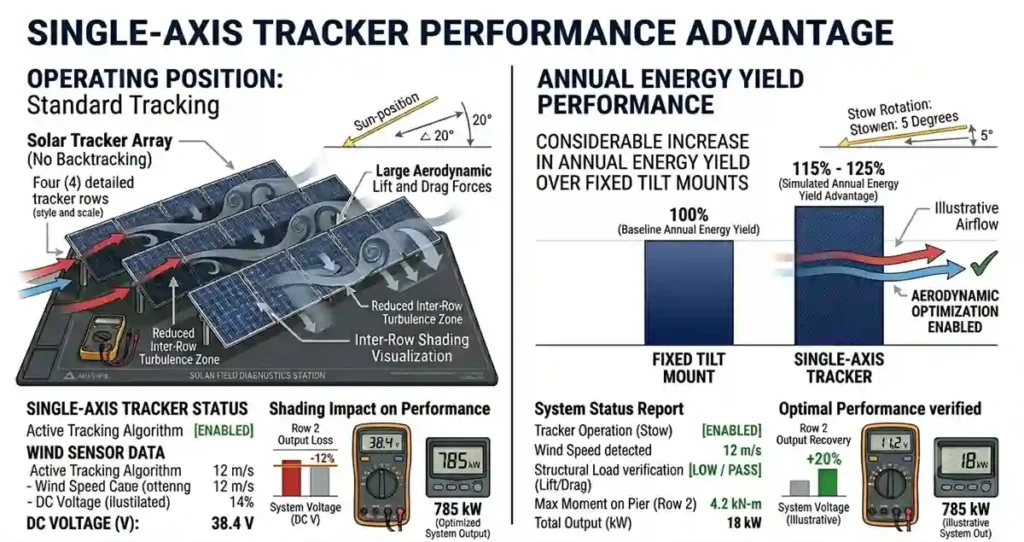
In the early morning and late afternoon, adjacent tracker rows can shade each other — a condition called inter-row shading. To prevent this, modern tracker controllers implement backtracking: an algorithm that deliberately rotates the tracker away from the optimal sun-facing angle to a position that eliminates inter-row shading, even though this reduces instantaneous power output.
The net effect of backtracking is a small reduction in total daily energy production compared to a no-shade calculation, but a larger improvement compared to what would occur without backtracking — because partial shading of a string-wired system causes disproportionate power loss relative to the shaded area.
2. Single Axis Solar Tracker System — Structural Engineering
Torque Tube Design
The torque tube is the primary structural element of a single axis tracker — it is both the axis of rotation and the main structural beam carrying the weight of the solar panels and the wind and snow loads from the array. Torque tubes are typically galvanized steel hollow sections — square or rectangular HSS — sized for the combined structural requirements of bending under wind load and torsional load from drive system forces.
The critical design case for torque tube sizing is typically the combination of maximum wind load at the stow angle — the position the tracker adopts when wind speed exceeds the operational limit — plus the torsional load from the drive system at maximum torque. This combination determines the required section modulus and torsional stiffness of the tube.
Foundation Requirements
| Foundation Parameter | Single Axis Tracker Requirement | Fixed Ground Mount Requirement | Tracker Premium |
| Pile embedment depth | Deeper — dynamic load analysis required | Standard geotech-specified depth | 10-20% deeper typically |
| Pile spacing | Set by tracker row length and torque tube span | Set by rail span and wind zone | Similar — driven by structural span |
| Pile head elevation tolerance | ±6mm — tracker alignment critical | ±6mm standard | Same |
| Lateral load capacity | Higher — wind loads from changing angles | Standard ASCE 7-22 fixed panel | 15-30% higher design lateral load |
| Foundation type | Driven pile preferred; helical pier where soil requires | Driven pile or helical pier | Same options — soil governs |
The ground mount foundation engineering that underpins tracker structures — pile types, embedment depth methodology, and structural frame connection — is covered in the Solar Panel Ground Mounting Systems guide.
Wind Load Engineering
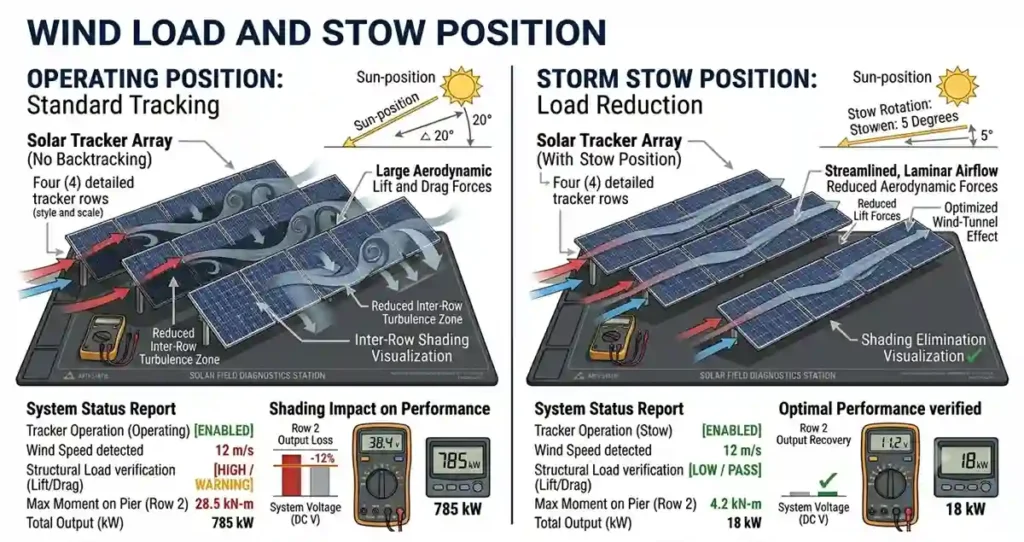
Wind load engineering for single axis trackers requires analysis across the full rotation range — from the maximum east rotation (+55°) through horizontal (0°) to maximum west rotation (-55°) — at the design wind speed for the site. The worst-case wind load typically occurs at intermediate angles, not at the extreme rotation positions.
The stow position — where the tracker parks when wind exceeds the operational wind speed limit (typically 35 to 45 mph) — is designed to minimize wind load by rotating the panels to a near-horizontal position. The stow wind speed and stow angle are system-specific design parameters that must be verified against the site design wind speed before procurement.
Engineer’s Note: The most common error in single axis tracker foundation design I see in commercial project reviews is using a generic fixed-mount wind load calculation instead of the tracker manufacturer’s wind load data package. Fixed-mount calculations significantly underestimate lateral loads on tracker foundations at intermediate angles. Always request the manufacturer’s site-specific wind load report — this is standard practice among Tier 1 tracker suppliers and should be a procurement requirement, not an afterthought.
3. Single Axis Solar Tracker System — US Commercial Performance Data
| US Region | Avg Fixed Annual Yield (kWh/kWp) | Single Axis Tracker Yield (kWh/kWp) | Tracker Gain | Typical Project Size |
| Southwest (AZ, NV, NM, TX west) | 1,800-2,100 | 2,200-2,600 | 18-25% | 1 MW to utility scale |
| Southeast (FL, GA, SC, NC) | 1,500-1,700 | 1,750-2,000 | 15-20% | 500 kW to utility scale |
| Midwest (IL, IN, OH, MO) | 1,300-1,500 | 1,500-1,750 | 14-18% | 500 kW+ |
| Mountain West (CO, UT, ID) | 1,600-1,900 | 1,900-2,300 | 18-22% | 1 MW to utility scale |
| Pacific Northwest (WA, OR) | 1,100-1,300 | 1,250-1,450 | 12-15% | 500 kW+ where justified |
These yield figures are based on typical site conditions. Site-specific modeling using PVsyst or SAM with actual meteorological data should be used for all project financial analysis.
4. Single Axis Solar Tracker System — Procurement Checklist
When evaluating single axis tracker suppliers for a US commercial project, the following documentation and specifications should be required before selection:
- Structural engineering package: torque tube sizing calculation, foundation load report (not generic — site wind speed specific), and pile spacing layout for the project site
- Wind load data package: wind load coefficients across the full tracker rotation range at the design wind speed, including stow position load verification
- Drive system specification: motor torque rating, drive mechanism type, operational wind speed limit, stow wind speed, and stow angle
- Controller specification: astronomical algorithm documentation, backtracking algorithm specification, communication protocol (typically Modbus or proprietary), and SCADA integration capability
- Warranty terms: structural warranty (minimum 10 years), drive system warranty (minimum 5 years), and controller warranty (minimum 5 years)
- Reference projects: at least three US projects of comparable size and wind zone with performance data available
- UL or IEC certification: tracker system certified to UL 3703 or IEC 62817 for safety and performance
Field Note: I have reviewed tracker procurement packages from six commercial suppliers on US utility-scale projects. The meaningful differentiators are not the headline yield improvement claims — every supplier claims 20-25% improvement. The differentiators are the structural engineering quality, the wind load methodology, and the local service capability. A tracker that fails a drive system in year 3 on a remote Nevada site with no local service is a significantly worse choice than a slightly lower-yield tracker with strong US service infrastructure.
5. Single Axis Tracker vs Fixed — When Tracker Wins and When It Does Not
- Tracker wins: Flat or gently sloping terrain in high-irradiance US regions (Southwest, Mountain West, Southeast). Projects above 500 kW where the tracker cost per watt premium is offset by yield gain. Sites with high direct normal irradiance (DNI) relative to diffuse irradiance — trackers gain most on clear-sky sites where the sun position is well-defined.
- Fixed wins: Rooftop installations where tracking is structurally impractical. Highly complex terrain where tracker row alignment is difficult. Sites with high diffuse irradiance fraction (Pacific Northwest, cloudy climates) where tracking the direct component gives smaller relative gain. Small projects where tracker capital premium is not offset by yield improvement at the project scale.
- Borderline: Projects in the 200-500 kW range in moderate irradiance regions. Agricultural (agrivoltaic) applications where tracker height clearance may conflict with crop management requirements — though specialized low-profile agrivoltaic trackers are available.
For the comparison of fixed ground mount performance vs tracker performance — including the financial modeling framework — see the Solar Tracker System hub. For a comparison of single axis against dual axis tracking, see the Dual Axis Solar Tracking System guide.
Frequently Asked Questions.
What is a single-axis solar tracker?
A single-axis solar tracker is a motorized mounting system that rotates solar panels along one axis, typically from east to west, to follow the sun throughout the day and increase energy production compared to fixed-tilt systems.
How much more electricity does a single-axis solar tracker produce?
Single-axis trackers typically increase annual energy production by 15% to 25% compared to fixed mounting systems. Actual gains depend on location, solar resource quality, weather patterns, and system design.
What is the difference between a single-axis tracker and a dual-axis tracker?
A single-axis tracker follows the sun’s daily east-west movement. A dual-axis tracker follows both the daily movement and seasonal changes in solar elevation, resulting in higher energy production but increased complexity and cost.
What is backtracking in a solar tracker system?
Backtracking is a control algorithm that adjusts tracker angles during early morning and late afternoon hours to reduce shading between adjacent tracker rows. Although it slightly reduces the ideal tracking angle, it usually increases total energy production by minimizing shading losses.
Are single-axis solar trackers worth the additional cost?
They are often economically beneficial for commercial and utility-scale solar projects where the additional energy production exceeds the added capital and maintenance costs. Site-specific financial modeling should always be performed before selecting a tracker system.
How do solar trackers handle high winds?
Modern tracker systems automatically move into a predefined stow position when wind speeds exceed operational limits. This position reduces aerodynamic loading and helps protect the structure from damage during severe weather events.
What maintenance do single-axis solar trackers require?
Routine maintenance typically includes inspection of motors, bearings, actuators, controllers, electrical connections, structural components, and foundation connections. Commercial operators usually perform annual preventative maintenance inspections.
How long do single-axis solar trackers last?
Most commercial tracker systems are designed for service lives of 25 years or more when properly maintained. Individual components such as motors and controllers may require replacement during the system’s operational life.
Are single-axis trackers used on residential solar systems?
Residential use is relatively uncommon because fixed mounting systems are usually more cost-effective and simpler to maintain. Single-axis trackers are most frequently used in commercial and utility-scale applications.
What certifications should a commercial solar tracker have?
Commercial buyers typically look for compliance with UL 3703, IEC 62817, and manufacturer-provided wind load and structural engineering documentation appropriate for the project location.
Related guides on SolarVisionAI.com
Solar Panel Installation: Complete Engineering Guide (2026)
Solar Panel Installation Cost: The Complete 2026 Breakdown
Commercial Solar Panel Installation: Engineering Guide 2026
When Is the Best Time to Install Solar Panels?
Solar Power System in 2026: Types, Cost, ROI & AI Optimization