
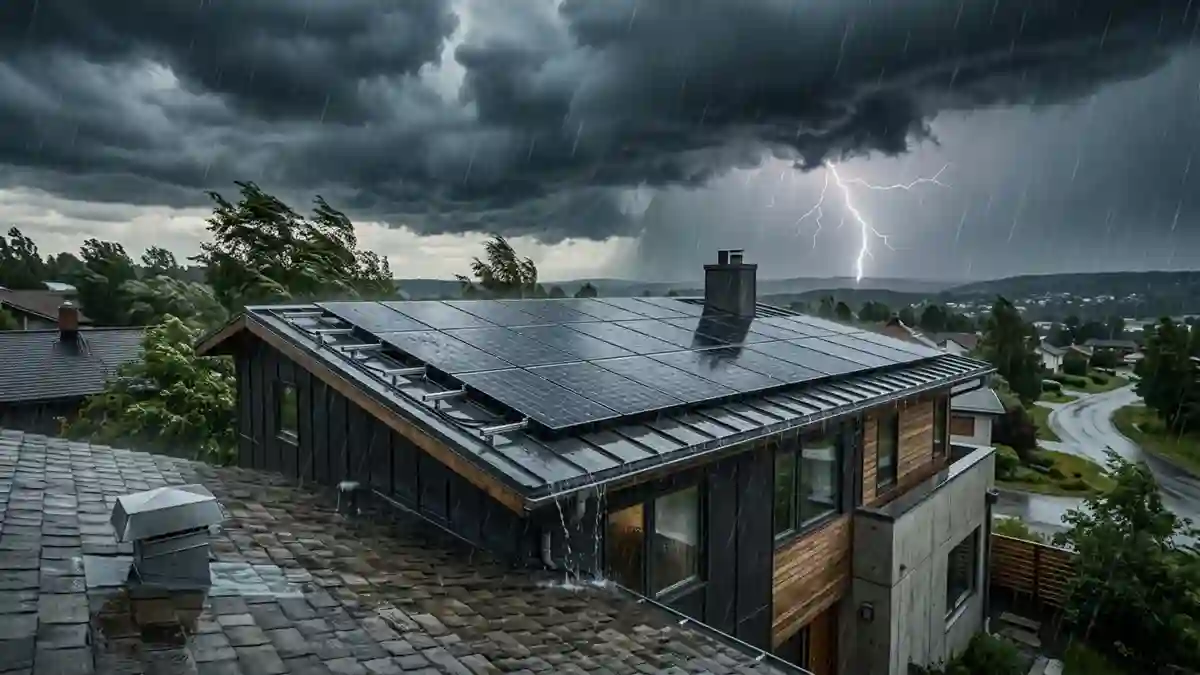
Solar panel weather damage insurance for US homeowners — a solar EPC consultant covers what wind, hail, snow and lightning each trigger in your policy and what gaps to fix.
Solar panels are outdoor electrical equipment. They are designed to operate in weather — but weather also damages them. Hail cracks cells. Wind lifts racking. Lightning surges kill inverters. Ice loads crack panel faces. Each weather event creates a different type of damage, triggers different insurance coverage, and requires a different claim approach.
This guide covers every significant weather threat to US solar installations — what the damage looks like, whether it is covered under a standard homeowners policy, and what to do when it happens. It is the consolidated reference I use with clients in EPC consultations when weather resilience and insurance preparedness are on the agenda.
| Disclaimer: This article is written by a Solar EPC Consultant based on real client inquiries and project experience. It is educational only. For your specific insurance decisions, consult a licensed insurance advisor in your state. |
1. Weather Damage Coverage — Master Reference Table
| Weather Event | Solar Component at Risk | HO-3 Coverage? | Coverage Type | Key Condition |
| Hail | Panel face cracking, cell damage, junction box damage | Yes | Coverage A — Dwelling | Separate hail deductible may apply in TX, CO, KS |
| Wind / Hurricane | Racking detachment, panel uplift, flying debris impact | Yes (wind) / Endorsement needed (hurricane zones) | Coverage A — Dwelling | FBC compliance required in FL; ASCE 7 compliance in high-wind zones |
| Lightning — direct strike | Panel burn, inverter destruction, surge damage | Yes — direct lightning is a covered peril | Coverage A — Dwelling | Surge from indirect strikes may require equipment breakdown endorsement |
| Electrical surge (grid-side) | Inverter failure, monitoring system damage | Not under standard HO-3 | Equipment breakdown endorsement | Add equipment breakdown — this is the most common uninsured gap |
| Ice / snow load | Panel frame cracking, racking distortion | Yes — weight of ice/snow is a covered peril | Coverage A — Dwelling | Applies to structural ice load failure, not gradual freeze-thaw |
| Wildfire | Total system loss — panels, inverter, wiring, racking | Yes — fire is a covered peril | Coverage A — Dwelling | Verify Coverage A limit sufficient for full system + home replacement |
| Flooding | Ground-mounted system — total or partial submersion | Not under standard HO-3 | NFIP flood policy or private flood endorsement | Critical for ground-mounted systems in flood zones |
| Tornado | Total system loss — racking, panels, inverter | Yes — windstorm is a covered peril | Coverage A — Dwelling | Verify dwelling limit covers full replacement including solar |
| Freeze / thermal expansion | Micro-cracks in cells, frame warping | Not covered — gradual deterioration exclusion applies | Manufacturer warranty — not an insurance claim | Document pre-freeze condition; manufacturer warranty may apply |
| Engineer’s Note: The electrical surge gap catches the most solar homeowners off guard. A grid-side surge event that destroys a $2,000 string inverter is not a lightning strike — it is an electrical surge, explicitly excluded from most HO-3 policies under the mechanical/electrical breakdown exclusion. Add an equipment breakdown endorsement. It covers this scenario for $25–$50/year. This is the single most impactful insurance addition for solar homeowners. |
2. Solar Panel Weather Damage Insurance — Complete Coverage Reference Table
Wind damage to solar installations is the highest-cost weather claim category in the US solar insurance market. The failure mode is almost always racking — not the panels themselves. Properly engineered and permitted racking survives most wind events. Under-engineered or improperly installed racking fails, taking the panels with it.
| Wind Event | Typical Damage | Avg Claim Cost | Prevention |
| Severe thunderstorm (60–80 mph) | Partial racking failure; 1–4 panel displacement | $3,000–$12,000 | Properly torqued hardware; code-compliant attachment depth |
| Tornado (EF1–EF2, 86–135 mph) | Significant racking failure; majority of panels displaced | $15,000–$40,000 | No practical prevention at EF2+; engineering reduces damage at lower wind speeds |
| Hurricane (Cat 1–2, 74–110 mph) | Partial to full system loss depending on installation quality | $20,000–$60,000+ | FBC / ASCE 7 compliance; Class 4 panels; professional permitted installation |
| Hurricane (Cat 3+, 111+ mph) | Near-total or total system loss likely regardless of quality | $40,000–full replacement | Insurance coverage is the primary protection at Cat 3+ — engineering limits are reached |
| Field Note: After Hurricane Ida in 2021, I reviewed claim data from several Louisiana commercial solar installations. The projects that had used engineered, permitted racking with verified torque specs survived Cat 2 conditions with minimal panel loss. Two projects that had used non-engineered racking on the same street lost 60–80% of panels at Cat 2 wind speeds the engineered systems survived. The engineering investment was $8,000–$12,000 per project. The claim differential was $120,000+. This is not an argument against insurance — it is an argument for engineering AND insurance. |
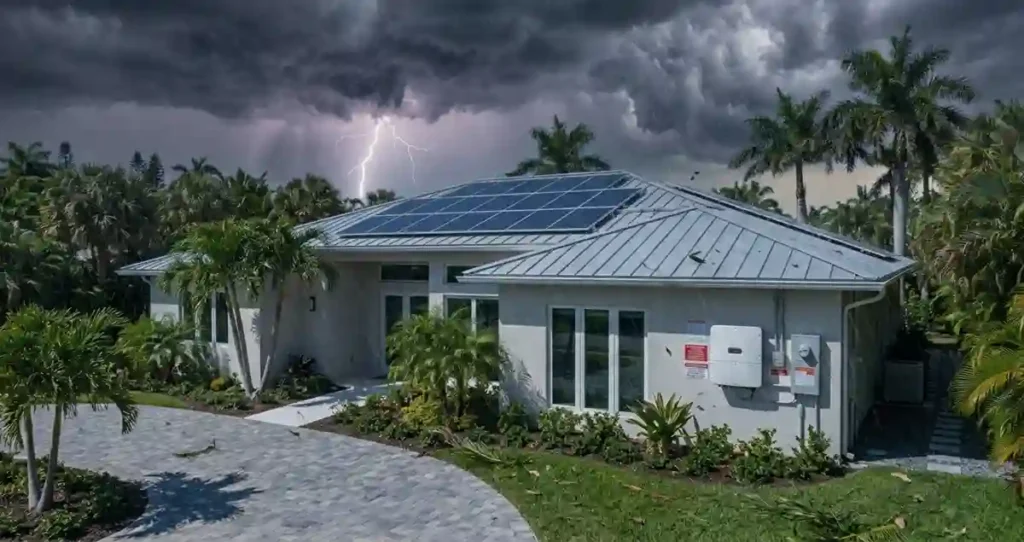
3. Lightning and Electrical Surge — What Is and Is Not Covered
| Event Type | HO-3 Coverage? | Equipment Breakdown Coverage? | What to Document |
| Direct lightning strike to panels or racking | Yes — direct lightning is a named peril | N/A — covered under HO-3 | Strike date/time; NOAA weather data; damage photos |
| Lightning-induced surge killing inverter | Possibly — depends on policy wording | Yes if equipment breakdown endorsement added | Same as above plus inverter error codes and monitoring data |
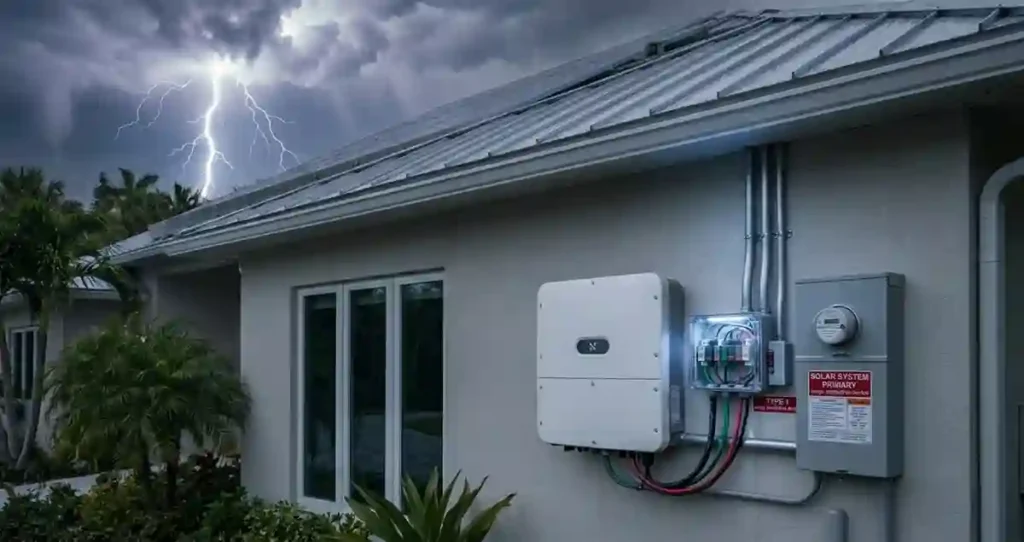
| Grid-side power surge killing inverter | No — standard HO-3 excludes electrical breakdown | Yes — equipment breakdown covers this | Utility company notification; inverter error log; monitoring timestamp |
| Solar production loss during grid outage (no battery) | No — lost production is not a property loss | Business interruption if commercial | Not an insurance claim for residential; battery storage prevents this operationally |
4. Snow and Ice Damage — The Northern States Issue
In northern states — Minnesota, Wisconsin, Michigan, the Northeast, mountain West — snow load and ice damage is a real and underappreciated risk. Modern solar panels are tested to withstand 5,400 Pa (113 psf) of static load under IEC 61215. The failure modes that generate insurance claims are not simply snow weight:
| Failure Mode | Coverage Status | Prevention |
| Ice dam causing water infiltration at roof penetrations | Covered — water damage from ice dam is a covered peril under HO-3 | Proper roof penetration sealing; ice and water shield at penetrations |
| Heavy wet snow load causing racking distortion | Covered — weight of ice/snow is a named peril | Use racking rated for local ground snow load per ASCE 7; do not use minimum-spec racking in snow country |
| Rapid freeze-thaw causing micro-cracks in panel cells | Not covered — gradual deterioration exclusion applies | Manufacturer warranty claim; quality panels with temperature coefficient rated for the climate |
| Fallen snow-loaded tree branch impacting panels | Covered — falling object is a named peril under HO-3 | None practical; covered under standard policy |
5. Pre-Storm Checklist — Preparing Your Solar System for Weather Events
| Action | Timing | Insurance Benefit |
| Photograph all panels in current condition — panel-by-panel record | Annually and before storm season | Pre-loss documentation eliminates disputes about pre-existing damage in claims |
| Download and archive monitoring system performance data | Monthly backup; immediately before storm season | Timestamped production data proves functional impairment post-storm |
| Verify racking hardware torque specs (get records from installer) | At installation; verify at 1-year mark | Documented installation quality reduces insurer’s grounds for claim dispute |
| Confirm equipment breakdown endorsement is active | At each policy renewal | Covers inverter and battery surge/breakdown — the most common post-storm non-structural claim |
| Review Coverage A limit annually | At each policy renewal | Panel replacement costs change; ensure limit reflects current replacement cost |
| Bookmark NOAA storm data: www.ncei.noaa.gov | Have URL ready before storm season | NOAA storm severity data is admissible documentation in insurance claims — free, timestamped, authoritative |
For hail-specific coverage and panel impact ratings, see: Solar Panel Hail Damage: What Your Insurance Covers
For Florida-specific storm and hurricane coverage, see: Solar Panel Insurance in Florida: Which Companies Cover You
For the complete solar insurance framework covering all components, see: Solar Panel Insurance: What It Covers & How to Get It
Frequently Asked Questions
Does homeowners insurance cover solar panel weather damage?
Yes. Most homeowners insurance policies cover sudden weather-related damage from hail, wind, lightning, tornadoes, and fire. Coverage depends on policy terms, deductibles, and exclusions.
Does solar panel weather damage insurance cover hurricanes?
In many cases, yes. Hurricane damage may be covered under windstorm protection, although separate hurricane deductibles often apply in coastal states.
Does insurance cover lightning damage to solar panels?
Direct lightning strikes are typically covered under standard homeowners insurance policies. Damage caused by electrical surges may require an equipment breakdown endorsement.
Does insurance cover hail damage to solar panels?
Yes. Hail is generally a covered peril under standard homeowners insurance policies, subject to deductibles and policy limits.
Are solar panels covered for snow and ice damage?
Most policies cover sudden structural damage caused by the weight of snow or ice. Gradual deterioration and freeze-thaw damage are usually excluded.
Does homeowners insurance cover flood damage to solar panels?
No. Standard homeowners insurance policies do not cover flood damage. Separate flood insurance is required for flood-related losses.
What is the most common uninsured solar weather damage claim?
Electrical surge damage to inverters is one of the most common uncovered claims because many homeowners do not purchase equipment breakdown coverage.
How can homeowners prepare for a solar weather damage insurance claim?
Photograph the system regularly, save monitoring data, maintain installation records, and document all storm-related damage immediately after an event.
Is solar panel weather damage insurance worth it?
Yes. A single weather event can cause thousands of dollars in repair or replacement costs, making proper insurance coverage an important part of solar system ownership.
Related Guides on SolarVisionAI
Solar Panel Insurance: What It Covers & How to Get It
Does Homeowners Insurance Cover Solar Panels? Complete Guide
Do Solar Panels Increase Your Home Insurance Premium?
Commercial Solar Panel Insurance: Installers, Cleaners & Buildings