
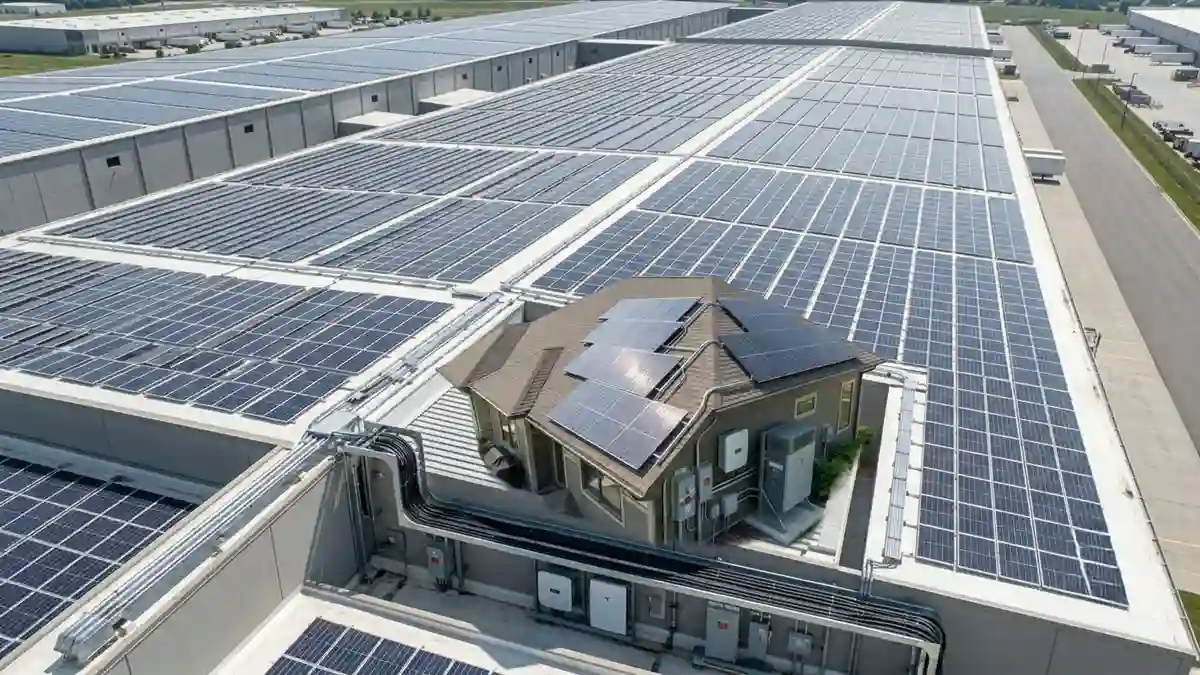
Commercial solar panel insurance is not the same as homeowners coverage. A solar EPC consultant covers what building owners, installers, and O&M crews each need to be properly covered
Commercial solar panels are a different insurance problem from residential solar — and it is one I deal with directly in EPC project consultations. On a commercial project, there are typically three parties that each need different types of coverage: the building owner or property manager, the solar installation contractor, and any ongoing O&M or cleaning service provider. Each has distinct exposure. Getting one wrong can create an uninsured gap that costs hundreds of thousands of dollars.
This guide covers what each party needs and the coverage structures that work on US commercial solar projects.
| Disclaimer: This article is written by a Solar EPC Consultant based on real client inquiries and project experience. It is educational only. For your specific insurance decisions, consult a licensed insurance advisor in your state. |
1. Commercial Solar Panel Insurance for Building Owners & Property Managers
A commercial solar array on a building roof or ground-mount is a capital asset. It is insured under the commercial property policy — not a homeowners policy. The coverage structure is different, the limits are higher, and the exclusions are more complex.
| Coverage Type | What It Covers for Solar | Typical Limit | Notes |
| Commercial Property Insurance | Solar panels, inverters, racking, wiring as building fixtures | Replacement cost of full system | Must specify solar equipment in policy schedule |
| Equipment Breakdown Insurance | Inverter failure, battery faults, electrical breakdown | $10,000–$1M+ | Critical — standard property policy excludes mechanical breakdown |
| Business Interruption Insurance | Lost revenue from solar generation during a covered outage | Based on energy production value | Relevant for PPAs, net metering revenue, and energy cost savings |
| Inland Marine / Equipment Floater | High-value inverters, batteries, monitoring equipment | Per-item scheduled coverage | For equipment exceeding standard property sub-limits |
| General Liability | Third-party bodily injury / property damage related to solar installation | $1M–$5M typical | Covers visitors, adjacent property — standard commercial requirement |
| Field Note: On a 500 kW rooftop project for a warehouse client in Ohio, the building owner’s existing commercial property policy did not automatically extend to the solar installation. The insurer required a scheduled equipment endorsement for the inverter room and battery bank, and a separate business interruption rider tied to the PPA revenue stream. This added $2,800/year to the insurance cost — on a $1.2M installation. It was the right call. |
2. Commercial Solar Panel Insurance for Installers — What Contractors Need
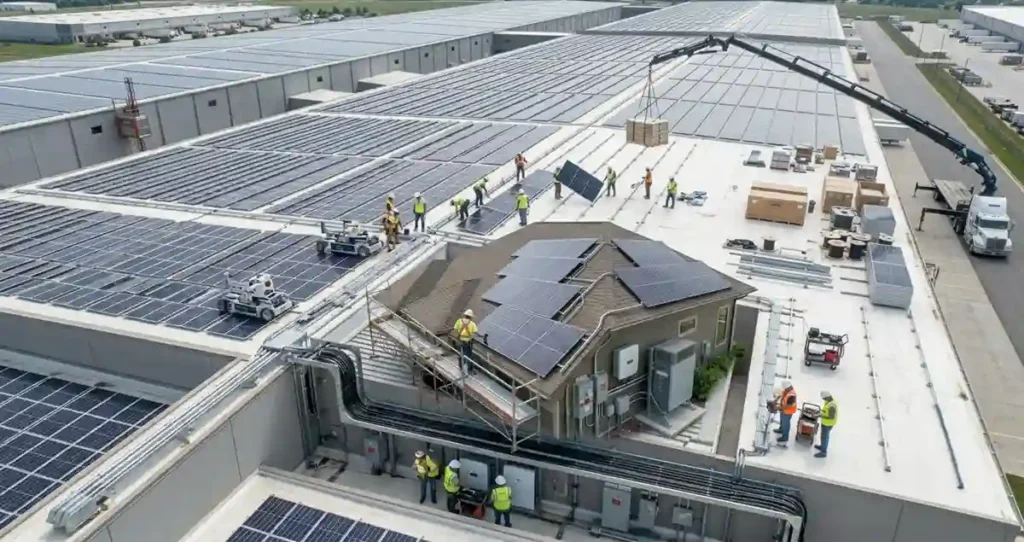
Solar installation contractors working on commercial projects face significant liability during and after installation. The coverage requirements for EPC contractors go beyond a standard contractor’s general liability policy.
| Coverage Type | What It Covers | Typical Requirement | Why It Matters |
| General Liability (GL) | Third-party bodily injury and property damage during installation | $1M per occurrence / $2M aggregate | Required by most commercial clients and building owners |
| Workers’ Compensation | Employee injuries during installation — rooftop work is high-risk | Statutory minimum by state | Required by law; rooftop solar classified as high-risk work class |
| Commercial Auto | Vehicles transporting equipment and crews to job sites | State minimum + company policy | Standard contractor requirement |
| Contractor’s Pollution Liability | Battery acid spills, chemical exposure during installation | $1M+ | Relevant for battery storage projects |
| Professional Liability (E&O) | Design errors, specification mistakes, engineering errors | $1M+ | Critical for EPC contractors providing design services |
| Installation Floater (Inland Marine) | Equipment and materials in transit and on-site during installation | Full project material value | Covers panels, inverters, batteries before fixed to structure |
| Completed Operations Coverage | Claims arising after installation is complete | $1M+ post-completion | Standard GL policy ends at project completion — this extends it |
| Engineer’s Note: The installation floater is the coverage most commonly missing from smaller solar contractor insurance packages. Panels, inverters, and batteries are at risk from the moment they leave the distributor warehouse to the moment they are energised and accepted by the client. A $180,000 inverter block sitting on a job site overnight is not covered by the building owner’s property policy or the installer’s GL policy. The installation floater covers exactly this exposure. |
3. Solar Panel Cleaning & O&M Service Insurance
Solar panel cleaning and O&M providers are a growing and underinsured segment of the industry. A cleaning crew on a commercial rooftop has significant liability exposure that a standard janitorial or cleaning service policy often does not cover.
| Coverage | Why Solar Cleaners Need It | Typical Coverage Needed |
| General Liability with rooftop work endorsement | Standard GL may exclude rooftop work — must be specifically endorsed | $1M per occurrence minimum |
| Workers’ Compensation | Rooftop work is classified as high-risk — required by state law | Statutory minimum; ensure rooftop work classification is included |
| Care, Custody & Control (CCC) Liability | Covers damage to panels while in the cleaner’s care | $500K–$2M depending on system value |
| Professional Liability | Cleaning errors causing panel damage or system underperformance | $500K+ for commercial contracts |
| Commercial Auto | Transport of cleaning equipment, water tanks, crews | State minimum + company policy |
| Field Note: A solar cleaning contractor I worked with on a commercial O&M contract had a standard janitorial insurance policy. When asked by the building owner to provide a Certificate of Insurance, the insurer confirmed the policy did not cover rooftop operations. The contractor lost the contract. A rooftop work endorsement added $600/year to their premium. They added it and won the next contract. Entirely avoidable. |
4. Commercial Solar Panel Insurance on Buildings — Key Requirements
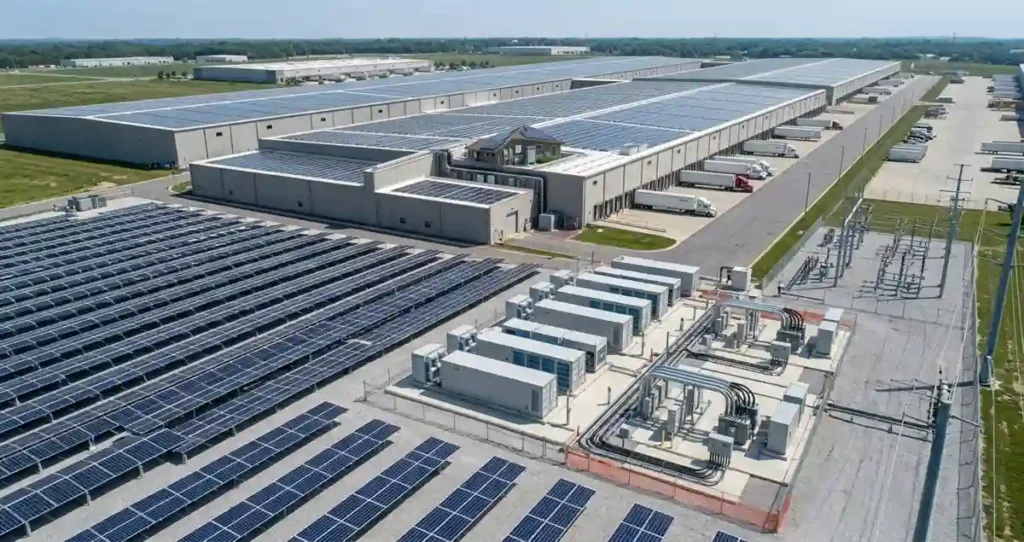
| Requirement | Rooftop System | Ground-Mount System | Notes |
| Property insurance classification | Building fixture — real property | Separate structure or equipment | Ground-mount may require a separate inland marine policy |
| Minimum property coverage | Full replacement cost of system | Full replacement cost of system | Account for future replacement pricing, not just installed cost |
| Equipment breakdown | Required — inverters and batteries | Required — inverters, trackers, batteries | Standard property policy excludes mechanical breakdown |
| Business interruption | Recommended if system generates or saves measurable revenue | Required for utility-scale or PPA projects | Calculate based on energy production value, not system cost |
| Liability | $1M minimum; $5M for large systems | $2M+ for ground-mount near public access | Ground-mount systems with public adjacency carry higher exposure |
For residential solar insurance coverage structure, see: Solar Panel Insurance: What It Covers & How to Get It
For weather and storm damage coverage on commercial systems, see: Solar Panels Weather & Storm Damage: Full Insurance Guide
Frequently Asked Questions
What insurance does a commercial solar installation require?
Most commercial solar projects require property insurance, equipment breakdown coverage, general liability insurance, and business interruption coverage. Additional policies may be required depending on project size and ownership structure.
Does commercial property insurance automatically cover solar panels?
Not always. Many insurers require that solar equipment be specifically listed or scheduled on the policy to ensure full replacement-cost coverage.
Why is equipment breakdown insurance important for commercial solar systems?
Standard commercial property insurance often excludes mechanical and electrical breakdowns. Equipment breakdown coverage helps protect inverters, batteries, trackers, and other critical components.
Do solar installation contractors need professional liability insurance?
Yes. Contractors providing design, engineering, or specification services should maintain professional liability insurance to protect against design errors and omissions.
What insurance should a solar panel cleaning company carry?
Solar cleaning companies typically need general liability insurance, workers’ compensation, commercial auto insurance, and coverage for rooftop operations and property damage.
Does business interruption insurance cover lost solar revenue?
In many cases, yes. Business interruption coverage can help compensate for lost energy production, PPA revenue, or energy cost savings resulting from a covered event.
Are battery energy storage systems covered by standard commercial solar insurance?
Not always. Many insurers require separate equipment breakdown or scheduled equipment coverage for battery storage systems due to their higher replacement value and risk profile.
Related Guides on SolarVisionAI
Solar Panel Insurance: What It Covers & How to Get It
Does Homeowners Insurance Cover Solar Panels? Complete Guide
Do Solar Panels Increase Your Home Insurance Premium?
Solar Panel Hail Damage: What Your Insurance Covers