
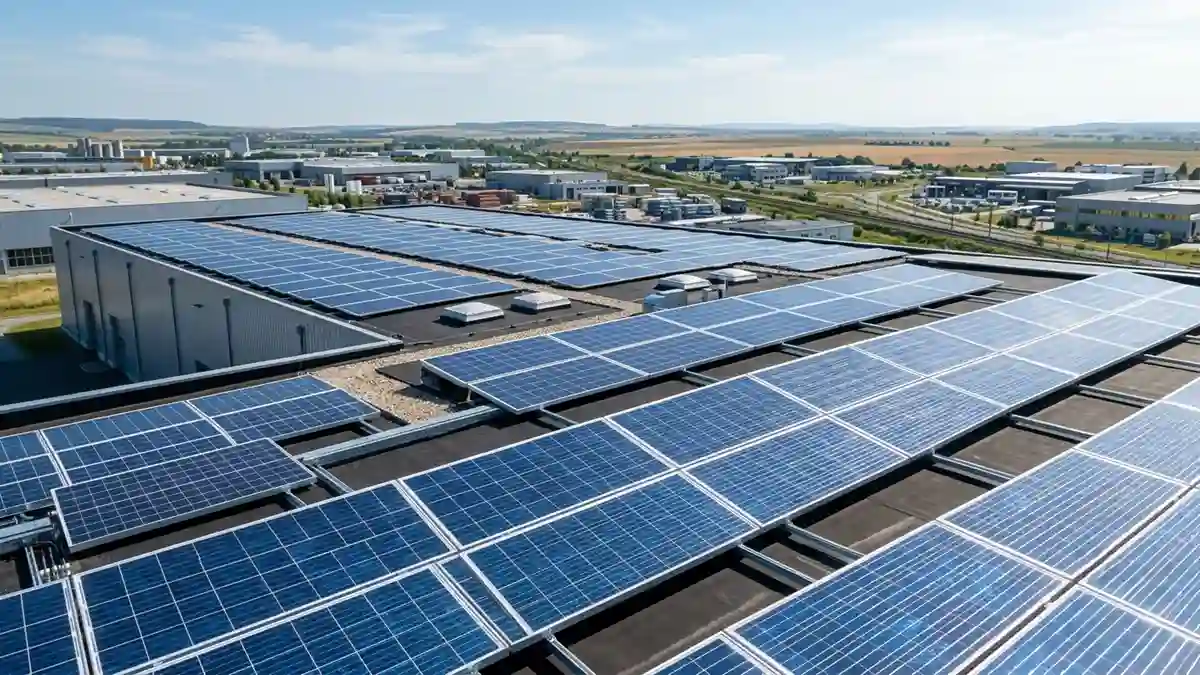
Efficiency, cost, and real-world performance data for polycrystalline solar panels — where they still make engineering sense in 2026.
I still get this question on nearly every residential site visit: “Just give me the cheapest solar panels that work.” More often than not, homeowners are referring to polycrystalline solar panels. The honest engineering answer in 2026 isn’t simply “yes” or “no.” It depends on your roof space, energy goals, climate, and budget. I’ve seen polycrystalline panels deliver excellent value in the right projects—and become costly compromises in the wrong ones.
This guide sits inside our broader Types of Solar Panels hub,
Quick Facts: Polycrystalline Solar Panels
| Feature | Details |
|---|---|
| Typical Efficiency | 15–18% |
| Expected Lifespan | 25–30 years |
| Annual Degradation | ~0.5–0.7% |
| Temperature Coefficient | ~−0.45%/°C |
| Best For | Large rooftops, warehouses, farms, ground-mounted systems |
| Primary Advantage | Lower upfront cost |
| Main Limitation | Requires more installation area |
| Typical Warranty | 25-Year Performance Warranty |
What Makes a Panel “Polycrystalline”
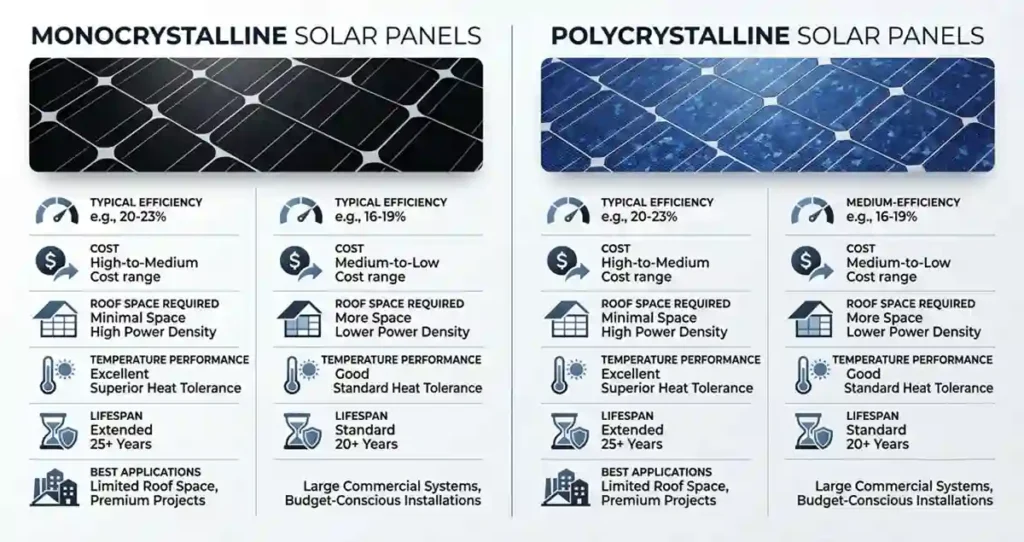
Polycrystalline cells are cut from silicon ingots cast from multiple silicon fragments melted together, rather than grown as a single continuous crystal the way monocrystalline is. The result is a cell with visible grain boundaries — that characteristic blue, fractured-glass appearance you can spot from across a rooftop — and a manufacturing process that uses less energy and generates less silicon waste than monocrystalline production.
That manufacturing simplicity is the entire reason polycrystalline panels are cheaper. It’s also the entire reason they’re slightly less efficient: grain boundaries interrupt electron flow, creating minor recombination losses that pure monocrystalline silicon doesn’t have. None of this is a defect — it’s simply a different point on the cost-versus-efficiency curve, and understanding where that curve sits is most of what you need to make a good decision here.
Engineer’s Note: People frequently ask me if polycrystalline panels are “lower quality.” They’re not lower quality — they’re a different manufacturing trade-off. A well-built polycrystalline panel from a reputable Tier 1 manufacturer will outlast a poorly-built monocrystalline panel from an unverified source. Cell type and build quality are two separate questions. Don’t conflate them.
Efficiency and Real Performance Numbers
| Metric | Polycrystalline | Monocrystalline | Practical Difference | Industry Reference |
|---|---|---|---|---|
| Typical Module Efficiency | 15–18% | 18–22% | Monocrystalline delivers approximately 3–4 percentage points higher efficiency, making it ideal for space-constrained installations. | NREL, Fraunhofer ISE |
| Temperature Coefficient | ~−0.45%/°C | ~−0.35%/°C | Monocrystalline generally maintains higher output during high-temperature operation. | NREL, Fraunhofer ISE |
| Roof Space Required (5 kW System) | ~32 m² | ~27 m² | Around 5 m² less roof area is typically required with monocrystalline modules. | Typical commercial module specifications |
| Typical Cost per Watt | Approximately 10–15% lower | Baseline | Polycrystalline offers lower upfront costs where installation space is plentiful. | IEA, IRENA |
| Annual Degradation | ~0.5–0.7% | ~0.4–0.6% | The lifetime performance difference is relatively small over a 25-year operating period. | NREL, PV Magazine |
| Reliability & Safety | Certified | Certified | Both technologies should comply with internationally recognized durability and safety standards. | IEC 61215 & IEC 61730 |
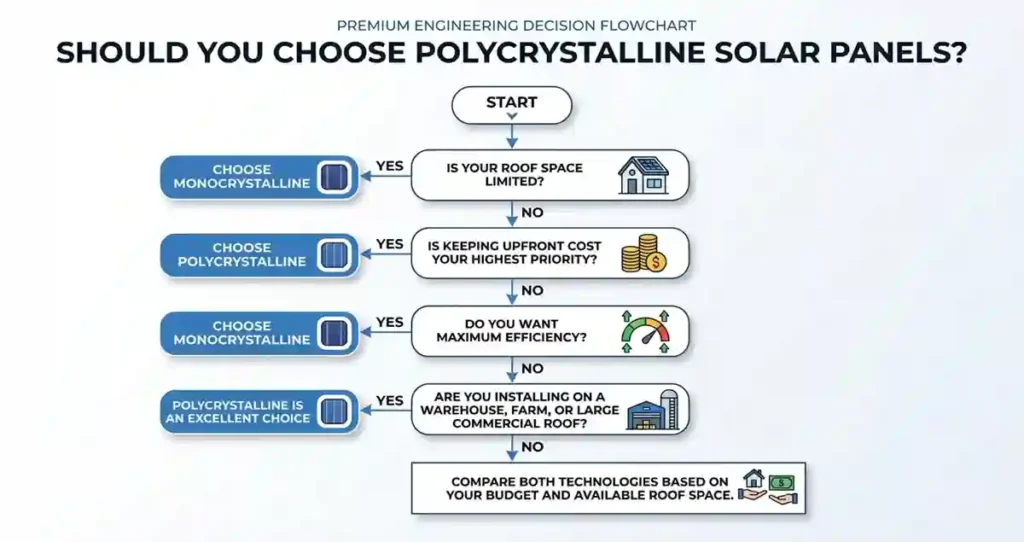
The efficiency gap is real, but it’s rarely the deciding factor for most buyers — it’s the space constraint that follows from it. If your roof has room to spare, the lower cost per watt of polycrystalline can outweigh the efficiency loss entirely. If your roof is tight and every square meter counts, monocrystalline usually wins on total system output regardless of price.
Engineering Assessment
| Feature | Polycrystalline | Engineering Assessment |
|---|---|---|
| Initial Cost | Lower | Excellent value for projects where roof space is not limited. |
| Module Efficiency | Moderate | Suitable for large installations but less effective on small roofs. |
| Heat Performance | Moderate | Slightly higher power loss under elevated temperatures compared to monocrystalline. |
| Long-Term ROI | Good | Strong return when the lower upfront cost outweighs the need for additional installation space. |
| Product Availability | Declining | Premium manufacturers increasingly prioritize TOPCon and other N-type technologies. |
| Overall Recommendation | Recommended | Best suited for budget-conscious commercial and agricultural projects with abundant space. |
Who Should Buy Polycrystalline Solar Panels?
Polycrystalline panels remain an excellent choice for buyers who prioritize affordability over maximum power density. They are particularly well suited for:
- Large residential rooftops with ample installation space
- Agricultural buildings and poultry farms
- Warehouses and industrial facilities
- Ground-mounted solar arrays
- Budget-conscious commercial projects
- Organizations focused on minimizing upfront capital costs
If roof space is plentiful, the lower cost per watt often provides a better overall return on investment than paying a premium for higher-efficiency modules.
When Polycrystalline May Not Be the Best Choice
Polycrystalline panels are generally not the ideal solution for:
- Homes with limited roof space
- High-end residential installations
- Urban buildings with restricted installation area
- Projects seeking maximum energy generation per square meter
- Future battery expansion where roof capacity is limited
- Customers are comparing against modern TOPCon or HJT technologies
In these situations, higher-efficiency monocrystalline or N-type technologies generally deliver greater long-term value.
Advantages and Disadvantages
| Advantages | Disadvantages |
| 10–15% lower cost per watt than monocrystalline | 3–4 percentage points lower efficiency |
| Lower manufacturing energy use and less silicon waste | Requires more roof/land area for equivalent output |
| Mature, well-proven manufacturing process | Slightly worse temperature coefficient in hot climates |
| Strong value on large ground-mount and utility projects | TOPCon and PERC have closed much of the historical price gap |
| Still available from reputable Tier 1 manufacturers | Fewer new premium product lines use this cell type |
Real-World Applications Where Polycrystalline Still Makes Sense
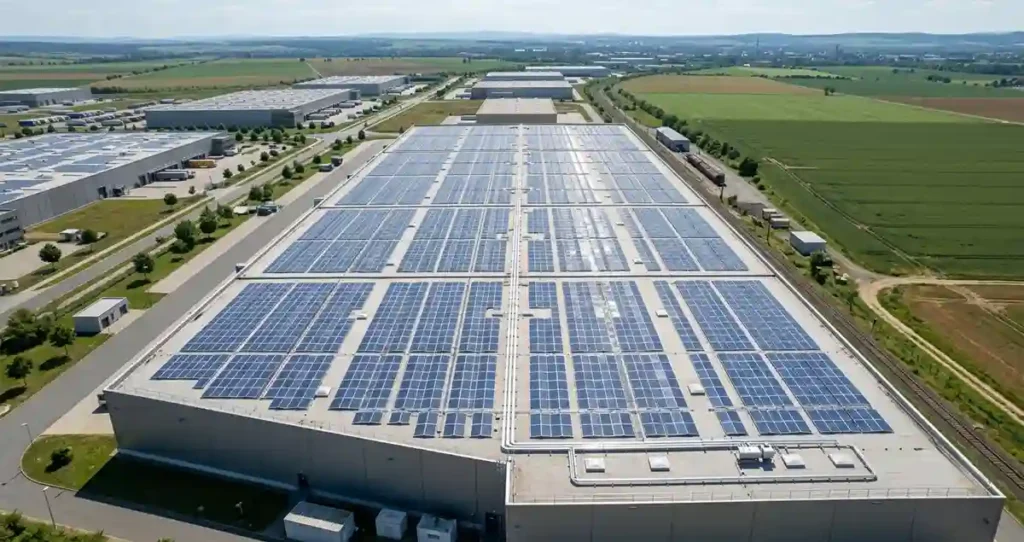
The clearest case I can point to is a 480kW ground-mount project I reviewed the specification for last year — an agricultural property with more open land than it knew what to do with, and an owner whose only real question was cost per kilowatt-hour delivered. On a project that size, the few extra rows of polycrystalline panels needed to hit the same output cost far less than upgrading the entire array to monocrystalline. That’s polycrystalline’s strongest use case in one sentence: abundant space, cost-sensitive buyer, large enough scale that the per-panel savings compound into real money.
I’ve also specified it on secondary structures — workshop roofs, storage sheds, agricultural outbuildings — where the building owner wants solar offset for that structure’s own load but isn’t trying to maximize output density. In those cases, paying a premium for monocrystalline’s extra efficiency doesn’t buy you anything, because there was never a space constraint to solve for in the first place.
Budget-conscious residential retrofits on larger-than-average roofs are the third scenario. If a homeowner has a roof considerably bigger than their system size requires, and cost is the primary driver, polycrystalline remains a legitimate, honest recommendation rather than a compromise. I’ve installed it on a handful of rural residential jobs where the roof was easily double the required footprint, and in every one of those cases, the client was happy with the trade-off two years later.
One project worth mentioning specifically: a poultry farm client wanted to offset the load of several large ventilation fans running almost continuously through summer. The roof area available across three sheds was enormous relative to the system size needed, and the project was entirely about minimizing total spend per kilowatt installed. Polycrystalline was the obvious, uncomplicated answer, and nobody involved second-guessed it.
Where Polycrystalline Panels Make the Most Sense
| Installation Scenario | Recommendation | Engineering Assessment |
|---|---|---|
| Agricultural Buildings | ⭐⭐⭐⭐⭐ | Excellent choice due to abundant roof area and lower installation costs. |
| Poultry Farms | ⭐⭐⭐⭐⭐ | One of the strongest remaining use cases in 2026. |
| Warehouses | ⭐⭐⭐⭐☆ | Suitable where maximizing roof utilization is not critical. |
| Large Residential Villas | ⭐⭐⭐⭐☆ | Good option if sufficient roof space is available. |
| Commercial Buildings | ⭐⭐⭐☆☆ | Consider monocrystalline if roof area is limited. |
| Urban Homes | ⭐⭐☆☆☆ | Higher-efficiency technologies are usually preferable. |
| Utility-Scale Ground Mounts | ⭐⭐⭐⭐☆ | Still viable where cost savings outweigh the efficiency penalty. |
Maintenance and Lifespan Expectations
Polycrystalline panels don’t require different maintenance from monocrystalline — the cell chemistry doesn’t change cleaning frequency, inspection routine, or the way you’d handle a cracked glass layer. What does differ slightly is the degradation curve: expect marginally faster year-over-year output decline, in the range of 0.5–0.7% annually versus 0.4–0.6% for monocrystalline. Over a 25-year system life, that difference adds up to a few extra percentage points of total output loss — worth knowing when you’re modeling long-term ROI, but rarely enough to change the buying decision on its own.
I recommend the same annual visual inspection and periodic cleaning schedule regardless of cell type — see How to Clean Solar Panels for the specifics — and the same attention to junction box and connector condition over time, since those components fail independently of cell chemistry.
Where It No Longer Makes Sense
TOPCon and PERC panels have closed much of the price gap that used to justify polycrystalline on cost grounds alone. For most residential rooftops with any meaningful space constraint, current-generation monocrystalline or TOPCon panels now deliver better lifetime value per dollar spent, because the efficiency premium has become cheap enough to stop being a luxury. See our TOPCon Solar Panels guide for why N-type has become the mainstream default in this segment.
Field Note: The polycrystalline quotes I still see winning bids in 2026 are almost always on projects above 500kW, where the aggregate savings run into tens of thousands of dollars. Below that scale, the price gap rarely justifies the space and efficiency trade-off anymore — I’ve had to talk more than one residential client out of it purely on the numbers.
A Real Cost Comparison Worked Example
To make the trade-off concrete: on a 10kW residential system, polycrystalline panels running at 17% efficiency versus monocrystalline at 20% efficiency means roughly 15% more roof area needed for the polycrystalline array to hit the same 10kW capacity. If your roof comfortably has that extra 15% to spare, and the polycrystalline panels are priced 12% lower per watt, the math tends to favor polycrystalline outright — you get the same output for meaningfully less money, and the space was never a scarce resource to begin with.
Flip the scenario to a roof that’s already tight for a 10kW array, and that extra 15% of area simply doesn’t exist. In that case the comparison isn’t really polycrystalline versus monocrystalline anymore — it’s polycrystalline versus a smaller system, since you physically can’t fit the larger polycrystalline footprint. That’s the scenario where I’ll always recommend monocrystalline regardless of the per-watt price difference, because a smaller system producing less total energy defeats the purpose of comparing cost per watt in the first place.
Buying Checklist If You Choose Polycrystalline
Before purchasing polycrystalline panels, verify the following:
- ✔ Confirm the manufacturer is recognized as a Tier 1 supplier.
- ✔ Ensure compliance with IEC 61215 and IEC 61730 certification standards.
- ✔ Review the temperature coefficient for installations in hot climates.
- ✔ Compare both the product warranty and the long-term performance warranty.
- ✔ Verify the annual degradation rate from the manufacturer’s datasheet.
- ✔ Check the panel’s power tolerance and quality control documentation.
- ✔ Compare the total installed system cost—not just the panel price.
- ✔ Confirm Grade A cell sorting
Frequently Asked Questions
Are polycrystalline solar panels still worth buying in 2026?
Yes. They remain a cost-effective solution for projects where installation space is abundant and minimizing upfront investment is the primary objective.
How long do polycrystalline solar panels last?
Most quality polycrystalline panels have an expected service life of 25 to 30 years, with annual degradation typically ranging from 0.5% to 0.7%.
Are polycrystalline panels suitable for Pakistan’s climate?
Yes. They perform reliably in Pakistan, although their slightly higher temperature coefficient means they lose marginally more output during extremely hot weather than monocrystalline panels.
Can polycrystalline panels be used with lithium batteries?
Yes. Battery compatibility depends on the inverter and charge controller, not the solar cell technology itself.
Are polycrystalline panels compatible with net metering?
Yes. Net metering eligibility depends on local utility regulations and inverter certification rather than the type of solar panel installed.
Which is better: Polycrystalline or TOPCon?
For most residential rooftops, TOPCon panels provide higher efficiency, lower degradation, and improved performance in high-temperature conditions. Polycrystalline panels remain competitive primarily where installation space is abundant and project cost is the main concern.
Can polycrystalline and monocrystalline panels be mixed?
Yes, but only when electrical characteristics such as voltage and current are properly matched. Mixing incompatible modules without appropriate system design can reduce overall performance.
What should I check before buying polycrystalline panels?
Review the manufacturer’s reputation, IEC certifications, warranty terms, degradation rate, temperature coefficient, and the total installed system cost before making a purchasing decision.
Related guides on SolarVisionAI.com
- Solar Fence Post Lights: Cap Sizes, Types & Install Guide
- Solar Charge Controller: The Complete Guide
- MC4 Connectors: Solar Safety & Installation Guide
- Solar Panel Types, Efficiency & Benefits
- Solar Water Pump Guide
- Commercial Solar Panel Installation: Engineering Guide
- Solar Fence Post Lights: Cap Sizes, Types & Install Guide — solarvisionai.com/solar-fence-post-lights/
- BESS — Battery Energy Storage System Guide — solarvisionai.com/bess-battery-energy-storage-system-guide/
- Commercial Solar Panel Installation — solarvisionai.com/commercial-solar-panel-installation/