
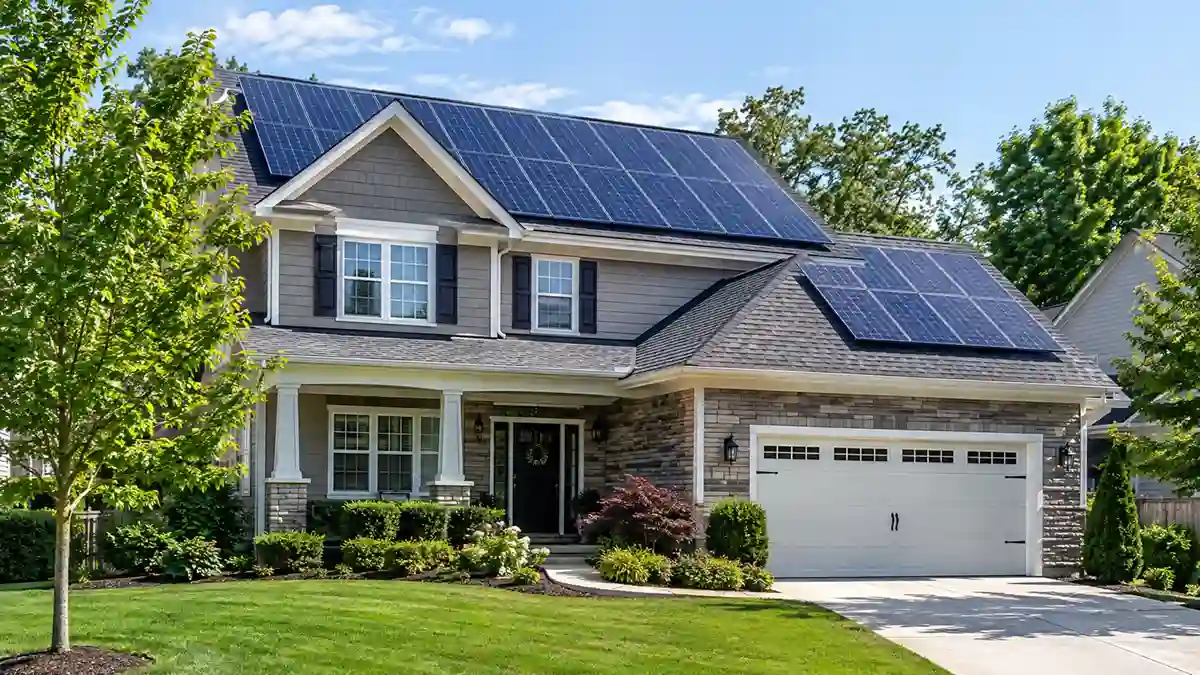
Planning residential solar panel installation? Learn about US installation costs, permits, roof suitability, installer selection, and solar incentives in 2026.
Residential solar panel installation is more than attaching panels to a roof. It involves evaluating the roof structure, estimating household electricity demand, selecting compatible equipment, obtaining permits, and coordinating with the local utility. Each decision affects the system’s energy production, safety, and long-term financial performance.
From an engineering perspective, the most important question is not simply how many solar panels will fit on a roof. It is whether the proposed system can reliably meet the home’s energy needs while remaining structurally sound, electrically safe, and financially worthwhile.
This guide explains how residential solar panel installation works in the United States, what homeowners should evaluate before hiring an installer, which costs to consider, and how to compare proposals without focusing on the panel price alone.
Quick answer: A typical residential solar installation may require one to three days of on-site work, although larger or more complicated projects can take longer. Design, permitting, inspection, and utility interconnection may extend the overall timeline to several weeks or longer. The exact schedule depends on the property’s condition, local approval requirements, equipment availability, and the utility’s procedures.
1. How Residential Solar Panel Installation Works
A residential solar installation typically progresses through six stages. Understanding these steps helps homeowners assess contractor proposals and identify potential delays before signing a contract.
| Stage | What happens | Typical consideration |
|---|---|---|
| Site assessment | The installer reviews electricity usage, roof condition, shading, and electrical equipment | Roof suitability and household demand |
| System design | Panel layout, inverter selection, and electrical design are prepared | Energy production and equipment compatibility |
| Permitting | Required building and electrical permits are submitted | Local authority requirements |
| Physical installation | Mounting hardware, panels, wiring, and inverter are installed | Structural and electrical safety |
| Inspection | The installation is checked against applicable requirements | Local inspection and code compliance |
| Utility interconnection | The utility reviews and authorizes grid connection | Utility-specific approval procedures |
The physical installation is often shorter than the administrative stages. In the United States, local authorities generally require permits for rooftop solar installations, followed by inspection. Grid-connected systems also require the appropriate utility interconnection process.
Requirements and processing times differ between jurisdictions. Homeowners should confirm the expected timeline with both the installer and the relevant local authority.
For a more detailed explanation of the installation process, see our complete solar panel installation guide.
Engineer’s note: Before accepting an installation schedule, ask whether it covers only the physical work or the complete process through utility approval. A company may be able to install the equipment quickly but cannot necessarily control local inspection queues or utility processing times.
2. Is Your Roof Suitable for Solar Panels?
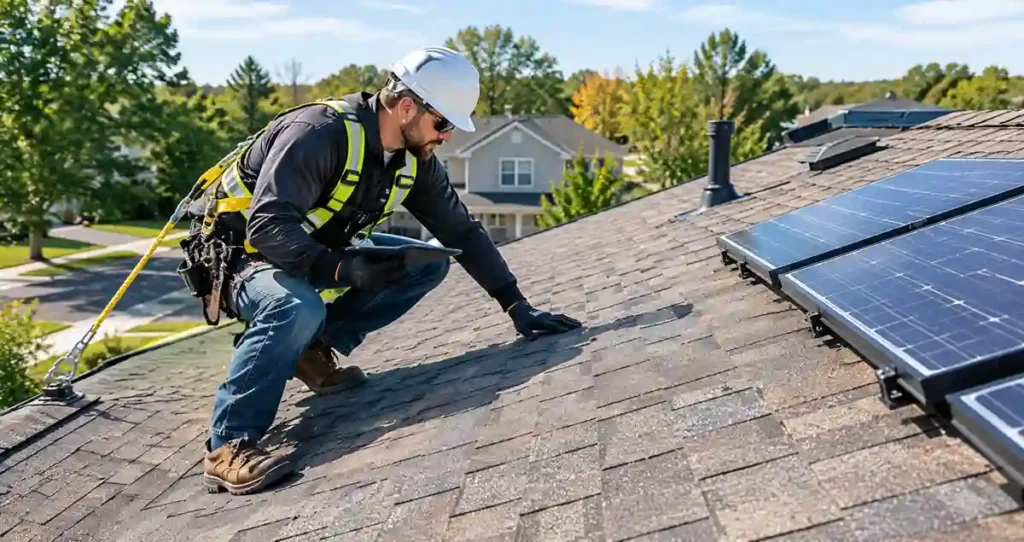
Roof suitability should be established before finalizing the system size or installation cost. A roof with ample space may still be unsuitable if it has structural limitations, significant shading, or insufficient remaining service life.
Roof condition and remaining life
Solar panels are intended to operate for decades, so installing them on a roof that needs replacement soon can create avoidable costs. Removing and reinstalling the array during later roof work may increase the overall project expense.
Ask the installer to assess the roof covering, underlying structure, existing damage, and mounting requirements. If the roof needs substantial repairs or replacement, compare the cost and timing of completing that work before installing solar.
Orientation, tilt, and shading
The roof’s orientation, pitch, and surrounding obstructions influence how much electricity the system can produce. Trees, chimneys, neighboring buildings, and rooftop equipment can reduce output by shading individual modules or parts of the array.
South-facing roof areas are often favorable for annual production in the United States, but the best layout depends on the property’s location, roof geometry, electricity usage, and utility compensation rules.
An installer should evaluate shading throughout the day and across relevant seasons rather than relying only on a photograph of the roof.
Structural capacity and mounting
Solar panels and mounting equipment add weight to the roof. Wind uplift, snow loads where applicable, roof framing, attachment locations, and the selected mounting hardware must also be considered.
The appropriate structural assessment depends on the building and local requirements. Do not assume that a roof can support a solar array simply because it is accessible or appears to be in good condition.
For properties with metal roofing, our guide to installing solar panels on a metal roof explains important mounting considerations.
The US Department of Energy also provides guidance on evaluating a home’s suitability for solar.
3. How to Size a Residential Solar Panel System
The right system size depends on household electricity consumption, available roof area, local solar conditions, and the amount of electricity the homeowner wants to generate.
Start by reviewing 12 months of electricity bills. This helps identify annual consumption, seasonal changes, and periods of particularly high demand.
Next, consider the roof area available for panels, shading, orientation, and expected system production. The installer should use location-specific solar resource data and account for realistic system losses rather than assuming that the panels will produce their rated output continuously.
Estimate the number of panels
The basic relationship is:
Number of panels = Required system capacity in watts ÷ Panel rating in watts
For example, a hypothetical 8 kW system using 400-watt panels would require approximately 20 panels:
8,000 W ÷ 400 W per panel = 20 panels.
This is a preliminary calculation, not a final design. The actual panel count depends on the selected module, roof layout, equipment compatibility, and the system’s required capacity.
To estimate the number of panels your home may need, use our solar panel size calculator.
For a better understanding of how panels are electrically arranged into an installation, see our guide to the solar array.
System capacity is not the same as energy production
A system rated at 8 kW does not produce 8 kW continuously throughout the day. Actual output changes with sunlight, temperature, orientation, shading, and equipment losses.
For a location-specific estimate, homeowners can use the NREL PVWatts calculator. The results can help compare possible system configurations, but they are estimates rather than guarantees of actual production.
The installer should explain the expected annual energy output in kilowatt-hours (kWh) and the assumptions behind the estimate.
4. Residential Solar Panel Installation Costs in the United States
The cost of residential solar panel installation varies considerably across the United States. System capacity, equipment selection, roof complexity, labor rates, permitting requirements, and electrical upgrades all affect the final price.
Rather than relying on a single national figure, homeowners should obtain itemized proposals for their specific property.
What does the installation price include?
A complete proposal may include:
- Solar panels and mounting hardware.
- Inverters or microinverters.
- Electrical wiring, disconnects, and associated protection equipment.
- Labor, engineering, and system design.
- Permits, inspections, and utility interconnection assistance.
- Monitoring equipment and commissioning.
- Roof repairs or electrical service upgrades, where required.
Not every proposal includes all these items. Some contractors quote additional work separately, so comparing headline prices without checking the scope can be misleading.
For example, one company might offer a lower price but exclude a necessary electrical panel upgrade. Another might include that work in its initial proposal. The second proposal may therefore provide a more realistic picture of the total project cost.
Compare the cost per watt
Cost per watt is a useful initial comparison metric.
Cost per watt = Total quoted system price ÷ System capacity in watts
Suppose a hypothetical 8,000-watt system has an installation quote of $24,000. Its quoted price is $3.00 per watt.
This example is for calculation purposes only, not a claim about the current national average. Homeowners should compare quotes using the same system scope, equipment assumptions, and payment terms.
For more detailed cost considerations, read our solar panel installation cost guide.
The National Laboratory of the Rockies’ solar installed-system cost analysis also provides technical resources on solar system cost benchmarks.
Calculate the potential return
The financial value of a solar installation depends on how much electricity the system generates, how much of that electricity the home uses, the utility’s compensation for exported power, and the total cost of ownership.
A simplified calculation is:
Simple payback period = Net upfront cost ÷ Estimated annual bill savings
This calculation provides a starting point, not a complete financial forecast. It does not account for financing interest, future electricity prices, maintenance, equipment replacement, degradation, or changes in utility tariffs.
Use our solar ROI calculator as a starting point for evaluating the financial side of a project.
5. Solar Incentives and Tax Credits for US Homeowners in 2026
Incentives should be checked carefully before being included in a residential solar payback calculation.
The federal Residential Clean Energy Credit is not available for qualifying residential clean energy expenditures made after December 31, 2025. Homeowners planning a new installation in 2026 should not assume they can claim this credit.
The IRS explains the termination date and relevant rules in its Residential Clean Energy Credit guidance.
Depending on the location and applicable program rules, homeowners may still want to investigate state incentives, utility rebates, local programs, and property tax provisions. Availability, eligibility, and funding can change, so confirm the current terms with the administering authority before making a financial commitment.
Also review the utility’s rules for electricity exported to the grid. Net metering, net billing, and other compensation arrangements differ between states and utilities. These differences can materially affect the financial value of excess solar production.
Our guide to net metering versus net billing explains why the distinction matters.
If you are researching a prior-year federal credit claim or a possible carryforward, consult the IRS guidance and a qualified tax professional. Our IRS Form 5695 guide can provide additional background, but it should not be treated as confirmation that a new 2026 installation qualifies for a federal residential solar credit.
6. How to Choose a Residential Solar Panel Installation Company
Choosing the installer is one of the most important decisions in the project. Equipment specifications matter, but the quality of the system design, roof attachments, electrical work, commissioning, and ongoing service also affects long-term performance.
Obtain multiple proposals and compare them using consistent criteria.
Verify licensing and insurance
Check the contractor’s licensing requirements in your state and locality. Confirm that the company and the personnel responsible for the work meet applicable requirements for electrical and solar installation.
Ask for proof of insurance and clarify whether the company uses subcontractors. If subcontractors will perform the installation, find out who is responsible for their work, site supervision, inspections, and warranty support.
Request an itemized proposal
A professional proposal should identify the major components and the work included in the price.
Look for the panel manufacturer and model, inverter type and model, proposed system capacity, mounting approach, estimated annual production, and any additional electrical or roof work.
The proposal should also identify exclusions and explain how unexpected work will be priced.
Compare production estimates, not just panel ratings
Two proposals with the same nominal system capacity may predict different annual energy production because of their layouts, shading assumptions, equipment selection, and modeling methods.
Ask each installer to explain the assumptions behind its production estimate. A credible proposal should make it possible to understand how the forecast was calculated.
Review warranties and service arrangements
Check the difference between the equipment manufacturer’s warranty and the installer’s workmanship warranty.
The equipment warranty may cover specified product defects or performance conditions. The workmanship warranty addresses certain problems associated with the installation itself, subject to its terms and exclusions.
Ask who will respond if a panel stops communicating, an inverter develops a fault, or a roof leak appears around a mounting point. Find out whether service is provided directly by the installer or through another company.
Ask these questions before signing
- Are permits, inspections, and utility interconnection assistance included?
- Who will perform the actual installation?
- Is any roof repair or electrical upgrade required?
- What annual energy production does the proposal estimate, and what assumptions support it?
- Which warranties cover the equipment and installation workmanship?
- How are monitoring, maintenance, and service requests handled?
- What happens if the project requires additional work or takes longer than expected?
- What are the complete payment terms, financing costs, and cancellation provisions?
For broader consumer guidance, the US Department of Energy’s homeowner solar guide is a useful starting point.
7. Should You Buy, Lease, or Use a Solar Power Purchase Agreement?
US homeowners may encounter several ways to pay for residential solar. The best option depends on available capital, financing terms, ownership preferences, and the expected financial benefits.
Buying with cash: The homeowner pays the installation cost and owns the system. This avoids loan interest, but requires a larger upfront investment.
Solar loan: The homeowner finances the system and generally owns it subject to the loan agreement. Compare the interest rate, fees, repayment period, and total amount payable rather than focusing only on the monthly payment.
Solar lease: A third-party provider owns the equipment, while the homeowner pays according to the lease terms. Review payment increases, maintenance responsibilities, and what happens if the property is sold.
Power purchase agreement (PPA): The homeowner purchases electricity generated by a third-party-owned system under an agreed pricing structure. Understand how the rate is calculated, whether it escalates, and what obligations apply during a home sale.
Before signing any agreement, compare the complete financial terms and ask how the arrangement affects roof work, system removal, property transfer, and future equipment service.
Do not assume that leasing or financing automatically makes solar cheaper. The total cost depends on the contract.
8. What Happens During Permitting and Utility Interconnection?
Residential solar installations in the United States commonly involve local permitting, post-installation inspection, and utility approval for grid connection.
The exact process varies by jurisdiction. Some locations have streamlined procedures, while others require more extensive documentation or reviews.
Your installer should explain which permits are required, who submits the applications, which fees are included, and how inspection and interconnection will be coordinated.
The local authority may review electrical and structural aspects of the proposed installation. The utility may separately review the proposed grid connection and applicable interconnection requirements.
Important: Installing the panels does not automatically authorize a grid-connected system to export electricity. Follow the utility’s approval process and do not assume the system can be switched on for grid-parallel operation before the required authorization is received.
See the US Department of Energy’s permitting and inspection guidance for additional information.
9. Grid-Tied Solar, Battery Backup, and Power Outages
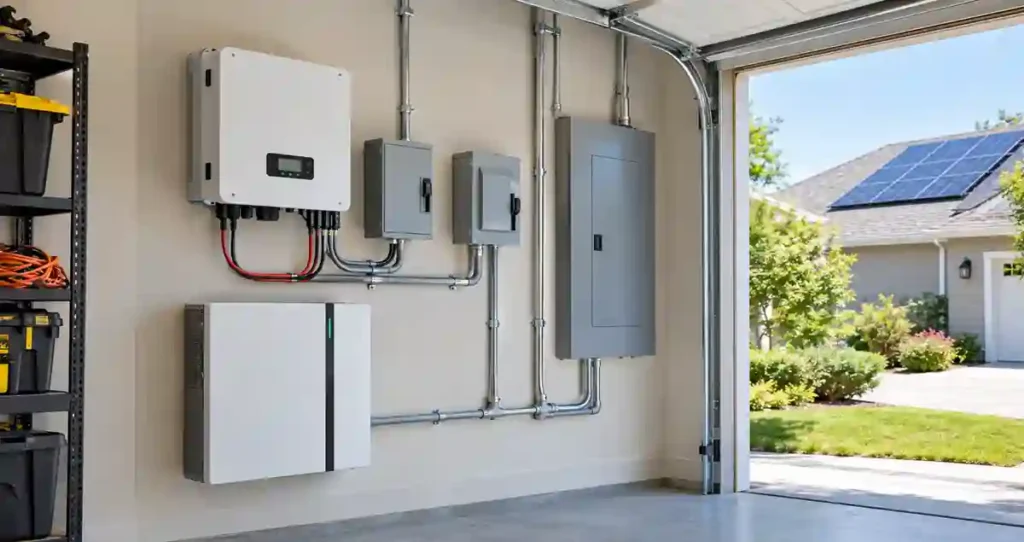
A standard grid-tied solar system is designed to operate in coordination with the utility grid. Many homeowners assume that rooftop panels will continue powering the home during a grid outage, but that is not normally how a conventional grid-tied system operates.
For safety, ordinary grid-tied inverters generally stop supplying power during an outage unless the system has appropriate equipment and controls designed to provide backup power.
When does a home need a solar battery?
A battery may be useful if the homeowner wants backup electricity, greater control over when solar energy is used, or a way to shift some energy consumption to periods when grid electricity is more expensive.
However, a battery adds cost and does not automatically provide whole-home backup. The inverter, battery power rating, usable storage capacity, selected backup circuits, and system configuration determine what can be powered and for how long.
For example, keeping essential lighting, communications, refrigeration, and selected outlets running may require a different design from backing up electric heating, central air conditioning, or other high-demand appliances.
Before choosing storage, ask the installer to calculate the expected backup load and duration. Confirm whether the system can recharge the battery from solar during an outage and which circuits will remain operational.
Our guide to solar battery installation covers additional considerations for homeowners.
You can also use our solar battery size calculator to explore preliminary storage requirements.
10. Can You Install Residential Solar Panels Yourself?
Some homeowners can undertake parts of a small solar project, particularly certain portable or off-grid applications. However, a grid-connected residential installation is a more demanding electrical and structural project.
The work may involve roof access, structural attachments, DC wiring, inverter connections, grounding, electrical protection, rapid shutdown requirements where applicable, permitting, and utility interconnection.
Whether a homeowner may legally perform specific work depends on the jurisdiction and the type of installation. Some locations require licensed contractors or electricians for particular activities, and permit requirements still apply.
DIY installation can also complicate equipment warranties, insurance, inspection, and future service if the work is not completed according to applicable requirements.
If you are considering a small self-contained project, start with our DIY solar panel kit guide. For a grid-connected rooftop system, confirm the local requirements before attempting any work.
11. When Is the Best Time to Install Solar Panels?
There is no single best installation month for every US homeowner.
The most suitable timing depends on roof condition, local weather, contractor availability, permitting schedules, and the household’s financial priorities.
Installing solar alongside a planned roof replacement may reduce the risk of paying for panel removal and reinstallation later. In areas with heavy snowfall, severe weather, or seasonal construction constraints, scheduling may also affect the project timeline.
It is worth requesting proposals early enough to allow for site assessment, system design, permits, and utility approvals rather than choosing a date based only on the contractor’s installation availability.
Read our guide to the best time to install solar panels for more planning considerations.
12. Final Inspection and System Commissioning
Once installation is complete, the system should be checked against the approved design and applicable electrical requirements.
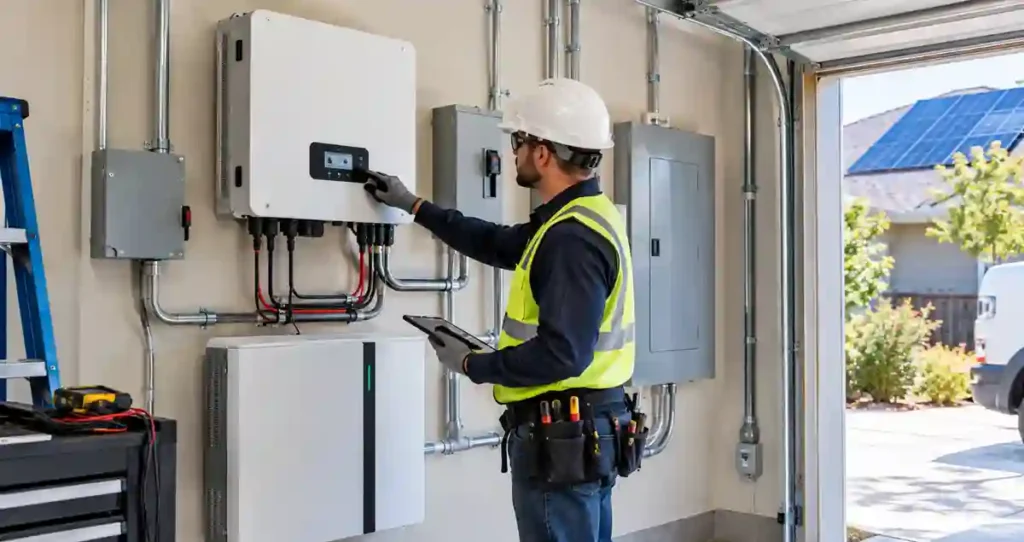
The commissioning process may include verifying wiring and connections, checking grounding and protective equipment, confirming inverter configuration, reviewing monitoring communications, and documenting system operation.
Homeowners should receive the relevant system documentation, equipment manuals, warranty details, monitoring instructions, and information about whom to contact for service.
For a grid-connected system, follow the utility’s authorization process before operating it in parallel with the grid.
After commissioning, monitor the system’s production and investigate unusual changes. Weather and seasonal sunlight naturally affect output, so a single low-production day does not necessarily indicate a fault. Persistent deviations from the expected performance should be reviewed against local weather, shading, equipment status, and the original production estimate.
Frequently Asked Questions
How long does residential solar panel installation take?
The physical installation may take one to three days for a typical residential project. The complete process can take several weeks or longer when site assessment, permitting, inspection, and utility interconnection are included. Timelines vary by location and project complexity.
How much does residential solar panel installation cost in the US?
The price depends on system capacity, equipment, labor, roof condition, permits, and any necessary electrical upgrades. Request itemized proposals from multiple qualified installers and compare the complete scope of work rather than relying on a single price per watt.
How many solar panels does a house need?
The number depends on the home’s electricity consumption, panel wattage, available roof area, shading, and expected local solar production. Start with your electricity bills and use our solar panel size calculator for a preliminary estimate.
Do solar panels work on cloudy days?
Yes. Solar panels can generate electricity under cloudy conditions, although production is generally lower than under strong direct sunlight. Actual output depends on cloud cover, panel technology, system orientation, and local weather.
Do solar panels work during a power outage?
A conventional grid-tied solar system generally shuts down during a grid outage for safety. Backup operation requires suitable equipment and a system designed and configured to operate safely without the grid.
Is a battery necessary for residential solar?
No. A grid-tied solar system can operate without a battery. Storage may be worthwhile when backup power, energy shifting, or particular utility tariff arrangements justify the additional cost.
Can I install solar panels myself?
Some small off-grid projects may be suitable for DIY work, but residential grid-connected installations involve structural and electrical requirements, permits, and utility procedures. Check local regulations and use qualified professionals where required.
Is the federal residential solar tax credit available for a new installation in 2026?
The federal Residential Clean Energy Credit is not available for qualifying expenditures made after December 31, 2025. Check the current IRS guidance for details and consult a qualified tax professional regarding prior-year claims or carryforward questions.
How do I choose a residential solar panel installation company near me?
Check applicable state and local licensing, insurance, itemized pricing, equipment specifications, production estimates, workmanship warranties, and service arrangements. Compare multiple proposals and verify who is responsible for permits, inspections, and utility interconnection.
Do I need permission from my utility before using my solar system?
Grid-connected systems generally must complete the applicable utility interconnection process. Confirm the requirements and operating authorization with your installer and utility before operating the system in parallel with the grid.
What should I check before signing a solar installation contract?
Review the total price, equipment models, estimated annual production, roof and electrical work, permit responsibilities, warranty terms, payment schedule, financing costs, service arrangements, and any conditions for cancellation or property transfer.
Final Thoughts
Residential solar panel installation is a long-term home investment, and a good decision starts with a realistic assessment of the property and the household’s electricity needs.
Before signing a contract, confirm that the roof is suitable, compare detailed system proposals, understand the local utility’s compensation rules, and verify the installation company’s qualifications. Evaluate the complete project cost and expected energy production rather than choosing an installer on panel price alone.
A properly designed and installed system should balance energy production, structural integrity, electrical safety, maintainability, and financial performance. Taking the time to evaluate these factors can help homeowners make a more informed decision about solar energy for their property.
Related Guides
- 24V 200Ah LiFePO4 Battery: Specs, Uses & Buying Guide
- LiFePO4 vs Lithium-Ion: Which Battery Should You Buy?
- LiFePO4 Battery: How It Works, Specs & Buying Guide
- LiFePO4 Batteries for Solar: How to Choose & Size Right
- 48V 200Ah LiFePO4 Battery: Specs, Sizing & Home Storage Guide
- LiFePO4 Battery Charger: Voltage, Amps & Settings
- Solar Panel Repair Guide: Diagnose Problems, Costs & Fixes
- IRS Form 5695 for 2025: Solar Tax Credit Guide
Related guides on SolarVisionAI.com
- Monocrystalline Solar Panels 2026: Still Worth It or Hype
- Polycrystalline Solar Panels: Worth Buying in 2026?
- Thin-film Solar Panels: When They Beat Silicon (2026)
- BIPV Solar Panels: Building-Integrated PV Complete Guide
- Portable Solar Panels: Engineer’s Buyer’s Guide 2026
- CPV Solar Panels: Concentrated Photovoltaic Explained
- Skin Solar Panel: What “Solar Skin” Actually Means
- Solar Fence Post Lights: Cap Sizes, Types & Install Guide
- Bifacial Solar Panels in 2026: How to Boost Energy Output
- Solar Charge Controller: The Complete Guide
- MC4 Connectors: Solar Safety & Installation Guide
- Solar Panel Types, Efficiency & Benefits
- Solar Water Pump Guide
- BESS — Battery Energy Storage System Guide
- Commercial Solar Panel Installation
- Solar Refrigerator & DC Fridge — Complete 2026 Guide
- Bifacial Solar Panel Albedo Effect Guide
- TOPCon: Why TOPCon Solar Panel is a Proven Smart Investment in 2026
- HJT: Why Heterojunction Is the Hot Climate Champion
- PERC: PERC Solar Panel: Still Relevant or Already Outdated?
- Perovskite: Perovskite Solar Panels: The 2026 Reality Check
- N-Type vs P-Type: N-Type vs P-Type Solar Panels: Honest Comparison
- ABC: ABC (all back contact) Solar Panel: Back Contact Technology Explained
- IBC: IBC Solar Panels: Interdigitated Back Contact Guide
- Tandem: Tandem Solar Panels: Are Stacked Cells Ready for Rooftops?