
LiFePO4 battery guide: how it works, specs, lifespan, safety, and how to choose one. Everything you need to know before you buy.
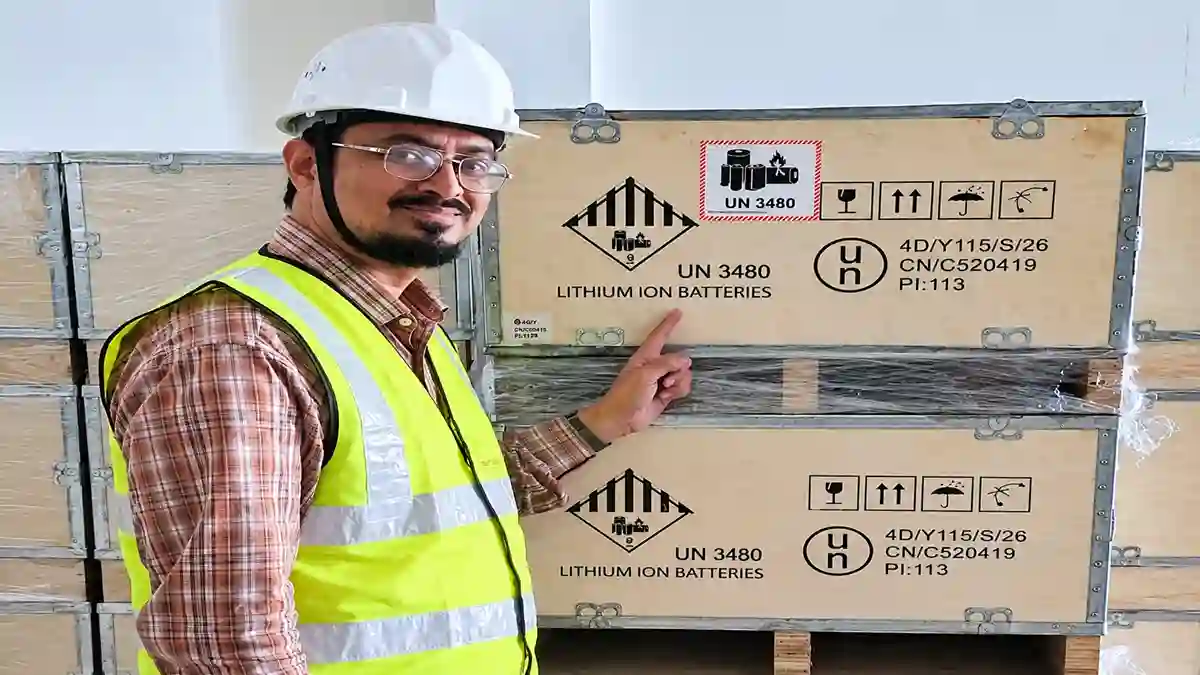
I’ve spent a good part of my career on the technical sales side of solar panels and battery equipment, which means I’m usually the person standing between the manufacturer’s spec sheet and the customer who has to trust that sheet is accurate. That’s taught me more about LiFePO4 batteries than any datasheet ever could. I’ve inspected shipments where the crate’s UN 3480 hazard labeling was correct, but the battery inside didn’t match its stated specs.
I’ve had customers ask why one “identical” battery costs 40% more than another, and had to explain that the difference wasn’t marketing; it was the BMS. What I’m sharing in this guide isn’t theory. It’s what I’ve actually seen matter when a battery performs the way it’s supposed to, and what I’ve seen go wrong when it doesn’t.
There’s also a lot of confusing marketing around this battery. You’ll see it called LiFePO4, LFP, lithium iron phosphate, sometimes just “lithium,” with ratings quoted with no conditions attached and packs sold with no datasheet at all. Most people buying one aren’t trying to become battery experts. They just want a straight answer on whether it’s the right choice and what to check before spending the money.
Quick answer: A LiFePO4 (lithium iron phosphate) battery is a type of rechargeable lithium battery known for being long-lasting, safe, and low-maintenance. Compared with a traditional lead-acid battery, it lasts roughly 3,000 to 6,000 charge cycles instead of a few hundred, gives you 80 to 100% of its rated capacity to actually use, weighs about half as much, and needs no maintenance. The trade-offs are a higher upfront price and the fact that it shouldn’t be charged in freezing temperatures without protection.
This guide is the starting point for everything on SolarVisionAI about this battery type. It covers what a LiFePO4 battery is, how it works, why the BMS matters so much, what its specifications mean, how long it lasts, how it compares with lead-acid, its key limitations, where it’s used, and what to check before you buy one. Each section links to a deeper guide if you want to go further on a specific topic.
1. What Is a LiFePO4 Battery?
LiFePO4 is short for lithium iron phosphate, which is the material used inside the battery. In plain terms, it’s a type of lithium battery — the same broad family as the batteries in phones and laptops — but built differently, in a way that trades a little bit of size and weight efficiency for a lot more durability and safety.
You’ll see the same battery called a few different names: LiFePO4, LFP, lithium iron phosphate, and occasionally “lithium ferrophosphate.” They’re all the same thing. LiFePO4 tends to be the name used on solar, RV and marine products, while LFP shows up more in electric vehicles and industry conversations.
You’ll also see LiFePO4 batteries referred to by their system-level name rather than their chemistry: ESS (Energy Storage System) or BESS (Battery Energy Storage System). These terms describe the complete installed system, battery, BMS, and often the inverter, rather than the chemistry itself, but LiFePO4 is the chemistry most commonly used inside them. If you’re specifically researching system-level design rather than the battery alone, see our BESS guide
2. How a LiFePO4 Battery Works
You don’t need an engineering background to understand the basics. Inside the battery, energy moves back and forth through a chemical reaction every time you charge or discharge it.
One thing that surprises a lot of people: a LiFePO4 battery’s voltage barely changes for most of its charge. A 12V battery might read close to 13V whether it’s at 90% or 30% charged, then drop off quickly near empty. That’s actually a good thing for your appliances, since they get steady power, but it means you can’t judge how full the battery is just by checking the voltage. A proper battery monitor gives a far more accurate picture.
3. Why the BMS Is the Most Critical Part of a LiFePO4 Battery
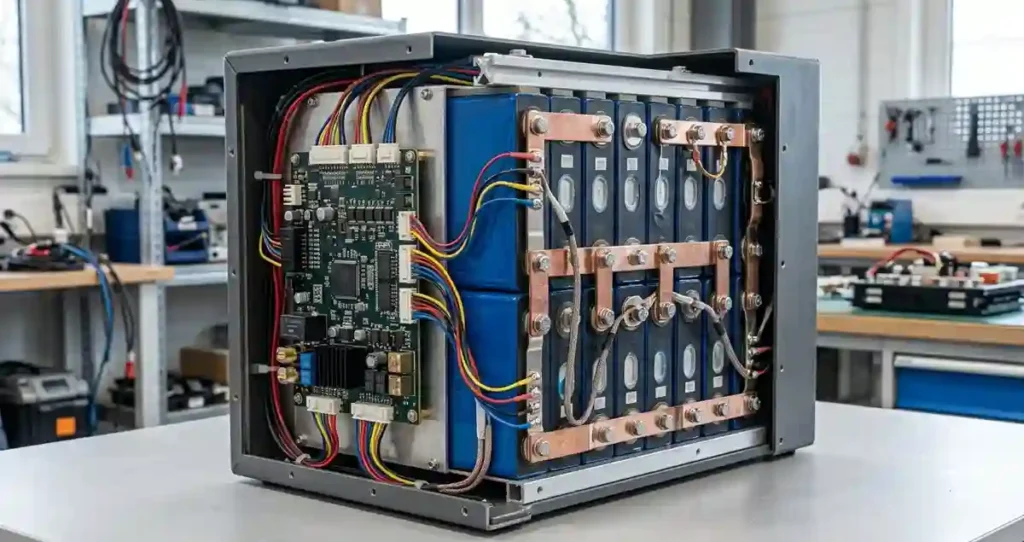
If there’s one component that determines whether a LiFePO4 battery performs safely and lives up to its lifespan claims, it’s the battery management system (BMS), not the cells themselves.
What the BMS Actually Does
Think of the BMS as the battery’s dedicated safety supervisor, constantly working in the background:
- Prevents overcharging, which can degrade cells or create safety risks
- Prevents over-discharging, which can permanently damage the battery
- Monitors temperature and blocks charging in unsafe conditions, like freezing weather
- Balances individual cells so they age at the same rate, rather than one cell wearing out faster than the others
- Protects against short circuits and excess current draw
Why BMS Quality Matters More Than Most Buyers Realize
Two batteries can use identical cells and still perform completely differently, because one has a well-designed BMS and the other doesn’t. A poor BMS can fail to balance cells properly, leading to reduced capacity over time, or fail to protect against cold-weather charging, leading to permanent damage that looks like a “bad battery” but was actually a bad BMS decision.
What to Check Before Buying, Based on the BMS
- Does it include low-temperature charge cutoff, not just a general temperature warning?
- Does it actively balance cells, or only monitor them?
- Is there any published data on its protection thresholds, or is it a black box?
Engineer’s Note: When people ask me why one LiFePO4 battery costs more than another that looks identical on paper, the answer is almost always the BMS. It’s the least visible part of the battery and the part doing the most work to keep you safe and get you the lifespan you were promised.
4. Typical LiFePO4 Specifications
You don’t need to memorize these, but it helps to know what a normal spec sheet looks like so you can spot something unusual.
| Specification | Typical value | What it means for you |
| Cycle life | 3,000 to 6,000+ cycles | How many full charge/discharge cycles before it wears down |
| Usable capacity | 80 to 100% | How much of the rated capacity you can actually use |
| Efficiency | About 95% or better | Very little energy is wasted while charging |
| Charging temperature | 0 to 45°C (32 to 113°F) | Don’t charge it in freezing conditions unless it’s designed for that |
| Self-discharge | About 1 to 3% per month | It holds its charge well in storage |
These are typical ranges, not guarantees. Always check the actual datasheet for whatever battery you’re considering, and pay attention to the conditions attached to any cycle-life claim. A number without context isn’t very useful.
5. How Long Does a LiFePO4 Battery Actually Last?
Battery life is usually measured two ways: in cycles (one full charge and discharge) and in years. Most manufacturers claim 3,000 to 6,000 cycles, which works out to roughly 8 to 16 years if you’re cycling it about once a day.
A few things affect how close you get to that number in real life:
- How deeply you drain it. Lighter, shallower use extends life.
- Temperature. Heat speeds up wear, and charging in the cold can cause permanent damage.
- How it’s charged. Charging to the very top voltage every time wears it out faster than stopping slightly short.
- Build quality. A well-designed BMS and good cell balancing make a real difference over time.
Engineer’s Note: Cycle-life numbers come from lab testing under ideal, controlled conditions. Treat them as a way to compare products, not as a promise of exactly how long your specific battery will last in your specific setup.
6. LiFePO4 vs Lead-Acid: Is It Really Worth the Extra Cost?
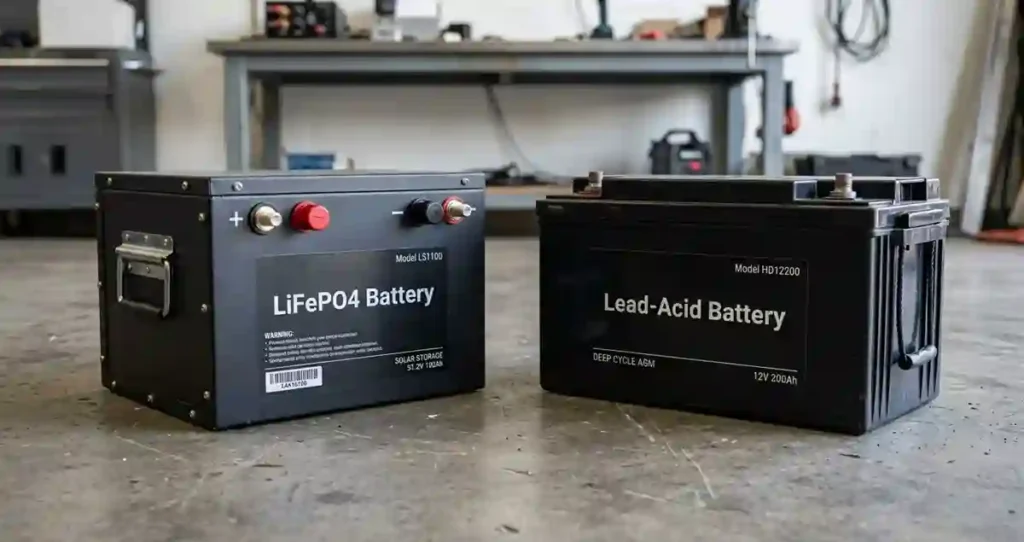
This is the question that matters most to most people, so here’s the honest comparison.
| Feature | Lead-Acid (AGM) | LiFePO4 |
| How much you can actually use | About 50% | 80 to 100% |
| Lifespan (cycles) | 300 to 1,000 | 3,000 to 6,000+ |
| Weight (same size battery) | Heavier | About half the weight |
| Maintenance | Sometimes needs water top-ups | None |
| Upfront cost | Lower | Higher |
| Cost over its lifetime | Higher | Lower |
The upfront price is where most people get stuck, so here’s a simple example. A LiFePO4 battery costing $400 might deliver roughly $0.12 for every kWh of energy it provides you over its lifetime. A cheaper lead-acid battery at $250 might actually cost you closer to $1.04 per kWh delivered, because it wears out so much faster and you can’t use as much of its capacity. The lead-acid battery is cheaper to buy, but far more expensive to actually use.
For a broader look at how LiFePO4 compares to other battery types in a solar setup, see our lithium-ion battery for solar guide.
7. Advantages and Limitations
Advantages
- Lasts far longer than lead-acid
- Lighter and more compact
- Charges faster and more efficiently
- More stable and safer than many other lithium types
- No maintenance required
Limitations
- Costs more upfront
- Can’t be charged in freezing temperatures without extra protection
- Slightly bulkier than some other lithium batteries for the same power
- Needs a charger and controller designed for lithium, not lead-acid
8. LiFePO4 Battery Temperature Sensitivity — A Key Limitation
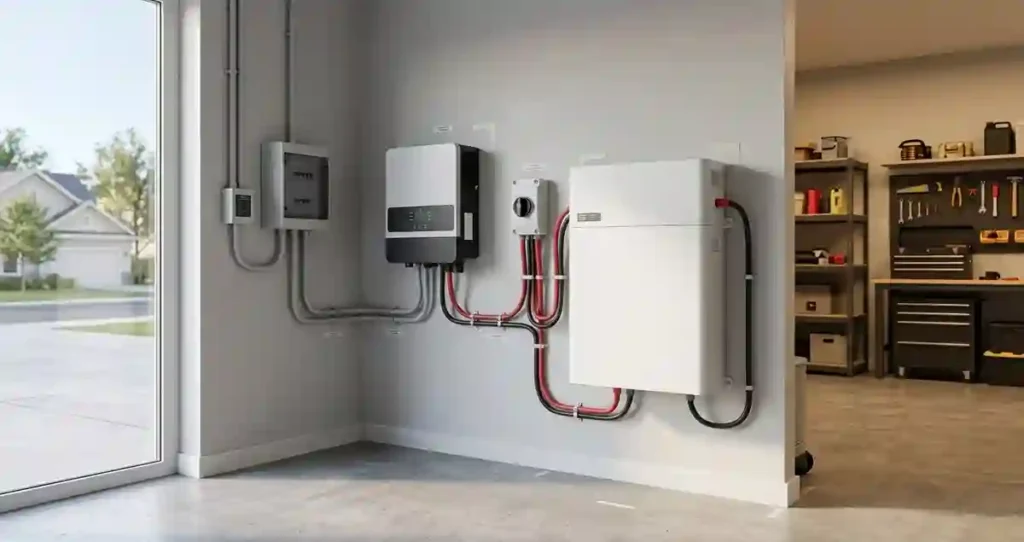
Despite its reputation for durability, a LiFePO4 battery has one limitation that catches a lot of people off guard: it’s genuinely sensitive to temperature, especially cold.
Charging in Cold Temperatures Can Cause Permanent Damage
Charging a LiFePO4 battery below 0°C (32°F) can cause something called lithium plating inside the cells, a chemical process that permanently reduces the battery’s capacity and, in worse cases, creates a safety risk. This isn’t a minor inconvenience; it’s actual, irreversible damage. A good BMS will block charging in these conditions specifically to prevent this.
Heat Shortens Lifespan Over Time
On the other end, consistently high temperatures accelerate aging. A battery kept in a hot, enclosed space, like a car trunk or an unventilated shed in summer, will wear out faster than one kept in a moderate environment, even if it never actually overheats to a dangerous level.
Practical Temperature Guidelines
| Condition | Safe Range | What Happens Outside It |
| Charging | 0°C to 45°C (32°F to 113°F) | Below 0°C: permanent cell damage. Above 45°C: faster aging |
| Discharging | -20°C to 60°C (-4°F to 140°F) | More tolerant, but capacity drops noticeably in the cold |
| Storage | Cool, dry space at 50–60% charge | Extreme heat or cold in storage shortens shelf life |
Engineer’s Note: If you live somewhere that sees real winters and you’re installing a battery in an unheated garage or shed, don’t treat this as a minor spec on a datasheet. Either buy a battery with built-in self-heating, or plan to insulate and heat the space it lives in. I’ve seen batteries damaged in a single cold snap because this got overlooked.
9. Is LiFePO4 Safe?
Yes, generally speaking, it’s considered one of the safest battery types available. It’s naturally more resistant to overheating and fire risk than many other lithium chemistries. That said, “generally safe” doesn’t mean “risk-free under any conditions.” Like any battery, it still needs to be treated correctly.
A few basics that matter:
- Use a properly rated fuse near the battery terminal.
- Use a charger that’s actually designed for lithium batteries.
- Look for recognized safety certifications on the product, such as UL 1973.
- If storing it long-term, keep it at a partial charge rather than completely full or empty.
Engineer’s Note: Safety comes from the whole setup, not just the battery itself. A good LiFePO4 battery with proper fusing and the right charger is very safe. The same battery with a missing fuse and undersized wiring is not — the battery gets blamed, but the mistake is usually in the installation.
10. LiFePO4 Battery Applications — Where This Battery Is Used
A LiFePO4 battery shows up in far more places than most people realize, mostly because it handles frequent daily use so well.
| Application | Why LiFePO4 Fits | Typical Size Range |
| Home solar storage | Handles daily charge/discharge cycles for 10+ years, safe indoors | 5 to 20+ kWh |
| RVs, campers and vans | Lightweight, deep discharge capability, no maintenance on the road | 100 to 400 Ah (12V or 24V) |
| Marine and boats | Resists vibration and humidity better than lead-acid, no venting needed | 100 to 300 Ah |
| Golf carts and utility vehicles | Lighter than lead-acid, faster charging between uses | 200 to 600 Ah |
| Off-grid cabins | Deep cycling daily with no generator maintenance in between | 5 to 15 kWh |
| Backup power / UPS systems | Long standby life, safe to keep at partial charge for months | 1 to 10 kWh |
| Electric bikes and scooters | Lightweight for its capacity, good cycle life for daily commuting | 0.5 to 2 kWh |
| Forklifts and industrial equipment | Fast charging supports multi-shift use without battery swaps | 24V to 80V systems |
| Telecom and grid backup | Long calendar life with minimal maintenance visits required | 5 to 50+ kWh |
| ESS / BESS (Energy Storage Systems) | The standard battery chemistry for both residential and commercial energy storage systems, valued for safety and cycle life at scale | 10 kWh to multi-MWh |
This range is exactly why LiFePO4 has become the default choice across so many industries. The same underlying strengths (long life, safety, low maintenance) apply whether the battery is powering a cabin or a forklift.
11. How to Choose a LiFePO4 Battery
- Compare energy (kWh), not just amp-hours. Two batteries with the same amp-hour rating can store very different amounts of energy if their voltage is different.
- Check what it can safely power. Make sure its discharge rating matches what your inverter or devices actually need.
- Look for a real datasheet. It should list the cell brand, cycle life with clear test conditions, and safe temperature ranges, not just a single glossy number.
- Check for certifications, such as UL 1973, as a sign of independent safety testing.
- Check the warranty terms, not just the length. Look at what capacity it should still have at the end of that period.
- Be wary of anything unusually light. A battery significantly lighter than similar products may not contain what it claims.
Frequently Asked Questions
What does LiFePO4 stand for?
Lithium iron phosphate — the material used to build the battery.
Is LiFePO4 the same as a regular lithium-ion battery?
It’s a type of lithium-ion battery, yes. When people say “lithium-ion” casually, they usually mean the type found in phones and laptops, which is actually a different, less stable chemistry.
How long do LiFePO4 batteries actually last?
Most are rated for 3,000 to 6,000 charge cycles, which typically works out to 10 to 15 years of normal use.
Can I charge a LiFePO4 battery in cold weather?
Not safely below freezing (0°C/32°F) unless it has built-in heating. Charging it in the cold without protection can permanently damage it.
Why is the BMS so important in a LiFePO4 battery?
The BMS protects the cells from overcharging, over-discharging and unsafe temperatures, and keeps them balanced so they age evenly. A poor BMS can undermine an otherwise good battery.
Is a LiFePO4 battery worth the extra cost?
For most regular use, yes. It costs more upfront, but it lasts so much longer and gives you so much more usable capacity that it works out cheaper per unit of energy over its lifetime.
What’s the difference between a LiFePO4 battery and a BESS?
A LiFePO4 battery is the chemistry inside the unit. A BESS (Battery Energy Storage System) is the complete installed system, the battery, BMS, inverter, and controls, working together. Most modern BESS installations use LiFePO4 as their battery chemistry.
Related Guides
- 24V 200Ah LiFePO4 Battery: Specs, Uses & Buying Guide
- LiFePO4 vs Lithium-Ion: Which Battery Should You Buy?
- LiFePO4 Battery: How It Works, Specs & Buying Guide
- LiFePO4 Batteries for Solar: How to Choose & Size Right
- 48V 200Ah LiFePO4 Battery: Specs, Sizing & Home Storage Guide
- LiFePO4 Battery Charger: Voltage, Amps & Settings
- Solar Panel Repair Guide: Diagnose Problems, Costs & Fixes
- IRS Form 5695 for 2025: Solar Tax Credit Guide
Related guides on SolarVisionAI.com
- Monocrystalline Solar Panels 2026: Still Worth It or Hype
- Polycrystalline Solar Panels: Worth Buying in 2026?
- Thin-film Solar Panels: When They Beat Silicon (2026)
- BIPV Solar Panels: Building-Integrated PV Complete Guide
- Portable Solar Panels: Engineer’s Buyer’s Guide 2026
- CPV Solar Panels: Concentrated Photovoltaic Explained
- Skin Solar Panel: What “Solar Skin” Actually Means
- Solar Fence Post Lights: Cap Sizes, Types & Install Guide
- Bifacial Solar Panels in 2026: How to Boost Energy Output
- Solar Charge Controller: The Complete Guide
- MC4 Connectors: Solar Safety & Installation Guide
- Solar Panel Types, Efficiency & Benefits
- Solar Water Pump Guide
- BESS — Battery Energy Storage System Guide
- Commercial Solar Panel Installation
- Solar Refrigerator & DC Fridge — Complete 2026 Guide
- Bifacial Solar Panel Albedo Effect Guide
- TOPCon: Why TOPCon Solar Panel is a Proven Smart Investment in 2026
- HJT: Why Heterojunction Is the Hot Climate Champion
- PERC: PERC Solar Panel: Still Relevant or Already Outdated?
- Perovskite: Perovskite Solar Panels: The 2026 Reality Check
- N-Type vs P-Type: N-Type vs P-Type Solar Panels: Honest Comparison
- ABC: ABC (all back contact) Solar Panel: Back Contact Technology Explained
- IBC: IBC Solar Panels: Interdigitated Back Contact Guide
- Tandem: Tandem Solar Panels: Are Stacked Cells Ready for Rooftops?