
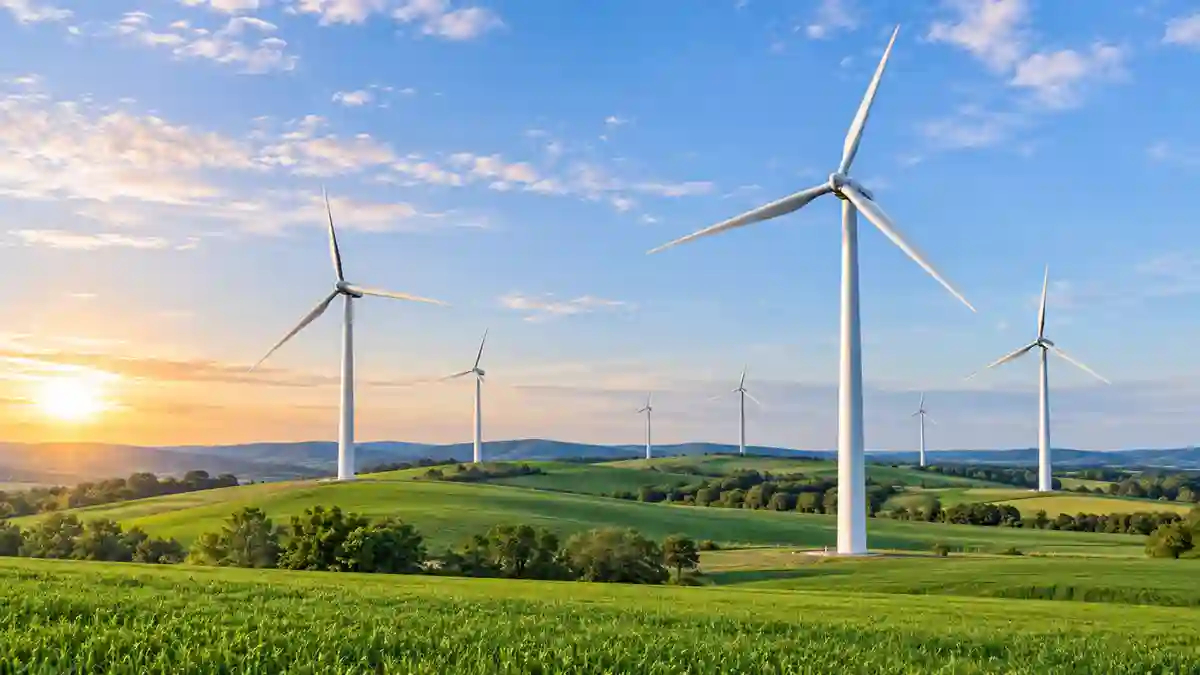
Learn how wind energy works, its key benefits and limitations, best wind locations worldwide, and real-world applications for homes, farms, and industry.
Wind energy is one of my favourite renewable energy sources because of its potential to provide greater energy independence. It uses a naturally available resource to generate electricity without requiring continuous fuel supplies. With a properly designed system, wind power can support homes, farms, businesses, industries and remote communities while reducing dependence on conventional electricity sources.
One of the most interesting aspects of wind energy is that it can complement solar power. Solar panels generally generate electricity during daylight hours, while wind turbines can produce electricity during the day or at night whenever suitable wind conditions are available. When both technologies are combined with suitable battery storage and power conversion equipment, they can create a more balanced renewable energy system.
However, wind energy is not suitable for every location. Electricity production depends on wind speed, consistency, turbine height, terrain and the quality of the installation. A turbine installed in a poor location may generate much less electricity than its rated capacity suggests. Installation costs, tower requirements, maintenance, transportation and environmental considerations also influence project feasibility.
This is why selecting the right location is one of the most important decisions in a wind energy project. Countries such as the United States, Canada, Australia and the United Kingdom have significant wind resources. Several European countries, China, Brazil and other regions also have established wind industries or promising development opportunities.
In this guide, I will explain what wind energy is, how wind turbines convert moving air into electricity, where suitable wind resources are found, and the major advantages, disadvantages and applications of this renewable energy source.
1. What Is Wind Energy?
Wind energy is the power obtained from moving air. It is a form of renewable energy that uses the kinetic energy of wind to produce mechanical power or electricity.
When wind moves across turbine blades, it creates aerodynamic forces that rotate the rotor. This rotation drives a generator, which converts mechanical energy into electrical energy.
Wind itself is created by several natural processes, including:
- Uneven heating of the Earth’s surface by the Sun.
- Differences in atmospheric pressure.
- The Earth’s rotation.
- Variations in terrain, elevation and surface conditions.
These processes create air movement across different geographical regions. Wind turbines capture part of this moving air’s energy and convert it into useful power.
Wind energy has been used for centuries in sailing, water pumping and grain milling. Modern wind turbines have developed into sophisticated machines capable of supplying electricity to individual properties, industrial facilities and national power grids.
For a closer look at the equipment involved, see our guide to wind turbine parts and their functions.
2. How Does Wind Energy Work?
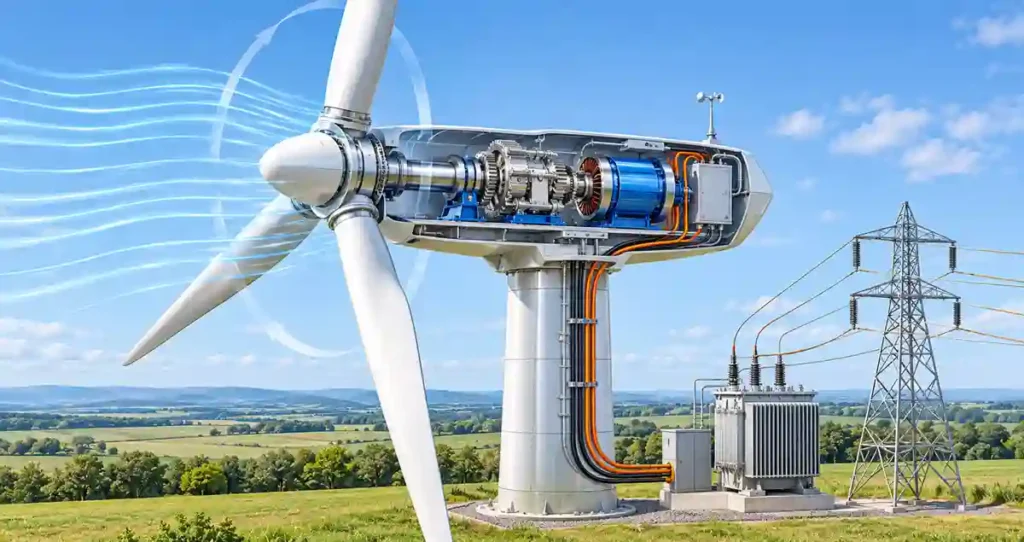
Wind energy generation follows a straightforward process: moving air rotates turbine blades, the rotor transfers mechanical energy to a generator, and the generator produces electricity.
The main stages are:
- Wind movement: Air flows across the turbine blades.
- Aerodynamic lift: The blade shape creates a pressure difference that produces lift and causes the rotor to turn.
- Mechanical rotation: The rotor transfers rotational energy through a shaft.
- Power generation: A generator converts mechanical rotation into electrical energy.
- Electrical conversion: Power electronics regulate the generated electricity to meet the requirements of the connected system.
- Power delivery: Electricity is supplied to a building, battery storage system or electrical grid.
Some turbines use a gearbox to increase generator speed, while direct-drive designs connect the rotor to a generator without a conventional gearbox.
The exact electrical arrangement depends on turbine design and application. A grid-connected wind farm uses transformers and grid connection equipment, while a small off-grid system may use a controller, battery bank and inverter.
For more detail on the conversion equipment, read our guide to the wind turbine inverter.
3. Best Locations for Wind Energy Around the World
Wind resources are not distributed equally across the world. Some regions experience strong and consistent winds because of their geography, coastal exposure, open plains and atmospheric conditions.
The following table highlights notable wind-energy regions. These are examples of established wind markets or areas with promising wind resources, not a guarantee that every site within a country is suitable.
| Country | States, provinces or regions | Wind energy opportunities |
|---|---|---|
| United States | Texas, Iowa, Oklahoma, Kansas, Illinois, California, Colorado and New Mexico | Strong onshore resources across the Great Plains and selected western regions. Offshore opportunities exist along the Atlantic and Pacific coasts. |
| Canada | Alberta, Saskatchewan, Manitoba, Ontario, Quebec and Nova Scotia | Prairie regions offer onshore opportunities, while coastal areas have potential for offshore development. |
| Australia | South Australia, Victoria, Tasmania, Western Australia and New South Wales | Southern coastal areas and open landscapes support onshore wind development, with offshore opportunities under consideration. |
| United Kingdom | Scotland, England, Wales and Northern Ireland | Strong offshore opportunities in the North Sea and Irish Sea, alongside established onshore wind regions. |
| Germany | Schleswig-Holstein, Lower Saxony, Brandenburg and Mecklenburg-Vorpommern | Northern Germany has substantial onshore development, with offshore projects in the North Sea and Baltic Sea. |
| Denmark | Jutland and North Sea and Baltic Sea coastal areas | An established wind energy market with both onshore and offshore installations. |
| Netherlands | North Holland, South Holland, Zeeland and Flevoland | Coastal and offshore wind resources support large-scale wind development. |
| Spain | Galicia, Castile and León, Aragón, Navarre and Castilla-La Mancha | Several inland and coastal regions offer suitable conditions for onshore wind farms. |
| France | Normandy, Brittany, Hauts-de-France, Occitanie and Grand Est | Onshore wind opportunities exist across several regions, with offshore development along the Atlantic and English Channel. |
| Sweden and Norway | Northern and central Sweden, western Norway and coastal regions | Northern landscapes and coastal areas offer opportunities for onshore and offshore wind projects. |
| Brazil | Rio Grande do Norte, Bahia, Ceará, Piauí and Rio Grande do Sul | Northeastern Brazil is particularly important for wind generation, with strong coastal and inland resources. |
| Argentina | Patagonia, Chubut, Santa Cruz and Río Negro | Patagonia is known for strong wind resources and offers significant potential for large wind farms. |
| South Africa | Western Cape, Northern Cape and Eastern Cape | Coastal and open inland regions offer opportunities for utility-scale wind projects. |
| China | Inner Mongolia, Xinjiang, Gansu, Hebei and eastern coastal provinces | Large onshore wind resources in northern and western regions, alongside extensive offshore development. |
| India | Gujarat, Tamil Nadu, Karnataka, Maharashtra and Rajasthan | Established wind development in western and southern states, with additional opportunities in suitable inland areas. |
| Morocco | Tangier, Tarfaya, Essaouira and Atlantic coastal areas | Atlantic coastal wind resources support established projects and further development opportunities. |
| New Zealand | Wellington, Manawatū-Whanganui, Taranaki and Southland | Exposed hills, coastal areas and open landscapes offer suitable wind conditions. |
| Pakistan | Jhimpir, Gharo, Keti Bandar and other areas of Sindh; selected areas of Balochistan | Southern Sindh has an established wind corridor, while parts of western Balochistan have been identified for further renewable energy development. |
Why are these locations suitable?
The regions above generally have one or more favourable conditions:
- Consistent wind speeds: Regular wind availability supports more predictable electricity generation.
- Open terrain: Plains and exposed landscapes can reduce obstructions to airflow.
- Coastal exposure: Coastal and offshore locations can provide useful wind resources.
- Suitable elevation: Some ridges and elevated areas experience stronger winds, although turbulence must be assessed.
- Infrastructure access: Roads, ports, transmission lines and grid connections influence project feasibility.
For example, the Great Plains of the United States are important for onshore wind generation, while the North Sea is a major centre for offshore wind development.
Pakistan also has notable wind resources. The World Bank’s renewable energy locational study identifies the Jhimpir and Gharo areas of Sindh as important wind development locations and highlights further potential in western Balochistan.
How to assess a wind energy location
A country or region with good wind resources does not automatically make every property suitable for a wind turbine. Local conditions can change considerably over short distances.
Before selecting a site, developers should evaluate:
- Average wind speed at the proposed turbine hub height.
- Wind direction and seasonal variations.
- Wind power density and expected energy production.
- Terrain, buildings, trees and other obstructions.
- Turbulence and the surrounding surface conditions.
- Access roads and transportation requirements.
- Grid connection capacity or the requirements of an off-grid system.
- Environmental, planning and safety restrictions.
The Global Wind Atlas is a useful starting point for identifying potential wind resources around the world. For the United States, the Department of Energy wind resource maps also provide useful information.
These tools support preliminary screening. A serious project still requires site-specific assessment, suitable wind measurements and engineering evaluation.
4. Main Types of Wind Energy Systems
Wind energy systems can be classified according to their turbine design, installation location and electrical connection.
A. Onshore wind energy
Onshore wind energy is generated by turbines installed on land. These projects are commonly located in open plains, agricultural areas, hills and coastal regions.
Onshore wind farms can contain a small number of turbines or hundreds of machines connected to the electrical grid.
They are generally easier to access for construction and maintenance than offshore installations, although land availability, transportation and grid access remain important considerations.
B. Offshore wind energy
Offshore wind energy is generated by turbines installed in bodies of water, usually in coastal seas.
Offshore locations can provide strong and relatively consistent wind resources. However, construction and maintenance require specialised equipment, marine vessels, foundations, subsea cables and careful environmental planning.
Offshore wind projects generally involve higher installation complexity and capital requirements than comparable onshore projects.
C. Distributed wind energy
Distributed wind refers to turbines installed near the point where electricity is consumed or connected to a local distribution system.
Examples include:
- Residential properties.
- Farms and agricultural facilities.
- Remote communities.
- Commercial buildings.
- Industrial facilities.
- Telecommunications installations.
Small wind turbines can operate independently or alongside solar panels, batteries and backup generators.
D. Horizontal-axis and vertical-axis turbines
Wind turbines also differ in rotor orientation.
- Horizontal-axis wind turbines (HAWTs): The rotor rotates around a horizontal shaft. This is the most common design for large commercial and utility-scale wind turbines.
- Vertical-axis wind turbines (VAWTs): The rotor rotates around a vertical shaft. Some designs can accept wind from different directions without a conventional yaw mechanism.
Neither design is automatically suitable for every application. Wind conditions, installation height, power requirements, efficiency and maintenance all matter.
Explore our separate guides to home wind turbines and vertical wind turbines for a more detailed comparison.
5. Seven Major Advantages of Wind Energy
Wind energy offers several technical, environmental and economic benefits. Its value depends on the quality of the wind resource, project design and local electricity requirements.
1. Renewable energy source
Wind is naturally replenished through atmospheric processes. Unlike fossil fuels, it does not require the extraction and continuous consumption of fuel to generate electricity.
2. No fuel cost during operation
Once a wind turbine is installed, it does not require purchased fuel to produce electricity. This reduces exposure to fuel price fluctuations, although maintenance, insurance, land and operating costs remain.
3. Lower operational emissions
Wind turbines generate electricity without burning fossil fuels during operation. Their lifecycle environmental footprint still includes manufacturing, transportation, installation and decommissioning.
4. Supports energy independence
Wind power can reduce dependence on imported fuels and conventional electricity supplies. For remote facilities, farms and suitable properties, a properly designed wind system can contribute to local electricity generation.
5. Suitable for large-scale electricity generation
Wind farms can contain multiple turbines connected to the grid. Large projects can supply substantial amounts of electricity to homes, businesses and industries.
6. Complements solar power
Wind and solar energy can complement one another when their generation patterns differ at a particular location. A suitable combination can improve the availability of renewable electricity across different hours and seasons.
Read our guide to solar and wind hybrid systems to understand how both sources can be integrated.
7. Supports local economic development
Wind projects can create employment in manufacturing, construction, transportation, engineering and maintenance. They can also provide lease payments and local economic activity in areas where projects are developed.
6. Disadvantages and Limitations of Wind Energy
Although wind energy offers important benefits, it also has limitations that must be considered before installation.
| Disadvantage | Why it matters |
|---|---|
| Variable electricity production | Wind speed changes throughout the day and across seasons, so output is not constant. |
| Location dependency | A turbine installed in a low-wind or highly turbulent location may produce insufficient electricity. |
| High initial investment | Turbines, towers, foundations, electrical equipment and installation can require substantial upfront spending. |
| Maintenance requirements | Blades, bearings, generators, gearboxes, electrical systems and control equipment require inspection and maintenance. |
| Noise and visual impact | Turbines can produce aerodynamic and mechanical noise and may change the appearance of the landscape. |
| Wildlife considerations | Poorly selected sites can create collision risks for birds and bats. Environmental assessment and mitigation are important. |
| Transportation challenges | Large blades, tower sections and nacelles may require specialised vehicles, route surveys, permits and suitable port facilities. |
| Grid integration challenges | Large amounts of variable generation require appropriate grid planning, forecasting, transmission and balancing resources. |
| Land and planning requirements | Turbines need suitable space, access, setbacks and approvals. Offshore projects require additional marine planning. |
Why wind energy is not suitable everywhere
A turbine’s rated power does not tell you how much electricity it will actually generate at a particular site. A 10 kW turbine does not continuously produce 10 kW.
Actual output depends on the turbine’s power curve and the wind conditions at hub height. If the wind resource is poor, the annual energy production may be too low to justify the investment.
This is why a wind resource assessment should be completed before selecting equipment or estimating project savings.
7. What Factors Affect Wind Energy Production?
Several technical and environmental factors influence the electricity generated by a wind turbine.
Wind speed
Wind speed is one of the most important factors affecting turbine output. The available power in moving air is proportional to the cube of wind speed, before considering turbine and system limitations.
The simplified wind power equation is:
Wind Power Formula
The theoretical power available in moving air can be calculated using:
P = ½ × ρ × A × v³
Where:
- P = Power available in the wind (watts)
- ρ (rho) = Air density (kg/m³)
- A = Rotor swept area (m²)
- v = Wind speed (m/s)
Note: This formula calculates the power available in the wind, not the actual electrical output of a turbine. Actual output depends on aerodynamic efficiency, mechanical and electrical losses, and turbine operating limits.
Rotor diameter and swept area
A larger rotor can capture wind across a greater swept area. However, a larger rotor also affects turbine design, structural loading, transportation and installation requirements.
Learn more in our article about wind turbine blade design and length.
Hub height
Wind speeds often increase with height because ground-level obstacles and surface friction influence airflow. A taller tower can therefore improve energy capture at a suitable site, but it also increases structural, foundation and installation requirements.
Air density
Air density changes with temperature, elevation and atmospheric pressure. Lower air density generally means less available wind power at the same wind speed and rotor area.
Turbine efficiency and power curve
The turbine’s design determines how efficiently it converts available wind energy into electricity. Its power curve shows the expected electrical output at different wind speeds.
Turbulence and obstructions
Buildings, trees, hills and nearby turbines can affect airflow. Excessive turbulence may reduce energy production and increase mechanical loading.
8. Applications of Wind Energy
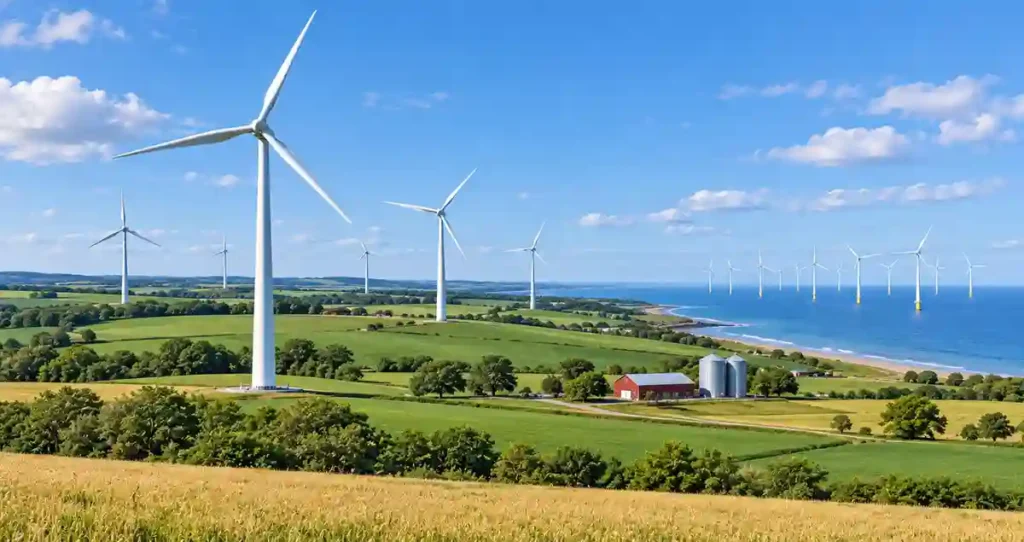
Wind energy is used in several sectors, from large electricity networks to individual off-grid installations.
Utility-scale electricity generation
Large wind farms supply electricity to national and regional grids. These projects are generally developed in areas with strong wind resources and suitable transmission infrastructure.
Residential and small commercial systems
Small wind turbines can support electricity requirements at homes, farms and commercial properties where the wind resource is suitable.
A residential system may be connected to the grid or designed for off-grid operation. The correct turbine capacity, tower height and electrical equipment must be selected according to the site’s energy demand and wind conditions.
Agricultural applications
Wind energy can support farms through electricity generation for buildings, irrigation equipment, water pumping and other agricultural loads.
Remote and off-grid power
Wind turbines can provide electricity in locations where grid access is limited or unavailable. Depending on the application, they may operate with battery storage, solar PV and backup generators.
See our guide to off-grid wind turbines for more information.
Industrial and commercial facilities
Businesses and industrial facilities may use wind energy as part of a wider energy strategy. The feasibility depends on electricity demand, available land, wind conditions, project cost and grid arrangements.
Water pumping
Wind energy can also drive mechanical water-pumping systems or supply electricity to electric pumps. This can be useful in suitable agricultural and remote locations.
9. Combining Wind Energy with Solar Power
Wind and solar power can work together because their generation patterns may differ.
Solar panels produce electricity when sunlight is available. Wind turbines generate electricity when wind conditions are suitable. At some locations, wind speeds are higher during periods when solar production is lower, including at night or during certain seasons.
A hybrid system may include:
- Solar PV modules.
- Wind turbines.
- Solar and wind charge controllers or compatible power conversion equipment.
- Battery storage.
- Inverters.
- Protection and isolation equipment.
- Monitoring and energy management systems.
However, combining both sources requires more than simply connecting a solar array and a wind turbine to the same battery. Each source must operate within its electrical limits, and the system needs appropriate charging control, protection and safe operating arrangements.
The wind turbine may require a dedicated controller and diversion load, depending on its design. Solar PV generally uses a separate MPPT charge controller or a compatible hybrid inverter input.
For a practical explanation, see our guide to the wind and solar hybrid controller.
You can also explore the difference between solar power and wind power and our comparison of solar and wind energy.
10. Environmental Impact of Wind Energy
Wind energy has a lower operational environmental impact than electricity generation based on fossil fuel combustion. However, it is not completely impact-free.
Positive environmental effects
- No fuel combustion during electricity generation.
- No direct operational carbon dioxide emissions from the turbine.
- No fuel extraction or delivery required during normal operation.
- Can reduce reliance on fossil-fuel-based electricity when it displaces that generation.
Environmental considerations
- Bird and bat collision risks.
- Habitat disturbance during construction.
- Noise and visual effects.
- Material use and manufacturing impacts.
- Transportation and construction emissions.
- Blade disposal and recycling at the end of service life.
Good project planning, environmental studies, suitable turbine placement and ongoing monitoring can help reduce these impacts.
The environmental performance of a wind project should therefore be assessed across its full lifecycle rather than looking only at the electricity generated during operation.
11. The Future of Wind Energy
Wind energy technology continues to develop through improvements in turbine design, blade materials, power electronics, digital monitoring and grid integration.
Some important areas of development include:
- Larger and more efficient turbines: Improved rotor designs and taller towers can help access stronger wind resources.
- Floating offshore wind: Floating foundations can make it possible to develop projects in deeper waters where conventional fixed foundations are unsuitable.
- Advanced materials: Research into blade materials and manufacturing can improve durability and support recycling.
- Digital monitoring: Sensors and data analytics can help identify performance changes and maintenance requirements.
- Improved forecasting: Better wind forecasting can help grid operators plan electricity supply and manage variability.
- Hybrid renewable systems: Combining wind, solar, battery storage and other energy sources can support a more flexible electricity supply.
Artificial intelligence and predictive maintenance may also help operators analyse turbine performance, detect unusual operating conditions and schedule maintenance more effectively.
However, technology alone cannot make every site viable. Wind resource quality, project economics, infrastructure and environmental planning will remain essential.
12. AI Optimization in Wind Energy
Artificial intelligence (AI) is becoming an important tool in modern wind energy systems. Wind turbines operate under changing weather conditions, and their performance depends on wind speed, direction, temperature, vibration and mechanical condition. AI can analyse this information to help operators improve energy production, identify potential faults and manage maintenance more effectively.
By combining sensor data, weather forecasts and machine learning algorithms, AI-based systems can support several aspects of wind farm operation.
How AI improves wind energy systems
| AI application | How it helps |
|---|---|
| Wind forecasting | Analyses historical weather and real-time data to estimate upcoming wind conditions and expected electricity generation. |
| Predictive maintenance | Identifies unusual vibration, temperature or operating patterns that may indicate developing equipment faults. |
| Turbine performance optimization | Analyses operating conditions to help adjust turbine settings and improve energy capture within manufacturer limits. |
| Blade condition monitoring | Uses sensor data, cameras and inspection images to help identify cracks, erosion, surface damage and other blade defects. |
| Power generation forecasting | Estimates expected output to help wind farm operators plan electricity delivery and grid integration. |
| Fault detection | Recognises abnormal operating patterns and helps maintenance teams investigate potential failures earlier. |
| Hybrid energy management | Coordinates wind generation, solar PV, battery storage and other energy sources according to demand and availability. |
AI and predictive maintenance
One of the most valuable applications of AI is predictive maintenance.
Traditional maintenance often follows fixed schedules or responds after a fault occurs. AI-based monitoring can continuously analyse information from turbine sensors, including:
- Vibration levels in bearings and rotating components.
- Generator and gearbox temperatures.
- Rotor speed and operating conditions.
- Electrical output and power quality.
- Blade condition and structural monitoring data.
Machine learning models can identify patterns that differ from normal operation and flag potential problems for further inspection.
For example, an unusual increase in gearbox vibration combined with rising operating temperature may indicate a developing mechanical issue. An AI monitoring system can alert the maintenance team to investigate before the condition becomes a major failure.
However, AI predictions are not a replacement for physical inspection, engineering judgement or manufacturer maintenance requirements.
AI in wind and solar hybrid systems
AI can also improve the management of hybrid renewable energy systems. When wind turbines and solar panels operate together, generation can vary throughout the day depending on weather conditions.
An intelligent energy management system can analyse:
- Forecast wind and solar generation.
- Current electricity demand.
- Battery state of charge.
- Grid availability and electricity prices.
- Generator operating requirements, where applicable.
Based on this information, the system can help schedule battery charging and discharging, manage energy distribution and reduce unnecessary reliance on backup power.
For example, if wind generation is expected to increase overnight while solar production is unavailable, an energy management system may adjust battery charging schedules to make better use of available renewable electricity.
Read our guides to solar and wind hybrid systems and AI in solar energy management for related applications.
Limitations of AI in wind energy
AI also has practical limitations:
- Requires reliable sensor data and monitoring infrastructure.
- Models need suitable training data and periodic validation.
- Installation and integration can increase project costs.
- Incorrect predictions can create unnecessary maintenance alerts.
- Cybersecurity and data protection must be considered.
- AI recommendations must remain within turbine safety and operating limits.
AI is therefore best treated as a decision-support technology that helps engineers and operators make better-informed decisions.
Engineer’s Note: AI does not create additional wind energy. Its value comes from improving forecasting, identifying equipment problems, supporting operational decisions and making better use of the electricity a wind farm can generate.
13. Wind Energy Standards and Safety Considerations
Wind energy projects require appropriate engineering, electrical protection, structural design and installation practices. The applicable requirements depend on the turbine type, system size, location and connection arrangement.
Some relevant international standards and codes include:
- IEC 61400 series: Standards covering wind turbine design, performance, safety and related technical requirements. IEC 61400-2 specifically addresses small wind turbines.
- IEEE 1547: Requirements for interconnecting distributed energy resources with electric power systems.
- IEEE 1547.1: Conformance test procedures for equipment used in distributed energy resource interconnection.
- NFPA 70 (National Electrical Code): Electrical installation requirements in the United States, including provisions relevant to renewable energy systems.
- UL 1741: Safety requirements for inverters, converters, controllers and interconnection system equipment within its scope.
These standards are not automatically applicable to every project or country. Engineers should confirm the current edition, local adoption, utility requirements and equipment certification before design and installation.
Engineer’s Note: Wind energy should be evaluated using actual site conditions rather than turbine rated capacity alone. A technically suitable turbine installed in a poor wind location can deliver disappointing energy production and an unattractive financial return.
Before selecting a turbine, assess wind speed at the proposed hub height, annual energy demand, turbine power curve, tower requirements, electrical architecture, maintenance access and expected lifecycle costs.
For hybrid systems, ensure that solar and wind charging equipment are compatible with the battery and inverter arrangement. Proper control and protection are essential for safe operation.
For residential, commercial and remote applications, the first question should not be “How many kilowatts is the turbine?” It should be “How much usable electricity can this location produce over a year?”
A realistic feasibility assessment should compare expected annual energy production with the property’s load profile, available solar resource, battery requirements and the cost of the complete installation.
This approach helps avoid selecting equipment based only on advertised capacity.
Frequently Asked Questions About Wind Energy
What is wind energy in simple terms?
Wind energy is the energy obtained from moving air. Wind turbines capture this energy through rotating blades and convert it into mechanical power or electricity.
How does wind energy generate electricity?
Wind turns the turbine blades and rotor. The rotor drives a generator, which converts mechanical energy into electrical energy. Power conversion equipment then prepares the electricity for use or grid connection.
What are the main advantages of wind energy?
The main advantages include renewable electricity generation, no fuel cost during operation, low operational emissions, energy independence, large-scale generation and the ability to complement solar power.
What are the disadvantages of wind energy?
Wind energy depends on local wind conditions. Other limitations include high initial investment, variable output, maintenance requirements, noise, visual impact, wildlife considerations and transportation challenges.
Which countries have the best wind energy resources?
The United States, China, Canada, Australia, the United Kingdom, Denmark, Germany, Brazil and Argentina have important wind-energy regions. However, the best location depends on local wind measurements and project requirements.
Is wind energy available at night?
Yes. Wind turbines can generate electricity during the night if wind speeds are within the turbine’s operating range. Unlike solar PV, wind generation does not require sunlight.
Can wind energy be combined with solar power?
Yes. Wind turbines and solar panels can be combined in a hybrid renewable energy system. Suitable controllers, inverters, batteries and protection equipment are required for safe and effective operation.
Is wind energy suitable for homes?
It can be suitable for homes with sufficient wind resources, appropriate tower space and suitable installation conditions. A site assessment is necessary before selecting a residential turbine.
Does wind energy require batteries?
Not always. Grid-connected wind turbines can supply electricity through the grid without requiring an on-site battery. Off-grid systems generally need battery storage or another suitable method of balancing supply and demand.
Is wind energy completely pollution-free?
Wind turbines do not produce direct emissions from fuel combustion during electricity generation. However, manufacturing, transportation, installation and end-of-life treatment have environmental impacts.
Final Thoughts
Wind energy is an important renewable energy source with the potential to support electricity generation, reduce fuel dependence and improve energy security. From large offshore wind farms to small systems for remote properties, its applications continue to expand.
However, successful wind energy projects depend on more than choosing a turbine with a high rated capacity. Wind resource assessment, site selection, tower design, electrical integration, maintenance and project economics all influence the final result.
For many applications, wind energy can also complement solar power and battery storage. When these technologies are properly designed around the local resource and electricity demand, they can contribute to a more flexible and reliable renewable energy system.
The most important principle is simple: assess the wind resource first, then select the technology.
- U.S. Department of Energy – Wind Energy Basics
- U.S. Department of Energy – How Do Wind Turbines Work?
- U.S. Department of Energy – Advantages and Challenges of Wind Energy
- U.S. Energy Information Administration – Where Wind Power Is Harnessed
- Global Wind Atlas
- World Bank – Variable Renewable Energy Locational Study for Pakistan
- International Electrotechnical Commission – IEC Standards Catalogue
- IEEE Standards Association
Related guides
- Solar and Wind Hybrid System: Design, Sizing, Cost, and Working
- Wind and Solar Hybrid Controller: Wiring, Inputs and Protection
- Home Wind Turbine: Cost, Output, Sizing and Is It Worth It?
- Wind Turbine Inverter: Grid-Tie, Off-Grid and Hybrid Options
- Home Wind Turbine Kits: What You Need and How to Choose
- Wind Turbine Parts Explained: Components and Their Functions
- Off-Grid Wind Turbine: Sizing, Batteries and System Design
- 7 Powerful Benefits of Solar Power and Wind Power
- Solar and Wind Energy: 7 Key Differences, Pros, Cons and Best Uses
- Wind Turbine Blade: 7 Powerful Facts About Size and Design
- Wind Energy Advantages and Disadvantages: 12 Key Pros and Cons
- Wind Turbine Nacelle: Components, Function and How It Works
- Wind Turbine Height: How Tall Are Wind Turbines?
Related guides on SolarVisionAI.com
- Monocrystalline Solar Panels 2026: Still Worth It or Hype
- Polycrystalline Solar Panels: Worth Buying in 2026?
- Thin-film Solar Panels: When They Beat Silicon (2026)
- BIPV Solar Panels: Building-Integrated PV Complete Guide
- Portable Solar Panels: Engineer’s Buyer’s Guide 2026
- CPV Solar Panels: Concentrated Photovoltaic Explained
- Skin Solar Panel: What “Solar Skin” Actually Means
- Solar Fence Post Lights: Cap Sizes, Types & Install Guide
- Bifacial Solar Panels in 2026: How to Boost Energy Output
- Solar Charge Controller: The Complete Guide
- MC4 Connectors: Solar Safety & Installation Guide
- Solar Panel Types, Efficiency & Benefits
- Solar Water Pump Guide
- Commercial Solar Panel Installation: Engineering Guide
- Solar Fence Post Lights: Cap Sizes, Types & Install Guide
- BESS — Battery Energy Storage System Guide
- Commercial Solar Panel Installation
- Solar Refrigerator & DC Fridge — Complete 2026 Guide
- Bifacial Solar Panel Albedo Effect Guide
- TOPCon: Why TOPCon Solar Panel is a Proven Smart Investment in 2026
- HJT: HJT Solar Panels: Why Heterojunction Is the Hot Climate Champion
- PERC: PERC Solar Panel: Still Relevant or Already Outdated?
- Perovskite: Perovskite Solar Panels: The 2026 Reality Check
- N-Type vs P-Type: N-Type vs P-Type Solar Panels: Honest Comparison
- ABC: ABC (all back contact) Solar Panel: Back Contact Technology Explained
- IBC: IBC Solar Panels: Interdigitated Back Contact Guide
- Tandem: Tandem Solar Panels: Are Stacked Cells Ready for Rooftops?