
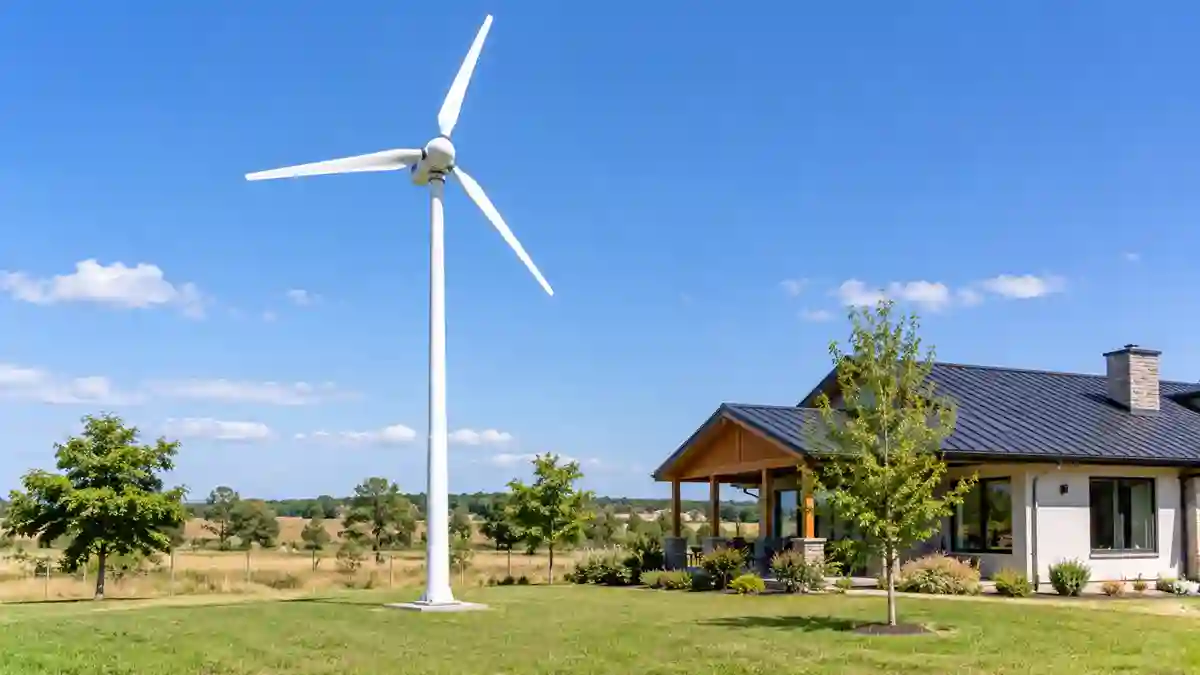
Explore home wind turbine costs, output, sizing and installation in the USA. Compare horizontal and vertical turbines and learn whether residential wind power is worth it.
Home wind turbine offer homeowners another way to generate electricity, reduce dependence on the utility grid and make better use of renewable energy. In the United States, residential wind power is particularly worth considering for rural homes, farms and properties with suitable wind conditions and enough space for a turbine tower.
As a solar and renewable energy engineer, I approach home wind turbine projects from a system-design perspective. My engineering work includes evaluating energy requirements, selecting suitable equipment, considering installation conditions and integrating renewable energy sources. I have also worked on wind energy system design, which has helped me understand why turbine selection, tower height, wind availability and electrical compatibility are important before installation.
However, installing a home wind turbine is not as simple as choosing a unit based on its advertised capacity. Actual electricity production depends on wind speed, tower height, turbine design, installation location and energy consumption. Both horizontal-axis wind turbines (HAWTs) and vertical-axis wind turbines (VAWTs) have different advantages, installation requirements and maintenance needs.
In this guide, I will explain home wind turbine costs, electricity output, sizing, installation requirements and maintenance. You will also learn how to compare turbine types and determine whether residential wind power is a practical investment.
What Is a Home Wind Turbine?
A home wind turbine is a small system that uses moving air to generate electricity.
When the wind turns the turbine blades, they rotate a generator that produces electricity. This electricity can be used in the house, stored in batteries or supplied to the grid through suitable equipment.
A typical home wind system includes:
- Wind turbine and blades
- Generator
- Supporting tower or mounting structure
- Wind controller
- Electrical safety equipment
- Inverter
- Battery storage, if required
Some systems also need a braking system or a special electrical load to safely manage excess wind energy. These parts depend on the turbine design.
Home wind turbines are available in different sizes and designs. The right choice depends on the property’s wind conditions, available space, electricity needs and installation budget.
Image 1 – Featured image: Place below the H1 and before the introduction.
Types of Home Wind Turbines: Horizontal vs Vertical
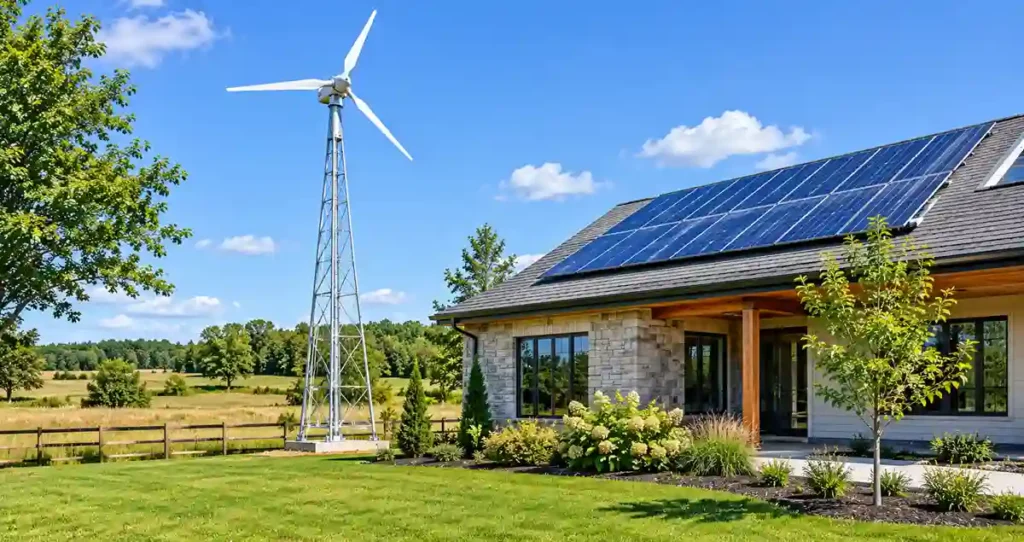
Before purchasing a home wind turbine, it is important to understand the two main designs.
1. Horizontal-Axis Wind Turbine (HAWT)
<text> </text>
A horizontal-axis wind turbine is the familiar design with blades that rotate like an aircraft propeller. Most large wind turbines used in wind farms follow this design.
The blades face the wind and rotate around a horizontal shaft. The generator is usually located inside the housing behind the blades.
Main advantages:
- Generally produces more electricity at suitable open sites.
- Well-established design with widely available technology.
- Suitable for properties with good wind conditions.
- Often a better choice when the main goal is higher electricity production.
Things to consider:
- Usually needs a taller tower.
- May require more substantial foundation work.
- The turbine must face the wind correctly.
- Reaching the generator and other parts for maintenance can be difficult if the turbine is installed high above the ground.
2. Vertical-Axis Wind Turbine (VAWT)
<text> </text>
A vertical-axis wind turbine has blades that rotate around an upright shaft. Unlike a horizontal turbine, it can receive wind from different directions without turning to face the wind.
Some vertical turbines have curved blades, while others use straight blades.
Main advantages:
- Can accept wind from different directions.
- Some models can be installed on shorter support structures.
- Certain designs allow easier access to the generator and electrical parts.
- May be suitable for locations where wind direction changes frequently.
- Can be worth considering when reducing installation work is a priority.
Things to consider:
- Many models produce less electricity than comparable horizontal turbines.
- Performance depends heavily on the design and quality of the product.
- Turbulent wind can still reduce electricity production.
- Not every vertical turbine is easier or cheaper to maintain.
- A proper support structure and safe foundation are still required.
Which type is better for a home?
For a homeowner, I would compare both types instead of automatically selecting the most familiar design.
If the property has strong, open and relatively steady wind, a horizontal-axis turbine is often the stronger option for electricity production.
However, if the project has limited space, changing wind direction, restricted tower height or a strong preference for simpler installation and maintenance access, a vertical-axis turbine deserves serious consideration.
My practical recommendation: Start by evaluating a vertical-axis turbine when reducing civil work and making maintenance easier are important priorities. But do not purchase it until its actual power output, support requirements and total cost have been checked. If electricity production is the main priority and the property has good open wind, compare it carefully with a horizontal-axis model.
Horizontal vs Vertical Wind Turbine Comparison
| Comparison | Horizontal turbine | Vertical turbine |
|---|---|---|
| Electricity production | Generally higher at suitable sites | Often lower for comparable size |
| Wind direction | Must face the wind | Accepts wind from different directions |
| Foundation work | May need a stronger or taller tower foundation | Some models may need simpler support arrangements |
| Installation | Can involve more lifting and tower work | Some designs are easier to install |
| Maintenance access | May be difficult when installed high | Can be easier on some ground-mounted designs |
| Noise | Depends on model and installation | Depends on model and installation |
| Changing wind direction | Needs to adjust to the wind | Does not need to turn to face the wind |
| Best use | Open areas with good wind | Locations where installation flexibility matters |
Remember that these are general differences. The actual result depends on the turbine model, its size and the installation location.
Image 2 – Turbine comparison: Place after the comparison table. Show one horizontal-axis and one vertical-axis turbine side by side.
How Much Electricity Can a Home Wind Turbine Generate?
The electricity produced by a wind turbine depends mainly on wind speed, turbine size, blade design and installation height.
A turbine rated at 5 kW does not produce 5 kW all the time. It only reaches its rated output when wind conditions are suitable. During slower winds, it produces less electricity. During very strong winds, it may stop automatically to protect itself.
The most useful figure for a homeowner is annual electricity production, measured in kilowatt-hours (kWh).
Example: How much can a 5 kW wind turbine produce?
Let’s consider a 5 kW turbine operating at an estimated 20% average output over the year.
For a simple estimate:
Step 1: Calculate the maximum possible annual energy
5 kW × 24 hours × 365 days = 43,800 kWh per year.
Step 2: Apply the assumed 20% average output
43,800 × 20% = 8,760 kWh per year.
Step 3: Calculate the monthly average
8,760 ÷ 12 = 730 kWh per month.
<text> </text>
So, under this example, the 5 kW turbine would generate approximately 730 kWh per month on average.
This is only an example. Actual production may be much lower or higher depending on the wind conditions and turbine performance. A proper estimate should use the manufacturer’s power chart and information about the wind at the installation site.
Estimated annual production at different output levels
The following table shows how much electricity a 5 kW turbine could produce at different assumed average output levels.
| Average output | Annual electricity | Monthly average |
|---|---|---|
| 10% | 4,380 kWh | 365 kWh |
| 15% | 6,570 kWh | 548 kWh |
| 20% | 8,760 kWh | 730 kWh |
| 25% | 10,950 kWh | 913 kWh |
| 30% | 13,140 kWh | 1,095 kWh |
The table is useful for understanding possible production, but the average output percentage should never be guessed when preparing a real project quotation.
What Size Home Wind Turbine Do You Need?
The correct turbine size depends on how much electricity your home uses and how much of that electricity you want to generate from wind.
Start by checking your electricity bills. Look at your monthly kWh consumption and calculate the average over the year.
Here are some examples of household electricity use and possible turbine sizes to investigate.
| Monthly electricity use | Annual electricity use | Turbine size to investigate |
|---|---|---|
| 300 kWh | 3,600 kWh | 1.5–3 kW |
| 500 kWh | 6,000 kWh | 3–5 kW |
| 750 kWh | 9,000 kWh | 5–10 kW |
| 1,000 kWh | 12,000 kWh | 5–15 kW |
These are starting points for comparison, not guaranteed recommendations. A smaller turbine at a windy site may produce more electricity than a larger turbine at a poor site.
Example: Sizing a turbine for a home using 750 kWh per month
Suppose a home uses 750 kWh of electricity every month.
Step 1: Calculate annual consumption
750 × 12 = 9,000 kWh per year.
Step 2: Consider a 5 kW wind turbine
Assume the turbine has an estimated average output of 20%.
Step 3: Calculate its annual production
5 × 24 × 365 × 20% = 8,760 kWh per year.
Step 4: Compare production with household consumption
8,760 ÷ 9,000 × 100 = approximately 97%.
This means the estimated annual wind generation is close to the home’s annual electricity use.
However, it does not mean the turbine can supply the home continuously. Wind may be unavailable when the household needs electricity. A grid connection, battery storage or another backup source may still be necessary.
For battery planning, you can also use our solar battery size calculator.
How Much Does a Home Wind Turbine Cost?
The total cost depends on the turbine size, type, tower, foundation, electrical equipment, batteries and installation work.
The turbine itself is only one part of the investment.
A complete installation may include:
- Wind turbine and generator
- Tower or support structure
- Foundation and civil work
- Controller and electrical protection
- Inverter
- Battery storage, if required
- Cables and electrical connections
- Installation and transportation
- Permits and inspections
What is the typical installation cost?
In the United States, the U.S. Department of Energy reported a capacity-weighted average installed cost of approximately $5,120 per kW for small wind projects installed in 2021. This was based on a limited project sample and is historical reference data, not a current residential quotation.
For another cost reference, Angi’s home wind turbine installation cost guide provides residential installation estimates. Actual prices depend on turbine size, location, tower and installation requirements.
Why should you compare civil work costs?
When comparing horizontal and vertical turbines, do not look only at the turbine purchase price.
A horizontal turbine may need a taller tower, lifting equipment and a substantial foundation. Some vertical turbines can use shorter support structures and may reduce certain installation costs.
However, this is not true for every model. A large vertical turbine can still require a strong foundation, and its total installed cost may be higher than expected.
Ask the supplier to provide separate costs for:
- Turbine and generator
- Tower or mounting structure
- Foundation and civil work
- Electrical equipment
- Installation and transportation
- Maintenance and warranty support
This makes it easier to compare the real project cost.
U.S. Wind Turbine Incentives, Tax Credits and Financial Considerations
Government incentives, tax credits and utility programs can affect the total cost of a residential wind turbine installation in the United States. However, not every incentive is available to individual homeowners, and some federal clean-energy credits have recently expired.
Before including an incentive in your financial calculation, check its current eligibility requirements, application status and installation deadlines.
1. Federal Residential Clean Energy Credit (IRC Section 25D)
The Residential Clean Energy Credit under Internal Revenue Code Section 25D previously allowed eligible U.S. homeowners to claim a 30% federal tax credit for qualifying small wind energy property expenditures.
Eligible small wind energy property included equipment using a wind turbine to generate electricity for a qualifying U.S. residence. Eligible installation costs were also included under the applicable rules.
Important 2026 update: The residential clean energy credit is no longer available for qualifying expenditures made after December 31, 2025. Therefore, homeowners planning a new wind turbine installation in 2026 should not include the former 30% credit in their project savings or payback calculations.
For installations completed within the eligible period, taxpayers should consult the IRS requirements and applicable filing instructions to determine whether they can still claim the credit.
Official reference: IRS – Instructions for Form 5695
2. Commercial and Agricultural Wind Energy Incentives
Businesses, agricultural operations and qualifying commercial energy projects may have access to different financing and tax incentive arrangements.
USDA Rural Energy for America Program (REAP)
The USDA REAP program supports eligible agricultural producers and rural small businesses investing in renewable energy systems and energy-efficiency improvements.
Small wind turbine systems may qualify when they meet the program’s technology, applicant and project requirements.
However, the program’s rules have changed. In October 2026, USDA announced revised requirements, including a requirement for projects to be fully constructed and operational, with documented performance, before applying for grant assistance. New application windows are subject to USDA announcements.
REAP is not a general residential homeowner rebate. Applicants should review the latest program rules and application notices before including potential grant funding in a project budget.
Official reference: USDA – Rural Energy for America Program
Commercial Clean Electricity Investment Credit (IRC Section 48E)
Certain qualifying commercial wind energy projects may be eligible for the federal Clean Electricity Investment Credit under Section 48E.
The applicable credit rate and eligibility depend on project capacity, construction timing, labor requirements, equipment and other statutory conditions. The law also includes restrictions and termination deadlines for wind facilities.
This credit should not be presented as a standard 30% residential homeowner incentive. Businesses should obtain professional tax advice to confirm whether a specific project qualifies.
Official reference: 26 U.S. Code Section 48E
3. State and Local Wind Energy Incentives
Some U.S. states, municipalities and utility providers offer renewable energy incentives that may support small wind installations.
Depending on the location and current program rules, these may include:
- State renewable energy rebates.
- Local clean-energy grants or financing programs.
- Property tax exemptions for qualifying renewable energy equipment.
- Sales tax exemptions on eligible equipment.
- Utility interconnection and net-metering arrangements.
Availability varies considerably by state, utility territory and system size. A program available in New York, California, Massachusetts or Oregon may not be available to a homeowner in another state.
Before purchasing a turbine, check the relevant state energy office, local government and electricity provider.
4. Net Metering and Electricity Export Payments
For a grid-connected wind turbine, the value of surplus electricity depends on the utility’s interconnection and compensation policy.
Some utilities may offer net metering or other export compensation arrangements. However, the credit rate is not necessarily equal to the retail electricity rate.
Homeowners should confirm:
- Whether small wind systems are eligible.
- Whether the utility permits electricity exports.
- The compensation rate for exported electricity.
- Interconnection fees and equipment requirements.
- Metering arrangements and applicable system-size limits.
Do not assume that every kilowatt-hour exported to the grid will receive the same value as electricity purchased from the utility.
5. How Incentives Affect Wind Turbine Payback
The financial value of a wind turbine depends on its installed cost, annual electricity production, local electricity prices, maintenance expenses and any incentives that are actually available.
Consider this illustrative example:
- Installed wind turbine system cost: $30,000.
- Estimated annual electricity generation: 8,000 kWh.
- Electricity value: $0.18 per kWh.
Step 1: Calculate annual electricity savings
8,000 kWh × $0.18 = $1,440 per year
Step 2: Calculate Simple Payback
Simple payback is calculated by dividing the total installation cost by the annual electricity savings.
Calculation:
$30,000 ÷ $1,440 = 20.8 years
This means the estimated installation cost would be recovered in approximately 20.8 years, assuming annual savings remain constant.
Illustrative Financial Summary
| Financial Item | Estimated Value |
|---|---|
| Gross installation cost | $30,000 |
| Federal residential tax credit (new 2026 installation) | $0 |
| Net project investment | $30,000 |
| Annual electricity savings | $1,440 |
| Estimated simple payback | 20.8 years |
Note: This is a simplified estimate. Actual payback may vary depending on maintenance costs, electricity prices, equipment replacement and actual wind turbine production.
Engineer’s Note: I would not reduce the estimated project cost by an incentive until the homeowner has confirmed eligibility and received approval where required. A financial feasibility study should first demonstrate that the turbine can generate sufficient electricity at the proposed location. Incentives should improve an already viable project, not make an unsuitable wind site appear financially attractive.
How Does Wind Speed Affect Electricity Production?
Wind speed is one of the biggest factors affecting how much electricity a turbine generates.
When wind speed increases, the energy available to the turbine increases significantly. This is why a turbine installed in a good wind location can produce much more electricity than the same model installed in a sheltered location.
For example, a property with open land and fewer nearby obstacles may have better wind conditions than a property surrounded by tall buildings and trees.
Before buying a turbine, check:
- Average wind speed at the proposed installation height
- Whether wind is available throughout the year
- Nearby buildings and trees
- Changes in wind direction
- The turbine’s minimum operating wind speed
- The manufacturer’s electricity production chart
Do not select a turbine based only on occasional strong winds. Consistent wind conditions are important for annual electricity production.
Why Does Installation Height Matter?
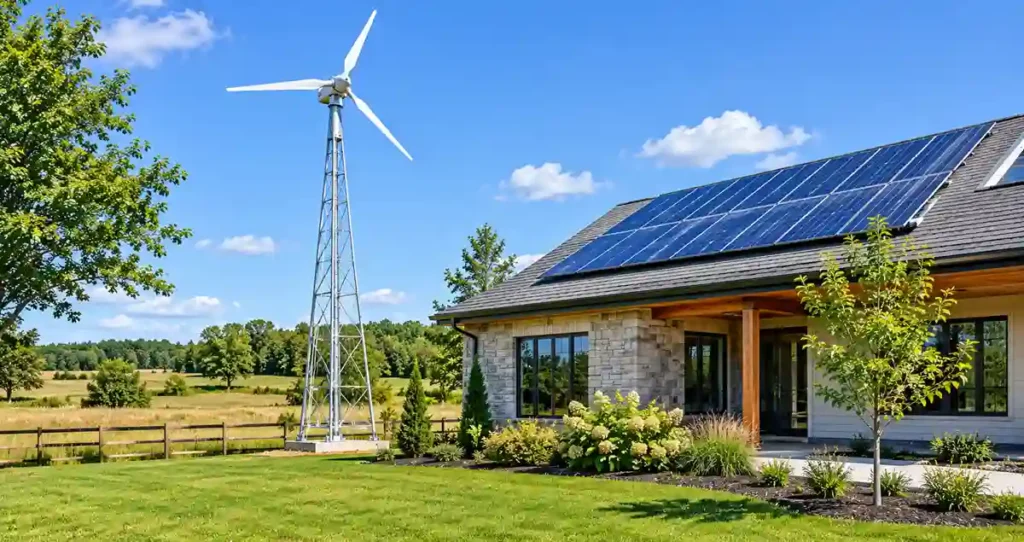
Wind speed can change with height. Close to the ground, buildings, trees and walls can disturb the airflow.
A turbine installed too low or too close to obstacles may produce less electricity and experience more vibration.
However, a taller tower can increase installation cost and require more civil work.
This is one reason why vertical-axis turbines may be worth evaluating for certain residential projects. Some models can be installed on shorter support structures, depending on their design and the available wind.
Before choosing a shorter installation, check whether the wind conditions at that height are good enough to produce useful electricity. A lower installation cost is not worthwhile if electricity production becomes too low.
Grid-Tied vs Off-Grid Home Wind Turbines
Home wind turbines can be connected to the utility grid or used as part of an independent power system.
Grid-connected wind turbine
A grid-connected turbine supplies electricity to the home’s electrical system through compatible power equipment.
When wind generation is higher than household demand, excess electricity may be exported to the grid if the local utility allows it.
When wind generation is low, the home can draw electricity from the utility.
A normal grid-connected system may shut down during a power outage for safety. Backup operation requires equipment specifically designed for that purpose.
Off-grid wind turbine
An off-grid wind system uses batteries to store electricity for times when wind generation is low or unavailable.
A typical system includes:
- Wind turbine
- Wind controller
- Battery bank
- Inverter
- Electrical safety equipment
Battery size depends on how much electricity the home uses and how long backup power is required.
For more information, read our guides to home battery backup and LiFePO4 batteries.
Solar and wind hybrid system
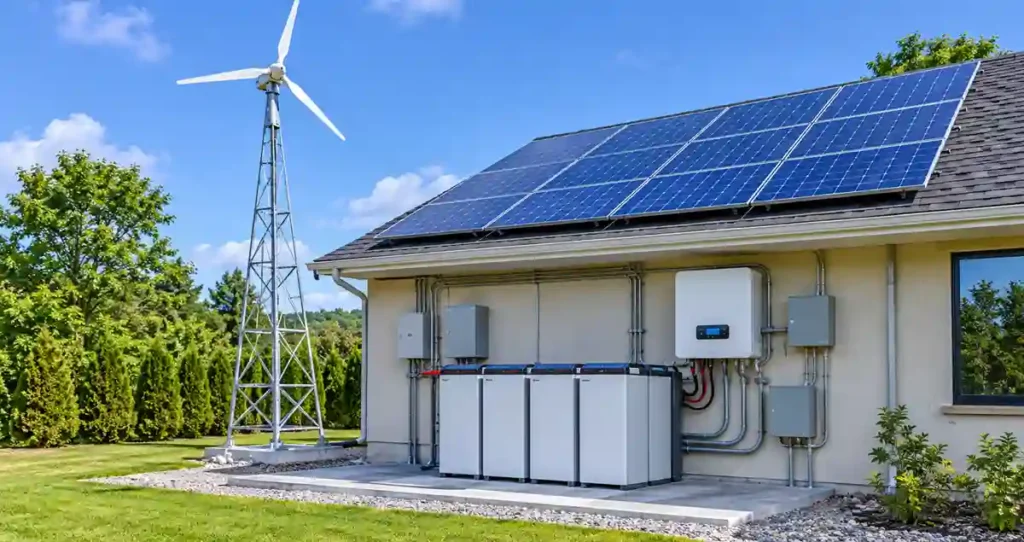
A home wind turbine can also work with solar panels.
Solar panels usually generate electricity during daylight hours, while wind may be available during the day or night depending on the location.
Combining both sources can help provide a more balanced renewable energy supply.
However, both systems need compatible controllers, inverters and safety equipment. They should not be connected together without checking the equipment specifications.
Read our guide to the solar and wind hybrid system and the wind and solar hybrid controller.
Maintenance: Which Wind Turbine Is Easier to Maintain?
Maintenance is an important part of choosing a home wind turbine. A low purchase price does not necessarily mean a low-cost system over its lifetime.
Horizontal turbines are often installed on taller towers. Reaching the generator, blades and other parts may require special equipment or trained technicians.
Some vertical turbines have the generator and other important parts closer to the ground, making inspection and maintenance easier. However, this depends on the particular design.
Before buying either type, ask the supplier:
- How often does the turbine need inspection?
- Can important parts be reached safely?
- Are replacement blades and generators available?
- Is local technical support available?
- What does the warranty cover?
- What is the expected service life?
- What are the estimated maintenance costs?
Regular checks should include the blades, mounting structure, electrical connections, safety equipment and signs of damage or unusual vibration.
Engineer’s Note: I would give preference to a turbine that has easily available spare parts, clear maintenance instructions and reliable after-sales support. A design that is difficult to service can become expensive even if its initial purchase price is attractive.
Is a Home Wind Turbine Suitable for Urban Properties?
Not every home is suitable for a wind turbine.
In cities and residential neighbourhoods, buildings, trees and limited installation space can affect wind conditions.
A rooftop turbine may look convenient, but it can face problems such as vibration, noise, poor wind conditions and structural limitations.
Vertical-axis turbines may be worth evaluating where wind direction changes frequently or where a traditional tower installation is difficult. However, they still need suitable wind, safe mounting and enough space.
Before installing any turbine, check:
- Local building and height restrictions
- Property boundaries and required clearances
- Noise requirements
- Structural safety
- Neighbourhood restrictions
- Electrical connection requirements
A site with open land and good wind exposure is generally a better candidate for a residential wind turbine.
Can Artificial Intelligence Help Manage a Home Wind Turbine?
Artificial intelligence can help monitor and manage renewable energy systems.
When a home uses wind, solar and battery storage together, an energy management system can use weather information and electricity usage patterns to:
- Estimate upcoming solar and wind production
- Plan battery charging and discharging
- Help manage household electricity use
- Identify unusual changes in system performance
- Support maintenance planning
AI cannot improve the natural wind available at a property. The turbine, installation height and wind conditions still determine how much electricity can be generated.
For more information, read our article on AI in solar energy management, if that page is published and available.
Is a Home Wind Turbine Worth It?
A home wind turbine can be a good investment when the property has suitable wind conditions, enough installation space and a reasonable installation cost.
It may be particularly useful for:
- Rural homes
- Farms
- Remote cabins
- Properties with good wind exposure
- Off-grid homes
- Locations where wind and solar can work together
However, it may not be financially attractive in a location with weak wind, limited tower height or expensive installation requirements.
Example: Calculate the simple payback
Suppose a home wind turbine installation costs $30,000.
Assume it generates 8,000 kWh of usable electricity every year, and the electricity price is $0.18 per kWh.
Step 1: Calculate annual savings
8,000 × $0.18 = $1,440 per year.
Step 2: Divide installation cost by annual savings
$30,000 ÷ $1,440 = 20.8 years.
The estimated simple payback is approximately 21 years.
This is only a basic example. It does not include maintenance, repairs, battery replacement, financing, insurance, incentives or changes in electricity prices.
The actual financial result depends on how much electricity the turbine produces and how much of that electricity the home can use.
Engineer’s Field Notes: What to Check Before Buying
Before recommending a home wind turbine, I would check these points:
- Home electricity use: Review the electricity bills to understand how much energy the property needs.
- Wind conditions: Check whether the location has enough wind throughout the year.
- Turbine type: Compare horizontal and vertical models rather than choosing by appearance.
- Civil work: Ask for the cost of the foundation, tower and installation separately.
- Maintenance: Check how easily the turbine can be inspected and repaired.
- Electricity production: Ask for the manufacturer’s power chart and expected annual output.
- Electrical equipment: Make sure the controller, inverter and batteries are compatible.
- Safety: Check the mounting structure, braking system and electrical protection.
- After-sales support: Confirm warranty coverage and spare-part availability.
- Total investment: Compare the complete installed cost, not only the turbine price.
My recommendation: For a residential project where reduced civil work and easier maintenance are important, I would evaluate suitable vertical-axis models first. If the property has strong, open wind and the main goal is higher electricity production, I would also compare horizontal-axis models. The final decision should be based on actual energy output, total installation cost and long-term maintenance.
Wind Turbine Engineering Standards and Electrical Codes: IEC, IEEE, NFPA, NEC and UL
A safe and reliable home wind turbine installation must follow appropriate engineering standards and electrical codes. These standards help ensure that the turbine, tower, wiring, protection devices, batteries and grid connections are designed and installed correctly.
The following standards are particularly relevant to small wind energy systems:
- IEC 61400-2 – Small Wind Turbines: Covers design and safety requirements for small wind turbines, including structural strength, mechanical components and operating conditions.
- IEEE 1547 – Distributed Energy Resource Interconnection: Defines technical requirements for connecting grid-connected wind turbines and other distributed energy systems to the electrical grid.
- IEEE 1547.1 – Interconnection Testing: Provides testing procedures to verify that equipment meets the applicable IEEE 1547 requirements.
- NFPA 70 (NEC) – National Electrical Code: Covers electrical installation safety, including wiring methods, grounding, overcurrent protection and applicable requirements for small wind energy systems.
- UL 6142 – Small Wind Turbine Safety: Addresses safety requirements for small wind turbine equipment where the standard applies.
Important Engineering Note: These standards cover different parts of a wind energy installation. IEC 61400-2 focuses on turbine design and safety, IEEE 1547 addresses grid interconnection, and NFPA 70 covers electrical installation. The applicable requirements depend on the project location, local regulations and the equipment being installed. In countries where the NEC or specific UL standards have not been adopted, follow the relevant national electrical regulations and authority requirements.
Frequently Asked Questions
Which is better for a home: horizontal or vertical wind turbine?
A horizontal turbine generally offers better electricity production at suitable open sites. A vertical turbine can offer more installation flexibility and may be easier to maintain in some designs. The best choice depends on the property and the manufacturer’s performance data.
Which home wind turbine requires less civil work?
Some vertical-axis turbines can use shorter or simpler support structures, which may reduce civil work. However, the foundation still needs to be designed for the turbine’s weight and wind loads. Compare the actual installation drawings and quotations.
How much electricity can a 5 kW home wind turbine produce?
It depends on wind conditions. As an illustration, a 5 kW turbine operating at an assumed 20% average output could generate approximately 8,760 kWh per year. Actual production may be different.
How much does a home wind turbine cost?
The price depends on turbine size, tower, foundation, electrical equipment and installation. A complete installed system can cost much more than the turbine alone.
Can a wind turbine power a house?
Yes, if the turbine produces enough electricity for the household’s needs. However, wind generation changes with weather, so a grid connection, battery or another backup source may be required.
Can I install a wind turbine on my roof?
Some small turbines are designed for specific building installations, but roof strength, vibration, noise and wind conditions must be checked first. A rooftop location is not automatically suitable.
Does a vertical wind turbine work when wind changes direction?
Yes. A vertical-axis turbine can receive wind from different directions without turning to face the wind. Its electricity production still depends on wind speed and turbine design.
Does a home wind turbine need batteries?
Not always. A grid-connected system can operate without batteries if the utility connection permits it. An off-grid system generally needs batteries or another source of electricity when wind generation is unavailable.
Is a home wind turbine noisy?
Noise depends on the turbine design, blade speed, installation and distance from nearby buildings. Ask for the manufacturer’s noise information and check local noise requirements before installation.
Can I combine a wind turbine with solar panels?
Yes. A properly designed solar and wind hybrid system can use both sources to generate electricity and charge a battery bank. The controllers and electrical equipment must be compatible.
Final Thoughts
A home wind turbine can be a useful source of renewable electricity, but choosing the right model is more important than simply selecting a higher power rating.
Horizontal-axis turbines are generally a battery strong option for open sites with good wind conditions and a focus on electricity production. Vertical-axis turbines deserve consideration when installation flexibility, reduced civil work and maintenance access are important.
Before investing, compare the expected electricity production, complete installation cost, maintenance requirements and available technical support.
A well-selected turbine can become a useful part of a home energy system. A poorly selected turbine can become an expensive installation that produces very little electricity.
Related guides
- Solar and Wind Hybrid System: Design, Sizing, Cost, and Working
- Wind and Solar Hybrid Controller: Wiring, Inputs and Protection
- Home Wind Turbine: Cost, Output, Sizing and Is It Worth It?
Related guides on SolarVisionAI.com
- Monocrystalline Solar Panels 2026: Still Worth It or Hype
- Polycrystalline Solar Panels: Worth Buying in 2026?
- Thin-film Solar Panels: When They Beat Silicon (2026)
- BIPV Solar Panels: Building-Integrated PV Complete Guide
- Portable Solar Panels: Engineer’s Buyer’s Guide 2026
- CPV Solar Panels: Concentrated Photovoltaic Explained
- Skin Solar Panel: What “Solar Skin” Actually Means
- Solar Fence Post Lights: Cap Sizes, Types & Install Guide
- Bifacial Solar Panels in 2026: How to Boost Energy Output
- Solar Charge Controller: The Complete Guide
- MC4 Connectors: Solar Safety & Installation Guide
- Solar Panel Types, Efficiency & Benefits
- Solar Water Pump Guide
- Commercial Solar Panel Installation: Engineering Guide
- Solar Fence Post Lights: Cap Sizes, Types & Install Guide
- BESS — Battery Energy Storage System Guide
- Commercial Solar Panel Installation
- Solar Refrigerator & DC Fridge — Complete 2026 Guide
- Bifacial Solar Panel Albedo Effect Guide
- TOPCon: Why TOPCon Solar Panel is a Proven Smart Investment in 2026
- HJT: Why TOPCon Solar Panel is a Proven Smart Investment in 2026
- PERC: PERC Solar Panel: Still Relevant or Already Outdated?
- Perovskite: Perovskite Solar Panels: The 2026 Reality Check
- N-Type vs P-Type: N-Type vs P-Type Solar Panels: Honest Comparison
- ABC: ABC (all back contact) Solar Panel: Back Contact Technology Explained
- IBC: IBC Solar Panels: Interdigitated Back Contact Guide
- Tandem: Tandem Solar Panels: Are Stacked Cells Ready for Rooftops?