
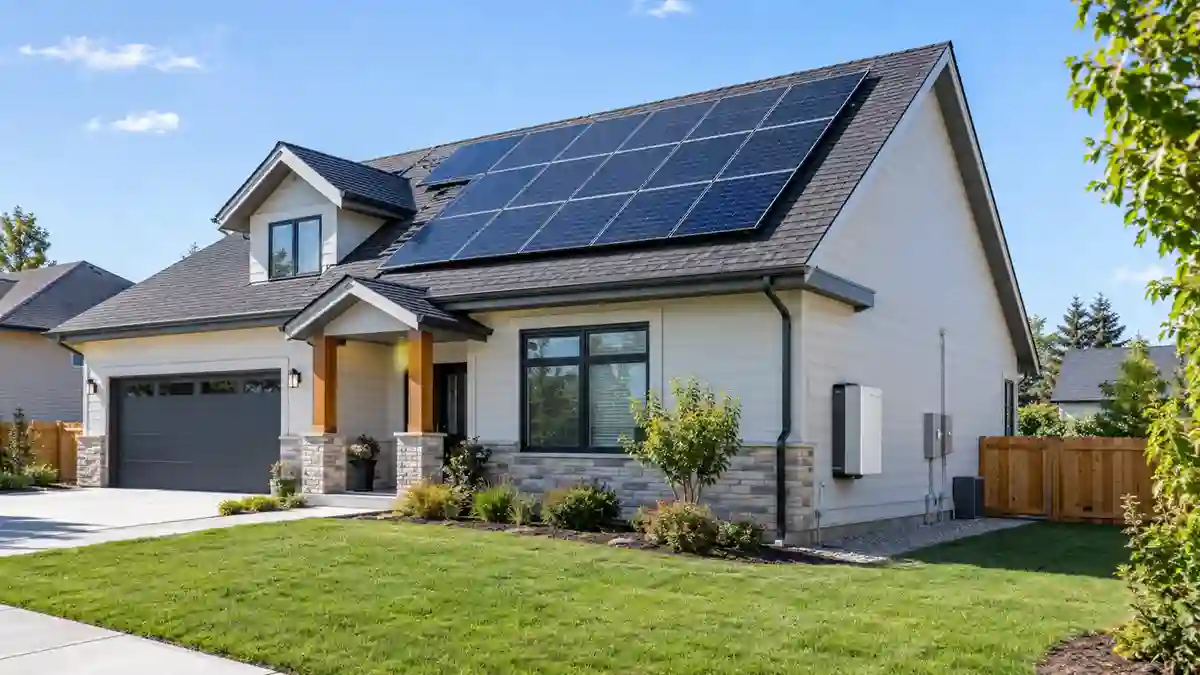
Home battery backup explained: compare ESS costs, LiFePO4 vs lead-acid, solar options, and sizing to choose the right system for your home.
A home battery backup system can keep essential appliances running during a power outage, store electricity for later use, and help homeowners manage time-of-use electricity rates. However, choosing the right system involves more than comparing battery capacity or purchase prices. You need to consider battery chemistry, inverter power, usable storage, installation requirements, and how you plan to recharge the battery.
As a solar engineer, I approach battery selection by first identifying what the homeowner needs to protect. A household that wants to run a refrigerator, lights, and internet equipment during occasional outages needs a different solution from one that wants to power air conditioning, electric cooking, and other high-demand appliances.
This guide explains how home battery backup works, which battery technologies are worth considering, how to calculate capacity, and when a battery-only system, solar panels-plus-battery installation, or generator makes the most sense.
Quick answer: For most homeowners seeking daily use and dependable backup, a properly designed lithium iron phosphate (LiFePO4 or LFP) battery system is a strong option. Battery capacity, measured in kilowatt-hours (kWh), determines how much energy is stored, while inverter power, measured in kilowatts (kW), determines how much equipment can operate simultaneously. Solar panels can recharge a compatible battery during an outage, while a grid-charged battery without solar generally cannot recharge once the grid is unavailable.
1. What Is Home Battery Backup?
Home battery backup is a system that stores electricity and supplies power when the utility grid fails or when electricity is more expensive. Depending on its configuration, it can support selected circuits or an entire house.
The term is often used interchangeably with battery storage, residential energy storage, and home power battery backup. However, the battery itself is only one part of the installation.
| Term | Meaning |
|---|---|
| Home battery backup | Battery-based power for essential circuits or an entire home |
| Home battery backup system | The complete battery, inverter, controls, protection, and switching arrangement |
| ESS (Energy Storage System) | The integrated equipment used to store and manage electrical energy |
| BESS (Battery Energy Storage System) | A broader term commonly used for residential, commercial, and utility-scale storage systems |
| Portable power station | A compact battery unit designed to power compatible devices, usually without permanent home wiring |
| UPS (Uninterruptible Power Supply) | A system designed to maintain power to connected equipment, often for short interruptions |
For a deeper engineering explanation, see the battery energy storage system (BESS) guide.
A complete residential installation typically includes battery modules, a battery management system (BMS), a compatible inverter, protective devices, and a means of isolating the home from the utility during an outage.
1-1. Home Battery Backup vs. ESS: What Is the Difference?
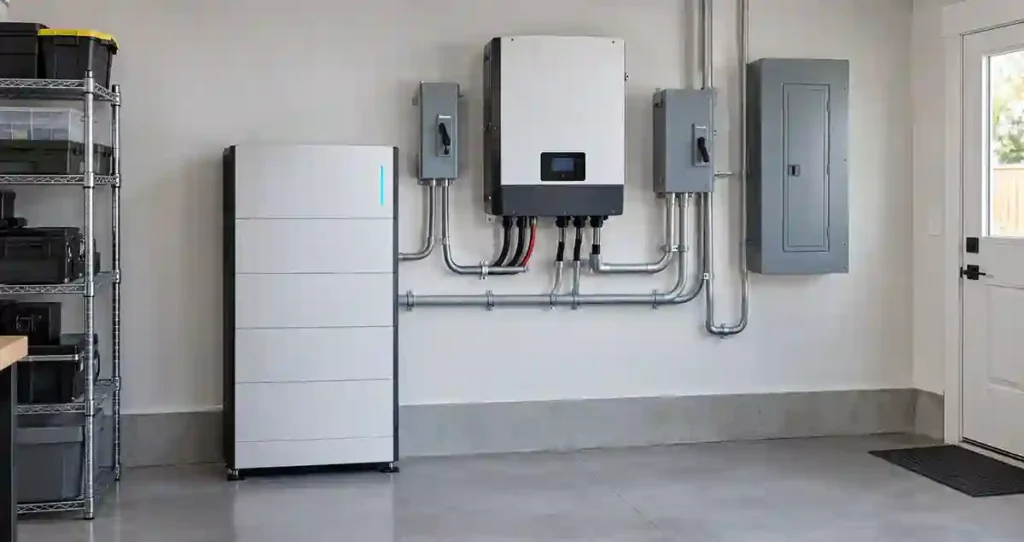
A home battery backup system is a residential application of an Energy Storage System (ESS). Although the terms are often used interchangeably, a battery and a complete ESS are not the same thing.
A battery stores electrical energy. An ESS combines energy storage with the power electronics, controls, protection, and connections required to use that energy safely and effectively.
A residential ESS may include:
- Battery modules: Store energy and determine the system’s nominal and usable capacity, measured in kilowatt-hours (kWh).
- Battery Management System (BMS): Monitors battery voltage, current, temperature, and state of charge, and provides battery protection.
- Inverter or Power Conversion System (PCS): Converts electricity between DC and AC and determines how much power the system can deliver.
- Energy Management System (EMS): Coordinates charging, discharging, operating schedules, and reserve settings where supported.
- Backup and protection equipment: May include a transfer switch, backup gateway, isolation devices, breakers, and other protective components, depending on the design.
- Solar integration: Where solar panels are included, a compatible hybrid inverter or separate solar and battery inverters allows solar generation to charge the battery.
Some residential systems integrate several components into a single enclosure, while others use separate battery modules, inverters, and controls.
How Does an ESS Provide Home Backup Power?
During normal operation, an ESS can store electricity from the utility grid, rooftop solar panels, or both, depending on its configuration. When a grid outage occurs, a backup-capable system isolates the backed-up circuits from the utility supply as required and delivers stored energy to the selected loads.
However, installing a battery does not automatically provide backup power. The inverter, transfer equipment, electrical panel configuration, and control system must all support backup operation. Some installations supply only essential circuits, while appropriately designed systems can support a larger portion of the home.
A battery-only ESS can provide backup without solar, but once its usable energy is depleted, it needs another charging source. A compatible solar-plus-storage ESS can recharge from solar during an outage when sunlight, system design, and operating conditions allow it.
For homeowners, the important question is not simply how large the battery is. The complete ESS must deliver enough power for the intended loads and store enough usable energy to support them for the required duration.
For a deeper system-level explanation, see our BESS and Battery Energy Storage System Guide. For inverter compatibility and system configuration, read our Hybrid Inverter Guide.
2. How Does a Home Battery Backup System Work?
A residential battery stores electricity when it is available and delivers that energy when required.
The operating sequence usually looks like this:
- Charging: The battery charges from the utility grid, solar panels, or both, depending on the system design.
- Normal operation: The system supplies energy according to its settings, which may prioritize backup reserves, solar self-consumption, or electricity savings.
- Grid failure: Compatible transfer equipment isolates the backed-up circuits from the utility and switches them to battery power.
- Backup operation: The inverter supplies the connected loads until the battery reaches its reserve limit or is depleted.
- Recharging: When the grid returns, or when solar generation becomes available, the battery can recharge.
The changeover time depends on the inverter and transfer equipment. Some systems provide near-instantaneous backup for compatible loads, while others introduce a brief interruption.
AC-coupled vs. DC-coupled battery systems
There are two common ways to integrate batteries with solar panels.
- DC-coupled system: Solar panels and the battery share a compatible hybrid inverter or DC power-conversion arrangement. This can be attractive for a new solar installation.
- AC-coupled system: A battery inverter works alongside an existing solar inverter. This is often considered when adding storage to an existing solar installation.
The best arrangement depends on the existing equipment, conversion losses, backup requirements, and installation costs. Read the hybrid inverter guide and solar inverter selection guide for more detail.
3. Which Battery Technology Is Best for Home Backup?
Battery chemistry affects usable capacity, lifespan, safety characteristics, maintenance, and long-term cost. The cheapest battery at purchase is not necessarily the most economical over its service life.
| Battery technology | Typical characteristics | Main advantages | Main limitations |
|---|---|---|---|
| Lead-acid | Flooded, AGM, and gel variants | Lower initial purchase cost and established technology | Lower usable capacity, heavier construction, and generally shorter cycle life |
| Lithium-ion NMC | Nickel-manganese-cobalt chemistry | High energy density and compact size | Different thermal and lifespan characteristics from LFP; product-specific safety requirements |
| LiFePO4 (LFP) | Lithium iron phosphate | Long cycle life, good thermal stability, and low routine maintenance | Higher initial cost than many lead-acid options; charging limits depend on temperature and manufacturer specifications |
| Sodium-ion | Emerging battery chemistry | Uses sodium instead of lithium and may offer useful cold-temperature performance | Residential availability, energy density, and long-term field history vary |
| Flow batteries | Liquid electrolyte stored in tanks | Potentially long service life and deep cycling | Larger footprint and generally higher system complexity for residential applications |
These characteristics are general comparisons, not guarantees for every product. Always check the manufacturer’s datasheet and warranty.
Why LiFePO4 is a strong choice for home battery backup
LiFePO4 batteries are attractive for residential storage because they combine long cycle life, high usable capacity, and comparatively good thermal stability. They can suit households that use their batteries during outages and cycle them regularly to manage electricity costs.
Explore the LiFePO4 battery guide, the technical overview of LFP batteries, and the lithium-ion battery for solar guide.
For a wider comparison, see solar battery types, efficiency, and storage. You can also compare LiFePO4 and lithium-ion batteries and review NMC battery technology.
Engineer’s note: Compare batteries by usable energy, warranted cycle life, round-trip efficiency, and replacement costs—not purchase price alone. A battery with a lower upfront price may become more expensive if it provides less usable energy or needs replacement sooner.
4. What Components Make Up a Home Battery Backup System?
A reliable backup battery for home use requires compatible electrical equipment, not just a battery module.
| Component | Function |
|---|---|
| Battery modules | Store electrical energy |
| Battery management system (BMS) | Monitors cell conditions and manages operating limits |
| Inverter | Converts DC battery power into AC electricity for household loads |
| Transfer and isolation equipment | Separates backed-up circuits from the grid when required |
| Electrical protection | Helps protect against overcurrent, short circuits, and other electrical faults |
| Energy management controls | Manage charging, discharge, operating modes, and reserve settings |
Modular batteries vs. all-in-one systems
An all-in-one system can simplify equipment selection and installation. Modular systems can offer more flexibility when additional capacity is needed, provided the batteries and inverter support expansion.
For example, a nominal 51.2 V, 200 Ah battery has a theoretical stored energy of:
51.2 V × 200 Ah = 10,240 Wh, or 10.24 kWh.
Actual usable energy is lower or equal to the nominal rating depending on the manufacturer’s discharge limits, reserve settings, temperature, and system losses.
Read the 48 V 200 Ah LiFePO4 battery guide for a closer look at this battery class. For smaller 24 V systems, see the 24 V 200 Ah LiFePO4 battery guide.
Before purchasing, confirm inverter compatibility, communication protocols, continuous discharge limits, and warranty conditions. Also check applicable electrical and fire codes, product certifications, and local permitting requirements. Standards such as UL 1973, UL 9540, and UL 9540A address different aspects of battery and energy-storage safety; their relevance depends on the product and installation.
5. Home Battery Backup Without Solar
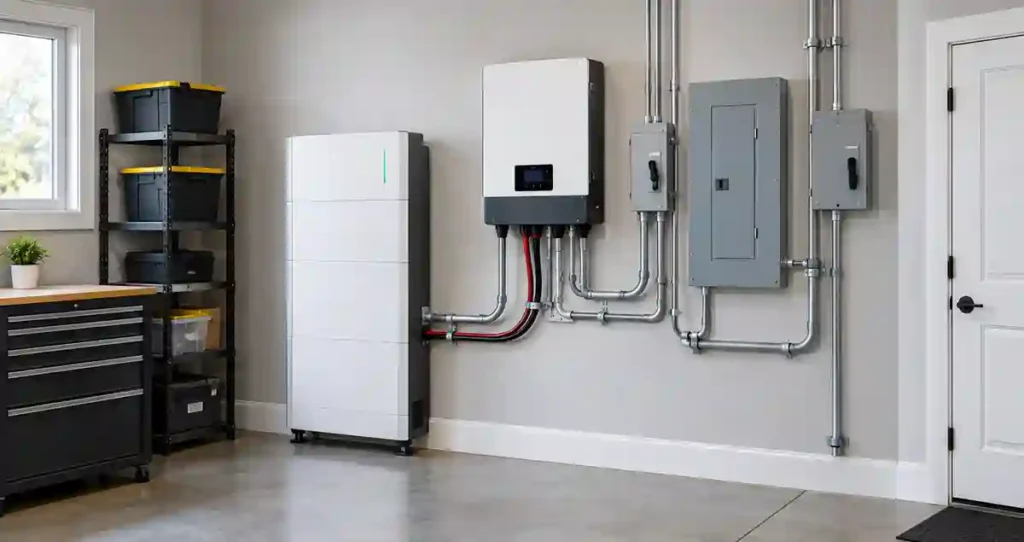
A home battery backup without solar can charge from the utility grid and provide electricity when the grid goes down. It may be suitable for homeowners who want backup power but cannot install solar panels because of roof conditions, shading, property restrictions, or budget.
A grid-charged battery can also be used to charge during lower-priced hours and discharge during expensive hours, where the utility rate structure and system controls support this operation.
The key limitation is recharge capability. Once the battery is depleted during an outage, a grid-only system cannot recharge from the unavailable utility supply. It must wait for grid restoration or another compatible charging source.
A battery-only installation may be a practical starting point for short outages, but households expecting prolonged outages should consider how they will replenish the stored energy.
6. Home Battery Backup With Solar
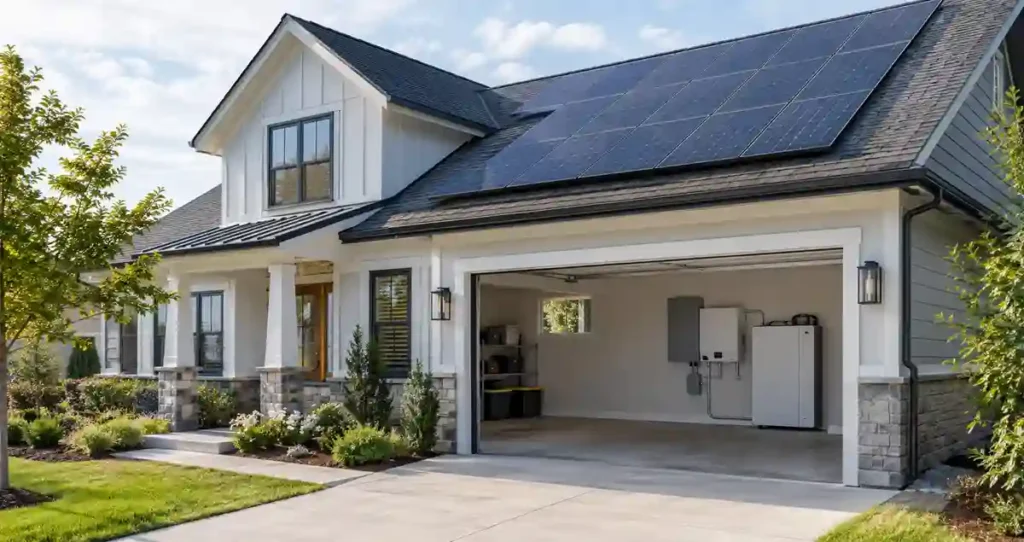
A home battery backup with solar combines photovoltaic panels and battery storage. During the day, solar generation can supply household loads and charge the battery when surplus energy is available.
At night, or when the grid fails, the battery can supply connected loads. A suitably designed system can continue recharging from solar during a daytime outage, but only if the inverter, controls, and solar configuration support this operation.
| Feature | Battery without solar | Battery with solar |
|---|---|---|
| Initial equipment cost | Generally lower | Generally higher |
| Recharge during a grid outage | Not from the grid | Possible from solar with compatible equipment |
| Energy available during prolonged outages | Limited by stored energy and alternative charging | Can be replenished by suitable solar generation |
| Potential electricity bill savings | Depends on tariffs and operating strategy | Can include solar self-consumption and tariff shifting |
| Main design consideration | Grid charging and backup duration | Solar production, battery capacity, inverter compatibility, and backup controls |
For an overview of system configurations and financial considerations, read the solar power system types, cost, and ROI guide.
If you are starting from scratch, the residential solar panel installation guide explains the broader installation context. Solar generation depends on system size, weather, shading, orientation, and seasonal conditions, so do not assume panels will always recharge the battery at its rated output.
7. Home Battery Backup vs. Generator: Which Is Better?
Battery storage and generators solve similar problems in different ways. A battery provides stored electricity, while a generator produces electricity using fuel.
| Factor | Home battery backup | Fuel-powered generator |
|---|---|---|
| Noise | Typically quiet | Produces engine noise |
| Exhaust emissions at the unit | None during battery discharge | Produces exhaust gases |
| Transfer to backup | Can be automatic and rapid with compatible equipment | Automatic or manual, depending on the installation |
| Runtime | Limited by stored energy and available recharging | Depends on fuel availability, load, and operating limits |
| Routine maintenance | Usually relatively low | Requires engine and fuel-system maintenance |
| Daily electricity savings | Possible with suitable tariffs and controls | Generally not a direct electricity-bill-saving function |
| Long-duration outages | Requires adequate stored energy and recharging | Can operate while fuel is available and maintenance limits are respected |
| Installation requirements | Battery, inverter, electrical protection, and suitable location | Generator, safe outdoor placement, fuel supply, and appropriate transfer equipment |
Which option costs less?
The answer depends on the required power, outage duration, installation complexity, fuel prices, and how frequently the equipment will be used.
A battery may have a higher initial cost but offer quiet operation and daily energy-management benefits. A generator may be more economical for occasional, long-duration outages when fuel is readily available. A battery can also reduce the need to run a generator continuously if the two systems are designed to work together.
For smaller portable applications, compare options in our best solar generators guide. If fuel flexibility is important, see the dual-fuel inverter generator buying guide and tri-fuel inverter generator guide.
What about whole-home battery backup?
A whole home battery backup system is designed to supply the home’s entire electrical distribution panel or a sufficiently broad set of circuits. It is not simply a larger battery connected to a house.
The inverter must support the expected simultaneous load and starting surges. Large air conditioners, well pumps, electric ranges, water heaters, and electric vehicle chargers can substantially increase the required power rating.
For many households, backing up essential circuits—such as refrigeration, lighting, internet equipment, selected outlets, and certain medical or security equipment—is a more economical approach.
8. How Much Home Battery Backup Do You Need?
Correct sizing requires two separate calculations:
- Energy capacity (kWh): determines how long the battery can supply the connected loads.
- Power rating (kW): determines how much load can operate at the same time.
A battery may have sufficient energy capacity but still be unable to operate an appliance if the inverter’s continuous output or surge capability is too low.
Step 1: Calculate the energy requirement
Estimate the wattage of each appliance and the number of hours it will run.
Energy consumption in kWh = appliance power in kW × operating hours.
For example, a refrigerator averaging 150 W over 24 hours would consume approximately 3.6 kWh if it actually averaged that power continuously. Real consumption varies with the appliance, ambient temperature, and duty cycle.
Add the energy requirements of the other backed-up loads to determine the total required energy.
Step 2: Account for usable capacity and losses
Consider a battery rated at 10.24 kWh nominal. If the system makes 90% of that capacity usable, it provides approximately 9.22 kWh of usable DC energy. After conversion losses, the energy delivered to AC loads will be lower.
Actual values depend on the battery, inverter, reserve settings, operating temperature, and discharge rate.
| Illustrative average load | Approximate runtime from 8.2 kWh of delivered energy |
|---|---|
| 500 W | 16.4 hours |
| 1,000 W | 8.2 hours |
| 2,000 W | 4.1 hours |
| 3,000 W | 2.7 hours |
These are simplified calculations, not guaranteed runtimes. Appliance startup loads, changing consumption, and inverter limitations can reduce actual performance.
Use our solar battery size calculator to estimate storage requirements. You can also use the kWh-to-kW calculator to understand the relationship between energy and power.
Step 3: Size the inverter
List the appliances that may operate simultaneously, then check their running power and starting surge. Motors and compressors can draw significantly more power when starting.
Our inverter size calculator can help estimate power requirements. Final selection should also account for voltage, phase configuration, surge duration, power factor, and manufacturer specifications.
Typical starting points for battery capacity
| Backup objective | Illustrative capacity range |
|---|---|
| Essential lights, internet, and selected small appliances | 5–10 kWh |
| Essentials plus more appliances and longer runtime | 10–20 kWh |
| Broad household backup, potentially including HVAC | 20 kWh or more; actual requirements may be substantially higher |
These are preliminary planning ranges rather than universal recommendations. Your actual consumption and desired backup duration should determine the design.
For example, a household that needs 8 kWh of delivered energy overnight may need more than 8 kWh of nominal battery capacity after accounting for reserve limits and conversion losses.
9. How to Reduce Electricity Costs With Battery Storage
A home battery can provide value even when the grid is operating normally. The opportunity depends on your utility’s rate structure, solar export compensation, battery efficiency, and degradation costs.
Time-of-use energy shifting
If electricity is cheaper overnight and more expensive during the evening, the battery may charge during lower-priced hours and discharge during peak hours.
Solar self-consumption
Where export credits are low, storing excess daytime solar electricity for use later can be more valuable than exporting it to the grid.
Backup reserve management
A battery can reserve a portion of its capacity for outages instead of discharging the entire battery for routine savings. The appropriate reserve depends on outage risk and household priorities.
Illustrative savings calculation
Assume:
- Off-peak electricity price: $0.12/kWh
- Peak electricity price: $0.35/kWh
- Energy delivered during peak hours: 9 kWh
- Round-trip efficiency: 90%
The approximate cost of replacing the energy used is 9 ÷ 0.90 × $0.12 = $1.20.
The avoided peak-rate cost is 9 × $0.35 = $3.15.
The resulting gross daily saving is approximately $1.95, before accounting for battery degradation, fixed charges, additional fees, or other tariff conditions. If the same savings occurred every day, the simple annualized figure would be about $712.
This is an illustrative example, not a forecast. Actual savings depend on the applicable utility rates and how often the battery can perform the cycle economically.
Homeowners in California should pay particular attention to their export compensation and applicable billing arrangements. Our guides to NEM 3.0 in California, net metering, and net metering vs. net billing explain relevant considerations.
10. Home Battery Backup Cost and Incentives in 2026
The total cost of a home battery backup system depends on more than the advertised battery price. Capacity, inverter power, electrical modifications, transfer equipment, permits, labor, and the installation location can all affect the final quote.
A system designed for essential circuits may require less equipment than one designed for whole-home backup. Adding solar panels can increase the initial investment but provide a way to recharge during suitable daytime conditions.
When comparing quotes, request an itemized breakdown covering:
- Battery capacity and usable energy
- Continuous and surge inverter output
- Battery management and control equipment
- Backup circuits and transfer equipment
- Electrical work, permits, and inspection
- Warranty coverage, throughput limits, and expected service life
- Solar integration, if included
Federal tax credit considerations
Federal residential clean-energy tax incentives changed for property placed in service after December 31, 2025. The former 30% residential Clean Energy Credit under Section 25D is not available for qualifying property placed in service after that date under the applicable 2025 legislation.
Homeowners should verify the rules for their specific installation and tax year with the IRS or a qualified tax professional. State, utility, and local incentives may have separate eligibility rules and deadlines.
For historical filing information, see our IRS Form 5695 guide. Do not assume that a credit applies to a new 2026 installation simply because it appeared in earlier solar-storage guidance.
For broader project economics, see the solar panel installation cost guide and use the solar ROI calculator to explore financial assumptions.
11. Installation, Safety, and Maintenance
Battery installation involves electrical hazards, high-current connections, protective devices, and potentially substantial stored energy. Use a qualified installer who understands the battery, inverter, applicable electrical codes, and local permitting requirements.
Before installation, confirm:
- The battery and inverter are approved for use together.
- The installation location meets the manufacturer’s temperature, ventilation, clearance, and fire-safety requirements.
- The system includes appropriate overcurrent protection, isolation, and transfer arrangements.
- The selected backup circuits and total loads match the inverter’s capabilities.
- The equipment and installation comply with applicable local rules.
- The homeowner understands the warranty, maintenance requirements, and emergency shutdown procedure.
For additional guidance, read our solar battery installation guide and complete solar panel installation guide.
Maintenance requirements vary by chemistry and product. Many residential lithium batteries require little routine maintenance, but owners should still monitor system alerts, keep equipment accessible, follow temperature limits, and arrange inspections when recommended.
12. Common Home Battery Backup Mistakes
Avoid these mistakes when comparing or installing systems:
- Sizing by kWh alone: A battery with enough energy may still have insufficient inverter power.
- Ignoring startup surges: Compressors and motors can exceed an inverter’s available output.
- Assuming every circuit will work during an outage: Only appropriately configured and backed-up circuits may remain energized.
- Choosing by upfront price: Compare usable capacity, efficiency, warranty, and expected service life.
- Overlooking recharge capability: A battery-only system may remain depleted throughout an extended outage.
- Ignoring cold-weather charging limits: Battery chemistry and manufacturer controls determine safe operating conditions.
- Using the wrong inverter or battery combination: Voltage range, current limits, and communication requirements must match.
- Discharging the battery without considering reserve needs: Routine savings should not compromise the desired emergency backup.
- Skipping permits and installation checks: Compliance and safe electrical integration are essential.
13. Home Battery Backup Buyer’s Checklist
Before choosing a backup battery for home use, answer these questions:
- Do I need backup for essential circuits or the whole house?
- How many hours must the battery operate without grid power?
- Which appliances will run simultaneously?
- What are their running loads and startup surges?
- What battery chemistry and usable capacity best fit my requirements?
- Is the inverter compatible with my electrical supply and planned loads?
- Will the battery charge from the grid, solar panels, or both?
- Can the system recharge during an outage?
- What are the installation, permit, and equipment costs?
- What do the warranty, cycle-life, and throughput terms actually cover?
- Are any local or utility incentives available for my installation?
- Can I expand the system later if my needs change?
A well-designed system should match your actual load profile and backup objective rather than simply maximize battery capacity.
Frequently Asked Questions
What is the best home battery backup system?
There is no single best system for every household. For many homes, LiFePO4 is a strong battery chemistry because of its cycle life and thermal characteristics. The best overall system also depends on usable capacity, inverter power, installation quality, compatibility, and warranty coverage.
Can I get home battery backup without solar panels?
Yes. A compatible battery system can charge from the utility grid and provide backup during an outage. However, a grid-only system generally cannot recharge from the utility while the grid is unavailable.
Is home battery backup with solar better than battery-only backup?
Solar-plus-battery storage can recharge during suitable daytime conditions and provide additional energy independence. Battery-only systems may cost less initially and can still provide useful backup and tariff-shifting benefits. The right option depends on outage duration, electricity prices, roof suitability, and budget.
How long will a home battery last during an outage?
Divide the usable energy delivered to household loads by their average power demand. For example, 8 kWh of delivered energy at a steady 1 kW load would last approximately eight hours. Actual runtime depends on conversion losses, changing appliance consumption, and inverter limitations.
How much does a whole home battery backup system cost?
Costs vary with storage capacity, inverter output, electrical modifications, backup coverage, and whether solar panels are included. Whole-home backup may require multiple batteries and a larger inverter than an essential-circuit system. Obtain itemized local quotes before comparing prices.
Is a home battery better than a generator?
A battery offers quiet operation, rapid changeover with suitable equipment, and potential electricity-bill savings. A generator can supply power for longer periods as long as fuel is available and the unit is maintained. Some homes benefit from combining both technologies.
Which battery is better for home backup: lead-acid or LiFePO4?
LiFePO4 is generally attractive for frequent cycling because of its usable capacity and cycle-life characteristics. Lead-acid may suit some low-cost applications with infrequent use, but its shorter cycle life and lower recommended usable capacity can increase lifetime costs.
Can a home battery lower my electricity bill?
Potentially. Savings may come from storing surplus solar electricity or shifting grid consumption away from expensive rate periods. The benefit depends on electricity tariffs, system efficiency, battery degradation, and the way the system is operated.
How many kWh do I need for whole-home battery backup?
There is no universal figure. Calculate the energy required by the appliances you intend to operate and determine how long they must run. Whole-home backup also requires sufficient inverter power and surge capability for simultaneous loads.
Is there a federal tax credit for home battery backup in 2026?
The former 30% residential Clean Energy Credit under Section 25D ended for qualifying property placed in service after December 31, 2025, under the applicable legislation. Verify your circumstances and any other available incentives with the IRS or a qualified tax professional.
Final Verdict
The right home battery backup system is the one that meets your power requirements, provides sufficient usable energy, and fits your budget over its expected service life.
For many households, LiFePO4 storage paired with a correctly sized inverter offers a compelling balance of usable capacity, cycle life, and low routine maintenance. Home battery backup without solar can be useful for short outages and time-of-use energy management, while home battery backup with solar can provide a way to recharge during suitable daytime conditions.
Before purchasing, calculate your essential loads, decide how long you need backup power, compare complete installed-system quotes, and confirm the equipment’s compatibility and safety requirements. These steps will help you choose a system that delivers practical resilience rather than paying for capacity you do not need.
Related guides on SolarVisionAI.com
- Monocrystalline Solar Panels 2026: Still Worth It or Hype
- Polycrystalline Solar Panels: Worth Buying in 2026?
- Thin-film Solar Panels: When They Beat Silicon (2026)
- BIPV Solar Panels: Building-Integrated PV Complete Guide
- Portable Solar Panels: Engineer’s Buyer’s Guide 2026
- CPV Solar Panels: Concentrated Photovoltaic Explained
- Skin Solar Panel: What “Solar Skin” Actually Means
- Solar Fence Post Lights: Cap Sizes, Types & Install Guide
- Bifacial Solar Panels in 2026: How to Boost Energy Output
- Solar Charge Controller: The Complete Guide
- MC4 Connectors: Solar Safety & Installation Guide
- Solar Panel Types, Efficiency & Benefits
- Solar Water Pump Guide
- Commercial Solar Panel Installation: Engineering Guide
- Solar Fence Post Lights: Cap Sizes, Types & Install Guide
- BESS — Battery Energy Storage System Guide
- Commercial Solar Panel Installation
- Solar Refrigerator & DC Fridge — Complete 2026 Guide
- Bifacial Solar Panel Albedo Effect Guide
- TOPCon: Why TOPCon Solar Panel is a Proven Smart Investment in 2026
- HJT: Why TOPCon Solar Panel is a Proven Smart Investment in 2026
- PERC: PERC Solar Panel: Still Relevant or Already Outdated?
- Perovskite: Perovskite Solar Panels: The 2026 Reality Check
- N-Type vs P-Type: N-Type vs P-Type Solar Panels: Honest Comparison
- ABC: ABC (all back contact) Solar Panel: Back Contact Technology Explained
- IBC: IBC Solar Panels: Interdigitated Back Contact Guide
- Tandem: Tandem Solar Panels: Are Stacked Cells Ready for Rooftops?