
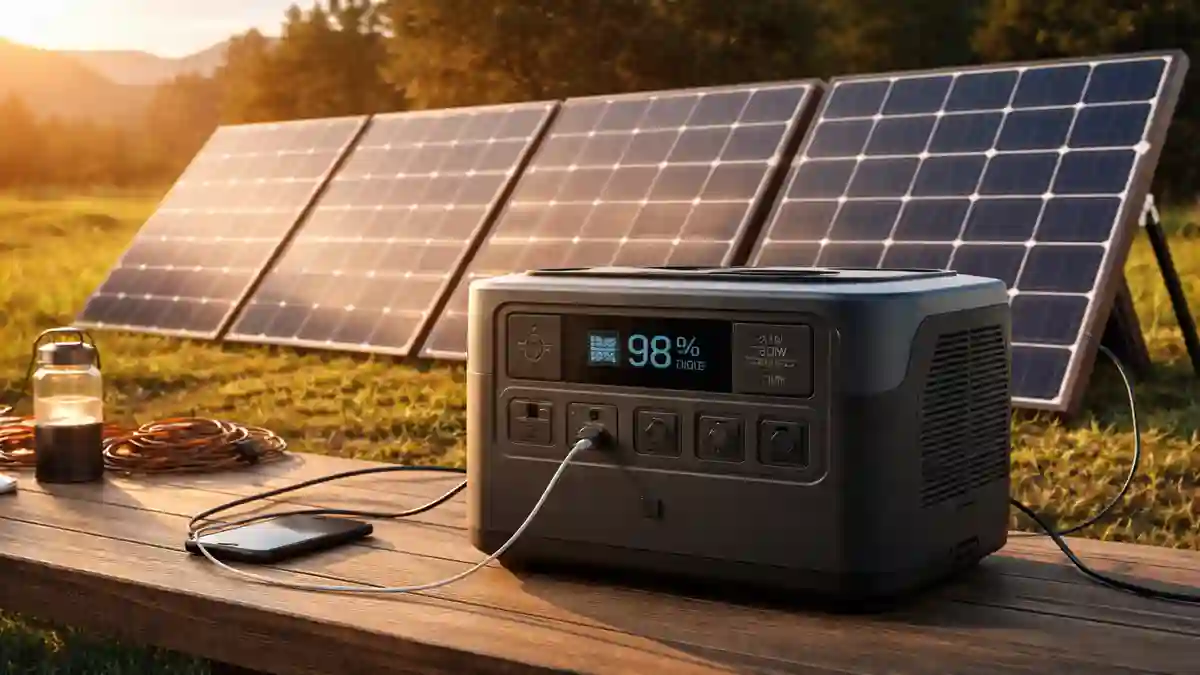
Looking for the best solar generator? This complete buyer’s guide covers how they work, what to look for, and top picks for off-grid power, camping and home backup.
Introduction
Power cuts, remote worksites, weekend camping trips, or simply cutting your electricity bill — whatever your reason, a solar generator is one of the smartest investments you can make right now. Unlike noisy gas-powered alternatives, solar generators run silently, produce zero fumes, and draw free energy from the sun.
But with dozens of models on the market — ranging from compact camping units to full solar power systems for homes — choosing the right one takes some knowledge. This guide breaks down everything you need to know: how solar generators work, what’s inside them, what specs actually matter, and which models are worth your money.
How solar generators work
At its core, a solar generator does three things: it captures sunlight through solar panels, stores that energy in a battery, and converts it into usable AC power through an inverter. Understanding each of these steps helps you pick a unit that genuinely matches your needs.
Solar panels absorb sunlight and produce direct current (DC) electricity. That current passes through a solar charge controller — specifically an MPPT (Maximum Power Point Tracking) charge controller in quality units — which regulates the incoming power and maximises the amount of energy transferred into the battery. MPPT technology can improve charging efficiency by up to 30% compared to older controllers, making it a critical component to look for.
The energy is stored in a battery, and the type of battery matters enormously. Most modern solar generators use solar lithium batteries (typically LiFePO4 chemistry), which offer a significantly longer cycle life, lighter weight, and safer operation compared to older lead-acid alternatives. The stored DC power is then converted to AC by a built-in power inverter, making it compatible with standard household appliances and devices.
What’s inside a solar generator: the key components
Every solar generator is essentially a bundle of four core components. Knowing what each one does — and what to look for — will make you a far more confident buyer.
1. The power inverter
The power inverter is the brain of the operation. It converts the DC power stored in the battery into the AC power your appliances, tools, and devices actually use. Look for a pure sine wave inverter — it produces cleaner power that’s safe for sensitive electronics like laptops, medical equipment, and modern appliances. Modified sine wave inverters are cheaper but can damage or underperform with certain devices.
2. The MPPT charge controller
The solar charge controller sits between the solar panels and the battery. Its job is to prevent overcharging and ensure the battery receives power at the optimal voltage and current. An MPPT charge controller does this with exceptional precision, continuously adjusting to extract maximum power from your panels regardless of weather conditions or the angle of the sun.
3. The battery (solar lithium batteries vs lead-acid)
The solar battery is where your energy is stored. Solar lithium batteries — particularly LiFePO4 (lithium iron phosphate) — have become the standard in quality generators for good reason. They typically offer 2,000–3,500 charge cycles compared to 300–500 for lead-acid; they’re significantly lighter, they charge faster, and they’re far less prone to thermal issues. If a generator still ships with lead-acid technology, it’s worth looking elsewhere.
4. Battery capacity and the BESS connection
Capacity is measured in watt-hours (Wh). A 1,000Wh battery can theoretically run a 100W device for 10 hours. For larger homes or commercial setups, a standalone generator may not be enough — this is where a full BESS (Battery Energy Storage System) comes into play, combining large-capacity battery banks with solar input for whole-property or industrial-scale energy management.
Who needs a solar generator?
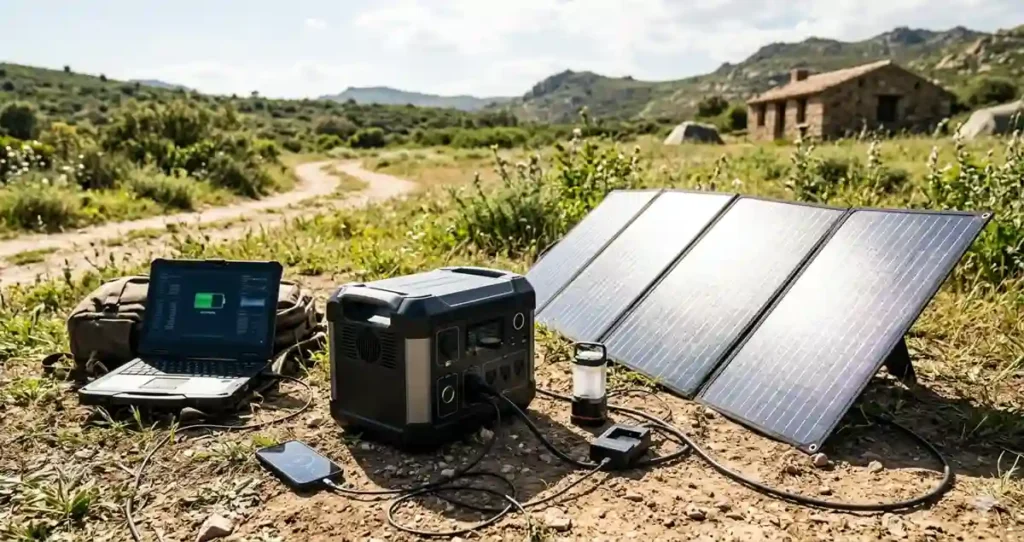
Solar generators are not a one-size-fits-all product. Here are the most common use cases:
- Off-grid living: For those who have stepped away from the grid entirely, a solar generator (often paired with a full solar power system) is an essential power source. Combined with the right battery capacity and panel array, it can cover everyday energy needs indefinitely.
- Camping and outdoor adventures: Portable solar generators are perfect for running lights, charging devices, powering small appliances and keeping a fridge cold on extended trips.
- Home backup power: Power cuts are unpredictable. A solar generator keeps essentials running — lights, communication devices, medical equipment — when the grid goes down.
- Hybrid solar systems: Some users pair a hybrid solar inverter with their generator, allowing simultaneous use of solar energy, grid power, and battery storage — switching intelligently between sources to minimise cost.
- Remote work and construction sites: Where running a cable is not practical, a silent solar generator offers clean, reliable power without the fumes or noise of a petrol unit.
What to look for when buying a solar generator
Here are the specifications that actually matter — and what the numbers mean in real-world use:
- Battery capacity (Wh): This determines how long you can run your devices. For camping or light backup, 500–1,000Wh is usually sufficient. For home backup or off-grid living, aim for 2,000Wh or more.
- Inverter output (W): This is the maximum load the unit can handle at any one moment. If you want to run a kettle (2,000W) and a laptop (60W) at the same time, you need at least 2,100W of inverter capacity.
- Charging speed: How quickly can the battery be refilled? Look at both solar input (W) and AC charging speed (W). Some units support fast charging — from 0% to 80% in under an hour.
- Battery chemistry: Always prefer solar lithium batteries (LiFePO4). Longer lifespan, safer, lighter, and better performance in temperature extremes.
- MPPT charge controller: Confirms the unit will make the most of your solar panels and charge efficiently even on cloudy days.
- Output ports: Check for the right combination of AC outlets, USB-A, USB-C (PD), DC outputs, and car ports for your actual devices.
Pairing your generator with the right solar panels
A solar generator is only as good as the panels feeding it. Most units ship with compatible panels or accept third-party ones within a specific wattage range. When selecting panels to pair with your generator, there are a few things to keep in mind.
Panel efficiency matters — higher-efficiency panels produce more power per square metre, which is especially important in limited space. Monocrystalline panels (mono solar panels) are the standard for portable use: compact, efficient, and reliable. For stationary or roof-mounted setups, bifacial solar panels are worth considering — they generate power from both the front and rear surfaces, increasing overall output without needing more space.
Always match the panel’s open-circuit voltage (Voc) and maximum power voltage (Vmp) to your generator’s MPPT charge controller specifications. Going outside the recommended range can reduce efficiency or damage the unit.
And once installed, keep those panels clean. Dust, bird droppings, and grime can reduce output by 15–25%. A simple routine wipe-down goes a long way — we cover this in detail in our guide on how to clean solar panels safely.
Top solar generator picks by use case
Best for camping and portable use
Look for units under 10kg with 500–1,000Wh capacity, a built-in MPPT charge controller, and multiple USB-C PD ports. The ability to charge via car adapter (12V) is also a bonus for road trippers.
Best for RV and van life
RV users need consistent power for days or weeks at a time. A 1,000–2,000Wh generator with fast solar recharging and the option to expand battery capacity is ideal. Pairing with a solar charge controller for lithium batteries ensures safe and efficient charging of your onboard lithium bank.
Best for home backup and off-grid living
For serious home backup or full off-grid living setups, a high-capacity generator (2,000Wh+) paired with a hybrid solar inverter gives you the most flexibility — drawing from solar panels, battery storage, and the grid as needed. At this scale, consider whether a full BESS setup makes more financial sense for your long-term energy goals.
Maintaining your solar generator
Solar generators require very little maintenance compared to fuel-powered alternatives, but a few habits will extend the life of your unit significantly:
- Charge the battery to around 50% before storing long-term — fully draining or fully charging lithium batteries for extended periods shortens their lifespan.
- Keep solar panels clean — even in moderate climates, dust accumulation can noticeably reduce output. A quick clean every few weeks with appropriate solar panel cleaning solutions keeps them performing at their best.
- Store in a cool, dry place — extreme heat degrades battery chemistry faster than anything else.
- Check connections and cables periodically — especially for outdoor or mobile setups where vibration and exposure can loosen terminals.
Frequently asked questions
Can a solar generator power a whole house?
A single portable generator cannot power a whole house on its own. However, a well-designed solar power system — combining multiple high-capacity batteries, a hybrid solar inverter, and sufficient panel array — can cover most or all of a home’s energy needs. This is more accurately described as a full off-grid or grid-hybrid solar setup rather than a standalone generator.
How long does it take to charge a solar generator?
Charging time depends on three factors: battery capacity, solar panel wattage, and sunlight conditions. A 1,000Wh generator connected to 200W of panels will take approximately 5–7 hours of direct sunlight to fully charge. Units with higher solar input limits (400W+) can cut that time significantly. The MPPT charge controller ensures the battery charges as efficiently as conditions allow.
Are solar generators worth it?
For the right use cases — off-grid living, regular camping, home backup, or reducing grid dependence — yes, absolutely. The ongoing cost of running one is near zero once purchased, and with solar lithium batteries rated for 2,000+ cycles, a quality unit will serve you reliably for a decade or more. The key is matching the right capacity and specification to your actual needs.
Conclusion
A solar generator is one of the most practical investments you can make in your energy independence. Whether you’re planning for off-grid living, protecting your home against power cuts, or simply want clean power on the go, there’s a unit built for your situation.
The best solar generators share a common formula: a high-quality power inverter, an efficient MPPT charge controller, long-lasting solar lithium batteries, and enough capacity to cover your actual daily load. Get those four things right and you’ll have reliable, silent, emissions-free power for years to come.
Ready to go deeper? Explore our related guides on how solar panels work, the best solar panel kits for home use.