
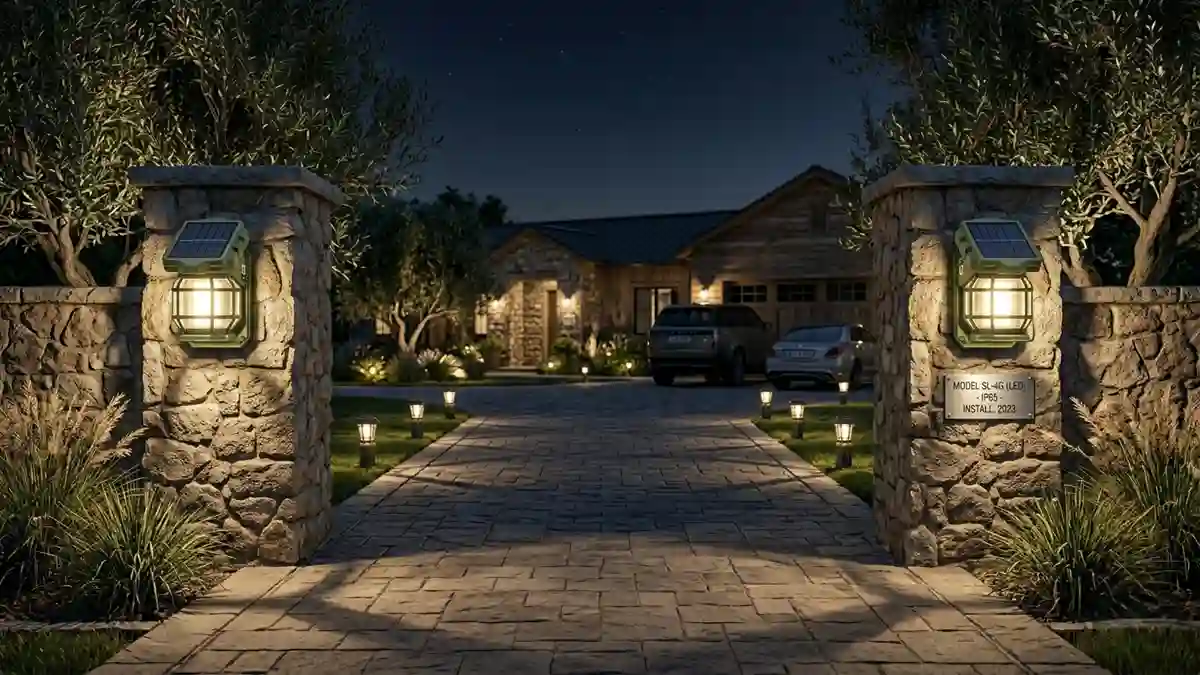
Outdoor Wall Solar Lanterns fail when the panel faces the wrong direction. An engineer covers mounting height, panel orientation, and IP rating — buy right.
A wall-mounted solar lantern is doing more work than it looks. It is a structural attachment to the building facade, a waterproofing penetration or surface-mount decision, a solar panel and battery charging system that must receive adequate solar irradiance at its wall-mounted angle, and a lighting source that needs to deliver the right lumen output at the right mounting height for the application.
This guide covers the four decisions that determine whether the product you choose will actually work on your wall. For the complete solar lantern engineering framework, see the solar lanterns pillar guide.
1. Mounting Height vs Lumen Output
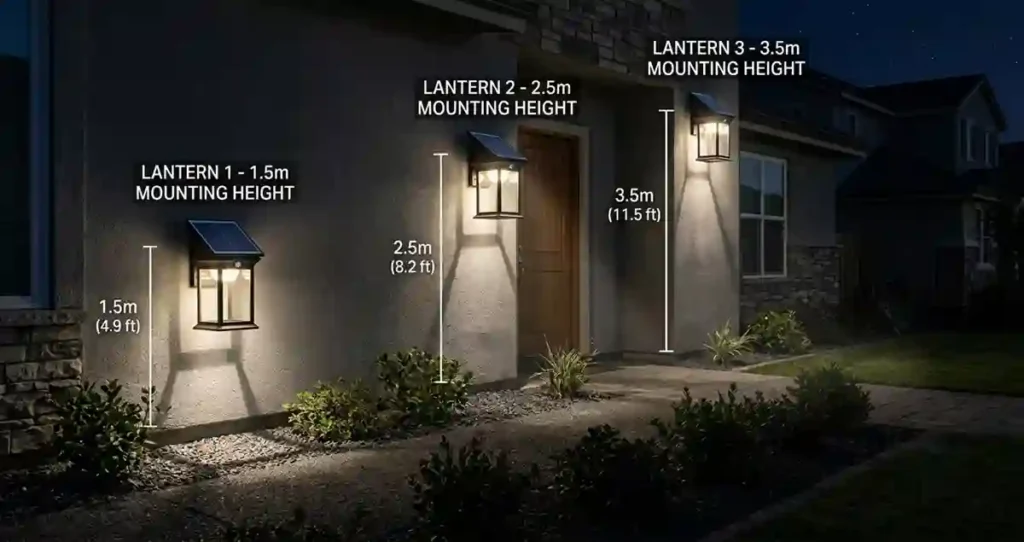
The illuminated area at ground level depends on both the lumen output and the mounting height. A 40-lumen lantern at 2.0 m mounting height produces a usable pool of light approximately 1.5 to 2.0 m in radius. The same lantern at 3.0 m mounting height spreads the same lumen output over a larger area — the light is dimmer at ground level.
| Mounting height | Application | Minimum lumens | IP rating minimum | Panel orientation note |
| 1.5–2.0 m | Pedestrian path, gate, low entry | 30–50 lm | IP65 | South-facing wall: full panel exposure |
| 2.0–2.5 m | Door entry, garage side, patio wall | 50–80 lm | IP65 | East/west wall: 15–25% reduced charge |
| 2.5–3.0 m | Driveway pillar, commercial entry | 80–120 lm | IP65 | North-facing wall: not recommended |
| 3.0 m+ | Perimeter security, carpark entry | 120–200 lm | IP65–IP67 | Separate panel recommended |
Engineer’s Note: A lantern mounted on a north-facing wall in the northern hemisphere receives almost no direct solar irradiance. The panel will charge from diffuse sky radiation only — typically 10 to 20% of the rated panel output. A lantern specified for 8 hours runtime on a south-facing wall will deliver 1.5 to 3 hours on a north-facing wall.
2. Panel Orientation on Walls
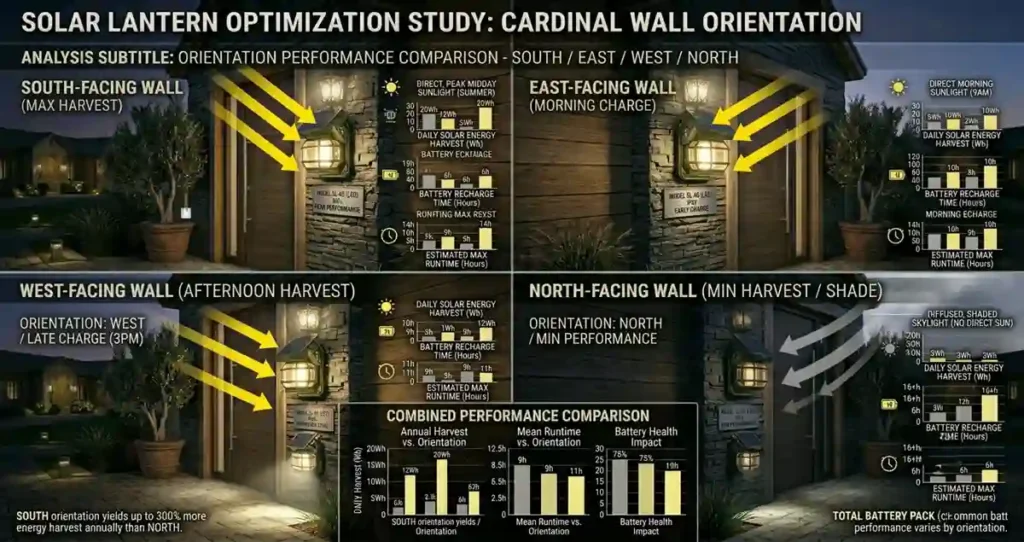
| Wall orientation (N. hemisphere) | Charge efficiency vs south-facing | Practical impact on runtime |
| South-facing | 100% — reference | Full rated runtime |
| Southeast / Southwest | 85–95% | Minor reduction — acceptable |
| East / West | 60–75% | Runtime reduced 25–40% — size battery up |
| Northeast / Northwest | 30–50% | Significant reduction — separate panel required |
| North-facing | 10–20% (diffuse only) | Product not suitable — do not install |
Field Note: On a commercial gatehouse installation, two identical wall solar lanterns were specified for east and west gate pillars. The west-facing unit performed acceptably. The east-facing unit cut out before midnight within the first week. Both units were replaced with lanterns carrying a larger integrated battery (2000 mAh vs the original 1000 mAh). Wall orientation was the cause; battery sizing was the solution.
3. IP Rating for Outdoor Wall Lanterns
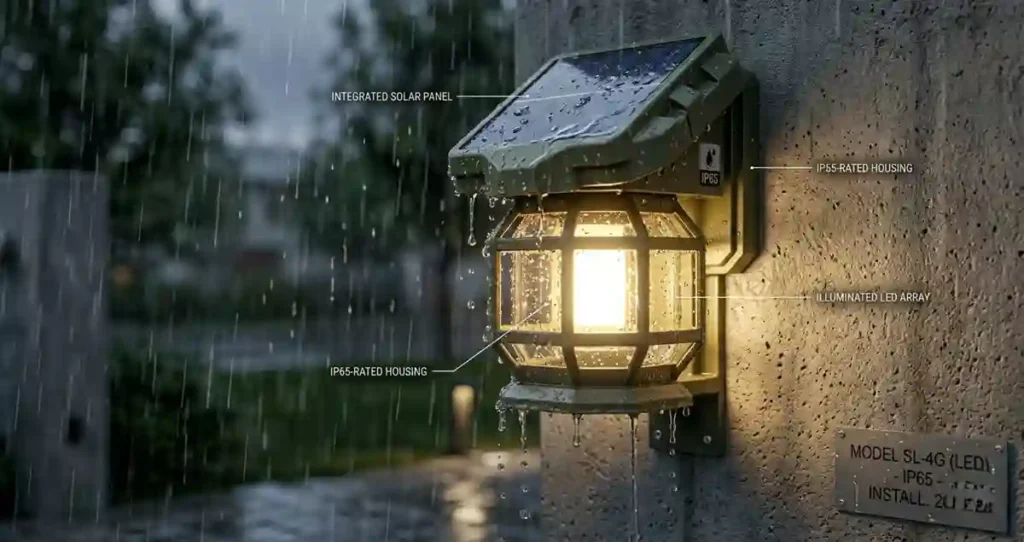
Outdoor wall lanterns are exposed to rain. IP65 is the non-negotiable minimum for any wall-mounted lantern without a protective overhang. For lanterns in coastal environments, specify marine-grade stainless or UV-stabilised polycarbonate housings in addition to IP65. Salt air accelerates corrosion on standard aluminum fittings within two to three years.
The full IP rating reference table is in the solar lanterns buying guide.
4. Common Installation Mistakes
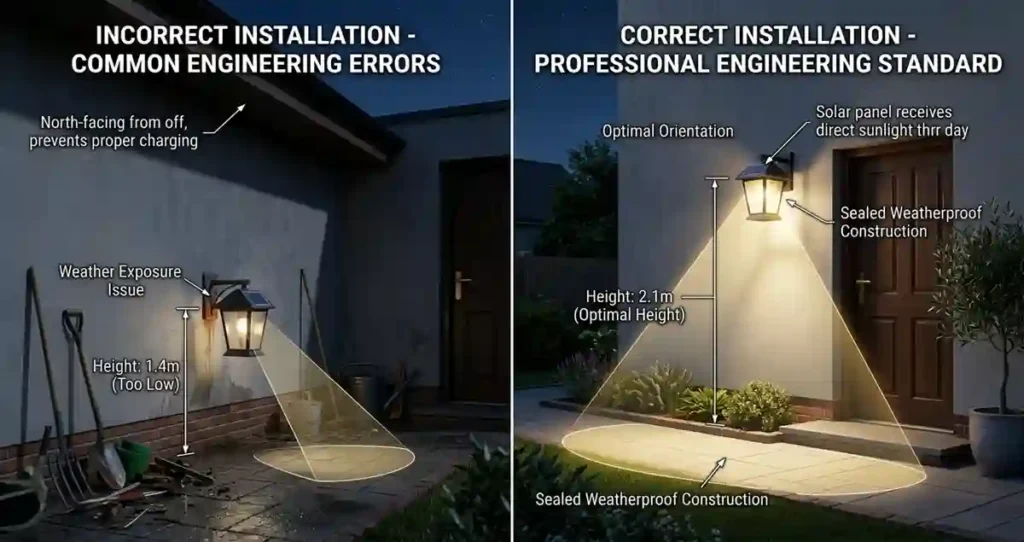
- Installing on a north-facing wall without assessing panel irradiance first — the most common cause of underperformance on installation day one
- Selecting a lantern sized for the wall height without accounting for the actual ground area that needs to be illuminated
- Using the decorative IP44 version of a lantern for a fully exposed installation — the IP44 and IP65 variants often look identical in product photos
- Mounting the lantern body flat against the wall with no air gap — lanterns need ventilation clearance at the back for thermal management
- Ignoring colour temperature — most wall solar lanterns default to 5000–6000K. Specify warm white (2700–3000K) for residential use.
5. Buying Checklist
| Spec to verify | Minimum requirement | Why it matters |
| IP rating | IP65 | Rain-resistant for all exposed wall positions |
| Lumen output | Match the mounting height table above | Determines actual ground-level illuminance |
| Battery capacity (mAh) | Listed explicitly | Runtime determination — unlisted = likely undersized |
| Panel orientation | South-facing preferred | Determines daily charge energy |
| Colour temperature | 2700–3000K residential; 4000–5000K commercial | Aesthetic and functional appropriateness |
| Mounting method | Surface mount with sealant | Weatherproofing at wall penetration |
For hanging lanterns on the same structure — pergola posts, fence pillars — see the hanging solar lanterns guide.
Frequently Asked Questions.
What is the best mounting height for Outdoor Wall Solar Lanterns?
Most Outdoor Wall Solar Lanterns perform best when installed between 2.0 and 2.5 meters above ground level. This height provides a good balance between light coverage and ground-level brightness for entrances, patios, and walkways.
Do Outdoor Wall Solar Lanterns work on north-facing walls?
Outdoor Wall Solar Lanterns installed on north-facing walls generally perform poorly in the northern hemisphere because the solar panel receives very little direct sunlight. In most cases, a south-facing wall or a lantern with a separate solar panel is a better option.
What IP rating should Outdoor Wall Solar Lanterns have?
Outdoor Wall Solar Lanterns installed in exposed locations should have a minimum IP65 rating. This provides protection against rain, dust, and outdoor weather conditions throughout the year.
How many lumens do Outdoor Wall Solar Lanterns need?
The required lumen output depends on the application. Decorative lighting may only require 30 to 50 lumens, while driveway entrances, perimeter lighting, and security applications often require 80 to 200 lumens.
Can Outdoor Wall Solar Lanterns be installed without electrical wiring?
Yes. Outdoor Wall Solar Lanterns operate using an integrated solar panel and rechargeable battery, eliminating the need for external electrical wiring. Proper wall orientation and adequate sunlight exposure are essential for reliable performance.
How long do Outdoor Wall Solar Lanterns last?
A quality Outdoor Wall Solar Lantern can last for many years. The LED light source often exceeds 25,000 hours of operation, while the rechargeable battery may require replacement after several years depending on usage and environmental conditions.
Related Guides on SolarVisionAI
Solar Lanterns: The Complete Engineer’s Buying Guide
Solar Powered Lanterns: Specs, Battery Sizing & What to Buy
Best Hanging Solar Lanterns for Outdoors
Best Solar Lanterns for Camping: Lumens, Runtime & Field Performance
Solar Lantern Replacement Parts: Cells, Panels & What’s Fixable
Solar Lanterns vs Costco & Walmart: An Engineer’s Honest Comparison