
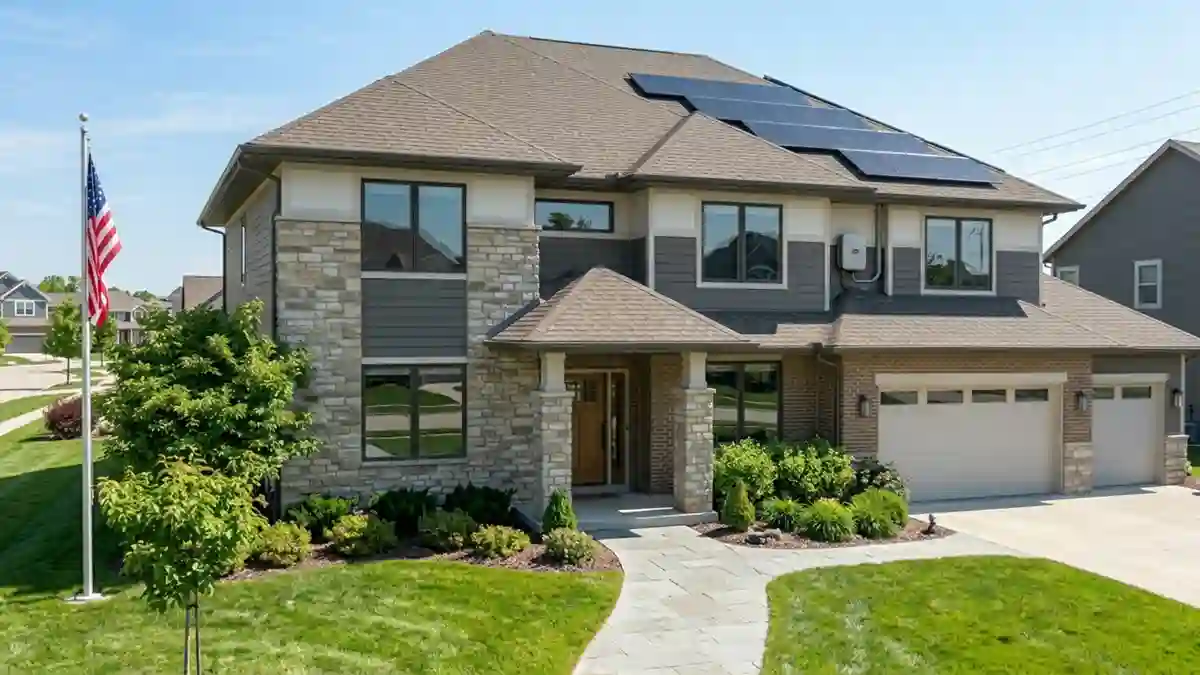
Do solar panels increase home insurance premiums? Usually yes — but far less than you think. A solar EPC consultant breaks down the real numbers and exactly what to do about it.
This question comes up in almost every residential EPC consultation I do. The client has just seen the solar proposal — $24,000 installed — and they want to know if their insurance bill is about to go up on top of that. The honest answer: yes, probably, but by far less than most people expect. And if the premium does not go up, there is a good chance the policy is not adequately covering the new system.
| Disclaimer: This article is written by a Solar EPC Consultant based on real client inquiries and project experience. It is educational only. For your specific insurance decisions, consult a licensed insurance advisor in your state. |
1. Why Solar Can Increase Your Premium — The Logic
Your homeowners insurance premium is calculated based on the replacement cost of your home. When you add a $25,000 solar system, the replacement cost increases by approximately that amount. If your Coverage A dwelling limit does not increase to match, you are underinsured. If it does increase — which is the correct approach — your premium increases proportionally. The premium increase is not a penalty for having solar. It is the cost of insuring the additional asset you have added to your home.
| System Cost | Approx Coverage A Increase | Approx Annual Premium Increase | Monthly Impact |
| $15,000 | $15,000 added to dwelling limit | $40–$90/year | $3–$8/month |
| $25,000 | $25,000 added to dwelling limit | $60–$150/year | $5–$13/month |
| $35,000 | $35,000 added to dwelling limit | $90–$200/year | $8–$17/month |
| $50,000+ (large system + battery) | $50,000+ added to dwelling limit | $130–$300/year | $11–$25/month |
| Field Note: These are national averages. State-specific factors — especially in California, Florida, and Texas — can make the premium impact higher. In Florida, where wind and hurricane risk is already priced into premiums, adding solar to a coastal home can result in a more significant increase. Always get an updated quote from your insurer before and after installation. |
2. Three Reasons Your Premium Might Increase More Than Expected
Reason 1 — You’re in a High-Risk Climate Zone
Insurers price premiums based on local risk. Hail-prone states (Texas, Colorado, Kansas) and hurricane states (Florida, Louisiana) carry higher base premiums. Solar panels are an additional replacement cost item in a zone where replacement events are more frequent. The premium increase in these states for an equivalent system can be 2–3x the national average. For hail-specific coverage, see: Solar Panel Hail Damage: What Your Insurance Covers
Reason 2 — You Added Battery Storage
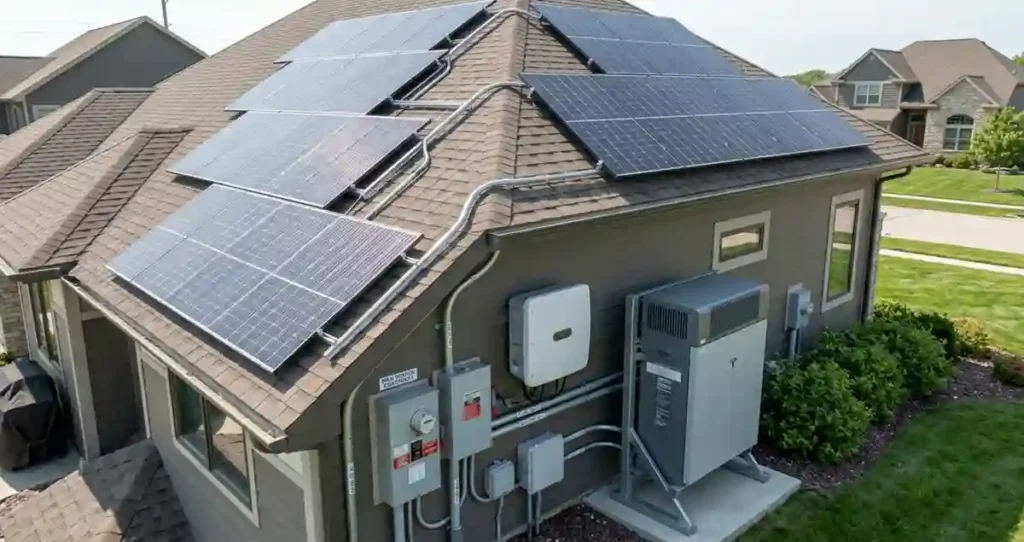
Battery systems (Tesla Powerwall, Enphase IQ Battery, SunPower SunVault) add $9,000–$15,000 to the insured value of a home. Some insurers classify large batteries as higher-risk items due to thermal event potential. For full battery coverage detail, see: Solar Panel Insurance: What It Covers & How to Get It
Reason 3 — Your Policy Moved from ACV to RCV
If your policy paid out on an Actual Cash Value basis (depreciated) and you upgrade to Replacement Cost Value — which is recommended for solar owners — your premium increases. This is the right move: a 10-year-old solar system under ACV pays out a fraction of replacement cost. RCV pays the current cost of a new equivalent system.
3. What Solar Does NOT Affect in Your Insurance
| Insurance Factor | Affected by Solar? | Notes |
| Liability coverage (Coverage E) | No | Solar panels do not change liability exposure for most insurers |
| Medical payments coverage (Coverage F) | No | No standard impact |
| Deductible amount | No — unless wind/hail deductible applies | Some policies add a separate hail deductible in hail-prone states — ask specifically |
| Coverage C (Personal Property) | Only if battery classified as personal property | Confirm battery classification with insurer |
| Loss of use coverage (Coverage D) | No direct impact | May be relevant if solar system prevents power loss during temporary displacement |
4. Do Solar Panels Increase Home Insurance?
| State | Risk Factor | Premium Impact | Recommendation |
| Florida | Hurricane, wind, hail | High — 15–30% above national average | Get hurricane/windstorm endorsement; verify panel wind uplift rating |
| Texas | Hail, wind, tornado | High — especially DFW and Panhandle regions | Verify hail deductible; consider Class 4 impact-resistant panel rating |
| California | Wildfire, earthquake | Moderate-High — wildfire zones increasingly difficult to insure | Earthquake endorsement critical; check insurer’s wildfire underwriting |
| Colorado | Hail | Moderate-High — high hail frequency statewide | Class 4 rated panels may reduce premium; confirm with insurer |
| Other states | Standard risk | Low-Moderate — $50–$150/year typical | Coverage A update + equipment breakdown endorsement |
| Engineer’s Note: In Texas and Colorado, I specify Class 4 impact-resistance rated panels (UL 2218 or FM 4473 SH4) as a standard EPC specification — not a premium option. The price differential between standard and Class 4 panels has narrowed significantly. Some insurers offer a premium discount for Class 4 panels that partially offsets the cost premium. Ask your insurer before specifying the panel model. |
5. How to Minimise Premium Increases Without Reducing Coverage
Why Do Solar Panels Increase Home Insurance Costs?
| Action | Potential Saving | Notes |
| Shop multiple insurers after installation | $50–$200/year | Not all insurers rate solar properties the same way |
| Specify Class 4 impact-resistant panels | 5–30% premium reduction (insurer-dependent) | Ask before purchasing panels — not all panels qualify |
| Bundle home + auto insurance | 5–15% total bundle discount | Often more impactful than solar-specific negotiations |
| Increase deductible on property coverage | Premium reduction offset | Higher out-of-pocket on a claim — balance carefully |
| Add monitored security system | Small discount on theft/vandalism coverage | Monitoring systems also protect solar equipment from theft |
For weather damage coverage across all climate zones, see: Solar Panels Weather & Storm Damage: Full Insurance Guide
Frequently Asked Questions
Does adding solar panels always increase homeowners’ insurance premiums?
Not always. Some insurers make little or no adjustment for smaller systems, while others increase premiums based on the added replacement value of the solar installation.
How much does solar add to homeowners’ insurance each month?
For many homeowners, solar increases insurance costs by approximately $3 to $13 per month, although costs vary by insurer, location, and system size.
Do solar batteries increase insurance premiums more than solar panels?
Often yes. Battery storage systems add significant replacement value and may be viewed by some insurers as a higher-risk component, resulting in larger premium increases.
Related Guides on SolarVisionAI
Solar Panel Insurance: What It Covers & How to Get It
Does Homeowners Insurance Cover Solar Panels? Complete Guide
Commercial Solar Panel Insurance: Installers, Cleaners & Buildings
Solar Panel Hail Damage: What Your Insurance Covers