
Solar panel hail damage insurance in the US — a solar EPC consultant explains what your HO-3 policy pays out, how to file a claim, and the best hail-resistant panels by state.
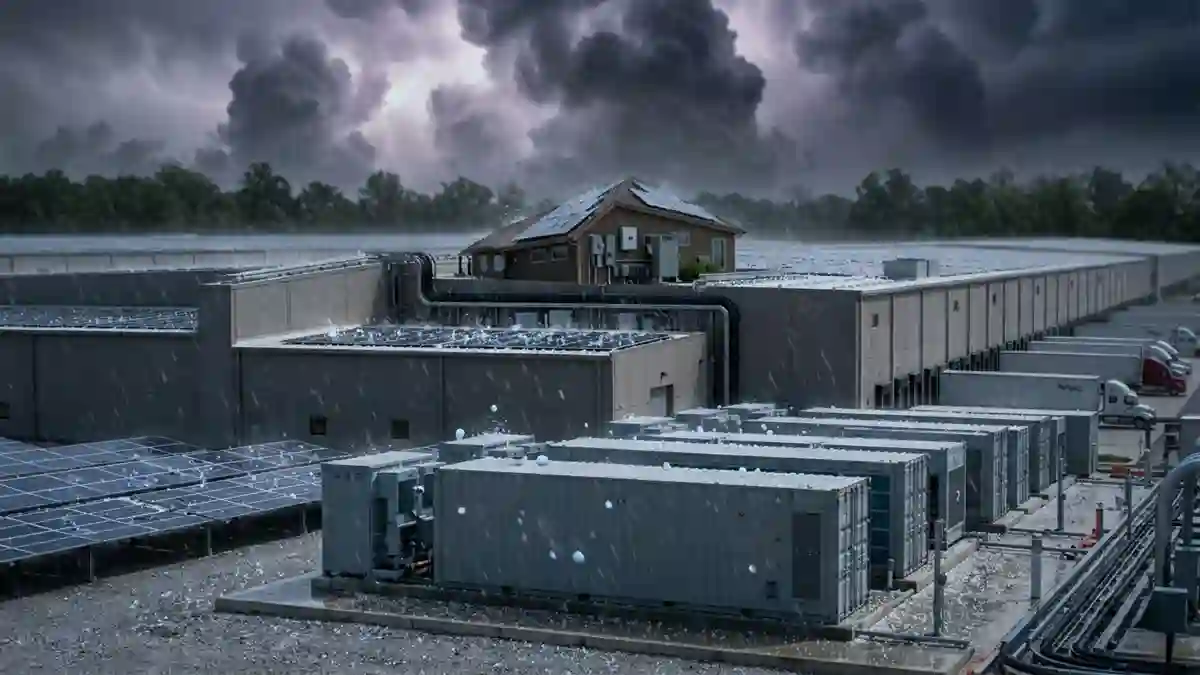
Hail is the single most common weather-related cause of solar panel damage in the United States. The hail belt — running from Texas through Kansas, Nebraska, Colorado, and into the Dakotas — accounts for the majority of solar hail claims filed annually. But hail events severe enough to damage solar panels occur in virtually every US state. In EPC project consultations, hail damage coverage is one of the first topics I raise with clients in high-frequency hail states. What the insurance covers, what it does not, and whether the panels specified can survive a hail event without a claim — these decisions are made before installation, not after damage.
| Disclaimer: This article is written by a Solar EPC Consultant based on real client inquiries and project experience. It is educational only. For your specific insurance decisions, consult a licensed insurance advisor in your state. |
1. Solar Panel Hail Damage Insurance — Does Your HO-3 Policy Cover It?
Yes — hail is a covered peril under a standard HO-3 homeowners policy. Solar panels permanently attached to the roof are covered under Coverage A (Dwelling) for hail damage, subject to your deductible and coverage limits. The conditions that affect whether a hail claim pays out in full:
| Condition | Impact on Claim Payout | What to Do |
| Coverage A limit updated after installation | Full replacement cost covered if limit is adequate | Update limit to full system replacement cost before hail season |
| Replacement Cost Value (RCV) policy | Current cost of equivalent new panels covered | Verify your policy is RCV, not ACV |
| Actual Cash Value (ACV) policy | Depreciated value only — 10-year-old panels pay out 40–60% of replacement cost | Upgrade to RCV or add extended replacement cost endorsement |
| Separate wind/hail deductible | Some policies in hail-prone states apply a separate, higher hail deductible | Check your declarations page — hail deductibles of 1–5% of dwelling value are common in TX, CO, KS |
| Cosmetic damage exclusion | Some policies deny hail claims where panels are dented but functional | Verify no cosmetic damage exclusion before hail season |
| Field Note: A homeowner in Colorado filed a hail claim after a 1.75-inch hailstorm cracked three panel faces and dimpled four others. The insurer covered the three cracked panels (functional impairment confirmed) and denied the four dimpled panels (cosmetic damage only, with no measured power loss). The client’s policy included a cosmetic damage exclusion that they had not read. Read the exclusions, not just the coverages. This exclusion is real and common in CO, TX, and other hail-heavy states. |
2. Solar Panels Hail Damage Insurance & Impact Resistance Ratings Explained
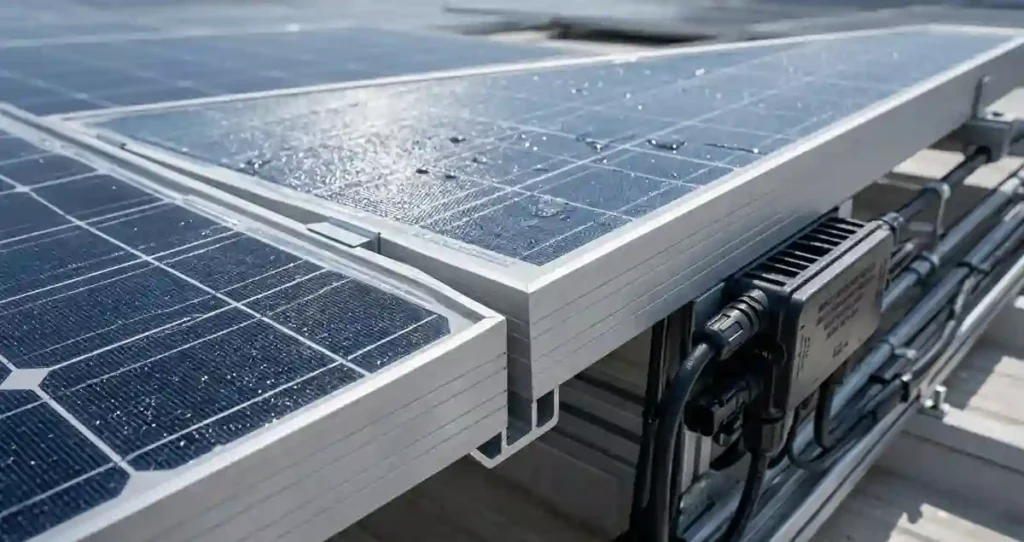
Solar panels are not equal in hail resistance. The US standard for solar panel impact resistance is UL 61730 and IEC 61215, which includes a hail test using 25mm (1-inch) ice balls at 23 m/s. Most standard panels pass this baseline test. The additional rating that matters for insurance is FM 4473 — Factory Mutual’s impact resistance classification:
| FM 4473 Rating | Hail Size Tested | Impact Speed | Insurance Relevance |
| Class 1 (SH1) | 1.25 in (32 mm) | ~52 mph | Minimum standard — not sufficient for severe hail states |
| Class 2 (SH2) | 1.5 in (38 mm) | ~58 mph | Moderate resistance — adequate for most US climates |
| Class 3 (SH3) | 1.75 in (44 mm) | ~68 mph | Good resistance — covers most severe hail events |
| Class 4 (SH4) | 2 in (51 mm) | ~78 mph | Highest rating — some insurers offer premium discounts; recommended in TX, CO, KS |
| Engineer’s Note: In my EPC specifications for projects in Texas and Colorado, I now default to Class 4 rated panels as a standard specification — not a premium option. The price differential between standard and Class 4-rated panels has narrowed significantly. The insurance discount some carriers offer for Class 4 panels partially offsets the cost premium. And the avoided claim cost over a 25-year system life makes it the correct engineering decision in high-hail-frequency markets. |
3. How to File a Solar Panel Hail Damage Claim — Step by Step
| Step | Action | Timing | Notes |
| 1 | Document the hail event — date, time, hail size using NOAA storm reports | Immediately after storm | NOAA storm data at www.ncei.noaa.gov — free, timestamped, admissible |
| 2 | Photograph all panels — close-up of each panel face and any cracking or dimpling | Within 24–48 hours of storm | Photograph in daylight; include panel serial numbers where visible |
| 3 | Run a system performance check — compare pre and post-storm output data | Within 48 hours | Monitoring system data (Enphase, SolarEdge, SMA) provides timestamped output records |
| 4 | Contact your insurer to open a claim | Within 72 hours of storm | Most policies require prompt notification — delayed claims risk denial |
| 5 | Get an independent solar inspection report | Before insurer adjuster visit if possible | An independent solar inspector’s report carries weight in disputed claims |
| 6 | Provide monitoring data showing performance drop | At insurer’s request | Objective data is the strongest evidence of functional impairment beyond cosmetic damage |
| 7 | Request itemised replacement estimate from a qualified solar contractor | After adjuster assessment | Get your own estimate — do not rely solely on the insurer’s adjuster valuation |
4. Solar Panel Hail Damage by US Region — Risk Reference
| Region | Hail Frequency | Recommended Panel Rating | Insurance Action |
| Texas (DFW, Houston, Panhandle) | Very High — 8–12 significant events/year | Class 4 (SH4) | Check for separate hail deductible; verify no cosmetic exclusion |
| Colorado, Kansas, Nebraska | Very High — hail belt core | Class 4 (SH4) | RCV policy critical; ask about Class 4 discount |
| Oklahoma, Missouri, Iowa | High | Class 3–4 (SH3–SH4) | Review deductible structure; RCV recommended |
| Southeast (AL, GA, TN) | Moderate | Class 2–3 (SH2–SH3) | Standard HO-3 + equipment breakdown sufficient |
| Pacific Coast, Northeast | Low | Class 1–2 (SH1–SH2) | Standard coverage adequate; earthquake risk more relevant (CA) |
For weather damage beyond hail — wind, storm, flooding, lightning — see: Solar Panels Weather & Storm Damage: Full Insurance Guide
For the complete solar insurance coverage structure by component, see: Solar Panel Insurance: What It Covers & How to Get It
Frequently Asked Questions
Does homeowners insurance cover hail damage to solar panels?
Yes. Most HO-3 homeowners insurance policies cover hail damage to permanently installed rooftop solar panels under Coverage A, subject to deductibles, exclusions, and policy limits.
Can hail destroy solar panels?
Yes. Severe hail can crack glass surfaces, damage solar cells, and reduce electrical output. Large hail events exceeding standard certification levels can require full panel replacement.
What size hail can solar panels withstand?
Most solar panels are tested using 1-inch hail under UL and IEC standards. Class 4 rated panels are designed to withstand hail up to approximately 2 inches in diameter.
Will insurance replace all solar panels if only a few are damaged?
It depends on the policy and availability of matching replacement panels. Some insurers replace only damaged panels, while others may approve larger replacements when matching equipment is unavailable.
Does cosmetic hail damage qualify for an insurance claim?
Not always. Many insurers distinguish between cosmetic damage and functional damage. Cosmetic damage exclusions are common in hail-prone states.
How long do I have to file a solar panel hail damage claim?
Deadlines vary by insurer and state. Most policies require prompt notification, and homeowners should report damage as soon as possible after a storm.
Should I inspect solar panels after every hailstorm?
Yes. Even when no visible cracks are present, hail can create microcracks and performance losses that may not be immediately obvious.
Are Class 4 solar panels worth the additional cost?
In high-risk hail states such as Texas, Colorado, Kansas, and Nebraska, Class 4 panels are often worth the investment due to improved durability and potential insurance benefits.
Related Guides on SolarVisionAI
Solar Panel Insurance: What It Covers & How to Get It
Does Homeowners Insurance Cover Solar Panels? Complete Guide
Do Solar Panels Increase Your Home Insurance Premium?
Commercial Solar Panel Insurance: Installers, Cleaners & Buildings