
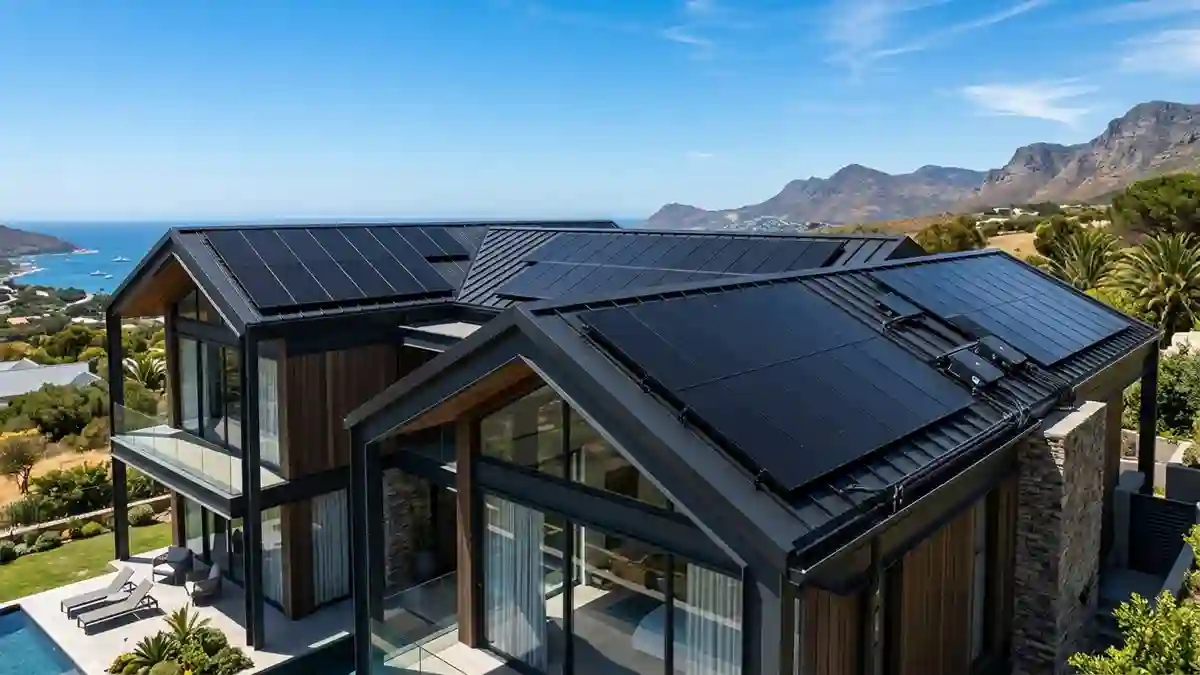
IBC solar panels technology fully explained — how interdigitated back contact cells work and when the premium efficiency is worth it
IBC — Interdigitated Back Contact — is the original research term for the back-contact cell architecture that’s increasingly marketed today under the newer label “ABC.” I’m covering it as its own guide because the term still appears on datasheets and in technical literature, and buyers researching premium solar panels deserve to know the two terms describe essentially the same underlying engineering.
This guide is part of our Technology cluster, and is the technical companion to our ABC Solar Panels guide — read that one for the buyer-facing framing, this one for the deeper engineering detail.
The Engineering Behind Interdigitated Contacts
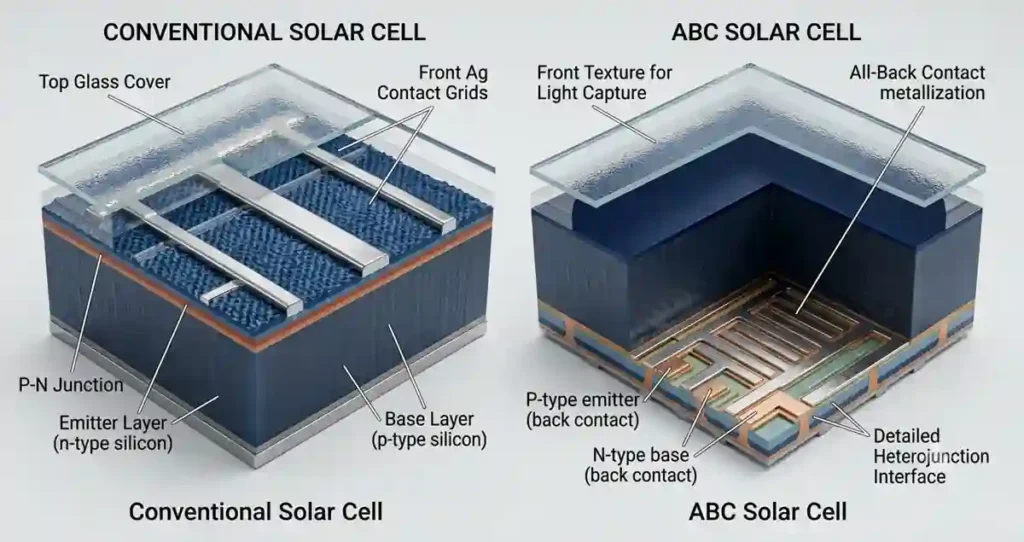
“Interdigitated” describes the physical layout: positive and negative contacts on the rear of the cell are arranged in alternating, finger-like strips that interlock like laced fingers, maximizing contact area while keeping the two polarities electrically isolated. This layout is what allows both contacts to be fully relocated to the rear surface without sacrificing current collection efficiency — a naive rear-contact design without this interdigitated pattern would struggle to collect current as effectively.
Engineer’s Note: When I read an IBC datasheet, the detail I check first is the fill factor — a measure of how efficiently the cell converts its theoretical maximum power into real usable output. IBC cells typically post excellent fill factors specifically because the interdigitated contact geometry minimizes resistive losses, which is a more technical way of saying the design is genuinely clever, not just a marketing repackaging of a lesser idea.
Technical Specifications
| Specification | Typical Value | Why It Matters |
|---|---|---|
| Cell Technology | Interdigitated Back Contact (IBC) | Eliminates front-side metal shading |
| Typical Module Efficiency | 22–24% | Very high energy production |
| Temperature Coefficient | ~−0.29%/°C | Excellent hot-weather performance |
| Annual Degradation | ~0.25–0.35% | Outstanding long-term output |
| Product Warranty | 25 Years | Indicates manufacturing quality |
| Performance Warranty | 30–40 Years | Long-term reliability |
| Certifications | IEC 61215, IEC 61730 | International safety and durability standards |
Efficiency and Manufacturing Reality
| Metric | IBC | Standard Front-Contact Cell | Industry Reference |
| Typical efficiency | 22% – 25%+ | 18% – 22% | NREL |
| Fill factor | Excellent, minimized resistive loss | Good, some resistive loss from grid | Fraunhofer ISE |
| Manufacturing complexity | High — precision rear patterning required | Lower — standard front metallization | IRENA |
| Market maturity | Growing, premium segment | Fully mature, mainstream | PV Magazine |
Engineering Assessment
| Feature | Rating | Engineering Assessment |
|---|---|---|
| Efficiency | ★★★★★ | One of the highest commercial efficiencies available today. |
| Reliability | ★★★★★ | Excellent long-term field performance. |
| Heat Performance | ★★★★★ | Outstanding in hot climates due to lower temperature losses. |
| Installation | ★★★★★ | Compatible with standard residential and commercial systems. |
| Cost | ★★★☆☆ | Premium pricing compared to PERC and TOPCon. |
| Long-Term Value | ★★★★★ | Higher lifetime energy production offsets higher upfront cost. |
| Overall Recommendation | ★★★★★ | Ideal for premium residential and space-constrained projects. |
Advantages and Disadvantages
| Advantages | Disadvantages |
| Excellent fill factor from minimized resistive losses in contact design | Precision manufacturing requirements increase production cost |
| No front-surface shading from busbars, maximizing light capture | Fewer manufacturers have mastered the process at high yield |
| Strong low-light and diffuse-light performance | Premium pricing limits accessibility for budget-driven projects |
| Proven research pedigree — decades of academic development behind it | Rear-side wiring adds complexity to installation and diagnostics |
Real-World Applications
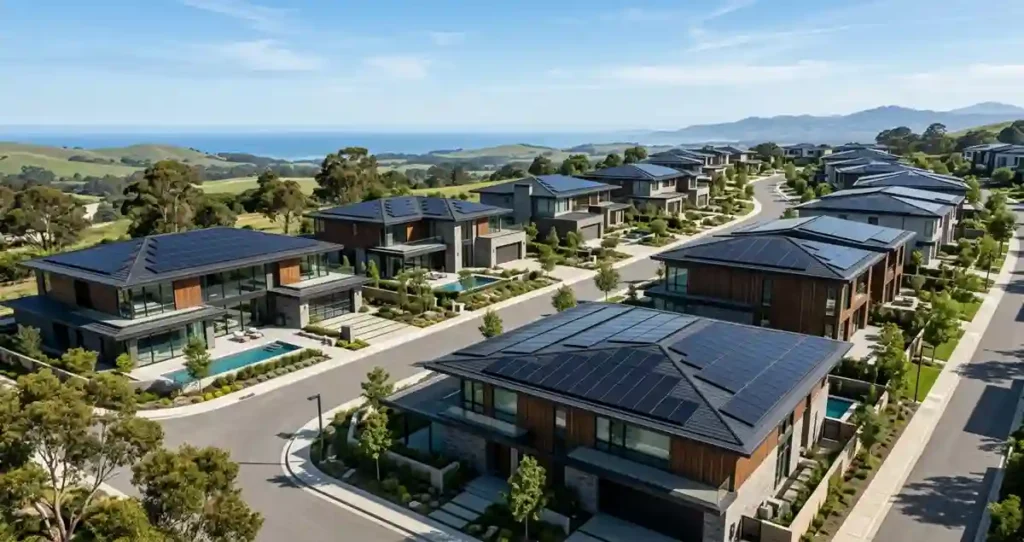
IBC panels come up most often in my consulting work on premium US residential projects where the client has already ruled out cost as the primary constraint and is optimizing purely for performance and appearance. I’ve also fielded interest from commercial clients running detailed lifetime-yield models, where the fill-factor advantage translates into a measurable bump in total energy harvested over the system’s life, even if the headline efficiency number looks only modestly better than TOPCon on paper.
One useful pattern I’ve noticed working with clients internationally: IBC’s strong low-light and diffuse-light performance makes it a genuinely good fit for regions with frequent cloud cover or hazy conditions, not just the high-direct-sun climates people usually associate with maximizing solar output. The technology’s advantage isn’t purely about peak sun performance.
Field Note: A client comparing an IBC quote against a TOPCon quote initially fixated purely on the headline efficiency percentage difference, which looked small. Once we modeled actual annual energy yield accounting for the fill-factor advantage and low-light performance, the real-world gap was larger than the spec-sheet efficiency numbers alone suggested. Headline efficiency isn’t always the whole story.
Where IBC Solar Panels Make the Most Sense
| Installation Scenario | Recommendation | Engineering Assessment |
|---|---|---|
| Premium Residential Homes | ⭐⭐⭐⭐⭐ | Maximizes output where roof space is limited. |
| Luxury Villas | ⭐⭐⭐⭐⭐ | Excellent aesthetics and efficiency. |
| Commercial Buildings | ⭐⭐⭐⭐☆ | High energy density improves ROI. |
| Off-Grid Systems | ⭐⭐⭐⭐☆ | Produces more energy from limited installation space. |
| Utility Scale Solar Farms | ⭐⭐⭐☆☆ | Cost often favors TOPCon instead. |
| Hot Climate Installations | ⭐⭐⭐⭐⭐ | Excellent temperature performance. |
Where It Doesn’t Make Sense
Any project where budget is the primary driver and roof space isn’t tightly constrained. The manufacturing complexity behind IBC’s genuine performance advantages comes at a real cost premium that’s difficult to justify unless you’re specifically optimizing for maximum lifetime yield or aesthetic uniformity.
Common Misconceptions Worth Clearing Up
The most common confusion is assuming IBC and ABC are competing technologies from different manufacturers. They’re not — they’re different names for the same underlying rear-contact cell concept, with IBC being the longer-established technical term and ABC the newer consumer-facing branding some manufacturers have adopted.
A second point worth flagging: because different manufacturers may implement the interdigitated back contact concept with slightly different proprietary refinements, two products both labeled IBC or ABC are not automatically identical in performance. Always compare the actual datasheet efficiency, fill factor, and warranty terms rather than assuming the underlying technology label alone guarantees a specific performance tier.
Standards & Certifications
| Standard | Why It Matters |
|---|---|
| IEC 61215 | Long-term durability testing |
| IEC 61730 | Electrical and fire safety |
| IEC 62804 | Potential Induced Degradation (PID) resistance |
| UL 61730 | North American safety certification |
| ISO 9001 | Manufacturing quality management |
Buying Checklist
• Verify the panel uses genuine Interdigitated Back Contact (IBC) cell architecture rather than standard front-contact cells.
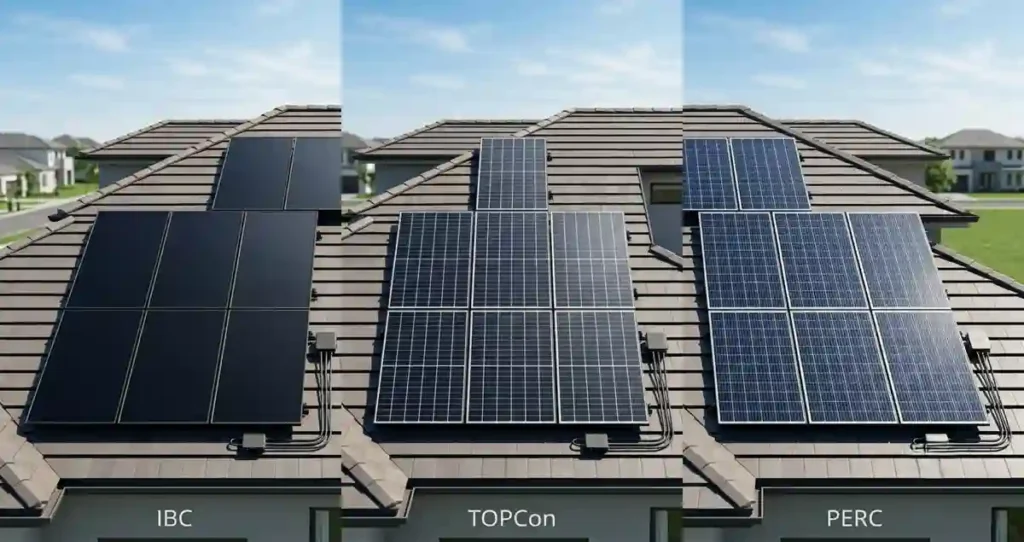
• Compare the price premium against TOPCon and ABC solar panels before making a final decision.
• Review the manufacturer’s temperature coefficient if installing in hot climates.
• Check the product and performance warranties—premium IBC panels often offer longer coverage.
• Ensure the panel complies with IEC 61215 and IEC 61730 certification standards.
• Purchase from a reputable Tier 1 manufacturer with a proven performance record.
• Compare lifetime energy production rather than focusing only on upfront cost.
• Confirm compatibility with your inverter, battery storage, and mounting system.
For the consumer-facing branding of this same technology, see our ABC Solar Panels guide. For the mainstream N-type alternative, see our TOPCon Solar Panels guide.
For US buyers evaluating IBC specifically, I’d also recommend confirming the installer’s familiarity with the technology before committing, since not every residential solar contractor in the US market has direct experience with rear-contact panel wiring and diagnostics. A qualified installer should be able to speak confidently about how they’d service or troubleshoot the system years down the line, not just how they’d mount it on day one.
Who Should Buy IBC Solar Panels?
Ideal for:
• Homeowners with limited roof space
• Luxury residential installations
• Premium commercial buildings
• Off-grid systems requiring maximum efficiency
• Hot climate installations
• Buyers seeking maximum long-term energy production
• Customers prioritizing aesthetics and premium technology
• Anyone willing to invest more for higher lifetime performance
Who Should Avoid IBC Solar Panels?
Less suitable for:
• Budget-conscious homeowners
• Large utility-scale projects focused on minimizing cost
• Installations with abundant roof space
• Buyers prioritizing the lowest upfront investment
• Projects where PERC or TOPCon already meet energy requirements
• Temporary solar installations
• Cost-sensitive commercial developments
Engineering Reality Check
Marketing Claim
“IBC solar panels are always the best choice.”
Engineering Reality
IBC solar panels are among the highest-performing photovoltaic technologies available today, offering exceptional efficiency, aesthetics, and long-term reliability. However, their premium price means they are not automatically the best choice for every project. Where installation space is abundant, modern TOPCon panels often deliver a better balance of performance and cost.
How I Explain This to Clients Who’ve Read the Headlines
IBC and its rebranded cousin ABC generate a specific kind of client question: “I read this is the most efficient panel — why isn’t everyone using it?” The honest answer is that efficiency is only one input into a purchasing decision, and manufacturing complexity translates directly into fewer factories capable of producing it reliably at scale, which keeps supply tighter and pricing higher than the efficiency number alone would suggest. That’s not a flaw in the technology — it’s simply where the market currently sits in terms of production maturity.
I expect that gap to narrow over time as more manufacturers invest in the precision equipment IBC requires, the same way TOPCon’s price premium over PERC has steadily fallen as production scaled. For now, I treat IBC as a legitimate premium option for clients who’ve already decided cost isn’t their primary constraint, not as the default recommendation for most projects.
Frequently Asked Questions
Are IBC solar panels worth buying in 2026?
Yes. They remain one of the highest-efficiency commercial solar technologies and are an excellent choice where roof space is limited or premium performance is required.
What does IBC stand for in solar panels?
IBC stands for Interdigitated Back Contact, a cell architecture that places all electrical contacts on the rear side of the solar cell to eliminate front-side shading.
Are IBC solar panels better than TOPCon?
IBC panels generally offer slightly higher efficiency and a cleaner appearance, while TOPCon panels provide a better balance between performance and cost for most residential installations.
How efficient are IBC solar panels?
Most commercial IBC solar panels achieve module efficiencies between 22% and 24%, making them among the most efficient photovoltaic modules currently available.
Do IBC solar panels perform well in hot climates?
Yes. Their low temperature coefficient allows them to maintain higher energy output during high-temperature operation compared with many conventional panel technologies.
How long do IBC solar panels last?
High-quality IBC solar panels typically have an expected service life of 30 years or more, with annual degradation often below 0.3%.
Can IBC solar panels be used with lithium batteries?
Yes. Compatibility depends on the inverter and charge controller rather than the solar cell technology.
Are IBC solar panels compatible with net metering?
Yes. Net metering eligibility depends on local regulations and inverter certification, not the type of solar panel used.
What certifications should IBC solar panels have?
Look for IEC 61215, IEC 61730, UL 61730 (where applicable), and products manufactured under ISO 9001 quality management systems.
Are IBC solar panels suitable for residential homes?
Absolutely. They are especially beneficial for homes with limited roof space where maximizing energy production per square meter is important.
References
The honest bottom line I give US clients considering IBC: it is an excellent technology for the right project, and a needlessly expensive one for the wrong project. The distinguishing factor rarely comes down to the technology itself — it comes down to whether the client’s actual priorities (space constraint, budget, aesthetics) genuinely call for what IBC specifically delivers. Efficiency and fill factor data for interdigitated back-contact cells are drawn from NREL’s Best Research-Cell Efficiency Chart and Fraunhofer ISE’s Photovoltaics Report. Manufacturing cost context references IRENA’s Power Generation Costs.
Related guides on SolarVisionAI.com
- Monocrystalline Solar Panels 2026: Still Worth It or Hype
- Polycrystalline Solar Panels: Worth Buying in 2026?
- Thin-film Solar Panels: When They Beat Silicon (2026)
- BIPV Solar Panels: Building-Integrated PV Complete Guide
- Portable Solar Panels: Engineer’s Buyer’s Guide 2026
- CPV Solar Panels: Concentrated Photovoltaic Explained
- Skin Solar Panel: What “Solar Skin” Actually Means
- Solar Fence Post Lights: Cap Sizes, Types & Install Guide
- Solar Charge Controller: The Complete Guide
- MC4 Connectors: Solar Safety & Installation Guide
- Solar Panel Types, Efficiency & Benefits
- Solar Water Pump Guide
- Commercial Solar Panel Installation: Engineering Guide
- Solar Fence Post Lights: Cap Sizes, Types & Install Guide
- BESS — Battery Energy Storage System Guide
- Commercial Solar Panel Installation