
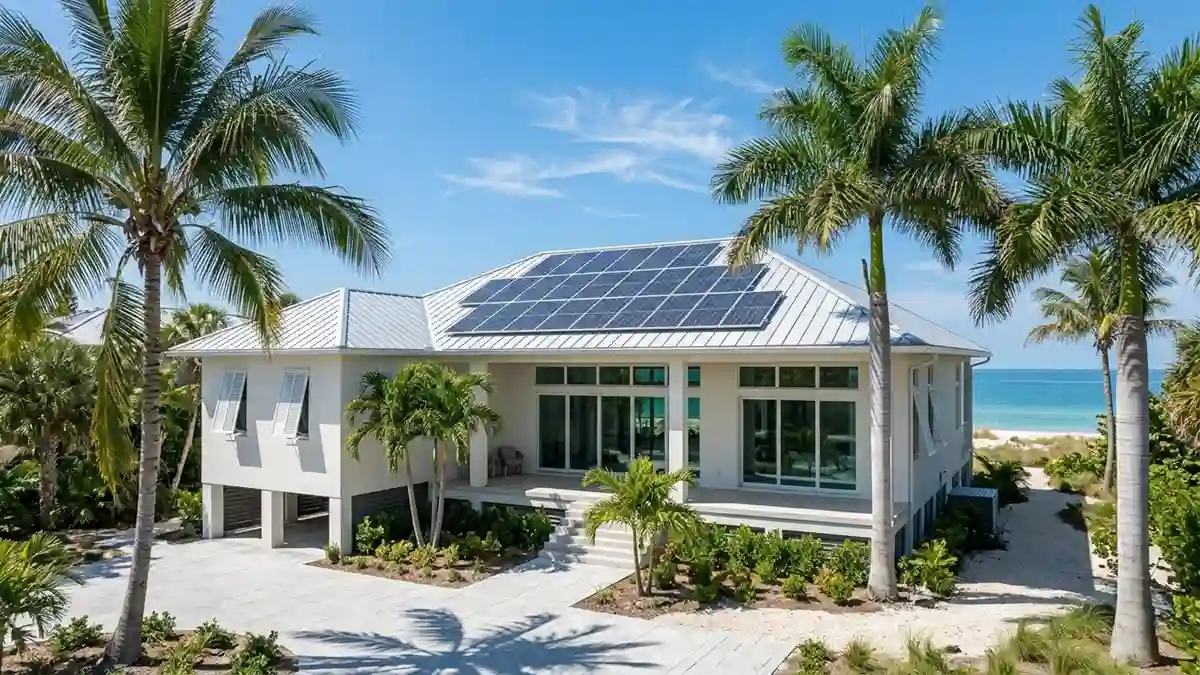
Solar panel insurance Florida homeowners need explained — a solar EPC consultant covers which companies still cover you, what to do before you install, and 7 critical steps.
Florida has more residential solar panel installations per capita than almost any other US state — and one of the most complicated homeowners insurance markets in the country. Several major national insurers have reduced or eliminated their Florida homeowners policies in recent years. The combination of hurricane risk, reinsurance cost pressure, and roof-age restrictions has created a coverage landscape that is genuinely difficult for Florida solar owners to navigate.
I consult on EPC projects throughout the Southeast and have seen the Florida insurance situation complicate solar projects directly — from clients who cannot get coverage updates to insurers who have specific solar exclusions in their Florida policy forms. This guide covers what Florida solar owners need to know in 2026.
| Disclaimer: This article is written by a Solar EPC Consultant based on real client inquiries and project experience. It is educational only. For your specific insurance decisions, consult a licensed insurance advisor in your state. |
1. Solar Panel Insurance Florida — Why the Market Is Different for Solar Owners
| Florida Insurance Factor | Impact on Solar Owners |
| Major insurer withdrawals (Farmers, Bankers, others reduced FL exposure 2022–2024) | Fewer options for coverage updates after solar installation; some owners pushed to Citizens Property Insurance |
| Hurricane / windstorm risk | Solar panels must meet Florida Building Code wind uplift requirements (ASCE 7-22); non-compliant installations may not be covered for wind damage |
| Roof age restrictions (many insurers require roof under 15–20 years) | Solar installation on an aging roof may trigger a policy review — some insurers cancel or non-renew |
| Citizens Property Insurance (state insurer of last resort) | Citizens does cover solar panels under its standard policy but has specific coverage limits and conditions |
| Post-2023 Assignment of Benefits (AOB) reform | Changes how solar repair contractors can work with insurers on claims — affects claim process timeline |
| Field Note: On a residential solar consultation in Fort Lauderdale in 2025, the homeowner’s insurer sent a non-renewal notice six weeks after solar installation — citing the addition of rooftop equipment without prior approval. The insurer was within their rights under the policy terms. The homeowner found replacement coverage through Citizens within 30 days, but the gap in coverage timing was a real risk. In Florida, notify your insurer before installation — not after. |
2. Florida Building Code Requirements for Insured Solar Installations
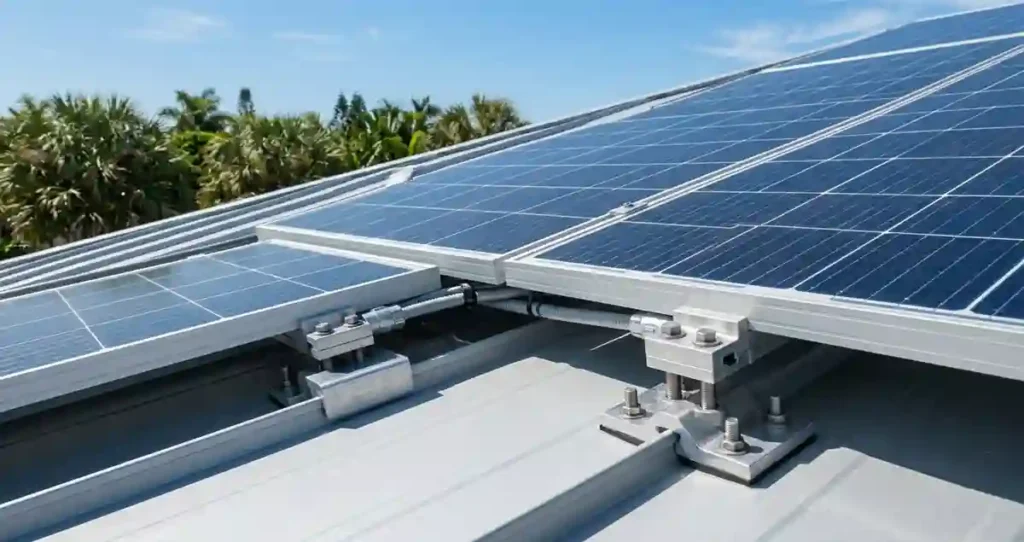
Florida has the most stringent wind-load requirements for solar panel installations in the US, reflecting the state’s hurricane exposure. Insurers writing Florida policies are increasingly verifying code compliance — non-compliant installations are grounds for claim denial after wind events.
| Requirement | Standard | What It Means for Solar Owners |
| Wind speed design zone | ASCE 7-22 / Florida Building Code 8th Edition | Panels and racking must be engineered for local design wind speed — 130–180+ mph in coastal zones |
| Racking attachment | Must penetrate roof deck to structural rafters / trusses | Surface-attached or adhesive-only racking systems are non-compliant in Florida |
| Permit requirement | Required for all residential solar in Florida | Unpermitted solar installations are uninsurable for wind damage — always pull a permit |
| Final inspection | Required by AHJ (Authority Having Jurisdiction) | Passed final inspection is the documented proof of code compliance insurers require |
| Florida Product Approval (FPA) | Required for panels and racking used in Florida | Verify your solar installer uses FPA-approved products — non-approved products can void wind coverage |
| Engineer’s Note: Florida Product Approval (FPA) is not the same as UL or IEC certification. A panel can be UL listed and not have Florida Product Approval. On Florida EPC projects, I verify FPA numbers for every panel and racking component before procurement. The Florida Building Commission maintains the searchable product approval database at floridabuilding.org — a 10-minute check that protects an entire insurance claim. |
3. Solar Panel Insurance Florida: Companies Still Writing Policies (2026)
The Florida insurance market is in active flux. The following represents the general landscape as of mid-2026. Always verify current availability directly with insurers or a Florida-licensed independent insurance agent.
| Insurer Type | Solar Coverage | Notes for Florida Solar Owners |
| Citizens Property Insurance (state) | Yes — standard HO-3 form covers rooftop solar under Coverage A | Insurer of last resort; coverage limits apply; no choice but Citizens for many coastal homeowners |
| Universal Property & Casualty | Yes — with proper notification and limit update | One of the larger remaining Florida-based private carriers; verify solar endorsement |
| Heritage Insurance | Yes — review policy form for wind endorsements | Florida-based; verify hurricane deductible structure for solar claims |
| HCI Group (Homeowners Choice) | Yes — with solar schedule update | Florida-based; active in solar coverage; confirm FPA compliance requirement |
| National carriers (State Farm, Allstate) | Limited new policies in FL — existing policyholders should verify solar coverage | Both reduced FL new business post-2022; existing clients must confirm solar coverage |
| Surplus lines / E&S market carriers | Yes — often more flexible on solar coverage | Higher premium; appropriate when standard market is unavailable; use a FL surplus lines broker |
| Field Note: I always recommend Florida solar clients work with a Florida-licensed independent insurance agent — not a captive agent for a single carrier. The Florida market is too complex and too fast-changing for a one-carrier view. An independent agent can access multiple carriers and surplus lines options and can advise on which insurers are currently writing solar-compatible policies in your specific county. |
4. Florida Solar Insurance Checklist — Before You Install
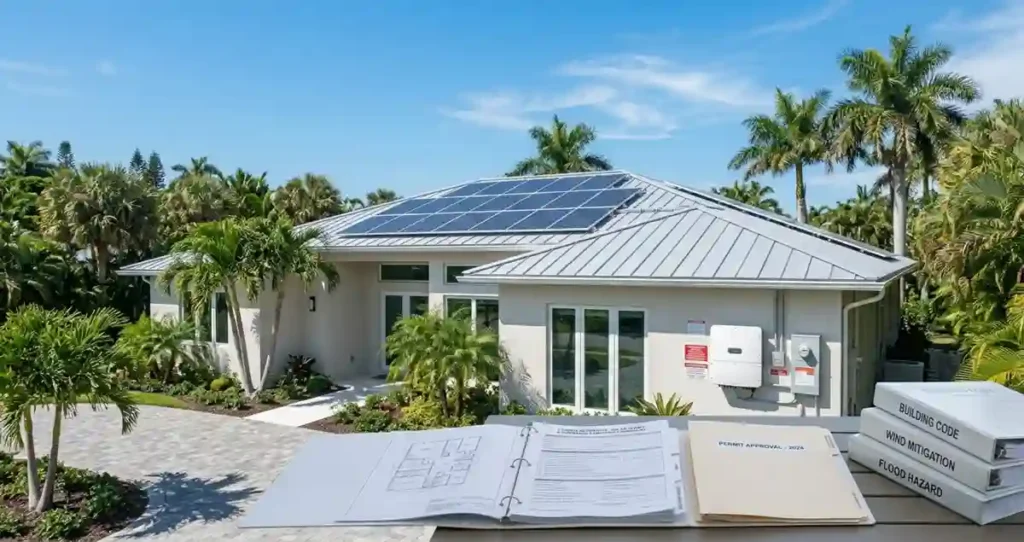
| Action | When | Why Critical in Florida |
| Notify your insurer before installation begins | Before installation starts | Some Florida carriers cancel or non-renew for undisclosed rooftop modifications |
| Verify the installer uses Florida Product Approved (FPA) panels and racking | Before contract signing | Non-FPA products are grounds for wind damage claim denial |
| Confirm a permit will be pulled and final inspection completed | Before contract signing | Unpermitted installations are uninsurable for wind damage in Florida |
| Request written Coverage A limit update confirmation | Immediately after installation | Verbal confirmation is not binding with Florida carriers |
| Check your hurricane / windstorm deductible amount | Before installation | Florida hurricane deductibles are often 2–5% of dwelling value — on a $400K home, that is $8K–$20K before coverage applies |
| Add equipment breakdown endorsement | At policy renewal after installation | Inverter and battery failures are not covered under standard Florida HO-3 |
| Verify roof age compliance with your insurer | Before installation | If your roof triggers an insurer’s age restriction, adding solar may accelerate a non-renewal decision |
For coverage in other states and the complete insurance framework, see: Solar Panel Insurance: What It Covers & How to Get It
For hail damage coverage specifics relevant to Florida storm events, see: Solar Panel Hail Damage: What Your Insurance Covers
For full weather and hurricane storm damage coverage, see: Solar Panels Weather & Storm Damage: Full Insurance Guide
Frequently Asked Questions
Does homeowners insurance cover solar panels in Florida?
Yes. Most Florida homeowners insurance policies cover permanently installed rooftop solar panels under dwelling coverage, provided the system is properly disclosed and insured.
Does Citizens Property Insurance cover solar panels?
Yes. Citizens generally covers rooftop solar panels under Coverage A, subject to policy limits, deductibles, and policy conditions.
Can solar panels affect my homeowners insurance in Florida?
Yes. Installing solar panels may require a coverage limit adjustment and could slightly increase premiums, depending on the system’s value and the insurer’s requirements.
Do Florida insurers require hurricane-rated solar panels?
Insurers typically expect solar systems to comply with Florida Building Code requirements, including the use of approved products and wind-load engineering standards.
What happens if I install solar panels without notifying my insurance company?
Some insurers may refuse coverage updates, issue policy restrictions, or in certain cases choose not to renew coverage after discovering undisclosed rooftop modifications.
Are solar batteries covered by Florida homeowners insurance?
Permanently installed battery systems are often covered, but homeowners should verify coverage limits and equipment breakdown protection with their insurer.
Will insurance cover hurricane damage to solar panels?
Coverage depends on policy terms, deductibles, code compliance, and whether the damage resulted from a covered event. Proper permitting and inspection records are important.
Do I need Florida Product Approved solar panels for insurance coverage?
Florida Product Approval is a critical compliance requirement for many installations. Using approved products helps support code compliance and insurance claims after major storms.
Related Guides on SolarVisionAI
Solar Panel Insurance: What It Covers & How to Get It
Does Homeowners Insurance Cover Solar Panels? Complete Guide
Do Solar Panels Increase Your Home Insurance Premium?
Commercial Solar Panel Insurance: Installers, Cleaners & Buildings