
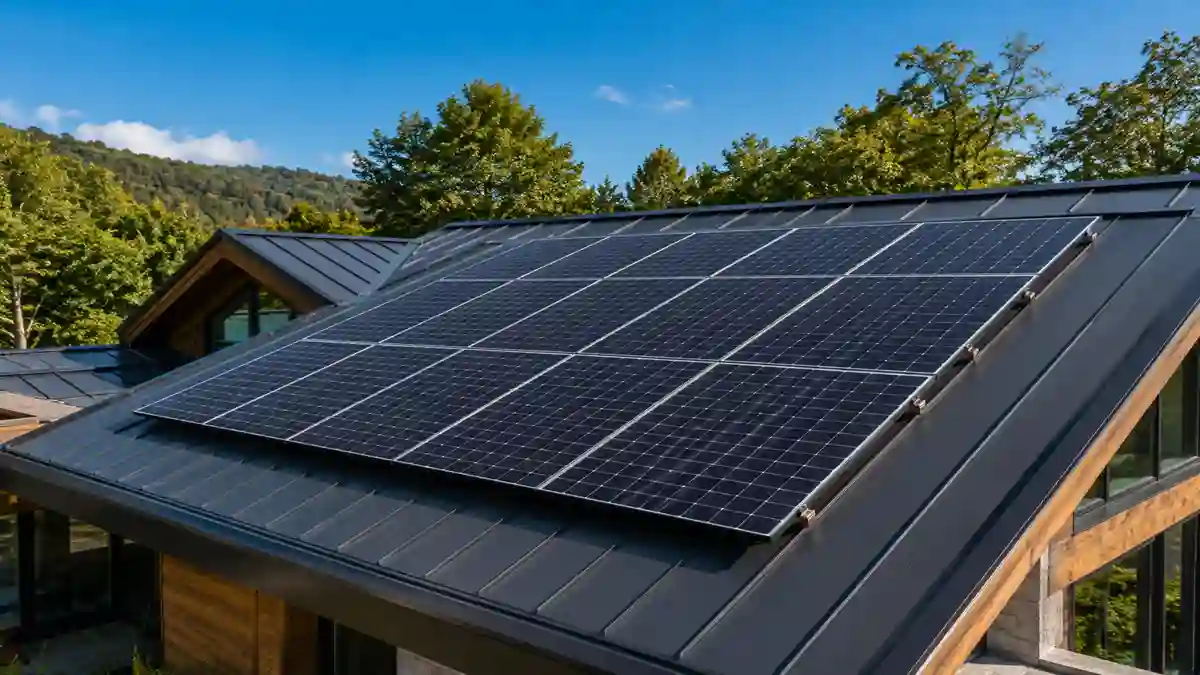
Thinking about monofacial solar panels? Learn when they outperform bifacial panels, where they work best, and whether they’re still worth buying in 2026.
Monofacial is the panel type that didn’t need a name until bifacial came along to contrast against. Every panel manufactured before roughly the mid-2010s was monofacial by default, and it still accounts for the overwhelming majority of residential installations today — not because it’s outdated, but because it’s the simplest, most cost-effective, and most universally proven design in the entire industry. This guide covers monofacial on its own terms, as a genuine buying category, not just as the “non-bifacial” option.
This guide is part of our Types of Solar Panels hub. If you’re actively deciding between monofacial and bifacial for a specific project, our Monofacial vs Bifacial comparison is the more direct resource — this guide is for understanding monofacial technology and construction in its own right.
What Makes a Panel Monofacial
A monofacial panel generates electricity from its front surface only. The rear is backed by an opaque material — traditionally a white or black polymer backsheet, though some monofacial panels now use a solid, non-transparent glass rear layer for added durability. Either way, no light reaches the rear-side cells, because the design was never engineered to let it. This isn’t a limitation so much as a deliberate simplification: monofacial construction avoids the transparent rear glass, additional rear-side cell wiring, and more delicate glass-glass assembly that bifacial solar panels require.
Engineer’s Note: I sometimes get asked whether monofacial panels are “lower quality” simply because they lack bifacial’s rear-side capability. They’re not — monofacial is a complete, mature, extremely well-proven design, not a stripped-down version of something better. Comparing monofacial to bifacial in terms of quality is like comparing a manual transmission to an automatic: different design philosophy, not a hierarchy of better and worse.
How Monofacial Panels Are Actually Built
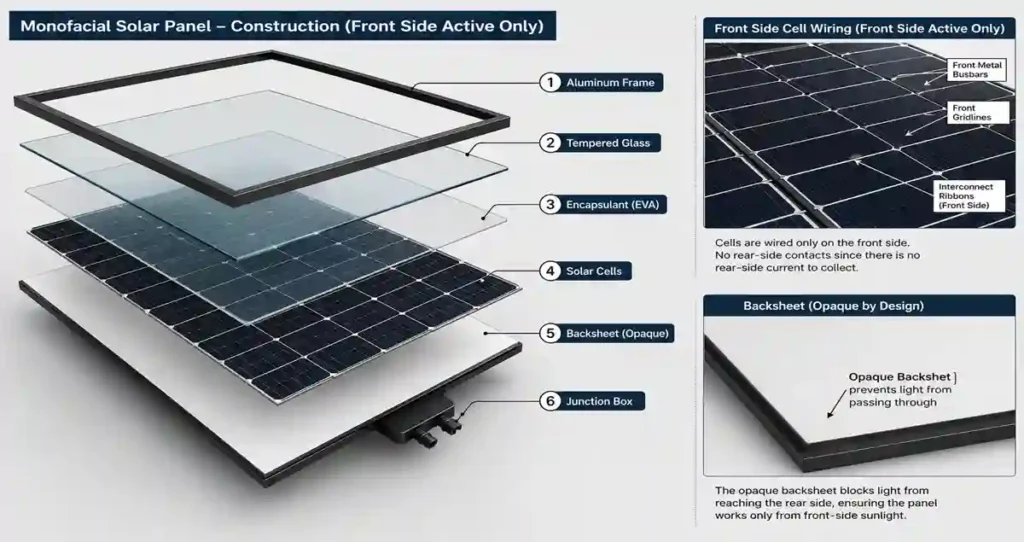
The construction is the same six-layer sandwich covered — tempered glass, encapsulant, cells, backsheet, frame, junction box — with one key detail: the backsheet is opaque by design, and the cells themselves are typically wired with contacts and interconnects only on the front side, since there’s no rear-side current to collect. This slightly simpler internal wiring is part of why monofacial panels have historically been cheaper to manufacture at scale than their bifacial counterparts.
Advantages and Disadvantages
| Advantages | Disadvantages |
| Lower cost per watt than equivalent bifacial panels | No rear-side generation — misses out on genuinely free reflected light |
| Simpler, more mature manufacturing with decades of field history | Cannot be retrofitted later to add bifacial capability |
| Performs identically regardless of mounting height or ground surface | On ideal bifacial-friendly sites, leaves real energy output on the table |
| Proven 25-30 year lifespan across nearly every climate and application | Slightly heavier in some constructions due to solid backsheet materials |
Performance and Cost Reality
| Metric | Monofacial | Bifacial | Industry Reference |
| Typical efficiency (front side) | 18% – 22% | 18% – 22% (front), plus rear gain | NREL |
| Cost per watt | Baseline, lowest in category | 10% – 20% higher | IRENA |
| Manufacturing complexity | Lower — simpler rear-side design | Higher — transparent rear glass, dual-side wiring | Fraunhofer ISE |
| Performance consistency across mounting types | Identical regardless of mounting height or surface | Highly variable — depends on site conditions | NREL |
Real-World Applications
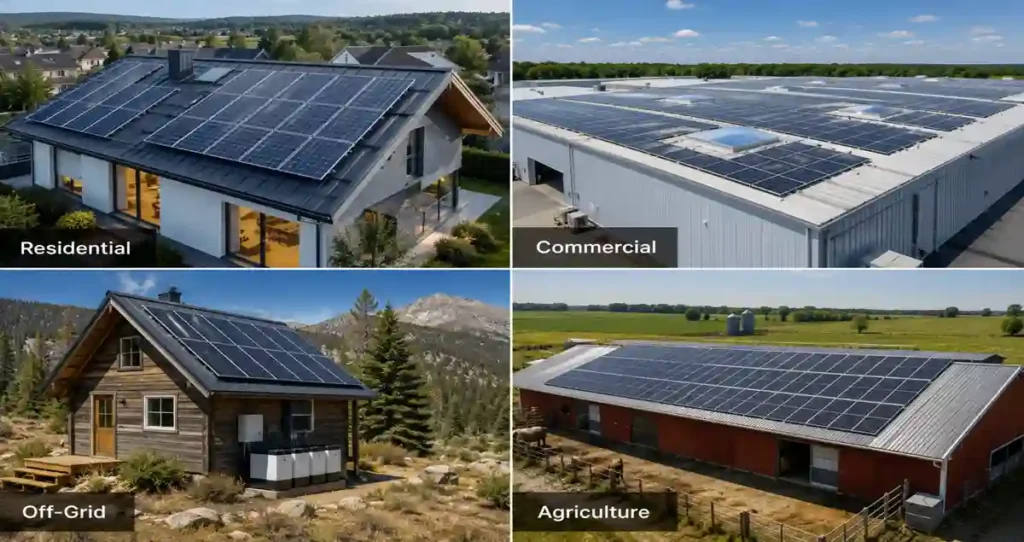
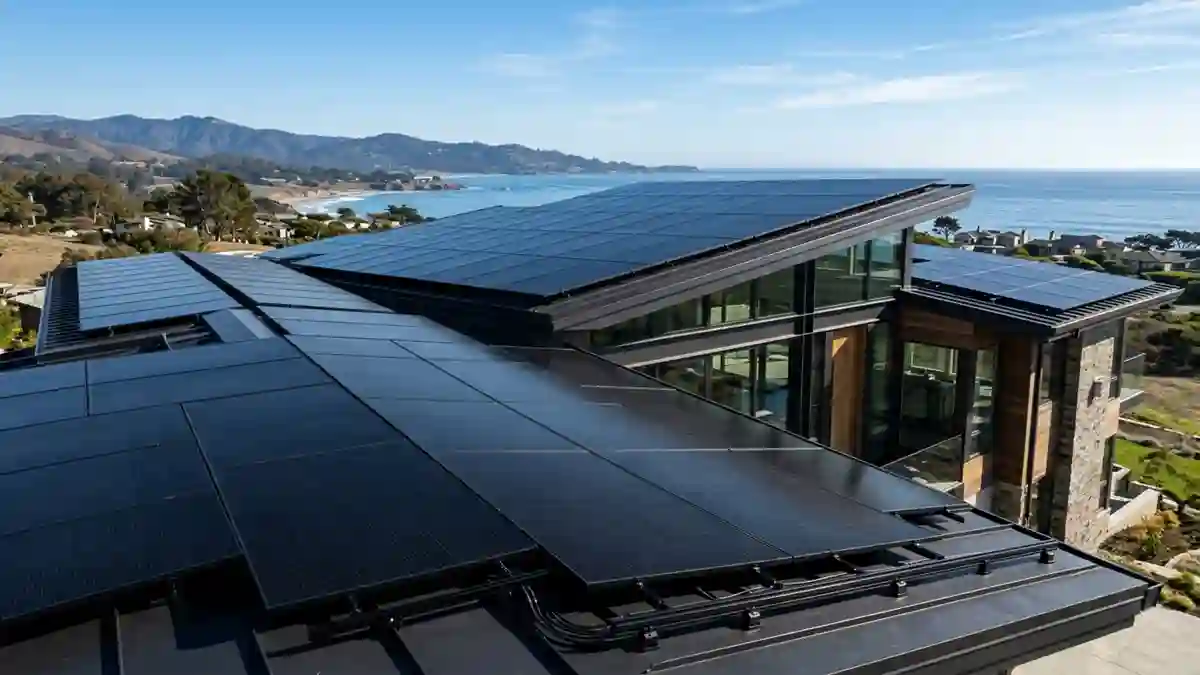
The overwhelming majority of my residential quotes still default to monofacial, and for good reason — a standard close-mounted rooftop over dark shingles gives a bifacial panel almost nothing useful to work with on its rear side, which means the bifacial premium buys nothing essentially in that context. For that installation profile, monofacial isn’t a compromise choice, it’s simply the correct engineering answer.
I also specify monofacial by default on budget-conscious commercial rooftop projects, carports without reflective paving beneath them, and any installation where the client has told me upfront that minimizing cost per watt matters more than squeezing out every last percentage point of possible output. In each of these cases, the money saved by choosing monofacial is far more valuable to the client than the marginal, often negligible rear-side gain bifacial would have delivered on that specific site.
Field Note: Where I’ve Seen Bifacial Panels Add Little Value
During site visits, I’ve come across several commercial and industrial projects where bifacial solar panels were installed on low-clearance metal roofs with almost no gap between the modules and the roof surface. for Guide: Installing Solar Panels on a Metal Roof. In these installations, the rear side of the panel receives very little reflected sunlight because there is insufficient space for light to reach the back of the module.
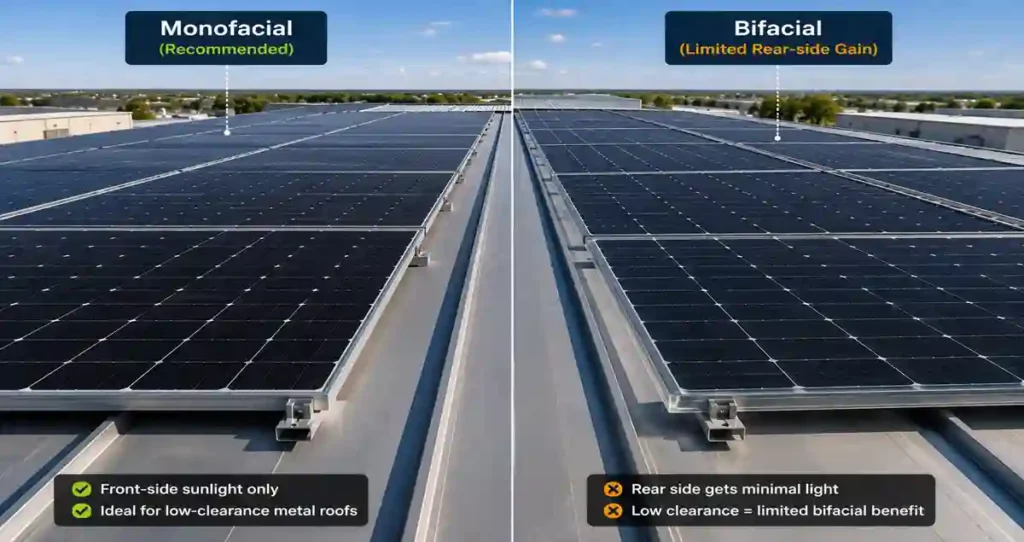
In practical terms, these systems often operate much like standard monofacial installations while costing more upfront. The additional investment in bifacial technology delivers little measurable benefit when the installation lacks adequate mounting height, reflective surfaces, or open space beneath the panels.
My recommendation is simple: before paying a premium for bifacial modules, evaluate the installation conditions first. If your roof is a conventional metal roof with minimal clearance, a high-efficiency monofacial panel may provide better value for money than a bifacial panel whose rear-side generation potential cannot be utilised.
Applications of Monofacial Solar Panels
| Application | Suitability | Why It’s a Good Choice |
|---|---|---|
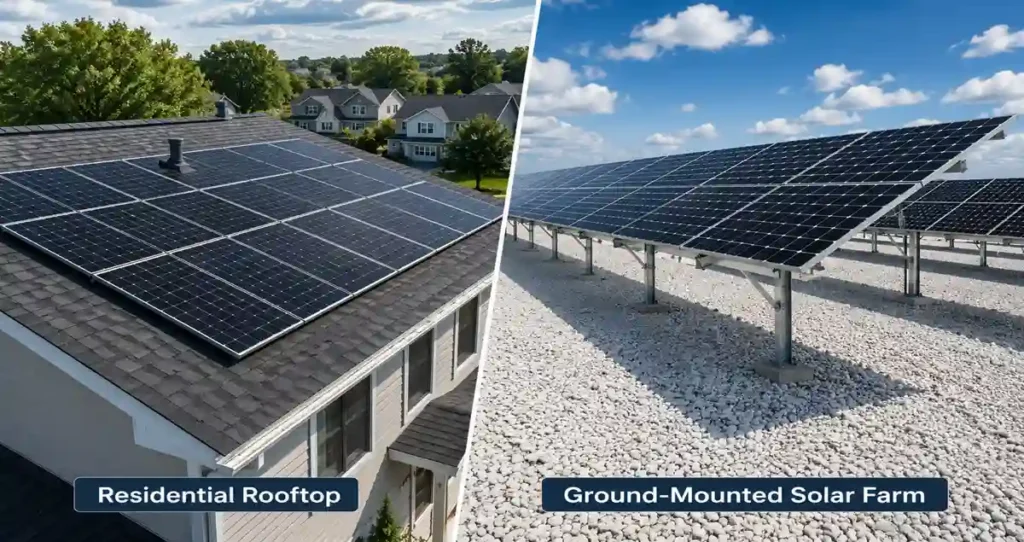
| Residential Rooftops | ★★★★★ | Ideal for standard homes where rear-side sunlight is limited and cost-effectiveness is a priority. |
| Commercial Rooftops | ★★★★★ | Performs reliably on warehouses, offices, and industrial buildings with conventional roof structures. |
| Utility-Scale Solar Farms | ★★★★☆ | Suitable where project costs are the primary concern and bifacial gains are minimal. |
| Off-Grid Solar Systems | ★★★★★ | A dependable choice for cabins, farms, telecom sites, and remote installations using battery storage. |
| RVs and Campers | ★★★★★ | Lightweight, affordable, and well-suited for mobile solar applications where bifacial benefits are negligible. |
| Marine and Boats | ★★★★☆ | Commonly used on boats and yachts when installed with corrosion-resistant mounting hardware. |
| Agricultural Buildings | ★★★★★ | Excellent for barns, storage sheds, and farm buildings with conventional pitched roofs. |
| Solar Carports | ★★★☆☆ | Can be used effectively, although bifacial panels often deliver higher energy yield in elevated carport structures. |
Engineer’s Note: Monofacial solar panels remain the preferred choice for most residential rooftop installations because they deliver reliable performance, lower installation costs, and excellent long-term value without relying on reflective surfaces for additional energy generation. Bifacial panels become a better investment only when installation conditions allow meaningful rear-side light capture.
Where Monofacial Is the Clear Choice
- Standard residential rooftops mounted close to dark shingle, tile, or membrane roofing
- Budget-conscious projects where every dollar saved on panel cost matters more than marginal output gains
- Carports and canopies without reflective paving or ground cover beneath them
- Any installation where structural or racking constraints don’t allow for elevated, bifacial-friendly mounting
Where It’s Worth Considering Bifacial Instead
Ground-mount installations with elevated racking and light-colored ground cover, snow-prone regions with strong seasonal albedo, and utility-scale projects where even a modest percentage gain compounds meaningfully across thousands of panels. For the full breakdown of that decision, see our Monofacial vs Bifacial comparison and Bifacial Solar Panel Albedo Effect guide.
Common Misconceptions Worth Clearing Up
The most common misconception is treating “monofacial” as synonymous with “older” or “basic” technology. In reality, cell technology (PERC, TOPCon, HJT, back-contact) and panel design (monofacial vs bifacial) are two completely independent choices. A monofacial panel using the latest back-contact cell technology can outperform a bifacial panel using older PERC cells in absolute efficiency terms — panel design and cell technology should be evaluated separately, not conflated into a single quality hierarchy.
The second misconception is assuming monofacial panels are being phased out industry-wide in favor of bifacial. That’s not accurate — monofacial remains the majority of global panel shipments, particularly for residential rooftop applications, and is likely to remain the default for that segment specifically for the foreseeable future, precisely because most residential roofs don’t provide the conditions bifacial needs to earn its premium.
Buying Checklist
- Confirm the cell technology (PERC, TOPCon, HJT, etc.) separately from the monofacial-vs-bifacial decision — they’re independent specs
- Compare total system cost against an equivalent bifacial quote for your specific site before assuming monofacial is automatically the budget compromise
- Verify Tier 1 manufacturer status and standard 25-year warranty terms, same as any panel purchase
- If your installation has any elevation or reflective ground cover, at least request a bifacial gain estimate before committing to monofacial by default
Engineering Assessment
| Feature | Rating |
|---|---|
| Residential Rooftops | ★★★★★ |
| Ground Mount | ★★★★☆ |
| Cost Effectiveness | ★★★★★ |
| Long-Term Reliability | ★★★★★ |
| Installation Simplicity | ★★★★★ |
| Overall Recommendation | ★★★★★ |
Frequently Asked Questions
Are monofacial solar panels being discontinued?
No. Monofacial remains the majority of global panel shipments and the default choice for most residential rooftop installations, where bifacial’s rear-side capability rarely provides a meaningful benefit given typical mounting height and roof surface conditions.
Is monofacial cheaper than bifacial?
Yes, typically 10-20% less per watt, due to simpler manufacturing that avoids the transparent rear glass and additional rear-side cell wiring bifacial panels require.
Can monofacial panels use the same cell technology as bifacial panels?
Yes. Cell technology (PERC, TOPCon, HJT, back-contact) and panel design (monofacial vs bifacial) are independent choices. Monofacial panels are available across every cell technology tier, from budget PERC to premium back-contact designs.
References
Efficiency and cost comparisons between monofacial and bifacial construction are drawn from NREL’s ongoing panel performance research, Fraunhofer ISE’s Photovoltaics Report, and IRENA’s Power Generation Costs data.
Related guides on SolarVisionAI.com
- Monocrystalline Solar Panels 2026: Still Worth It or Hype
- Polycrystalline Solar Panels: Worth Buying in 2026?
- Thin-film Solar Panels: When They Beat Silicon (2026)
- BIPV Solar Panels: Building-Integrated PV Complete Guide
- Portable Solar Panels: Engineer’s Buyer’s Guide 2026
- CPV Solar Panels: Concentrated Photovoltaic Explained
- Skin Solar Panel: What “Solar Skin” Actually Means
- Solar Fence Post Lights: Cap Sizes, Types & Install Guide
- Bifacial Solar Panels in 2026: How to Boost Energy Output
- Solar Charge Controller: The Complete Guide
- MC4 Connectors: Solar Safety & Installation Guide
- Solar Panel Types, Efficiency & Benefits
- Solar Water Pump Guide
- BESS — Battery Energy Storage System Guide
- Commercial Solar Panel Installation
- Solar Refrigerator & DC Fridge — Complete 2026 Guide
- Bifacial Solar Panel Albedo Effect Guide
- TOPCon: Why TOPCon Solar Panel is a Proven Smart Investment in 2026
- HJT: Why TOPCon Solar Panel is a Proven Smart Investment in 2026
- PERC: PERC Solar Panel: Still Relevant or Already Outdated?
- Perovskite: Perovskite Solar Panels: The 2026 Reality Check
- N-Type vs P-Type: N-Type vs P-Type Solar Panels: Honest Comparison
- ABC: ABC (all back contact) Solar Panel: Back Contact Technology Explained
- IBC: IBC Solar Panels: Interdigitated Back Contact Guide
- Tandem: Tandem Solar Panels: Are Stacked Cells Ready for Rooftops?