
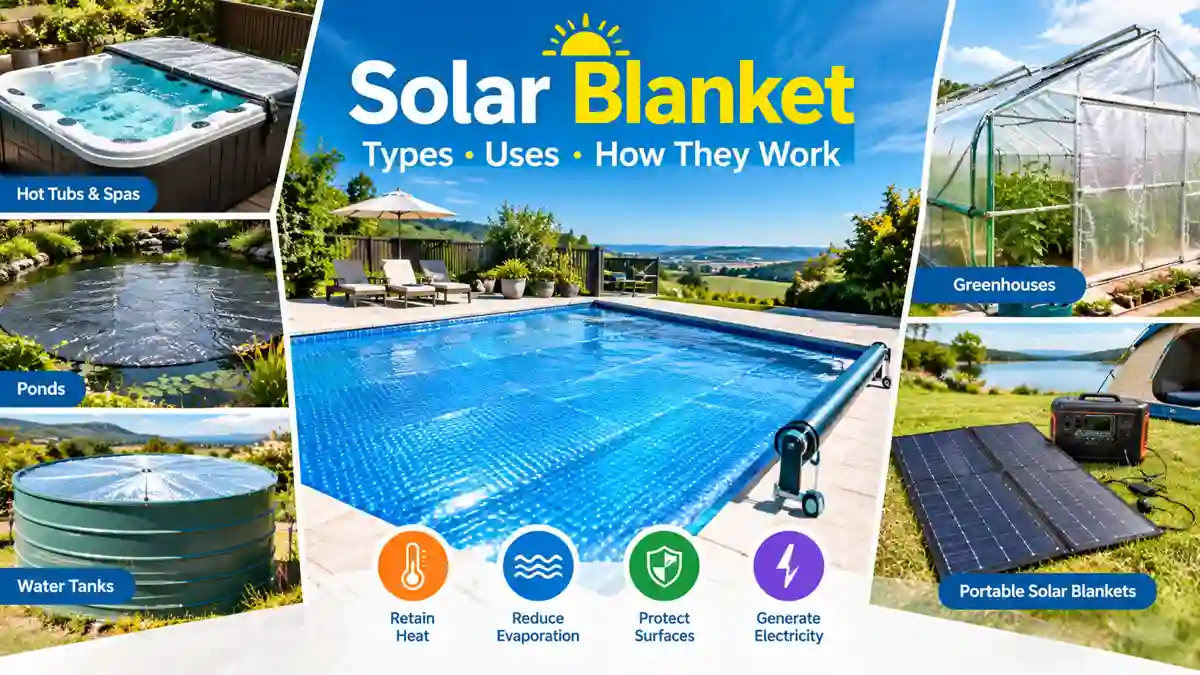
Learn how a solar blanket works, how pool covers retain heat, and what to know about hot tubs, ponds, greenhouses, and portable solar blankets
A solar blanket is generally used to capture or retain heat, but its exact function depends on the product. In swimming pools, a pool solar blanket floats on the water to help retain warmth and reduce evaporation. Other products described as solar blankets may be used for hot tubs, greenhouse insulation, or portable electricity generation.
These products are not interchangeable. A pool cover works primarily through thermal management, while a portable photovoltaic solar blanket converts sunlight into electricity. Choosing the wrong type can lead to disappointing performance, material damage, or safety problems.
As a solar engineer, I evaluate energy-related equipment by first identifying its purpose, operating conditions, and performance losses. The same approach applies when choosing a solar blanket. If your goal is to retain heat in a swimming pool, a solar pool blanket may be the practical option. If you want to generate electricity for household appliances or other loads, solar panels are the appropriate technology. The right choice depends on what you want the system to achieve.
This guide explains the different types of solar blankets, how they work, their practical applications, and the engineering considerations that matter when selecting one.
What Is a Solar Blanket?
A solar blanket is a flexible cover designed to help manage heat or, in some products, collect solar energy. The term is used for several different products, so the name alone does not tell you exactly what the blanket can do.
For swimming pools, a solar blanket usually consists of a UV-resistant plastic sheet with air-filled bubbles. It floats on the water, allows sunlight to pass through the material, and reduces heat loss from the pool surface.
A portable photovoltaic solar blanket is different. It contains photovoltaic cells that produce electricity when exposed to sunlight. These units are commonly used with portable power stations, RVs, and off-grid equipment.
The distinction matters because a thermal cover does not generate electrical power, and a photovoltaic blanket does not directly function as a floating pool cover.
The main types of solar blankets
- Pool solar blankets: Floating covers designed to reduce evaporation and help retain pool heat.
- Hot-tub covers: Thermal covers or floating products specifically rated for spa temperatures and operating conditions.
- Pond and tank covers: Covers selected for the particular water body, its contents, and its operating requirements.
- Greenhouse thermal screens: Insulating or shading materials used to manage heat and light.
- Portable photovoltaic blankets: Foldable solar panels designed to generate electricity.
Not every category is equally established under the term solar blanket. In particular, greenhouse screens and tank insulation are often sold under other product names. Always check the manufacturer’s stated application rather than relying on the marketing label.
How Does a Solar Blanket Work?
The operating principle depends on the product. A pool solar blanket mainly helps manage heat transfer at the water surface. A photovoltaic blanket converts sunlight into electricity.
How a pool solar blanket retains heat
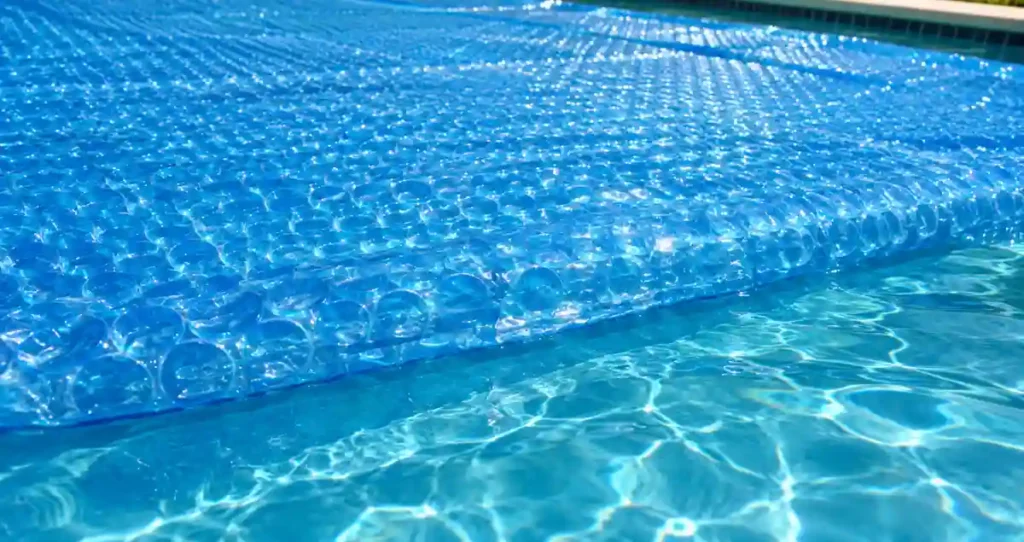
An uncovered swimming pool loses heat through evaporation, convection, radiation, and other heat-transfer processes. Evaporation can be particularly significant because energy is required for water to change from liquid into vapor.
A suitable pool cover reduces the amount of water exposed to the surrounding air. This limits evaporation and helps preserve heat already gained from sunlight or a pool heater.
Transparent or translucent covers can also allow solar radiation to reach the water. The resulting temperature change depends on sunlight, outdoor temperature, wind, pool depth, water circulation, cover design, and how consistently the cover is used.
The US Environmental Protection Agency explains that properly used pool covers can prevent up to 95% of pool-water evaporation. This is an upper-end figure, not a guarantee for every cover or installation. See the EPA’s pool water efficiency guidance.
Engineer’s Note: When evaluating a pool cover, I would separate two questions: how much heat the pool gains during the day, and how much heat it loses afterward. A cover can significantly reduce heat loss without necessarily providing enough additional heat to reach the owner’s target temperature. That distinction is important when deciding whether a cover alone is sufficient or an active heating system is also needed.
How a photovoltaic solar blanket works
A portable photovoltaic blanket uses solar cells to convert sunlight into DC electricity. Its output varies with the rated wattage, solar irradiance, cell temperature, shading, orientation, and electrical losses.
The generated power may charge a compatible portable power station or battery through suitable charging equipment. For more on the electrical side, see our guide to how solar charge controllers work.
The key point is that the word solar can describe two different processes: collecting thermal energy and converting sunlight into electrical energy.
1. Solar Blankets for Swimming Pools
Swimming pools are the most common application associated with a solar blanket. A pool solar blanket normally floats directly on the water and is cut or manufactured to fit the pool’s dimensions.
The purpose is not simply to cover the pool. The cover must allow the intended amount of solar heat gain, reduce evaporation, tolerate pool conditions, and remain practical for daily use.
Types of pool solar blankets
Bubble solar covers
These covers are made from plastic film with small air-filled bubbles. The bubbles face the water and contribute to the cover’s thermal performance. These products are widely used for residential pools because they are relatively lightweight and easy to roll up.
Clear solar covers
Clear or translucent covers allow sunlight to reach the water. Their actual performance depends on the material, thickness, bubble structure, and manufacturer’s design. Clear does not automatically mean better, so compare product specifications rather than judging by appearance alone.
Colored or opaque thermal covers
Some covers prioritize insulation, shading, or limiting sunlight exposure rather than maximizing solar heat gain. Their suitability depends on the pool’s climate and operating requirements.
Solar rings
Solar rings are individual floating sections placed across the water surface. They may be easier to handle than a single large cover, but the gaps between them can allow more evaporation.
What benefits can a pool solar blanket provide?
A suitable, regularly used cover can:
- Reduce water loss through evaporation.
- Help retain heat gained from sunlight.
- Reduce heat loss from a pool that is already warm.
- Limit some debris entering the water.
- Reduce some chemical loss associated with evaporation.
- Lower the demand on a separate pool heater under suitable conditions.
The actual savings depend on local weather, pool size, wind exposure, desired water temperature, heater type, and cover usage. A cover that remains rolled up for most of the week cannot deliver the same evaporation reduction as one used consistently.
Field Note: The practical test is not whether a cover looks substantial when unrolled. It is whether the owner can handle it easily enough to use it regularly. For a large pool, a compatible reel and a properly fitted cover may be more useful than choosing a slightly cheaper product that becomes inconvenient to remove and replace.
2. Solar Blankets for Hot Tubs
Hot tubs and spas also lose heat from their water surfaces. A suitable cover helps retain warmth when the tub is not in use and can reduce the energy required to maintain the set temperature.
However, a standard swimming-pool solar blanket should not automatically be used on a hot tub. Spas operate at higher water temperatures and may expose materials to different chemical and environmental conditions.
Before selecting a cover, confirm that the manufacturer approves it for the specific spa application.
Check the following:
- Maximum rated operating temperature.
- Compatibility with spa chemicals.
- Resistance to moisture, UV exposure, and routine handling.
- Fit around the tub and its controls.
- Safe removal, storage, and access.
A purpose-built insulated spa cover may be more suitable than a floating pool blanket. The right choice depends on the design of the tub and whether the priority is heat retention, solar gain, or another function.
Engineer’s Note: Temperature ratings matter more than a product’s general description. A material that performs adequately on a swimming pool may soften, deteriorate, or become unsuitable under the hotter operating conditions of a spa. Verify the rating before repurposing any cover.
3. Solar Blankets for Ponds and Water Tanks
Ponds and water tanks have different requirements from swimming pools. A cover may help reduce evaporation, retain heat, or keep out debris, but the design must suit the water’s intended use.
Garden and ornamental ponds
Covering a pond can reduce evaporation and limit falling debris in some situations. However, it may also restrict sunlight and gas exchange, affecting aquatic plants and animals.
Before covering a pond, consider whether fish and plants depend on sunlight, surface interaction, and adequate oxygen levels. Do not use an ordinary pool blanket over a pond containing fish unless the product and arrangement are appropriate for that environment.
Water storage tanks
A thermal cover may help limit heat loss or evaporation from certain water-storage systems. Selection depends on tank material, temperature, water quality requirements, and the intended application.
For potable water, materials that contact the water must be suitable and approved for that purpose. A pool cover should never be assumed safe for drinking-water storage simply because it is made of plastic.
Where precise temperature control is required, a properly designed insulated tank lid or insulation system may be more appropriate than a flexible blanket.
4. Solar Blankets for Greenhouses
Greenhouses need sunlight for plant growth, but they can lose heat quickly when outdoor temperatures fall. Thermal screens and insulating curtains are used in some greenhouse designs to reduce heat loss and manage solar gain.
These products are not necessarily sold as solar blankets, and a pool cover should not be repurposed as a greenhouse screen without confirmation that the material is suitable.
Depending on the design, greenhouse screens may help:
- Reduce heat loss during colder periods.
- Manage excessive solar gain.
- Limit temperature fluctuations.
- Improve the efficiency of a greenhouse heating system.
The trade-off is that insulation and shading can also reduce the light reaching crops. The correct design depends on the crop, climate, humidity, ventilation, and the time of day the screen is used.
Field Note: Heat retention is only one part of greenhouse performance. A screen that reduces heat loss but blocks too much useful light may create a different problem. The material and operating schedule should be selected around the growing environment, not simply the desire to keep the greenhouse warm.
5. Portable Solar Blankets for Camping and Off-Grid Power
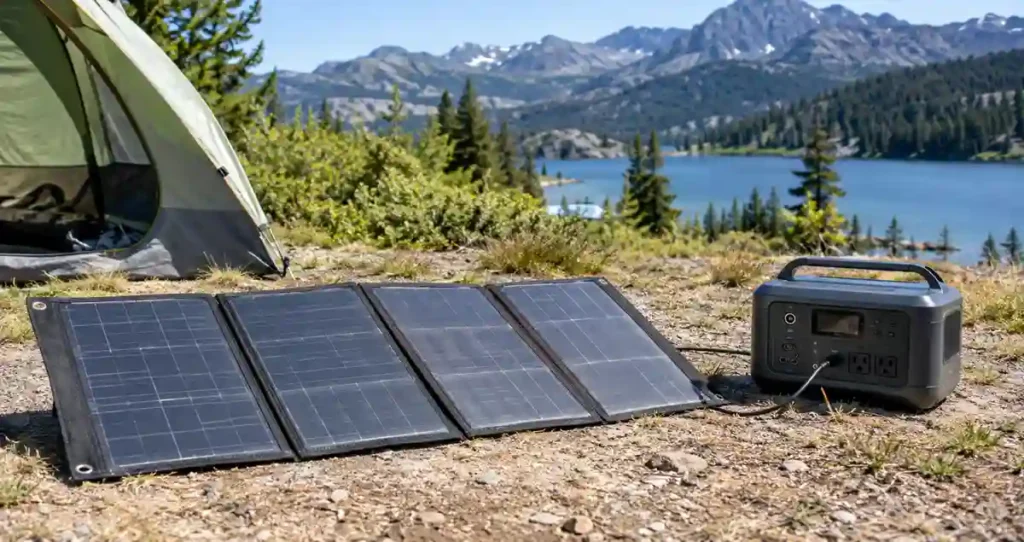
Portable photovoltaic solar blankets are flexible or foldable solar panels designed to generate electricity. They are useful where conventional rigid modules are inconvenient, such as camping, RV travel, boating, and some off-grid applications.
These products are not thermal pool covers. They are electrical generating equipment, and their performance must be assessed using electrical specifications.
What should you check before buying one?
Rated power: The wattage rating indicates the panel’s nominal output under specified test conditions. Actual output outdoors will vary.
Voltage and current: Confirm that the blanket’s electrical characteristics match the input limits of the charge controller or power station.
Shading and orientation: Even partial shading can reduce output, depending on the cell layout and electrical configuration.
Connectors: Verify connector type, polarity, cable rating, and compatibility before connecting the panel.
Charging equipment: Some power stations have built-in solar charge controllers. Other systems require an external controller. Follow the manufacturer’s instructions.
Portability: Compare weight, folded dimensions, mounting options, and weather resistance for your intended use.
For a complete system, the solar blanket is only one component. Our solar panel size calculator can help you estimate the size of a solar array for a given energy requirement, while our solar array guide explains how individual modules form a complete array.
If the system includes battery storage, our solar battery installation guide covers the practical considerations involved in integrating storage into a solar setup.
Engineer’s Note: Do not select a portable solar blanket on wattage alone. A panel rated at a particular wattage may not be compatible with every power station or battery system. Check the voltage window, maximum input current, connector, and controller requirements before purchasing. Electrical compatibility is a system-level decision, not just a panel specification.
Solar Blanket vs. Solar Pool Heater
A solar blanket and a solar pool heater can complement each other, but they perform different functions.
| Feature | Solar blanket | Solar pool heater |
|---|---|---|
| Main function | Reduces heat loss and evaporation | Transfers solar heat to pool water |
| Typical design | Floating cover | Solar collectors, piping, circulation pump, and controls |
| Generates electricity | No | No, in a typical thermal system |
| Circulates water through collectors | No | Yes |
| Helps retain existing heat | Yes | Depends on system design; a cover may still be useful |
| Typical role | Heat retention | Active pool-water heating |
A pool cover helps preserve heat that the water has already gained. A dedicated solar pool heater captures solar thermal energy and transfers it to circulating pool water.
Neither option guarantees a particular temperature. Performance depends on the available sunlight, outdoor conditions, pool size, system design, and operating schedule.
How to Choose the Right Solar Blanket
Start with the application. A cover for a swimming pool, a hot tub, a greenhouse, and a portable power system must meet different requirements.
For a swimming pool, work through these checks:
- Measure the water surface. Record the pool’s dimensions and shape. Irregular pools may need a custom cover or careful trimming according to the manufacturer’s instructions.
- Check the material. Look for UV resistance and guidance on chlorine exposure, storage, and expected service life.
- Compare performance claims. Review the manufacturer’s specifications instead of assuming that color or thickness alone determines effectiveness.
- Consider handling. A reel can make a large cover easier to use consistently.
- Review safety limitations. A floating solar blanket is not a safety cover and should never be treated as a surface that can support a person or pet.
- Calculate the full cost. Include the cover, reel, storage, replacement, and maintenance requirements.
For a portable photovoltaic blanket, focus instead on rated power, voltage, current, connectors, controller compatibility, and weather resistance.
Solar Blanket Maintenance and Safety
A cover needs routine care to remain useful. Follow the manufacturer’s cleaning and storage instructions, keep sharp objects away from the material, and inspect it for tears or brittle sections.
For pool covers:
- Remove and store the cover as instructed when it is not being used.
- Check for material damage caused by UV exposure or chemicals.
- Use a suitable reel or storage arrangement when recommended.
- Avoid exposing the cover to incompatible chemicals or temperatures.
- Keep removed covers away from children and pets.
- Never treat a floating cover as a drowning-prevention device.
A typical solar blanket is not designed to support a person or animal. It is not a substitute for compliant pool barriers, supervision, or an approved safety cover. Follow applicable local pool-safety requirements.
For photovoltaic blankets, inspect cables, connectors, and the panel surface before use. Keep electrical connections within the manufacturer’s specified operating limits and follow the instructions for outdoor exposure and charging.
Frequently Asked Questions
Do solar blankets really heat a swimming pool?
A suitable pool solar cover can help warm the water by allowing sunlight through while reducing heat loss. The result depends on sunlight, weather, pool conditions, cover design, and how consistently it is used.
Do solar blankets work without a pool heater?
Yes. A pool cover can help retain heat gained from sunlight even when there is no dedicated heater. However, it cannot guarantee a target temperature or replace active heating when substantial heat input is needed.
Is a solar blanket the same as a solar panel?
No. A typical pool solar blanket is a thermal cover that helps reduce evaporation and retain heat. A photovoltaic solar panel or portable solar blanket generates electricity.
Can I use a pool solar blanket on a hot tub?
Only if the manufacturer confirms that the product is suitable for the spa’s temperature and operating conditions. A purpose-built insulated spa cover may be more appropriate.
Are solar blankets safe for children and pets?
A standard floating pool blanket is not designed to support people or animals. It must not be treated as a safety cover or a replacement for proper barriers and supervision.
How long does a solar blanket last?
Service life varies with material quality, UV exposure, water chemistry, handling, storage, and frequency of use. Follow the manufacturer’s warranty and inspect the cover regularly rather than relying on a universal replacement interval.
What is the difference between a solar blanket and a thermal cover?
The terms can overlap. A solar blanket often refers to a pool cover that allows sunlight through while helping retain heat. A thermal cover may place greater emphasis on insulation. Check the product’s specifications and intended use.
Can a portable solar blanket run household appliances?
It depends on the panel’s output and the connected power equipment. A portable photovoltaic blanket generally needs a compatible charge controller or power station, and the available energy must be sufficient for the load. Estimate your requirements before selecting the equipment.
Final Thoughts
A solar blanket can be a practical way to reduce heat loss and evaporation, especially for swimming pools that receive regular sunlight. Its value depends on the application, material, operating conditions, and whether the cover is convenient enough to use consistently.
For a pool, the primary benefit is heat retention rather than electricity generation. Hot tubs, ponds, tanks, and greenhouses need products selected for their particular conditions. Portable photovoltaic blankets belong to a different category because they generate electrical power.
My engineering recommendation is to define the required outcome before selecting the product. If the goal is to retain pool heat, evaluate the cover and its handling requirements. If the goal is to raise water temperature more actively, compare a suitable cover with a dedicated solar pool-heating system. If the goal is to generate electricity, assess the photovoltaic blanket as part of a complete electrical system.
Related Guides
- 24V 200Ah LiFePO4 Battery: Specs, Uses & Buying Guide
- LiFePO4 vs Lithium-Ion: Which Battery Should You Buy?
- LiFePO4 Battery: How It Works, Specs & Buying Guide
- LiFePO4 Batteries for Solar: How to Choose & Size Right
- 48V 200Ah LiFePO4 Battery: Specs, Sizing & Home Storage Guide
- LiFePO4 Battery Charger: Voltage, Amps & Settings
- Solar Panel Repair Guide: Diagnose Problems, Costs & Fixes
- IRS Form 5695 for 2025: Solar Tax Credit Guide
Related guides on SolarVisionAI.com
- Monocrystalline Solar Panels 2026: Still Worth It or Hype
- Polycrystalline Solar Panels: Worth Buying in 2026?
- Thin-film Solar Panels: When They Beat Silicon (2026)
- BIPV Solar Panels: Building-Integrated PV Complete Guide
- Portable Solar Panels: Engineer’s Buyer’s Guide 2026
- CPV Solar Panels: Concentrated Photovoltaic Explained
- Skin Solar Panel: What “Solar Skin” Actually Means
- Solar Fence Post Lights: Cap Sizes, Types & Install Guide
- Bifacial Solar Panels in 2026: How to Boost Energy Output
- Solar Charge Controller: The Complete Guide
- MC4 Connectors: Solar Safety & Installation Guide
- Solar Panel Types, Efficiency & Benefits
- Solar Water Pump Guide
- BESS — Battery Energy Storage System Guide
- Commercial Solar Panel Installation
- Solar Refrigerator & DC Fridge — Complete 2026 Guide
- Bifacial Solar Panel Albedo Effect Guide
- TOPCon: Why TOPCon Solar Panel is a Proven Smart Investment in 2026
- HJT: Why Heterojunction Is the Hot Climate Champion
- PERC: PERC Solar Panel: Still Relevant or Already Outdated?
- Perovskite: Perovskite Solar Panels: The 2026 Reality Check
- N-Type vs P-Type: N-Type vs P-Type Solar Panels: Honest Comparison
- ABC: ABC (all back contact) Solar Panel: Back Contact Technology Explained
- IBC: IBC Solar Panels: Interdigitated Back Contact Guide
- Tandem: Tandem Solar Panels: Are Stacked Cells Ready for Rooftops?