
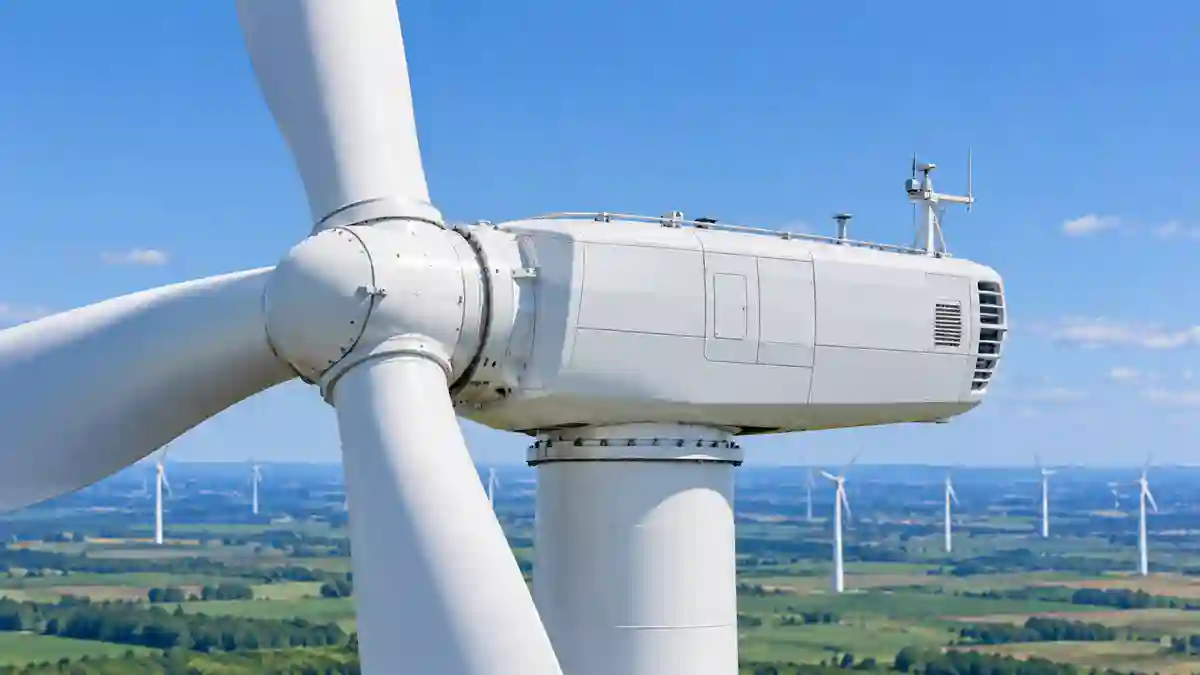
Learn what a wind turbine nacelle is, where it is located, how it works and what components it contains, including the gearbox, generator, shafts and yaw system.
A wind turbine nacelle is the main housing located at the top of a wind turbine tower. It contains many of the mechanical, electrical, and control components responsible for converting the rotational energy of the rotor into usable electrical power.
When you look at a modern wind turbine, the nacelle is the large enclosure positioned directly behind the rotor blades and hub. Although it may appear to be a simple protective cover, it houses some of the most important equipment in the entire wind energy system, including the gearbox, generator, main shaft, braking system and control equipment.
The design of the nacelle depends on the turbine’s capacity, drivetrain configuration and manufacturer. Some turbines use a gearbox to increase rotational speed before electricity generation, while others use direct-drive technology without a gearbox.
Understanding the wind turbine nacelle is important because its components directly influence power generation, operating efficiency, reliability and maintenance requirements.
This guide explains the main nacelle components, their functions, how the system works and the differences between geared and direct-drive designs.
Wind Turbine Nacelle: Components, Function and How It Works
What Is a Wind Turbine Nacelle?
A wind turbine nacelle is an enclosed structure mounted on top of the tower that houses the main mechanical and electrical equipment of a wind turbine.
Its primary purpose is to support and protect the drivetrain and associated systems while allowing the turbine to convert mechanical energy into electrical energy.
In a typical horizontal-axis wind turbine, the nacelle is connected to the rotor assembly at the front. The rotor transfers rotational force through the main shaft to the drivetrain, which drives the generator.
The nacelle also provides structural support for the equipment and helps protect sensitive components from rain, dust, temperature changes, and other environmental conditions.
Not every turbine has exactly the same internal arrangement. For example, a geared turbine contains a gearbox, while a direct-drive turbine connects the rotor to a low-speed generator without using a conventional gearbox.
Where Is the Nacelle Located on a Wind Turbine?
The nacelle is located at the top of the wind turbine tower, directly behind the rotor hub in a typical upwind turbine design.
It is mounted on a yaw bearing and yaw mechanism, allowing the nacelle and rotor assembly to rotate horizontally to face the wind direction.
The main external parts around the nacelle include:
- Rotor blades: Capture energy from the moving air.
- Hub: Connects the blades to the main shaft.
- Nacelle: Houses the main mechanical and electrical equipment.
- Tower: Supports the nacelle and rotor at an appropriate height.
- Yaw system: Allows the nacelle to turn and align with the wind.
The nacelle is not the same as the rotor hub. The hub connects the blades to the drivetrain, while the nacelle contains the equipment that supports the drivetrain and electrical generation process.
For a broader explanation of turbine construction, see our guide to wind turbine parts.
Main Components of a Wind Turbine Nacelle
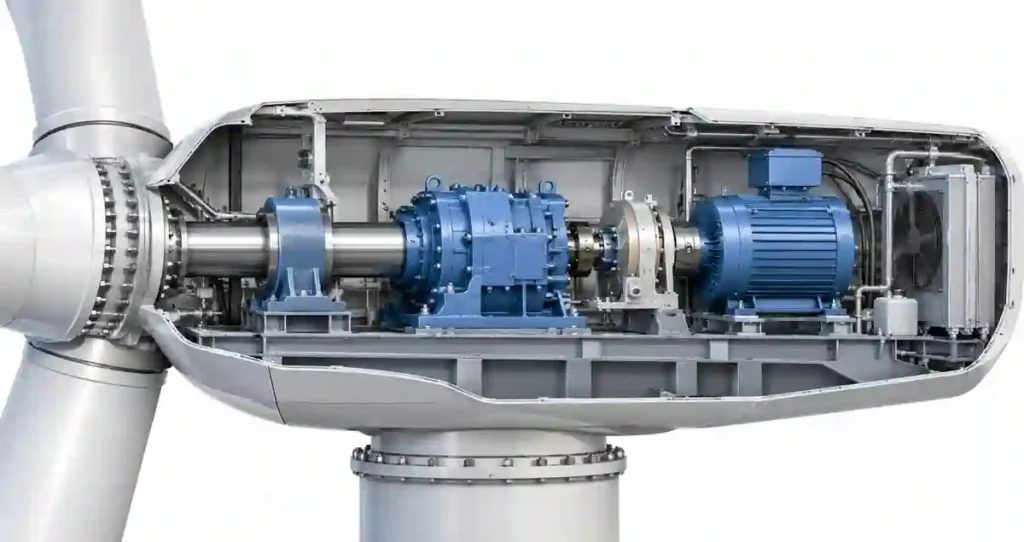
A modern wind turbine nacelle contains several interconnected components. Each has a specific function, and their coordinated operation allows the turbine to generate electricity safely and efficiently.
The exact arrangement varies between turbine models, but the following components are commonly found in geared horizontal-axis wind turbines.
1. Main Shaft
The main shaft transfers rotational energy from the rotor hub into the drivetrain.
When wind causes the blades to rotate, the hub turns the main shaft. This shaft carries the mechanical torque generated by the rotor toward the gearbox or generator, depending on the turbine design.
The main shaft operates under substantial mechanical loads because it must transmit the forces produced by the rotor while supporting the drivetrain arrangement.
Its bearings help support the rotating assembly and manage the loads transferred from the rotor.
2. Main Shaft Bearings
Main shaft bearings support the rotating shaft and allow it to operate with controlled friction.
They also help transfer the rotor’s mechanical loads to the nacelle structure.
Bearing condition is important for turbine reliability. Wear, lubrication problems, contamination or misalignment can increase friction and temperature, potentially leading to equipment failure.
3. Gearbox
The gearbox is one of the major components in a conventional geared wind turbine.
Wind turbine rotors generally rotate at relatively low speeds but produce high torque. Many generators require a higher rotational speed to operate within their intended range.
The gearbox increases the rotational speed between the low-speed input shaft and the high-speed output shaft.
For example, a geared turbine may operate with a rotor speed of approximately 10–20 revolutions per minute (RPM), while its generator-side shaft operates at a much higher speed. The actual speeds and gearbox ratio depend on the turbine design.
A gearbox typically contains several gear stages, bearings and a lubrication system. Its internal arrangement may use planetary gears, parallel-shaft gears or a combination of both.
The gearbox is not present in every wind turbine. Direct-drive turbines use a different generator arrangement that does not require a conventional speed-increasing gearbox.
For a more detailed explanation of electrical conversion equipment, read our guide to the wind turbine inverter.
4. High-Speed Shaft
In a geared wind turbine, the high-speed shaft transfers rotational energy from the gearbox to the generator.
The gearbox increases the rotational speed, and the high-speed shaft delivers that mechanical power to the generator.
Some turbine designs use a coupling between the gearbox and generator to accommodate small alignment differences and reduce the transmission of unwanted mechanical vibration.
5. Electrical Generator
The generator converts mechanical rotational energy into electrical energy through electromagnetic induction.
When the shaft rotates the generator’s rotor relative to its magnetic field and windings, electrical power is produced.
The generator design varies according to the turbine’s electrical architecture. Common arrangements include induction generators and synchronous generators, including permanent-magnet designs.
The generator output is not necessarily ready for direct connection to the utility grid. Power conversion equipment may be required to regulate voltage, frequency and other electrical characteristics.
6. Mechanical Braking System
The braking system provides an additional means of stopping or holding the turbine when required.
A wind turbine does not rely on its mechanical brake as the normal method of controlling rotor speed. Aerodynamic control, especially blade pitch adjustment, is generally used to regulate rotor operation and bring it to a safe stop.
The mechanical brake can be used during certain shutdown conditions, emergencies or maintenance procedures, depending on the turbine’s control and safety design.
The braking system must be designed for the mechanical loads and operating conditions specified by the manufacturer.
7. Yaw System
The yaw system allows the nacelle to rotate horizontally around the top of the tower.
Its purpose is to keep the rotor aligned with the wind direction so the turbine can capture wind energy effectively.
The system commonly includes:
- Yaw bearing
- Yaw motors
- Gear drives
- Position sensors
- Yaw brakes or holding arrangements
- Control equipment
A wind vane measures wind direction and sends information to the turbine controller. When the wind direction changes sufficiently, the controller can operate the yaw motors to reposition the nacelle.
The yaw system is particularly important for upwind horizontal-axis wind turbines. Downwind turbine designs may use a different arrangement.
8. Cooling and Lubrication Systems
The gearbox, generator and other operating components produce heat during operation.
Cooling systems help maintain equipment temperatures within the manufacturer’s specified limits. Depending on the design, these may use fans, heat exchangers, liquid cooling circuits or a combination of methods.
Lubrication systems deliver oil or grease to bearings, gears and other moving components where required.
In geared turbines, gearbox oil performs important functions, including reducing friction, carrying away heat and helping protect gear surfaces from wear.
Oil temperature, pressure, contamination and condition can be monitored to identify potential problems before they develop into major failures.
9. Control and Monitoring Equipment
The turbine control system coordinates the operation of the nacelle and other turbine systems.
It receives information from sensors and monitors operating conditions such as:
- Wind speed and direction
- Rotor speed
- Generator temperature
- Gearbox temperature
- Vibration levels
- Hydraulic pressure, where applicable
- Electrical operating parameters
Based on the turbine’s control logic, the system can adjust operating conditions, initiate yaw movements, control blade pitch and stop the turbine when required.
Modern wind turbines also use remote monitoring systems that allow operators to review performance data and identify faults without continuously visiting each turbine.
How Does a Wind Turbine Nacelle Work?
The nacelle works as part of the complete wind turbine system. It receives mechanical power from the rotating rotor and supports the equipment that converts this energy into electricity.
The process can be explained in the following steps.
Step 1: Wind rotates the rotor
Wind flows across the turbine blades, creating aerodynamic lift that causes the rotor to turn.
Step 2: The hub transfers rotation
The rotor hub transfers the rotational movement and torque to the main shaft.
Step 3: The drivetrain receives mechanical power
The main shaft transfers mechanical energy into the nacelle’s drivetrain.
Step 4: The gearbox increases rotational speed, if fitted
In a geared turbine, the gearbox increases the shaft speed before it reaches the generator. In a direct-drive turbine, the rotor drives the generator without a conventional gearbox.
Step 5: The generator produces electricity
The generator converts mechanical energy into electrical energy.
Step 6: Power electronics condition the electrical output
The turbine’s electrical conversion equipment regulates the generator output and prepares it for connection to the collection system or grid.
Step 7: The control system monitors operation
Sensors and control equipment continuously monitor the turbine. The yaw and pitch systems adjust the turbine’s operation according to wind conditions and safety requirements.
The nacelle therefore acts as the central mechanical and electrical equipment housing, although the complete electricity-generation system also includes equipment outside the nacelle.
Geared vs Direct-Drive Wind Turbine Nacelle
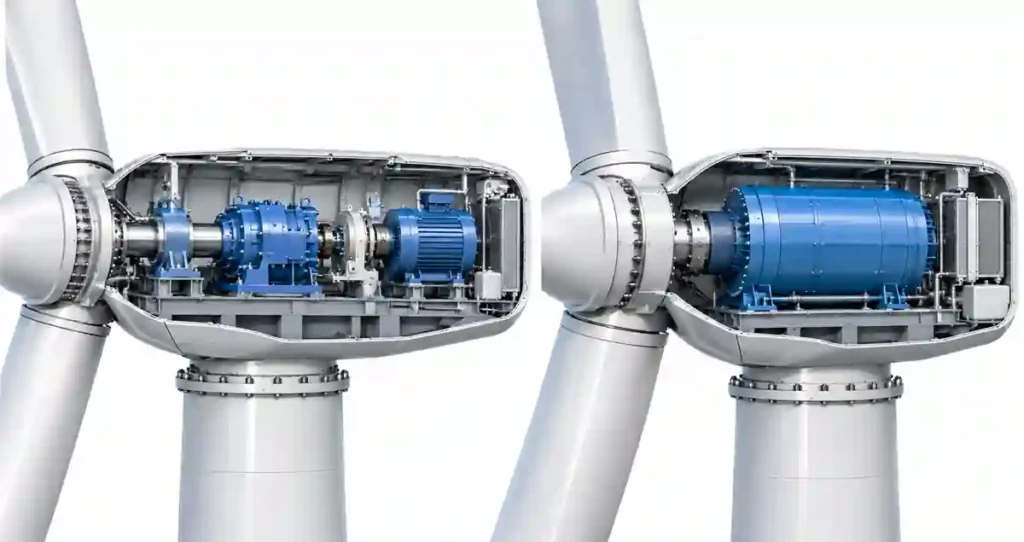
Not all wind turbine nacelles use the same drivetrain arrangement. Two important designs are geared and direct-drive systems.
Geared Wind Turbine
A geared turbine uses a gearbox between the main shaft and generator.
The gearbox increases the rotational speed to match the requirements of the generator.
Main characteristics:
- Includes a conventional gearbox.
- Uses low-speed and high-speed shaft arrangements.
- Requires gearbox lubrication and condition monitoring.
- May use a relatively compact generator compared with some direct-drive designs.
- Has additional mechanical components that require inspection and maintenance.
Direct-Drive Wind Turbine
A direct-drive turbine connects the rotor to a generator without using a conventional speed-increasing gearbox.
Because the generator operates at relatively low rotational speeds, it is designed to produce the required electrical output under those conditions.
Main characteristics:
- Does not require a conventional gearbox.
- Uses a low-speed generator.
- Has fewer drivetrain stages.
- Avoids gearbox-related maintenance.
- May require a larger generator with a different structural and electrical design.
Comparison: Geared vs Direct-Drive Nacelle
| Feature | Geared turbine | Direct-drive turbine |
|---|---|---|
| Gearbox | Required | Not required |
| Generator speed | Increased through gearbox | Operates at lower speed |
| Drivetrain | More mechanical stages | Fewer drivetrain stages |
| Gearbox lubrication | Required | Not applicable |
| Maintenance | Includes gearbox inspections | No gearbox maintenance |
| Generator design | Often smaller for a given rating | Often larger and designed for low speed |
| System complexity | More drivetrain components | Different generator and support requirements |
Neither design is automatically better in every application. The selection depends on turbine capacity, manufacturer technology, site conditions, cost, reliability requirements and maintenance strategy.
Why Is the Wind Turbine Nacelle Important?
The nacelle plays a major role in the performance and reliability of a wind turbine.
Its importance extends beyond simply housing mechanical equipment.
1. Supports electricity generation
The nacelle contains the drivetrain and generator systems that convert rotor movement into electrical power.
2. Protects critical equipment
Its enclosure helps protect sensitive mechanical and electrical components from environmental exposure.
3. Supports turbine control
The nacelle contains or supports important monitoring and control equipment that helps regulate turbine operation.
4. Enables wind alignment
The yaw system allows the rotor to face the wind direction in turbine designs that use active yaw control.
5. Influences maintenance requirements
The condition of the gearbox, generator, bearings, cooling equipment and other nacelle components directly affects turbine availability and maintenance needs.
6. Supports long-term reliability
Proper monitoring, lubrication, temperature management and inspection help reduce the risk of unexpected equipment failure.
Common Wind Turbine Nacelle Problems
Nacelle components operate under changing wind conditions, mechanical loads and environmental exposure. Over time, these conditions can lead to wear, overheating or equipment faults.
Some common problems include:
Gearbox Failure
Gearbox problems may develop due to bearing wear, lubrication issues, gear damage, contamination or excessive mechanical loading.
Regular oil analysis, vibration monitoring and temperature monitoring can help identify developing faults.
Generator Overheating
High operating temperatures may result from cooling system problems, excessive loading, electrical faults or ventilation restrictions.
Temperature monitoring and inspection of cooling equipment are important preventive measures.
Bearing Damage
Bearings can experience fatigue, inadequate lubrication, contamination or misalignment.
Vibration and temperature trends can help identify bearing deterioration.
Yaw System Faults
Yaw motors, gears, brakes or position sensors may develop faults that prevent the nacelle from aligning correctly with the wind.
This can reduce energy capture and increase mechanical loading.
Cooling System Problems
Blocked filters, failed fans, leaking cooling circuits or ineffective heat exchangers can cause equipment temperatures to rise.
Cooling performance should be checked according to the manufacturer’s maintenance requirements.
Sensor and Control Faults
Faulty sensors or communication problems can affect turbine control and monitoring.
Correct sensor operation is important because the turbine relies on accurate measurements to operate safely.
Wind Turbine Nacelle Maintenance
Nacelle maintenance is essential for maintaining turbine reliability and reducing unplanned downtime.
A suitable maintenance programme depends on the turbine manufacturer, operating environment, service agreement and equipment condition.
Common inspection and maintenance activities include:
- Checking gearbox oil condition and levels.
- Inspecting bearings and lubrication systems.
- Monitoring vibration and operating temperatures.
- Inspecting generator connections and electrical equipment.
- Checking cooling fans, filters and heat exchangers.
- Inspecting yaw motors, gears and brakes.
- Checking control equipment, sensors and communication systems.
- Reviewing alarms, fault records and operating data.
Maintenance intervals should follow the manufacturer’s instructions and the applicable site safety procedures. Work inside a nacelle involves electrical, mechanical and working-at-height hazards, so it should only be carried out by suitably trained and authorized personnel.
How AI and Condition Monitoring Can Improve Nacelle Performance
Modern wind turbines generate large amounts of operational data. This information can help operators understand the condition of equipment and identify developing faults.
Artificial intelligence and data analytics can support nacelle maintenance by analysing information from vibration sensors, temperature measurements, gearbox oil monitoring and turbine control systems.
For example, condition-monitoring software can identify unusual vibration patterns that may indicate bearing or gearbox deterioration.
Predictive maintenance models can also analyse historical operating data to estimate when a component may require inspection.
These tools do not replace physical inspections or manufacturer maintenance procedures. Instead, they help operators make better-informed maintenance decisions and potentially reduce unexpected downtime.
Applicable IEC and ISO Standards
International standards provide important guidance for wind turbine gearbox design and nacelle condition monitoring.
IEC 61400-4:2025 – Wind Turbine Gearbox Design: Covers design requirements for enclosed speed-increasing gearboxes used in horizontal-axis wind turbines, including mechanical loading, gears, bearings, lubrication and design verification.
ISO 20816-21 – Wind Turbine Vibration Monitoring: Guides measuring and evaluating mechanical vibration in wind turbines. It supports condition monitoring of drivetrain components, including bearings, shafts and gearboxes.
These standards help engineers evaluate gearbox reliability and monitor mechanical condition. Actual maintenance intervals and operating limits should follow the turbine manufacturer’s recommendations.
Frequently Asked Questions
1. What is a wind turbine nacelle?
A wind turbine nacelle is the enclosure mounted at the top of the tower that houses important mechanical, electrical and control components, including the drivetrain and generator.
2. What components are inside a wind turbine nacelle?
Common components include the main shaft, bearings, gearbox (if fitted), high-speed shaft, generator, braking equipment, cooling system and control equipment. The exact arrangement depends on the turbine design.
3. Does every wind turbine have a gearbox inside its nacelle?
No. Geared turbines use a gearbox to increase rotational speed before the generator. Direct-drive turbines connect the rotor to a low-speed generator without a conventional gearbox.
4. What is the main function of a wind turbine nacelle?
Its main function is to house and support the equipment that transfers mechanical energy from the rotor and converts it into electrical energy.
5. Can a wind turbine operate without a nacelle?
A conventional horizontal-axis wind turbine requires a suitable structure to support and protect its drivetrain and generator. The nacelle provides this enclosure and structural arrangement, although its shape and design vary between turbine models.
6. How does the nacelle turn toward the wind?
In an upwind turbine with active yaw control, wind-direction sensors provide information to the controller. The yaw motors and drive rotate the nacelle around the top of the tower to align the rotor with the wind.
7. Is the transformer located inside the nacelle?
It depends on the turbine design. Some turbines have a transformer inside or near the nacelle, while others locate it at the tower base or elsewhere in the wind turbine installation.
Conclusion
The wind turbine nacelle is one of the most important assemblies in a modern wind energy system. It houses the drivetrain, generator, control equipment and supporting systems responsible for converting rotor movement into electrical power.
Its design varies between geared and direct-drive turbines, but both arrangements must provide reliable mechanical support, electrical generation, cooling and operational control.
Understanding the nacelle and its components helps explain how a wind turbine operates and why regular monitoring and maintenance are important for long-term performance.
For a complete understanding of wind energy technology, explore our Wind Energy guide and related articles on wind turbine parts, wind turbine blades and wind turbine inverters.
Engineer’s Note: The nacelle should not be considered only a protective enclosure. It is a complete mechanical and electrical equipment assembly in which drivetrain design, structural loading, thermal management, control systems, and maintenance requirements come together.
When evaluating a wind turbine, the nacelle design is an important consideration because it affects equipment accessibility, maintenance planning, reliability, and the overall operating strategy.
References
- U.S. Department of Energy – Explore a Wind Turbine
- U.S. Department of Energy – How a Wind Turbine Works
- Pacific Northwest National Laboratory – O&M Best Practices for On-site Wind Turbines
- Electric Power Research Institute – Wind Turbine Maintenance Guide
Related guides
- Solar and Wind Hybrid System: Design, Sizing, Cost, and Working
- Wind and Solar Hybrid Controller: Wiring, Inputs and Protection
- Home Wind Turbine: Cost, Output, Sizing and Is It Worth It?
- Wind Turbine Inverter: Grid-Tie, Off-Grid and Hybrid Options
- Home Wind Turbine Kits: What You Need and How to Choose
- Wind Turbine Parts Explained: Components and Their Functions
- Off-Grid Wind Turbine: Sizing, Batteries and System Design
- 7 Powerful Benefits of Solar Power and Wind Power
- Solar and Wind Energy: 7 Key Differences, Pros, Cons and Best Uses
- Wind Turbine Blade: 7 Powerful Facts About Size and Design
- Wind Energy: How It Works, Benefits and Limitations
- Wind Energy Advantages and Disadvantages: 12 Key Pros and Cons
- Wind Turbine Height: How Tall Are Wind Turbines?
Related guides on SolarVisionAI.com
- Monocrystalline Solar Panels 2026: Still Worth It or Hype
- Polycrystalline Solar Panels: Worth Buying in 2026?
- Thin-film Solar Panels: When They Beat Silicon (2026)
- BIPV Solar Panels: Building-Integrated PV Complete Guide
- Portable Solar Panels: Engineer’s Buyer’s Guide 2026
- CPV Solar Panels: Concentrated Photovoltaic Explained
- Skin Solar Panel: What “Solar Skin” Actually Means
- Solar Fence Post Lights: Cap Sizes, Types & Install Guide
- Bifacial Solar Panels in 2026: How to Boost Energy Output
- Solar Charge Controller: The Complete Guide
- MC4 Connectors: Solar Safety & Installation Guide
- Solar Panel Types, Efficiency & Benefits
- Solar Water Pump Guide
- Commercial Solar Panel Installation: Engineering Guide
- Solar Fence Post Lights: Cap Sizes, Types & Install Guide
- BESS — Battery Energy Storage System Guide
- Commercial Solar Panel Installation
- Solar Refrigerator & DC Fridge — Complete 2026 Guide
- Bifacial Solar Panel Albedo Effect Guide
- TOPCon: Why TOPCon Solar Panel is a Proven Smart Investment in 2026
- HJT: HJT Solar Panels: Why Heterojunction Is the Hot Climate Champion
- PERC: PERC Solar Panel: Still Relevant or Already Outdated?
- Perovskite: Perovskite Solar Panels: The 2026 Reality Check
- N-Type vs P-Type: N-Type vs P-Type Solar Panels: Honest Comparison
- ABC: ABC (all back contact) Solar Panel: Back Contact Technology Explained
- IBC: IBC Solar Panels: Interdigitated Back Contact Guide
- Tandem: Tandem Solar Panels: Are Stacked Cells Ready for Rooftops?